

MoroccoMulti-CountrySpain
16-Day Spain and Morocco Private Tour: Madrid to Marrakech Across the Strait
16 Days from $16,984 per person, double occupancy
16 days, 15 nights. From $16,984 per person, double occupancy. Best seasons: March to early June and late September to early November.
This 16-day Spain and Morocco itinerary runs from Madrid to Marrakech, a private tour for your own party, and it crosses the Strait of Gibraltar by fast ferry instead of flying over it. You spend two nights each in Madrid, Seville, Granada and Marbella, with Toledo, the Alhambra and Ronda along the way, then sail to Tangier and drive south through Chefchaouen, Fez and the Middle Atlas to three nights in Marrakech. In Spain a licensed guide leads each visit and a separate licensed driver handles the roads. In Morocco a licensed guide leads the medinas and a private driver handles every road day. A high-speed train links Madrid and Seville.
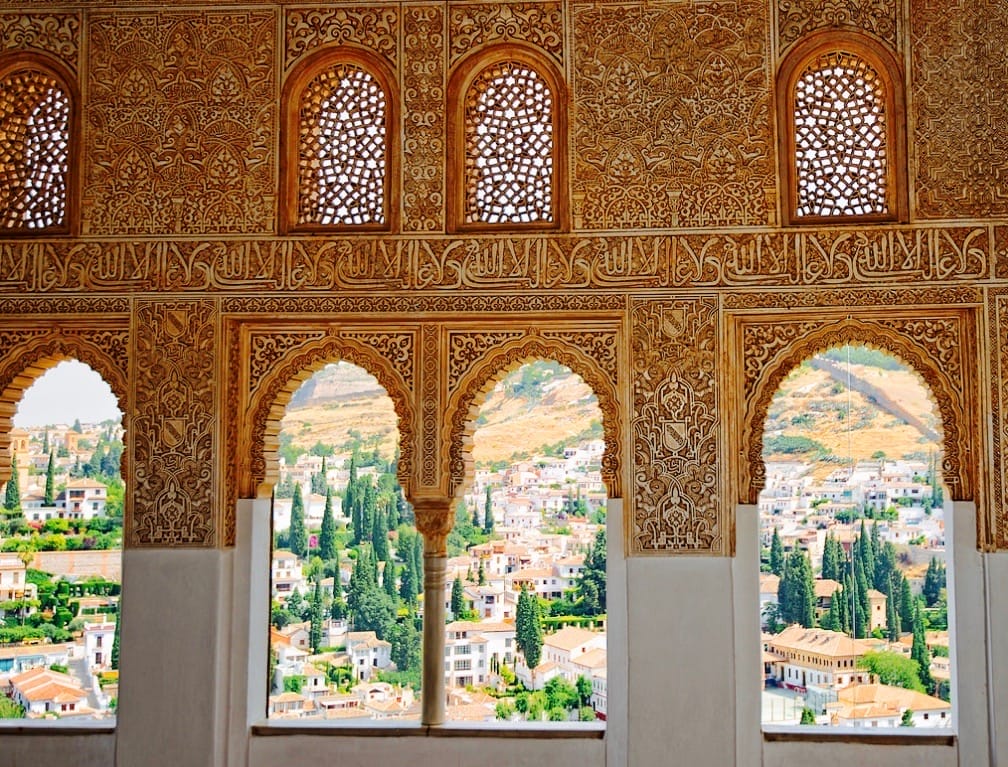
Walk the Nasrid Palaces and the Court of the Lions with Israel, Granada.
Taste a Sevillian lunch you help prepare after a market morning with a local chef, Seville.
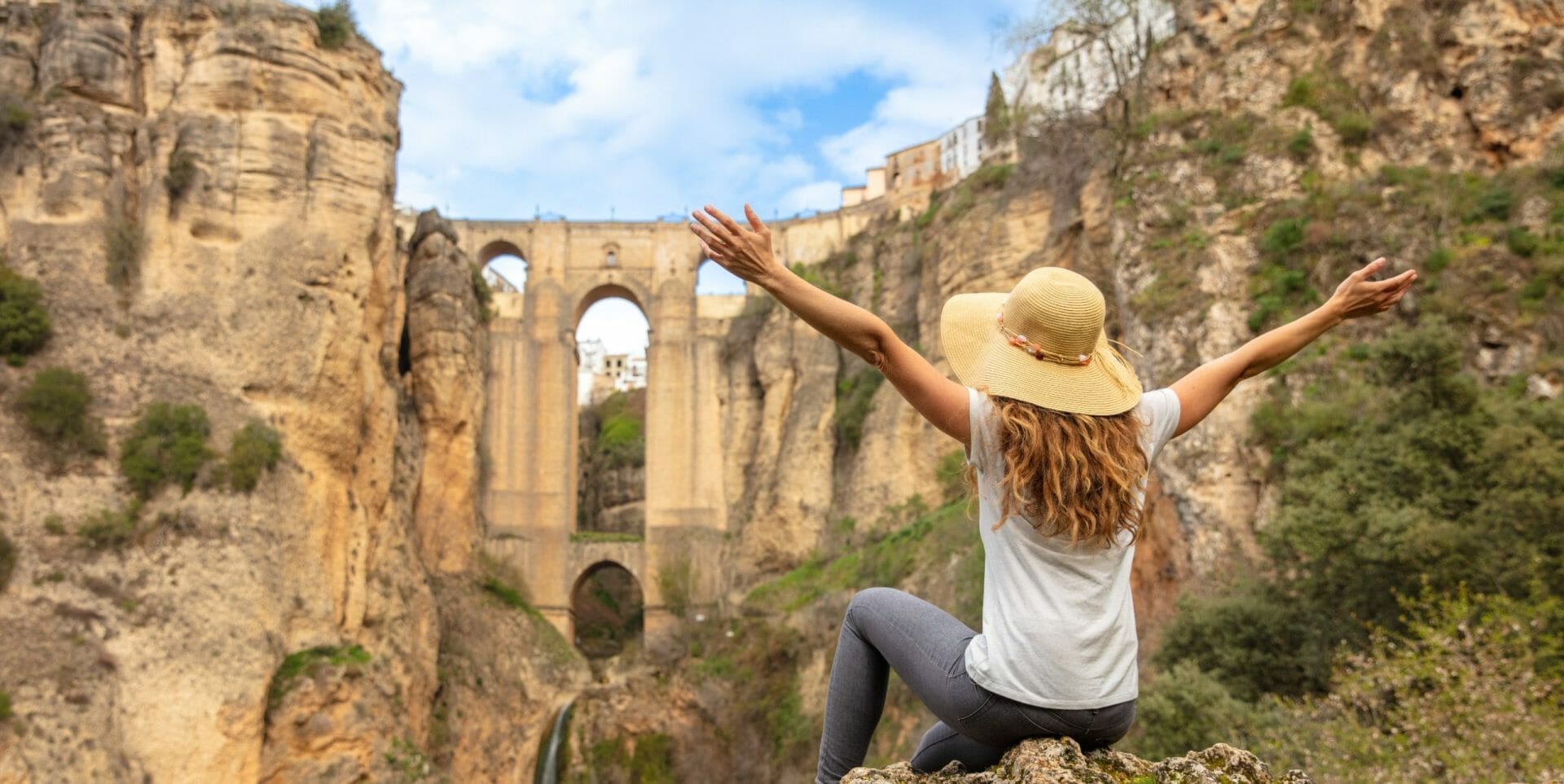
Cross the Puente Nuevo high above the El Tajo gorge, Ronda.
Sail the Strait of Gibraltar from Tarifa to the port in the heart of Tangier.
Walk the lanes of Fes el Bali to the Bou Inania Madrasa with a licensed guide, Fez.
Hear the storytellers and Gnaoua musicians of Jemaa el-Fnaa at dusk, Marrakech.
★ Excellent Trustpilot Reviews | American Precision, Local Roots | 15,000 served since 2002


“We love to tailor-make trips you’ll talk about for years, built on our local relationships & story-worthy experiences.” – Magical’s American founder, in Europe since 1998, culinary enthusiast & world traveler.


A Journey Designed Just for You
Our resident experts wrote this itinerary as a starting point, and your planner shapes every day around your interests, pace and travel style.
The 16-day Spain and Morocco itinerary at a glance
The route uses nine bases and fifteen nights. In Spain you spend two nights each in Madrid, Seville, Granada and Marbella. In Morocco you spend one night each in Tangier, Chefchaouen, Fez and Ifrane in the Middle Atlas, then three nights in Marrakech. The Spanish half moves at an easy pace, with a full day in every city after the arrival day. The Moroccan half travels more, a north-to-south road journey with a new view out of the window each morning, and it ends with three unhurried nights in one place.
Four kinds of connection link the bases. The high-speed train runs from Madrid to Seville in about 2 hours 30 minutes. A licensed driver covers Seville to Granada, about 2 hours 40 minutes, and Granada to Marbella, about 2 hours. A fast ferry crosses the Strait of Gibraltar from Tarifa to Tangier in about 1 hour. From Tangier, a private driver takes the road through the Rif to Chefchaouen, on to Fez, over the Middle Atlas and down to Marrakech, where the journey ends with a flight home.
The route suits spring and autumn best. Spain’s state weather agency, AEMET, records average daily highs in Seville of about 23°C (74°F) in April and 26°C (79°F) in October, against 36°C (97°F) in July, and Granada averages about 21°C (69°F) in April and 23°C (74°F) in October. Fez and Marrakech follow the same seasonal pattern, with warm springs, warm autumns and hot midsummer afternoons. Summer and winter departures both work with a different daily rhythm, and our team plans the hours around the season.
Why the route runs from Madrid to Marrakech
The journey follows one story across two continents. The Almohads ruled both sides of the Strait in the 12th century. They completed the Giralda in Seville in 1198, and the Koutoubia minaret in Marrakech, which likely inspired the Giralda, rises over the medina where this route ends. The Nasrid court of the Alhambra and the Marinid madrasas of Fez belong to the same 14th century. Families from Córdoba settled Fez after a rebellion in 817 and 818, and Andalusi families settled Chefchaouen after the fall of Granada in 1492. You see the Spanish chapters first, then cross the water and read the Moroccan ones.
The crossing runs by sea on purpose. At its narrowest the Strait separates Europe and Africa by about 14 kilometers, and the ferry lands in the center of Tangier, a short walk from the medina. From there the road runs one way, north to south, so you never double back, and you fly into Madrid and home from Marrakech. The Middle Atlas section replaces a domestic flight with cedar forests, a mountain town and the Ouzoud waterfalls. Our Spain destination page and Morocco destination page set out each country in more depth.
Journey at a glance
Length
16 days
From
$16,984 per person, double occupancy
Route
Madrid, Seville, Granada, Marbella, Ronda, Tangier, Fez, Meknes, Volubilis, Marrakech
Your planner adjusts every day to your dates.

Day One
Madrid: The Royal Palace and Plaza Mayor
Your licensed driver meets you at Madrid-Barajas airport and brings you to a hotel in the historic center. In the afternoon your licensed guide walks you through the Habsburg heart of the capital, starting at the Royal Palace, which rose on the site of the old Alcázar after fire destroyed it on Christmas Eve 1734. The palace holds 3,418 rooms, and the royal family uses it for state ceremonies. The walk ends in Plaza Mayor, completed in 1619, where 237 balconies look down on the arcades, and the evening turns to tapas and a glass of Spanish wine at a bar your guide knows well. For travelers who land early, the Prado, the Thyssen-Bornemisza and the Reina Sofía stand along the Paseo del Prado, and where your dates allow, Anna, an art historian, leads a Prado visit on request. Logistics: Madrid-Barajas airport to central Madrid by road with your licensed driver, then a light afternoon on foot with your licensed guide.
Day Two
Toledo, City of Three Cultures
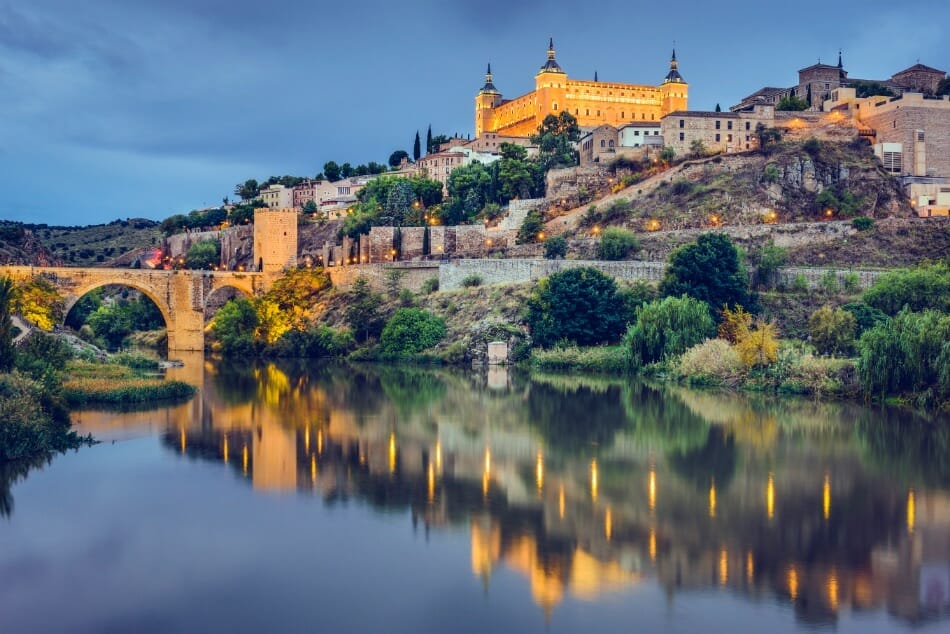
Toledo sits on a hilltop wrapped on three sides by a bend of the Tagus River, about 70 kilometers south of Madrid, and UNESCO inscribed the old city in 1986. Christian, Jewish and Muslim communities shared these streets for centuries, and your licensed guide reads them with you, from the Gothic cathedral, begun in 1226, to the synagogues of Santa María la Blanca and El Tránsito a few streets apart. In the cathedral sacristy, fifteen works by El Greco hang together, among them El Expolio, and the painter spent the latter part of his life in the city. Before you leave, taste mazapán de Toledo, the city's almond marzipan, which carries protected geographical indication status and holds at least half its weight in almonds. Logistics: Madrid to Toledo by road, about 1 hour each way, licensed driver, with a licensed guide for the day in Toledo.
Day Three
South to Seville
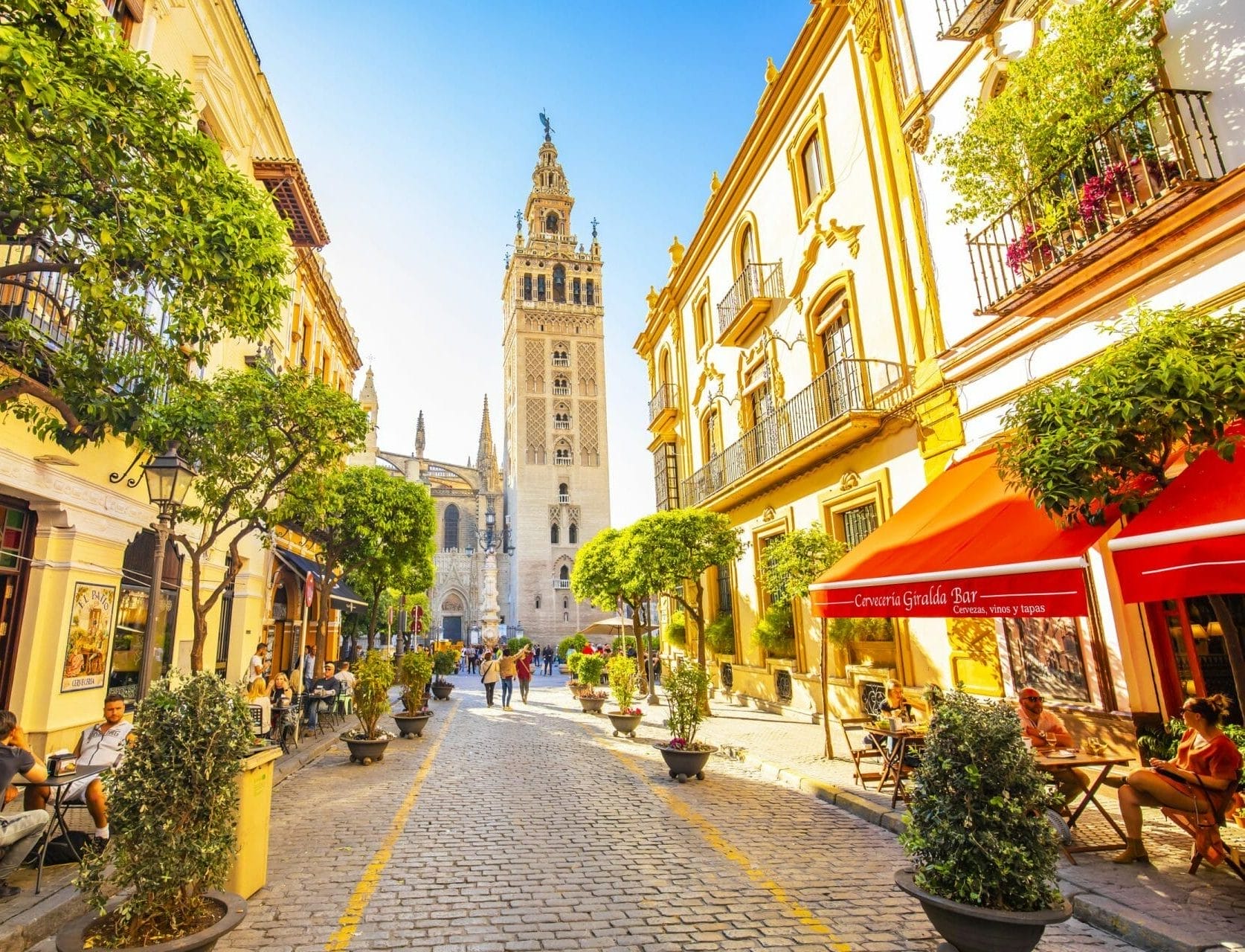
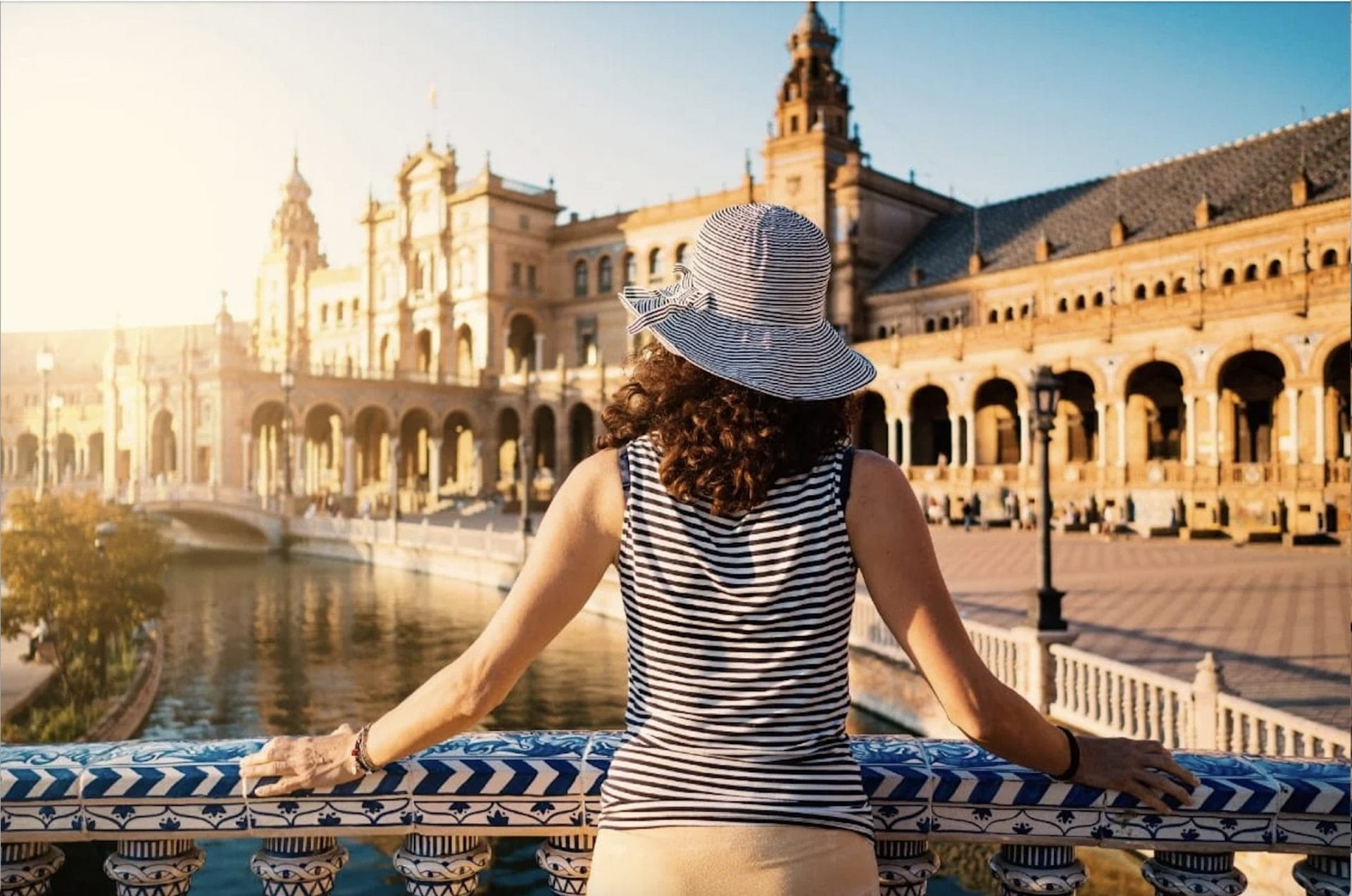
The morning high-speed train carries you south through Córdoba to Santa Justa station, and in the afternoon your licensed guide opens Seville through its World Heritage monuments, which UNESCO inscribed together in 1987. At the Real Alcázar, King Pedro I built his Mudéjar palace in the 1360s, and the royal family still uses the upper floors when it visits the city. Next door rises the Giralda, the minaret the Almohads completed in 1198 and later Seville turned into the cathedral bell tower. Inside, 35 ramps instead of stairs wind up the tower, built wide enough for beasts of burden, as a chronicler of the time recorded. The walk ends in the lanes of the Santa Cruz quarter, where the scent of orange trees hangs over the small squares. Logistics: Madrid to Seville by high-speed train, about 2 hours 30 minutes, and a licensed driver meets you at Santa Justa.
Day Four
Food and Culture of Seville
A local chef meets you for a private market visit, and the morning starts at the Mercado de Triana, which has traded on the site of the medieval Castle of San Jorge since 1823. Below the stalls of olives, cured ham and fresh fish, a small interpretation center shows the castle ruins. Back in the kitchen, you cook alongside the chef and then sit down to a multicourse lunch with wine. Dishes such as salmorejo, the chilled cream of tomato, bread, olive oil and garlic from Córdoba, often open the meal. In the afternoon your licensed guide walks you through Triana, the riverside quarter where Seville's narrative ballads turned into the soleá, a cornerstone of flamenco. Where it suits your party, our team arranges seats for an evening of flamenco guitar, song and dance, the art UNESCO recognized as intangible heritage in 2010. Logistics: a walking day in Seville with your chef and licensed guide, and a licensed driver for the evening transfer to and from the flamenco venue.

Day Five
Granada and the Albaicín
Your licensed driver takes the road east across Andalusia to Granada, the last capital of the Nasrid kingdom. In the afternoon your licensed guide leads you up into the Albaicín, the hillside quarter UNESCO added to the Alhambra listing in 1994. Its lanes climb past cármenes, the traditional houses of the quarter, each a home behind a high wall with a small orchard or garden inside. Near the top, the Mirador de San Nicolás looks across the Darro valley to the walls of the Alhambra, with the Sierra Nevada behind them. As the sun drops, the red stone of the fortress turns gold and the bells of the churches below start to ring. Logistics: Seville to Granada by road, about 2 hours 40 minutes, licensed driver, then an afternoon on foot with your licensed guide.
Day Six
The Alhambra and the Generalife
The Alhambra sits on the Sabika hill, and Muhammad I, the first Nasrid ruler, began the complex in 1238. UNESCO inscribed the Alhambra and the Generalife in 1984. Where your dates allow, Israel, one of our licensed guides in Granada, leads the day. Inside the Nasrid Palaces the courtyards turn intimate, and water runs through narrow channels at floor level. In the Palace of the Lions, the great work of Muhammad V, twelve marble lions carry the fountain basin. The Alcazaba, the oldest part of the complex, guards the western tip and looks out over the city. The Generalife, once the summer estate of the Nasrid rulers, steps down the hillside to the east among cypress, roses and running water. Logistics: our team books the timed entry to the Nasrid Palaces in advance, the visit runs on foot, and your licensed driver handles the transfers to and from the hill.
Day Seven
Mediterranean Marbella
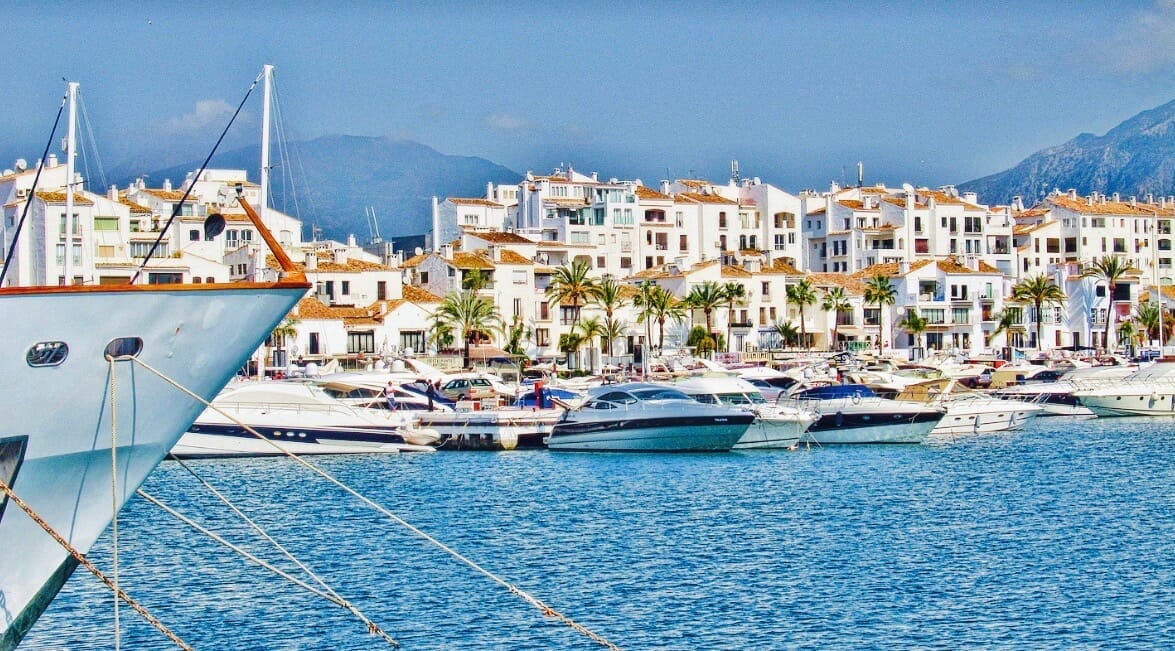
Your licensed driver takes the road south from Granada to the Costa del Sol and the town of Marbella, which passed to the Crown of Castile on 11 June 1485 without bloodshed. The old town keeps its walled layout, and at its center lies the Plaza de los Naranjos, laid out in 1485 and framed by the town hall, the Casa del Corregidor and the small Ermita de Santiago. Orange trees, planted in 1941, shade the Renaissance fountain, and the cafés set their tables beneath them. Behind the town, La Concha rises to 1,215 meters in the Sierra Blanca. West along the coast, Puerto Banús, the marina opened in 1970, lines its quays with yachts. The afternoon stays open for the sea, a long lunch of fried fish on the beach, or the pool. Logistics: Granada to Marbella by road, about 2 hours, licensed driver, with the afternoon at leisure by the Mediterranean.
Day Eight
Clifftop Ronda
Ronda stands on a plateau split by the El Tajo gorge, more than 100 meters deep, with the Guadalevín River at the bottom. With your licensed guide you cross the Puente Nuevo, finished in 1793, which links the old Moorish town with the newer quarter, and you look straight down the gorge from the parapet. A path then leads down to the Arab Baths, which date from the 13th and 14th centuries. Orson Welles and Ernest Hemingway both spent summers in the old quarter, and Welles's ashes rest on the estate of his friend, the bullfighter Antonio Ordóñez, outside the town. Lunch brings the dishes of the Serranía de Ronda, the mountains around the town, before the drive back to the coast. Logistics: Marbella to Ronda by road, about 1 hour 10 minutes each way, licensed driver, with a licensed guide for the day in Ronda.
Day Nine
Across the Strait to Tangier
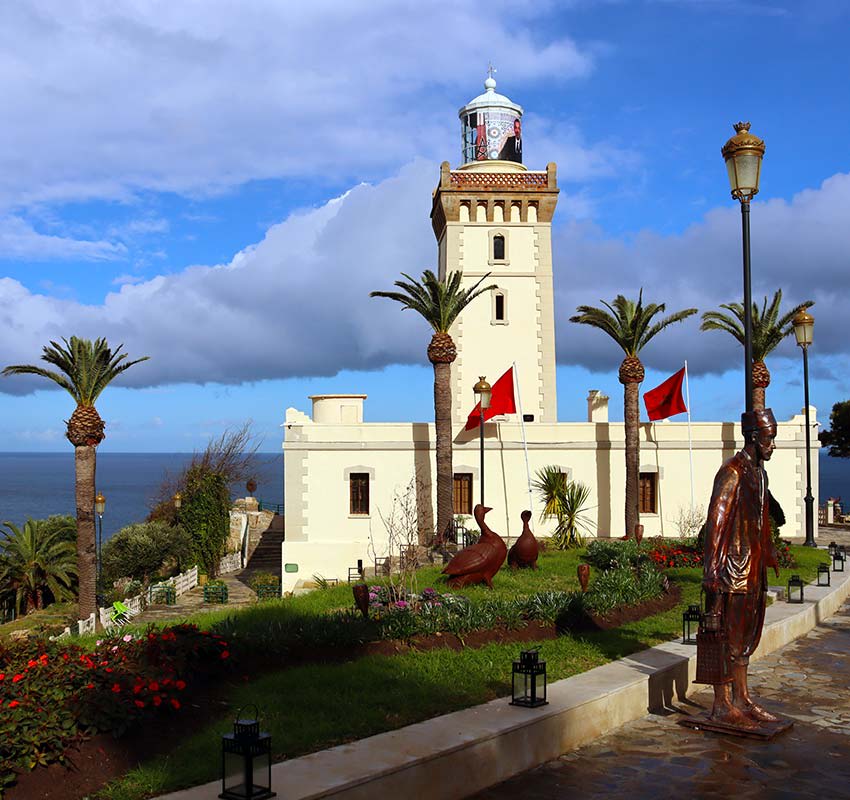
Your licensed driver follows the coast west to Tarifa, the southern tip of mainland Spain, where the fast ferry leaves from a port in the center of town. At its narrowest point the Strait of Gibraltar separates Europe and Africa by about 14 kilometers, and the coast of Africa draws closer across the water from the deck. The ferry docks at the port of Tanger Ville, in the heart of the city and a short walk from the medina, and a private driver meets you on the Moroccan side. In the late afternoon, take a glass of sweet mint tea on the terraces of Café Hafa, open since 1921 on the cliff top above the Strait, where Paul Bowles and the Rolling Stones once sat. Logistics: Marbella to Tarifa by road, about 1 hour 20 minutes, licensed driver, then a fast ferry to Tangier, about 1 hour, and a private driver meets you at the port.
Day Ten
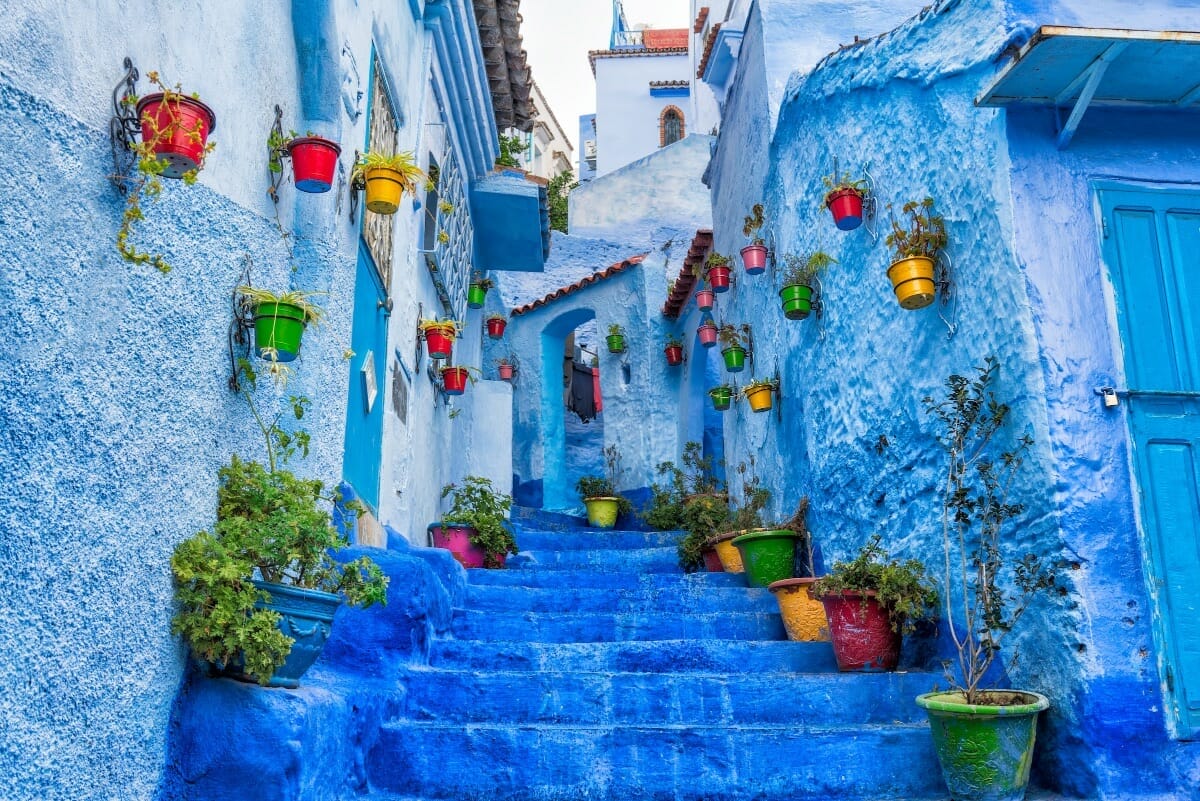
Tangier and Chefchaouen, the Blue Town
In the morning your licensed guide leads you through the medina of Tangier to the American Legation, the building Sultan Moulay Suliman gave to the United States in 1821, the first American public property abroad and the only US National Historic Landmark in a foreign country. Higher up, the Kasbah Palace, once the residence of the city's governors, looks out over the Strait. After lunch your private driver takes the road south into the Rif to Chefchaouen. Ali ibn Rashid founded the town in 1471 as a small fortress, and after the fall of Granada in 1492 Andalusi families built quarters here in the style of the city they had left. Your licensed guide walks you through blue-washed lanes to the rammed-earth kasbah and down to Ras el Maa, the spring outside the walls, where the water runs cold from the mountain. Logistics: Tangier to Chefchaouen by road, a little over 2 hours through the Rif, private driver, with a licensed guide in Tangier and in Chefchaouen.

Day Eleven
Fez, the Medina of the Marinids
Your private driver leaves Chefchaouen after breakfast for the road south to Fez, where your licensed guide meets you at Bab Bou Jeloud, the main western gate of Fes el Bali. Idris I founded the city in 789, families expelled from Córdoba after the rebellion of 817 and 818 settled one bank of the river, and UNESCO inscribed the medina in 1981. Inside, a car-free warren of about 300 hectares carries donkeys, handcarts and the call to prayer. The Marinid sultan Abu Inan Faris built the Bou Inania Madrasa between 1350 and 1355, and zellij tilework and carved cedar doors with interlacing star patterns line its courtyard. Traditional sources record Fatima al-Fihri as the founder of al-Qarawiyyin in 859. In Place Seffarine, the coppersmiths still work beside the Qarawiyyin library, and from a terrace above the Chouara tannery, the stone vats show the poppy red, indigo and henna orange of the dyes. Logistics: Chefchaouen to Fez by road, about 4 hours on the N13, private driver, then an afternoon on foot in the medina with your licensed guide.

Day Twelve
Ifrane and the Cedars of the Middle Atlas
Your private driver climbs south out of Fez into the Middle Atlas to Ifrane, about 60 kilometers away and more than 1,650 meters above sea level. The French administration built the town in 1929 as a summer hill station, and its pitched roofs and gardens earned it the local nickname of Little Switzerland, a place of snow in winter and mild summers. Al Akhawayn University, an English-language university with an American curriculum, opened here in 1995. Outside the town, the Cèdre Gouraud forest of Atlas cedar holds groups of Barbary macaques, an endangered species living wild in these forests, and the air smells of resin and cold earth. Tonight you stay in a chalet-style resort among the cedars, with a fire in the lounge on cool evenings. Logistics: Fez to Ifrane by road, about 60 kilometers, private driver, with time in the cedar forest on the way.
Day Thirteen
Bin el Ouidane, the Ouzoud Falls and Marrakech
Day thirteen is the longest road day of the journey, and your private driver breaks it into three parts. The first runs south along the Middle Atlas to Bin el Ouidane, where an arch dam, 133 meters high and completed in 1953, holds back the El-Abid River in a long mountain lake. The second reaches the Ouzoud Falls, which drop 110 meters in three tiers through olive groves, with old olive and grain mills at the top and Barbary macaques along the paths. Lunch comes from a family kitchen by the falls, a slow-cooked tagine with bread from the oven. The last stretch crosses the plains to Marrakech, about 150 kilometers away, where you arrive by late afternoon. Logistics: Ifrane to Ouzoud by road, about 5 hours with the stop at Bin el Ouidane, then Ouzoud to Marrakech, about 2 hours 30 minutes, private driver.

Day Fourteen
Marrakech: The Medina and Jemaa el-Fnaa
The Almoravids founded Marrakech in 1070 to 1072, and UNESCO inscribed its medina in 1985. Your licensed guide starts at the Koutoubia, the mosque the Almohad caliph Abd al-Mu'min founded in 1147 and rebuilt around 1158. Its minaret rises 77 meters, it likely inspired the Giralda you saw in Seville, and you admire it from the square outside, since the mosque remains a place of worship for Muslims. Deeper in the medina, the Ben Youssef Madrasa, rebuilt by the Saadian sultan Abdallah al-Ghalib in 1564 and 1565, gathers 130 student rooms around a carved courtyard. The souks follow, lane by lane, with spice stalls, leather and brass. At dusk you reach Jemaa el-Fnaa, the square UNESCO honors as intangible heritage, where storytellers, Gnaoua musicians and food sellers work well into the night. Our team suggests a sunset toast on a rooftop terrace before dinner. Logistics: a walking day in the medina with your licensed guide, and your private driver for the transfers to and from the hotel.

Day Fifteen
Marrakech: Choose Your Day
Today follows your interests, and your licensed guide shapes it with you the evening before. Garden lovers start at the Jardin Majorelle, the garden the painter Jacques Majorelle began in 1923 and painted in the blue now named after him, with the Yves Saint Laurent Museum, opened in October 2017, a few steps away. History lovers head to the Bahia Palace, which the grand vizier Si Musa began in the 1860s and his son Ba Ahmed expanded until 1900, with about 150 rooms under painted cedar ceilings. Nearby, in the Saadian Tombs, Sultan Ahmad al-Mansur lies in the Chamber of the Twelve Columns, carved from Carrara marble. Food lovers spend the day on a market visit, a cooking lesson and a long Moroccan lunch, and travelers who want open horizons head out to the stony Agafay desert for an evening where it suits your party. Logistics: Marrakech with your licensed guide and private driver, the plan set the evening before around your party's interests.

Day Sixteen
Farewell from Marrakech
The morning stays free for a last breakfast in a riad courtyard, the sound of a fountain and a final glass of mint tea. Your private driver collects you from the hotel with time to spare for your flight home from Marrakech-Menara airport. Our team arranges VIP airport assistance on request, covering meet-and-greet and help through the terminal. Travelers who want more time often add nights in the Atlas Mountains, the Agafay desert or the Atlantic town of Essaouira, and our team plans those extensions on the same private basis. Logistics: hotel to Marrakech-Menara airport by road with your private driver, with VIP assistance by prior arrangement.
How many days do you need for Spain and Morocco?
Sixteen days gives you the classic Spain of Madrid and Andalusia and a full north-to-south crossing of Morocco without rushing either country. The Spanish half takes eight days, with two nights in each of four bases, and the Moroccan half takes eight days by road from Tangier to Marrakech. With ten to twelve days, most travelers either choose one country or fly from Madrid to Marrakech and leave out the north of Morocco. With three weeks, the same route takes extra nights in Fez and Marrakech, or adds the Sahara.
How do you get from Spain to Morocco on a private tour?
On this route your licensed driver takes you from Marbella to Tarifa, and a fast ferry crosses the Strait of Gibraltar to Tangier in about 1 hour. Baleària runs up to six departures on the route, and the ferry docks at Tanger Ville, in the heart of the city and a short walk from the medina, where a private driver meets you. Other crossings exist. Ferries from Algeciras land at Tanger Med, about 40 kilometers outside the city, in about 1 hour 30 minutes to 2 hours, and a ferry from Gibraltar reaches Tanger Med on the days it sails. Flights also link Spain and Morocco, and our team plans the crossing around your dates.
What is the best route for Spain and Morocco in one trip?
The simplest route flies into Madrid and home from Marrakech, so you never double back. It runs south through Andalusia, crosses the Strait at its narrowest point and continues south through Morocco by road. Starting in Spain lets you see the Giralda in Seville and the Alhambra in Granada before you reach their Moroccan relatives in Fez and Marrakech. A high-speed train covers the long leg from Madrid to Seville, and our article on Spain’s high-speed trains to Seville explains the rail options. The route also runs in reverse, from Marrakech to Madrid, if your flights suit the reverse direction.
This Spain and Morocco route, the three-country journey, or a single-country trip?
Choose this route if you want Madrid and Andalusia in depth and a Morocco seen from the road, from the Rif and Fez to the Middle Atlas and Marrakech. The 16-day Spain, Portugal and Morocco journey covers three countries in the same sixteen days. It starts in Barcelona, adds Lisbon, Sintra and Évora, and flies from Madrid to Marrakech for four nights based in one city, with the Agafay desert and the Atlas Mountains as day trips. It suits travelers who want Portugal too and prefer flights to road days. This page suits travelers who want two countries with more time in each.
If you have already seen Spain, a Morocco-only journey gives the country more room. The 10-day Imperial Cities of Morocco journey runs from Casablanca through Rabat, Meknes, Volubilis and Fez to Marrakech, and the 7-day Northern Morocco journey covers Rabat, Asilah, Tangier, Chefchaouen and Fez in a week. With a week for Spain alone, the 7-day Andalusia journey serves you better than a rushed version of this route, and the 16-day Spain journey spends the same sixteen days entirely in Spain. Our multi-country journeys page collects the other combinations, and our team adjusts any of them to your dates.
Who this journey suits
Couples who want two countries and two continents in one trip, with the ease of a private guide and driver. Families with teenage or adult children, who share a vehicle and set their own hours. Friends traveling together as a private party, who want one plan and one point of contact across both countries. Travelers drawn to Islamic art and architecture, from the Alhambra and the Giralda to the madrasas of Fez and Marrakech. Returning visitors to Spain who want to add Morocco for the first time with a team on hand. Your guide is glad to advise on suitability before booking for anyone who prefers shorter walking days.
The people behind the route
Our team selects guides as much for how they read a room as for what they know. In Granada, where your dates allow, Israel, one of our licensed guides, leads the Alhambra day. He paces the Nasrid Palaces around your timed entry and takes the Generalife and the Alcazaba at the speed your party sets.
In Madrid, where your dates allow, Anna, an art historian, leads our Prado visits. She builds the visit around the painters you care about, from Velázquez and Goya to the Flemish rooms. Our guide to highlights of the Prado gives a sense of the collection before you go. In Morocco, a licensed guide leads each city, and a private driver stays with you on the road from Tangier to Marrakech.
What the 16-day journey costs and what it includes
The 16-day route starts from $16,984 per person, double occupancy. The from-price covers fifteen nights in deluxe four-star properties selected for comfort, location and service. Five-star luxury properties are available by request. It includes licensed guides for the visits described, a licensed driver for airport and road transfers in Spain, a private driver for the road days in Morocco, and timed entry to the Alhambra’s Nasrid Palaces.
Four things move the price: the season, the hotel category, the size of your private party, and added experiences such as the cooking class and flamenco evening in Seville, a cooking lesson in Marrakech or a night in the Agafay desert. Magical Private Travel maintains excellent ratings on Trustpilot and Google’s independent review platforms.
To shape this route around your dates and your party, speak with our team about your Spain and Morocco journey.
Frequently asked questions about the Spain and Morocco itinerary
How much does a private 16-day Spain and Morocco tour cost?
This 16-day route starts from $16,984 per person, based on two people sharing a room. The from-price covers the route as written: fifteen hotel nights, licensed guides for the visits described, a licensed driver for the road transfers in Spain and a private driver for the road days in Morocco, with the full list of inclusions set out in your written quote. Four things move the price. The season matters most, since hotel rates rise and fall through the year. Five-star hotels raise it. Party size changes it, because the guide and driver serve the whole party, so larger private parties pay less per person. Added experiences, such as the flamenco evening in Seville, a cooking lesson in Marrakech or a night in the Agafay desert, add to it. Our team sends a written quote for your dates and party before you commit.
When is the best time to travel to Spain and Morocco?
March to early June and late September to early November suit this route best. Spain’s weather agency, AEMET, records average daily highs in Seville of about 23°C (74°F) in April and 26°C (79°F) in October, and about 36°C (97°F) in July. Granada averages about 21°C (69°F) in April and 23°C (74°F) in October. Fez and Marrakech follow the same pattern, with warm springs and autumns and hot midsummer afternoons, and Ifrane in the Middle Atlas stays cooler than both because of its altitude of more than 1,650 meters. Summer departures work well with early starts and long lunches indoors in the heat of the afternoon. Winter brings cooler days, shorter light and the quietest hotels of the year, and snow on the cedars of Ifrane. During Ramadan the rhythm of Moroccan cities changes, and our article on traveling in Morocco during Ramadan explains how our team plans around it.
How does the ferry from Spain to Tangier work?
On day nine your licensed driver takes you from Marbella to Tarifa, about 1 hour 20 minutes by road. The fast ferry leaves from the port in the center of Tarifa and crosses to Tanger Ville in about 1 hour. Baleària runs up to six departures on the route, so the crossing fits around a late breakfast or an early lunch. At its narrowest point the Strait of Gibraltar separates Europe and Africa by about 14 kilometers, and the crossing gives you the open water between two continents from the deck. The ferry docks in the heart of Tangier, a short walk from the medina, and your private driver meets you at the port with the luggage plan already set. Your planner confirms the sailing time once your dates settle, and our team sends the details with your final documents.
Do US citizens need a visa for Morocco?
US citizens need no visa for tourist stays in Morocco of 90 days or fewer, according to the US State Department. The passport must hold at least six months of validity on entry to Morocco and one blank page for each entry stamp. Spain sits in the Schengen area, so the Spanish half of the route follows the Schengen rules for short stays. Citizens of other countries should check the rules for their own passport, and our team is glad to point you to the right official source. Keep your passport with you on the ferry day, since you leave Spain at Tarifa and enter Morocco at Tangier, and your private driver waits for you once the formalities finish. Our team lists the documents for each border with your final travel papers.
Who looks after us in Morocco, and are the guide and the driver the same person?
In both countries the guide and the driver are two different people. In Spain a licensed guide leads the visits and a licensed driver handles the vehicle and the road transfers. In Morocco a licensed guide leads the medinas of Tangier, Chefchaouen, Fez and Marrakech, and a private driver stays with you on the road from Tangier to Marrakech. The split lets your guide focus on the site and your driver focus on the road, and it means the guide in each city knows the city in depth. Our team in Marrakech stays on hand throughout the Moroccan half. Where your dates allow, named specialists such as Israel at the Alhambra and Anna at the Prado lead those visits in Spain.
Why does the route stop in Chefchaouen, and is there a faster way to Fez?
Chefchaouen sits in the Rif mountains on the natural road between Tangier and Fez, and it adds the blue town, founded in 1471, to the route for the cost of one night. The road from Tangier takes a little over 2 hours, and the road on to Fez about 4 hours on the N13, so day eleven gives Fez an afternoon with your licensed guide. For travelers who want more time in Fez, our team offers a faster version on request. Your private driver takes the highway from Tangier straight to Fez, Chefchaouen drops out, and Fez gains a second night and a full day in the medina. Our pages on Chefchaouen and Fez set out each place in more depth, and your planner helps you choose.
How long are the road days in Morocco?
Most Moroccan road days run between 2 and 4 hours. Tangier to Chefchaouen takes a little over 2 hours, and Chefchaouen to Fez about 4 hours. Fez to Ifrane covers about 60 kilometers. Day thirteen is the longest day of the journey, about 5 hours from Ifrane to the Ouzoud Falls with a stop at the Bin el Ouidane lake, then about 2 hours 30 minutes from the falls to Marrakech. Your private driver plans stops for coffee, photographs and lunch by the falls, and the three nights in Marrakech follow, so the next morning starts with no luggage. If your party prefers shorter road days, our team splits the Middle Atlas section with a second night on the way.
Do we need to book the Alhambra in advance?
Yes, and our team handles it. Every Alhambra ticket including the Nasrid Palaces carries a fixed entry time for the palaces, and the Alhambra’s own ticket office asks visitors to arrive on time for the slot. Visitors buying or collecting tickets at the monument must do so at least one hour before their assigned time. For these reasons our team books the timed entry as soon as you confirm your dates, and your licensed guide plans the rest of day six around it, usually with the Alcazaba and the Generalife before or after the palaces. Where your dates allow, Israel, one of our licensed guides in Granada, leads the visit. The Generalife gardens and the Alcazaba sit within the same complex and need no separate journey.
Is a night in the desert an option on this route?
Yes. The Agafay desert, a stony desert of hills and plateaus outside Marrakech, works well as an evening or an overnight on day fifteen, where it suits your party, with dinner under canvas in a private tent camp with real beds. The Sahara dunes lie much farther away, beyond the High Atlas, and a Sahara visit adds several days to the route. Our article on Agafay or the Sahara compares the two, and our Agafay desert page describes the camps and the views. Your planner prices either option alongside the main route so you see the full cost at once.
Does this journey suit families or travelers with limited mobility?
Families travel this route often, because a private guide and driver set the pace around the youngest and the oldest in the party. Teenagers tend to respond to the Alhambra, the ferry crossing, the Barbary macaques of the Middle Atlas and the evening in Jemaa el-Fnaa. Several days involve walking on cobbled streets, slopes and steps, especially in Toledo, the Albaicín, old Ronda, Chefchaouen and the car-free medina of Fez. Your guide is glad to advise on suitability before booking, and our team adjusts walking routes, adds vehicle time between sites, or shortens days where it helps. Our page on accessible travel sets out how our team plans for travelers who need step-free routes or extra support.
We have a selected list of vetted four- and five-star hotels that are well located and have been enjoyed by our past customers and ourselves. The selection of hotels depends on your preferences, and our expert travel planners will be happy to talk to you about the possibilities for your tailor-made private luxury tour.
What's Included
A Very Personalized Itinerary, Just For You and Your Schedule
Hand-Picked Ultra-Luxury & Boutique Hotel Options
Insider Experiences + Inspiring Sightseeing + Magical Upgrades
Private Touring with Your Own Personal Expert Guide
Private Airport & Train Station Luxury Transfers
Full Breakfasts + Food & Wine Tasting Options
Your Choice of Activities on “Design Your Days”®
Expert Advice, Restaurant Ideas & Reservations
24/7 Support & Concierge Service from Spain, Portugal & Morocco
Magical is an award-winning luxury travel agency
Private journeys with soul & stories
Excellent independent reviews
Only five journeys per country, per week
Hidden gems, insider fun & vetted hotels
Your private guide, deluxe vehicle & flexible pace
24/7 concierge-style support
We handle everything — you live the dream
American Precision, Local Soul
Our Unforgettable Trips Are Tailored Just For You
Hi from Spain & Portugal,
Along with our local partners across Portugal, Spain, Morocco and beyond we believe that our clients deserve the truly tailor-made private luxury trips, not generic "one-size-fits-all" plans.
Get inspired with our sample trips then get in touch about an expert-made personalized custom luxury itinerary, just for you.
Kind regards,
Dan O'Beirne & the MPT team
Request a Quote