


Spain · Private and tailor-made
Jewish Spain, from Seville to Barcelona
Stand in Córdoba's synagogue on Calle Judíos, one of three medieval synagogues still standing in Spain.
Suggested length
10 days
Price guide
From $9,984 per person, excl. flights, based on two sharing
Includes hotels, private guiding, experiences and transfers
When
April to mid-June and September to October
or call +1 (727) 699-5439
A planner replies within one business day
American precision with local expertise · Planned from Europe since 2002 · Nearly 17,000 American travelers · Never cancelled a journey
Seville’s Santa Cruz quarter was once the city’s medieval Jewish quarter, and its lanes are where this private Jewish heritage tour of Spain begins. It follows Sephardic history north to Barcelona. In Córdoba you stand in the synagogue on Calle Judíos, built in 1315 and one of three medieval synagogues still standing in Spain. From Madrid you visit Toledo’s Sinagoga del Tránsito, Santa María la Blanca and the Museo Sefardí, and taste mazapán, the city’s almond marzipan, at an old-town obrador. Barcelona’s Call leads to Girona, with the Bonastruc ça Porta centre and the Museum of Jewish History, and on to Besalú. Private guides and drivers go with you. Your planner shapes each day around the stories you came for.
Walk the lanes of Santa Cruz, Seville’s medieval Jewish quarter, with your licensed guide.
Stand in the prayer hall of the Córdoba synagogue on Calle Judíos, which dates from 1315.
Visit the Sinagoga del Tránsito and Santa María la Blanca in Toledo.
Visit the Prado with Ana, an art historian, where your dates allow, Madrid.
Walk Girona’s Call to the Bonastruc ça Porta centre and the Museum of Jewish History.
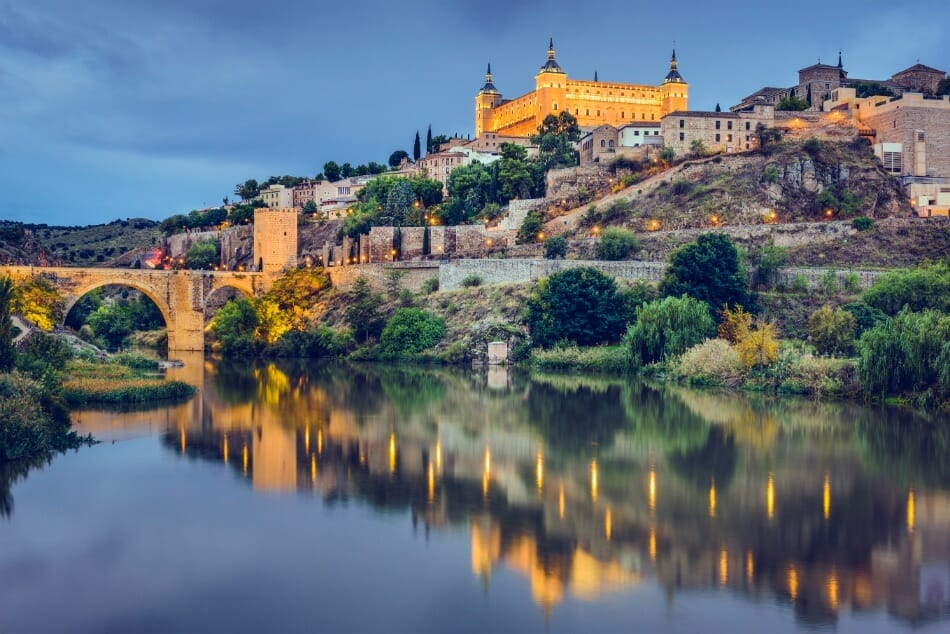
Taste Mazapán de Toledo at an obrador in the old city of Toledo.

“We love to tailor-make trips you’ll talk about for years, built on our local relationships & story-worthy experiences.” – Magical’s American founder, in Europe since 1998, culinary enthusiast & world traveler.






A Journey Designed Just for You
Our resident experts wrote this itinerary as a starting point, and your planner shapes every day around your interests, pace and travel style.
What do our American travelers say?
The 10-day Jewish heritage itinerary of Spain at a glance
You spend two nights in Seville, one in Córdoba, three in Madrid and three in Barcelona. Our team books three high-speed train legs: Seville to Córdoba, about 45 minutes, Córdoba to Madrid, about 1 hour 45 minutes, and Madrid to Barcelona, about two and a half hours. Two road days complete the picture. Your licensed driver takes you from Madrid to Toledo, about 50 minutes each way, and from Barcelona to Girona, about an hour and a half, with Besalú on the same day.
You stay in deluxe four-star properties selected for comfort, location and service. Five-star luxury properties are available by request. Each hotel sits within walking distance of the old quarter you visit, so most touring starts at the front door.
Spring and autumn suit this route best. AEMET’s 1981 to 2010 averages give Seville a mean high of about 23°C (74°F) in April and 26°C (79°F) in October, while Madrid’s Retiro station averages about 18°C (65°F) in April and 26°C (80°F) in September. Barcelona sits close to these figures, with mean highs of about 18°C (64°F) in April and 22°C (72°F) in October. Seville averages 36°C (97°F) in July, so our team shifts summer touring there to the morning and evening.
Licensed guides we work with on this route include Andrés and Rosario in Seville, David and Paco in Córdoba, Ana and Alicia in Madrid, Melanie in Toledo, and Irma and Mariona in Barcelona. Each is a highly educated local expert who cares about the people in their group. We request your guides by name, and your planner confirms who leads each day once your dates are set.
Why the route runs from Seville to Barcelona
The route reads Spain’s Jewish history through the buildings which survive it, and it follows the high-speed rail line from south to north so you spend your time in synagogues and museums, not on highways. Andalusia comes first. Seville’s Jewish community settled in Santa Cruz after Ferdinand III took the city in 1248, and Seville became the seat of the Inquisition’s first tribunal in 1481. Córdoba adds the city of Maimonides and the only surviving medieval synagogue in Córdoba.
Castile follows. Toledo keeps two medieval synagogues within a short walk of each other, and Madrid gives you the Prado, where a single painting records the auto de fe held in the Plaza Mayor in 1680. Catalonia closes the journey. Barcelona’s Call and Girona’s Call preserve the street plans of two Catalan communities, and the Museum of Jewish History in Girona sets the whole story in order, from the first Jewish families in the late 9th century to the decree of 1492. Ending in Girona gives you the clearest summary of everything you have seen in the days before.
Journey at a glance
Length
10 days
From
$9,984 per person, double occupancy
Route
Seville, Córdoba, Madrid, Toledo, Barcelona, Girona, (Departs Daily On A Private Basis... If Available)
Your planner adjusts every day to your dates.

Day One
Arrive in Seville: Santa Cruz, the Old Judería
Your licensed driver meets you at Seville airport and takes you to a hotel within walking distance of the cathedral. In the late afternoon your licensed guide walks you through Santa Cruz, the neighborhood where Ferdinand III gathered Seville's Jewish community after he took the city in 1248. Calle Santa María la Blanca marks one edge of the old quarter, and the church of Santa María la Blanca stands on the site of a former synagogue. Orange trees shade the small squares, and the narrow lanes stay cool into the evening. Dinner tonight is at your own pace, with a reservation from our team if you wish. Logistics: arrival at Seville airport, private transfer with a licensed driver, walking tour on foot.
Day Two
Seville: The Alcázar, the Cathedral and Triana
Your licensed guide opens the day at the Alcázar, where Pedro I of Castile built his Mudéjar palace in the 1360s. Arabic inscriptions in the Patio de las Doncellas call him sultan, and artisans from Toledo made the wooden doors of the Hall of Ambassadors. Next door, the cathedral rises on the site of the city's great mosque, and its Giralda bell tower began as the mosque's minaret. After lunch you cross the river to Triana. Beneath the Mercado de Triana, the Castillo de San Jorge interpretation centre shows the foundations of the castle where the Inquisition kept its Seville headquarters from 1481 to 1626. Upstairs, the market hall fills with the calls of fishmongers and fruit sellers. Logistics: a full day in Seville on foot with your licensed guide, licensed driver on hand for the crossing to Triana.

Day Three
Córdoba: The Synagogue and the City of Maimonides
Our team books the high-speed train from Seville, and your licensed driver meets you at Córdoba station. In the old Jewish quarter your licensed guide leads you along Calle Judíos to the synagogue, which a Hebrew foundation inscription dates to 1314 and 1315. The prayer hall covers no more than 40 square meters, and its carved stucco carries verses from the Psalms in Hebrew. A few steps away, a seated statue of Maimonides, born in Córdoba in 1138 by his own account, stands in the Plaza de Tiberíades. In the afternoon your guide walks you through the Mosque-Cathedral, a mosque which became the city's cathedral in the 13th century. Lunch brings salmorejo, Córdoba's cold cream of tomato, bread, garlic and olive oil. Logistics: Seville to Córdoba by high-speed train, about 45 minutes, booked by our team, overnight in Córdoba.
Day Four
Córdoba to Madrid: The Royal Palace and the Plaza Mayor
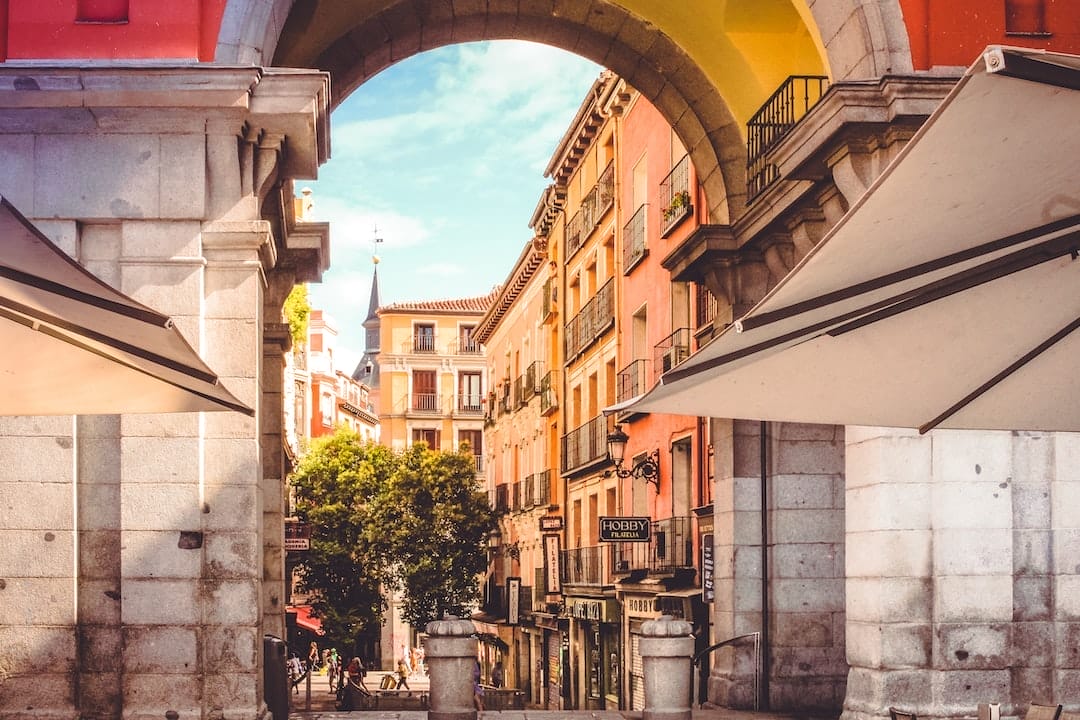
Our team books the morning high-speed train to Madrid, and your licensed driver meets you on arrival. Your licensed guide starts at the Royal Palace, which stands on the site of the old Alcázar, which burned on Christmas Eve 1734. From there you walk to the Plaza Mayor, which Juan Gómez de Mora completed in 1619. Here 237 balconies look down on the bronze equestrian statue of Philip III. On 30 June 1680 the Inquisition held an auto de fe in this square, and more than half of the accused were conversos charged with keeping Jewish practice in secret. Your guide links this date to a painting you see on Day Six. The evening is yours, with a dinner reservation from our team if you wish. Logistics: Córdoba to Madrid by high-speed train, about 1 hour 45 minutes, licensed driver for station and hotel transfers.
Day Five
Toledo: Two Synagogues and the Museo Sefardí
Your licensed driver takes you to Toledo, which UNESCO inscribed on the World Heritage List in 1986, and your licensed guide leads the day. In the Sinagoga del Tránsito, Samuel ha-Leví, treasurer to King Pedro I, raised a prayer hall around 1357 with Mudéjar stucco, Hebrew and Arabic inscriptions and a carved wooden ceiling. The building now houses the Museo Sefardí, Spain's national museum of Sephardic culture, which opened to the public in 1971. A short walk away, Santa María la Blanca shows five aisles of horseshoe arches on octagonal piers. The building dates from the late 12th or early 13th century and became a church in the early 15th century. Before you leave, your guide stops at an obrador for Mazapán de Toledo, a protected sweet whose rules call for almonds as about half its weight. Logistics: Madrid to Toledo by road, about 50 minutes each way, licensed driver, return to Madrid in the evening.

Day Six
Madrid: The Prado with an Art Historian
Today belongs to the Museo del Prado. Where your dates allow, Ana, an art historian who leads our Prado visits, takes you through the galleries. You stand before Las Meninas, which Velázquez painted in 1656 on a canvas more than three meters tall, and The Executions, which Goya painted in 1814 to record the shootings in Madrid after the uprising of 1808. Ana then brings you to the Auto-da-fé in the Plaza Mayor of Madrid, which Francisco Rizi painted in 1683 to record the ceremony of 30 June 1680 in the square you crossed on Day Four. Charles II and his mother, Mariana of Austria, preside from beneath a canopy. After lunch you walk in the Retiro park beside the museum, or return to your hotel to rest. Logistics: a full day in Madrid on foot, licensed driver for hotel transfers.
Day Seven
Madrid to Barcelona: The Call and the Gothic Quarter
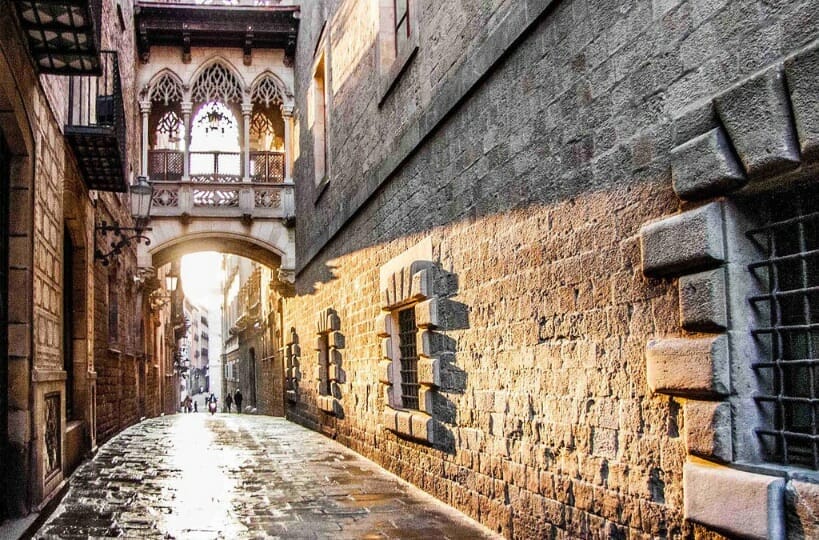
Our team books the high-speed train to Barcelona, and your licensed driver meets you at Sants station. In the afternoon your licensed guide walks you into the Call, the medieval Jewish quarter in the lanes behind the cathedral. The word call first meant a narrow alley, and only later the whole neighborhood. Where opening days allow, you visit MUHBA El Call, a branch of the Barcelona History Museum inside the house of Jucef Bonhiac, a veil weaver, with walls from the 13th and 14th centuries. Your guide explains how the attacks of 1391 broke up the community in these streets. The cathedral bells mark the hours as you walk. Logistics: Madrid to Barcelona by high-speed train, about two and a half hours, booked by our team, licensed driver for station and hotel transfers.
Day Eight
Girona and Besalú: The Call and the Bonastruc ça Porta Centre
Your licensed driver takes you north to Girona, where your licensed guide walks you through the narrow lanes of the Call, home to a Jewish community from the late 9th century until 1492. At the Bonastruc ça Porta centre, on the site of the city's last synagogue, the Museum of Jewish History displays gravestones from the medieval cemetery on Montjuïc and the remains of a mikveh which archaeologists uncovered in 2014. The centre carries the Catalan name of Nahmanides, the rabbi and scholar born in Girona in 1194. Lunch looks over the Onyar river, where the riverside houses have worn a palette of 29 colors since 1982. In the afternoon you continue to Besalú, where a medieval bridge of seven arches crosses the Fluvià and 36 steps lead down to a vaulted mikveh which came to light in 1964. Logistics: Barcelona to Girona by road, about an hour and a half, then about 40 minutes on to Besalú with your licensed driver, return to Barcelona in the evening.
Day Nine
Barcelona: La Boqueria and a Private Cooking Session
Your licensed guide takes you into La Boqueria, the market off La Rambla whose first written mention dates to 1217 and whose metal roof went up in 1914. You choose produce alongside a private chef, then cook together in a nearby kitchen, with Catalan wines poured as the dishes come together. The meal ends with a dessert such as crema catalana, a custard flavored with lemon zest and cinnamon under a crust of burnt sugar. In the late afternoon you keep time for a last walk, or your guide arranges a visit to Gaudí's Sagrada Família on request. Logistics: a full day in Barcelona on foot, licensed driver for transfers, cooking session hosted by a private chef.

Day Ten
Departure from Barcelona
Your last breakfast in Barcelona brings pa amb tomàquet, toasted country bread rubbed with fresh tomato, olive oil and salt. Your licensed driver collects you at the hotel at the time our team sets around your flight and takes you to Barcelona airport. Our team stays in touch until you board. Logistics: hotel to Barcelona airport by private transfer with your licensed driver.
What does a Jewish heritage tour of Spain include?
A Jewish heritage tour of Spain includes the medieval synagogues still standing in Toledo and Córdoba, the former Jewish quarters of Seville, Barcelona and Girona, and the two museums which interpret Sephardic history in depth, the Museo Sefardí in Toledo and the Museum of Jewish History in Girona. On this route a licensed guide explains each site in its own period. You see Santa Cruz in Seville, where Ferdinand III settled the city’s Jewish community after 1248, the Córdoba synagogue of 1315, Samuel ha-Leví’s synagogue in Toledo from around 1357, and the Bonastruc ça Porta centre on the site of Girona’s last synagogue. Art and food complete the picture, from Rizi’s painting of the 1680 auto de fe at the Prado to Toledo marzipan and a market morning in Barcelona.
How many days do you need for a Sephardic Spain tour?
Ten days covers the essential Sephardic sites of Spain at a comfortable pace, with time in Andalusia, Castile and Catalonia and only two road days, both day trips from a city base. Seven days works for travelers who focus on Andalusia and Toledo and skip Catalonia, while twelve to fourteen days leave room for Segovia, Granada or an extension into Portugal. Our team plans the ten days around three high-speed trains, so the longest single journey, Madrid to Barcelona, takes about two and a half hours in a reserved seat.
Which Spanish cities still have medieval synagogues?
Toledo keeps two medieval synagogues, the Sinagoga del Tránsito and Santa María la Blanca, and Córdoba keeps one, the synagogue on Calle Judíos, which dates from 1315. Segovia preserves its former main synagogue, which served the community until 1410 and became the church of Corpus Christi in 1419, though a fire in 1899 destroyed most of the original building. Girona and Barcelona show their history through the street plans of their Calls and through museums on historic sites. Seville, Córdoba, Toledo, Segovia and Barcelona all belong to the Red de Juderías de España, the network of Spanish cities which protects and presents Jewish heritage.
This 10-day Spain route, the Spain and Portugal journey, or the Portugal journey?
Choose this ten-day route if Spain is the focus and you want the major Sephardic sites in one trip: Seville, Córdoba, Toledo, Madrid, Barcelona and Girona, linked by fast trains. It suits a first visit to Spain and gives every city enough time for a full guided day.
Choose the 14-day Spain and Portugal Jewish heritage journey if you want Lisbon, Tomar and Porto alongside the Spanish cities. Four extra days add the story of Portugal’s Jewish community, which took in many families from Spain after 1492. If Portugal itself is the priority, the 10-day Portugal journey with Jewish heritage covers Lisbon, Évora, Castelo de Vide, Belmonte and Porto, and serves travelers who have already seen Spain.
If Jewish heritage forms one interest among several, the Highlights of Spain 10-day private tour keeps Madrid, Andalusia and Barcelona with a broader focus, and the 7-day Andalusia private tour suits a shorter trip centered on Seville, Córdoba and Granada. Our team adds Jewish heritage stops to either one on request, and you find every route among our private tours of Spain.
Who this journey suits
Families and multigenerational groups tracing Sephardic roots, or marking a bar or bat mitzvah year with a journey of meaning, find a clear story here, told city by city. Grandparents and grandchildren share the same guided days, and our team paces walking and rest to fit the oldest and youngest travelers.
Couples and friends with a strong interest in history, art and architecture appreciate the depth of the guiding and the balance of museums, old quarters and food. Synagogue groups, Jewish community organizations and other affinity groups travel the route as a private party, with a licensed guide for the whole group.
Travelers new to Spain see its major cities in ten days, while returning visitors find a new reading of places they already know. Your guide is glad to advise on suitability before booking, especially for the stepped lanes of Girona’s Call and the descent into the Besalú mikveh.
The people behind the route
In Madrid, where your dates allow, Ana, an art historian, leads our Prado visits. She builds the morning around the paintings which speak to this route, Rizi’s Auto-da-fé in the Plaza Mayor of Madrid above all, and sets them beside Velázquez and Goya. Our page on the highlights of the Prado gives a sense of her approach.
American travelers who add Granada meet Israel, one of our licensed guides in Granada, where your dates allow. He leads our Alhambra days, and the Alhambra connects directly to this journey: Isabella and Ferdinand issued the decree of expulsion there on 31 March 1492. In every other city on the route, a licensed guide who lives in the city leads your touring, with a licensed driver alongside.
What the 10-day journey costs and what it includes
The journey starts from $9,984 per person, double occupancy, for the route as written. The price covers nine nights in deluxe four-star hotels in the old quarters, a licensed guide for each touring day, a licensed driver for every transfer and both road day trips, the Prado visit with Ana where your dates allow, the private cooking session in Barcelona, and full planning and support from our team.
Several choices move the price. Five-star hotels, your travel dates, a larger or smaller party, extra days for Segovia or Granada, and additional private experiences each change the total. Our team sends a detailed quotation once we know your dates, your party and your interests.
When you are ready to plan, speak with our team about your dates, your party and the parts of Sephardic Spain you most want to see.
Frequently asked questions about the Jewish heritage tour of Spain
What was the Alhambra Decree, and when did Spain expel its Jewish community?
Isabella I of Castile and Ferdinand II of Aragon issued the Alhambra Decree in Granada on 31 March 1492, less than three months after the surrender of Granada. The decree gave Jews in their kingdoms four months, until 31 July 1492, to convert to Christianity or leave. Many families crossed into Portugal, and others sailed to North Africa, Italy and the Ottoman Empire, where the Sephardic communities kept their Spanish language and traditions for centuries. On this route you see the decree’s effect in place after place. Girona’s last synagogue passed to the cathedral canons in July 1492, Córdoba’s synagogue became a hospital, and Toledo’s Sinagoga del Tránsito went to the Order of Calatrava. The Spanish state formally revoked the decree on 16 December 1968, a symbolic act which your guide discusses in Madrid.
Which synagogues does the 10-day tour visit?
The route visits three medieval synagogue buildings and two former synagogue sites. In Toledo you see the Sinagoga del Tránsito, which Samuel ha-Leví founded around 1357 and which now houses the Museo Sefardí, and Santa María la Blanca, a five-aisled hall of horseshoe arches from the late 12th or early 13th century. In Córdoba you visit the synagogue on Calle Judíos, which dates from 1315 and opens to visitors six days a week. In Seville the church of Santa María la Blanca occupies a former synagogue, and in Girona the Bonastruc ça Porta centre stands on the site of the last synagogue, in use from 1435 to 1492. Your guide also points out the Hebrew inscriptions, the women’s galleries and the stucco work in each building, so you learn to read the architecture as you go.
Who was Maimonides, and why does Córdoba remember him?
Moses ben Maimon, known as Maimonides, gave his own birth year as 1138 in Córdoba, though some sources give 1135. His family left the city after the Almohads took Córdoba in 1148, and he lived in Fez and later settled in Fustat, Old Cairo, where he served as court physician to Saladin and, for periods, as head of the Egyptian Jewish community. He died there in 1204. He wrote the Mishneh Torah, a full code of Jewish law in Hebrew, and The Guide for the Perplexed, a work of philosophy in Judeo-Arabic. Córdoba honors him with a seated statue in the Plaza de Tiberíades, which the city inaugurated on 7 June 1964, a few steps from the synagogue. Your licensed guide places his life in the context of the city’s Caliphate period and its scholarship, and explains how his work reached Jewish communities across the Mediterranean.
Who was Bonastruc ça Porta, and why does the route end in Girona?
Bonastruc ça Porta is the Catalan name of Moses ben Nahman, known as Nahmanides or the Ramban, born in Girona in 1194. He led the Girona community as its rabbi, and in 1263 he defended Judaism in a public disputation before King James I of Aragon. He left for the Land of Israel in 1267 and founded a synagogue in Jerusalem’s Old City, which still carries his name. Girona named its Jewish heritage centre after him. The route ends in Girona because the Museum of Jewish History, inside the centre, tells the complete story of the Catalan communities in eleven sections, from origins and family life to the synagogue, the cemetery, the expulsion and the Inquisition. After nine days of individual sites, the museum ties the journey together.
Does the itinerary include Segovia or Granada?
The standard route covers Seville, Córdoba, Toledo, Madrid, Barcelona and Girona, and our team adds Segovia or Granada on request. Segovia works well as a day out from Madrid. Your licensed guide takes you through the Jewish quarter to the former main synagogue, now the church of Corpus Christi, and to the Centro Didáctico de la Judería in the house of Abraham Seneor, a rabbi and financier at the court of Isabella and Ferdinand. From the Puerta de San Andrés, a path leads down to the medieval Jewish cemetery on the hillside of El Pinarillo. Granada adds two nights and the Alhambra, where the monarchs issued the decree of 1492. Where your dates allow, Israel, one of our licensed guides in Granada, leads the Alhambra day. Either addition extends the trip and changes the price.
How do we travel between the cities?
Our team books three high-speed trains for the long legs: Seville to Córdoba, about 45 minutes, Córdoba to Madrid, about 1 hour 45 minutes, and Madrid to Barcelona, about two and a half hours. A licensed driver meets you at every station and takes you and your luggage to the hotel, and another licensed driver handles the day trips by road, about 50 minutes each way between Madrid and Toledo and about an hour and a half from Barcelona to Girona. Your licensed guide and your licensed driver are always two separate people, so the guide gives you full attention while the driver concentrates on the road. You never carry bags through a station or wait for a taxi.
When is the best time to take this tour?
April to mid-June and September to October give the most comfortable walking weather across all three regions. AEMET’s 1981 to 2010 averages put Seville’s mean high at about 23°C (74°F) in April and 26°C (79°F) in October, Madrid at about 18°C (65°F) in April and 26°C (80°F) in September, and Barcelona at about 18°C (64°F) in April and 22°C (72°F) in October. July in Seville averages 36°C (97°F), so summer trips start touring early and rest through the afternoon. Winter brings cooler days and quieter museums, a good fit for travelers focused on synagogues and collections. Our team also checks site opening days for your dates, since the Córdoba synagogue and MUHBA El Call in Barcelona keep limited weekly hours.
Is this tour only for Jewish travelers?
No. The route suits anyone interested in Spanish history, and many travelers book it for the depth it brings to cities they planned to visit anyway. Seville, Córdoba, Toledo, Madrid and Barcelona appear on most first trips to Spain, and this journey shows them through a lens most visitors miss: the medieval Jewish communities who lived, worked and studied in these streets for centuries. Your licensed guides present the history plainly and in context, with the Christian and Muslim history of each city alongside. Travelers of every background leave with a fuller understanding of how Spain took shape, and the food, art and architecture days give the trip balance.
We keep a list of vetted four- and five-star hotels, well located and enjoyed by our past travelers and by our own team.
Examples for each overnight stop on this route. Choose a deluxe boutique hotel or a five-star stay, and your travel advisor matches each night to your wishes, the season and availability.
Seville
Boutique: Hotel Casa 1800 Sevilla. A 19th-century mansion with a patio and a rooftop pool facing the cathedral and Giralda.
Five-star: Hotel Alfonso XIII. Built for the 1929 Ibero-American Exposition, a neo-Mudéjar palace of tiles and arches near the Alcázar.
Córdoba
Boutique: Balcón de Córdoba. A century-old house with three patios and a rooftop terrace looking at the Mezquita.
Five-star: Hospes Palacio del Bailío. A 16th-century palace built over Roman remains, seen through the glass floor of its patio.
Madrid
Boutique: Tótem Madrid. A restored 19th-century building on Calle Hermosilla, steps from Serrano’s shops in the Salamanca district.
Five-star: Rosewood Villa Magna. Reopened by Rosewood in 2021 on the Paseo de la Castellana, with a leafy front garden.
Barcelona
Boutique: H10 Casa Mimosa. A listed 19th-century Modernista building on Pau Claris, on the same block as Gaudí’s La Pedrera.
Five-star: Mandarin Oriental Barcelona. A former bank on Passeig de Gràcia turned into a calm, pale-toned hotel with a rooftop pool.
What's Included
A Very Personalized Itinerary, Just For You and Your Schedule
Hand-Picked Ultra-Luxury & Boutique Hotel Options
Insider Experiences + Inspiring Sightseeing + Magical Upgrades
Private Touring with Your Own Personal Expert Guide
Private Airport & Train Station Luxury Transfers
Full Breakfasts + Food & Wine Tasting Options
Your Choice of Activities on “Design Your Days”®
Expert Advice, Restaurant Ideas & Reservations
24/7 Support & Concierge Service from Spain, Portugal & Morocco
Magical is an award-winning luxury travel agency
Private journeys with soul & stories
Excellent independent reviews
Only five journeys per country, per week
Hidden gems, insider fun & vetted hotels
Your private guide, deluxe vehicle & flexible pace
24/7 concierge-style support
We handle everything — you live the dream
American Precision, Local Soul
Our Unforgettable Trips Are Tailored Just For You
Hi from Europe,
Along with our local partners across Portugal, Spain, Morocco and beyond we believe that our clients deserve the truly tailor-made private luxury trips, not generic "one-size-fits-all" plans.
Get inspired with our sample trips then get in touch about an expert-made personalized custom luxury itinerary, just for you.
Kind regards,
Dan O'Beirne & the MPT team
Request a Quote