


Spain · Private and tailor-made
The Highlights of Spain, Privately
Walk the Alhambra's Court of the Lions after the doors close to the public.
By arrangement · How private access worksSuggested length
10 days
Price guide
From $10,484 per person, excl. flights, based on two sharing
Includes hotels, private guiding, experiences and transfers
When
April to June and September to October
or call +1 (727) 699-5439
A planner replies within one business day
Planned from Madrid since 2002 · 15,000+ travelers · Never cancelled a journey
First visits to Spain call for the classics, and this 10-day private tour of Spain gathers them in Madrid, Toledo, Seville, Granada and Barcelona. At the Prado, Anna, our art historian, shows you Las Meninas where your dates allow. Seville holds the Alcázar, the Santa Cruz quarter and an intimate evening of flamenco. In Granada you watch the sun set over the Albaicín, and by arrangement you walk the Court of the Lions after the doors close to the public. Barcelona ends the trip with a market morning, a paella you cook beside a chef and a day with Gaudí at the Sagrada Família and Park Güell. Any day can move, stretch or slow down to suit you.
Walk the Nasrid Palaces and the Court of the Lions with Israel, Granada.
Study Las Meninas and Goya’s Black Paintings with Anna, an art historian, at the Prado, Madrid.
Visit the synagogue of El Tránsito and the cathedral on a guided day in Toledo.
Hear the palmas and footwork of an intimate flamenco performance, Seville.
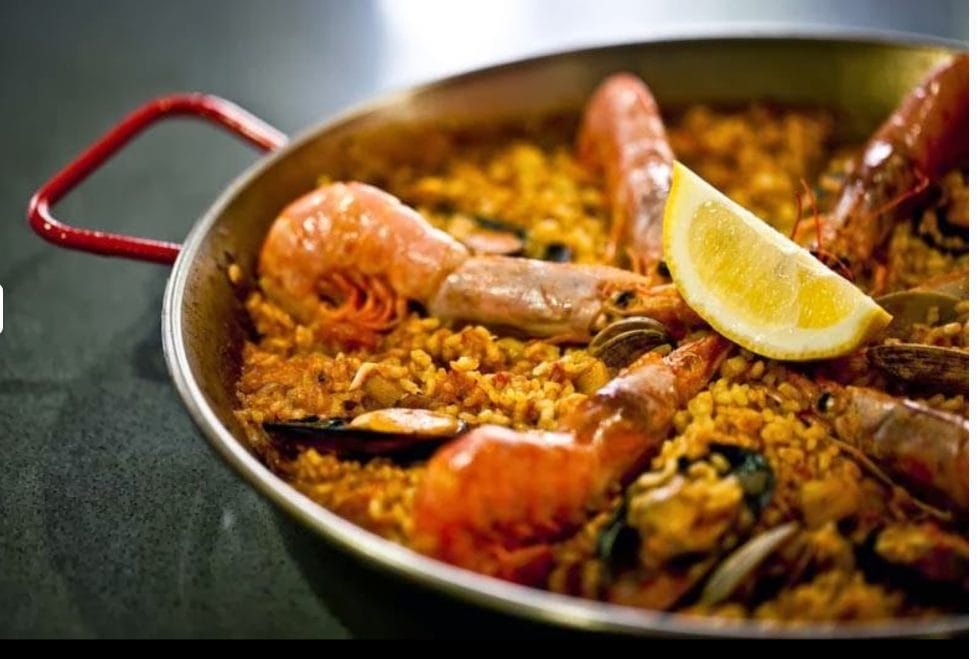
Taste a paella you cook beside a chef after a market visit, Barcelona.
Visit the Sagrada Família, where Gaudí worked for the last 43 years of his life, Barcelona.

“We love to tailor-make trips you’ll talk about for years, built on our local relationships & story-worthy experiences.” – Magical’s American founder, in Europe since 1998, culinary enthusiast & world traveler.







A Journey Designed Just for You
Our resident experts wrote this itinerary as a starting point, and your planner shapes every day around your interests, pace and travel style.
What do our travelers say?
The 10-day Spain itinerary at a glance
The route uses four bases and nine nights: two in Madrid, three in Seville, two in Granada and two in Barcelona. These are the four cities first-time visitors most often ask our team about, and the route gives each of them at least one full day with no transfer ahead of you. Seville holds the extra night because it carries the most on the ground, with the Alcázar, the cathedral, the Santa Cruz quarter, Triana and an evening of flamenco.
Three kinds of connection link the bases. A high-speed train runs from Madrid’s Atocha station to Seville’s Santa Justa in about 2 hours 30 minutes, on the line Spain opened in 1992. A licensed driver then takes the road east from Seville to Granada, about 240 kilometers and about 2 hours 40 minutes. From Granada a direct flight reaches Barcelona in about 1 hour 30 minutes, and a licensed driver meets you at El Prat. The day in Toledo runs by road from Madrid, about 1 hour each way.
Spring and autumn suit the route best. Spain’s state weather agency, AEMET, records average daily highs in Seville of about 23°C (74°F) in April and 26°C (79°F) in October, against 36°C (97°F) in July. Granada averages about 21°C (69°F) in April and 23°C (74°F) in October, Madrid about 18°C (65°F) and 19°C (67°F), and Barcelona about 18°C (64°F) and 22°C (72°F). Summer departures work with early starts and long indoor lunches in Andalusia, and our team plans the hours around the season.
Why the route runs from Madrid to Barcelona
A first visit to Spain makes the most sense when the story runs in order, and this route follows it. Madrid opens with the royal capital and the paintings of Velázquez and Goya. Toledo shows how Christian, Jewish and Muslim communities shared one city for centuries. Seville and Granada carry the Andalusia of the Almohads and the Nasrids, from the Giralda, the minaret the Almohads completed in 1198, to the Alhambra. Barcelona closes the trip with Gaudí and the Mediterranean.
The route flies into Madrid and home from Barcelona, so you never double back. Each connection uses the mode best suited to the distance: the train covers the fast run south, a driver takes the Andalusian road with a coffee stop, and the flight replaces the longest leg of the trip, about 680 kilometers from Granada to Barcelona. Ten days gives each of the four cities a proper visit, without the extra mountain days of a longer route. Our note on whether to fly into Madrid or Barcelona explains the airport logic in more detail.
Journey at a glance
Length
10 days
From
$10,484 per person, double occupancy
Route
Madrid, Córdoba, Seville, Granada, Barcelona - (Departs Daily on a Private Basis)
Your planner adjusts every day to your dates.
Day One
Madrid: The Prado, Puerta del Sol and Plaza Mayor
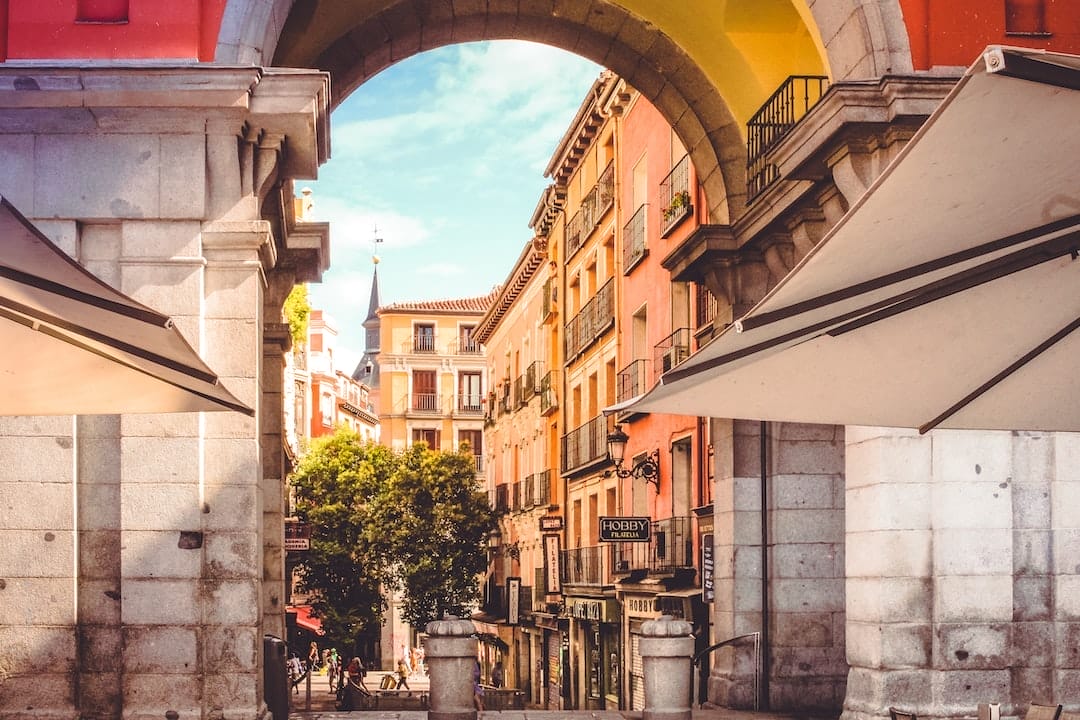
Your licensed driver meets you at Madrid-Barajas airport and brings you to a hotel in the historic center. After a rest, the afternoon starts at the Prado, which opened to the public in 1819. Where your dates allow, Anna, an art historian, leads a focused visit built around two paintings: Velázquez's Las Meninas, from 1656, and Goya's Black Paintings, fourteen murals he painted on the walls of his house outside Madrid between about 1820 and 1823 and the Prado has held since 1881. At dusk your licensed guide walks you to Puerta del Sol, where a plaque on the ground marks Kilometer Zero, the point from which Spain numbers its road distances. Plaza Mayor follows, completed in 1619, with 237 balconies above its arcades, and the bars around it serve the bocadillo de calamares, a hot roll filled with fried squid rings. The walk ends at the Royal Palace, the official residence of the royal family, with 3,418 rooms. Logistics: Madrid-Barajas airport to central Madrid by road with your licensed driver, then a light afternoon on foot with your licensed guide.
Day Two
A Guided Day in Toledo, Then Tapas in Madrid
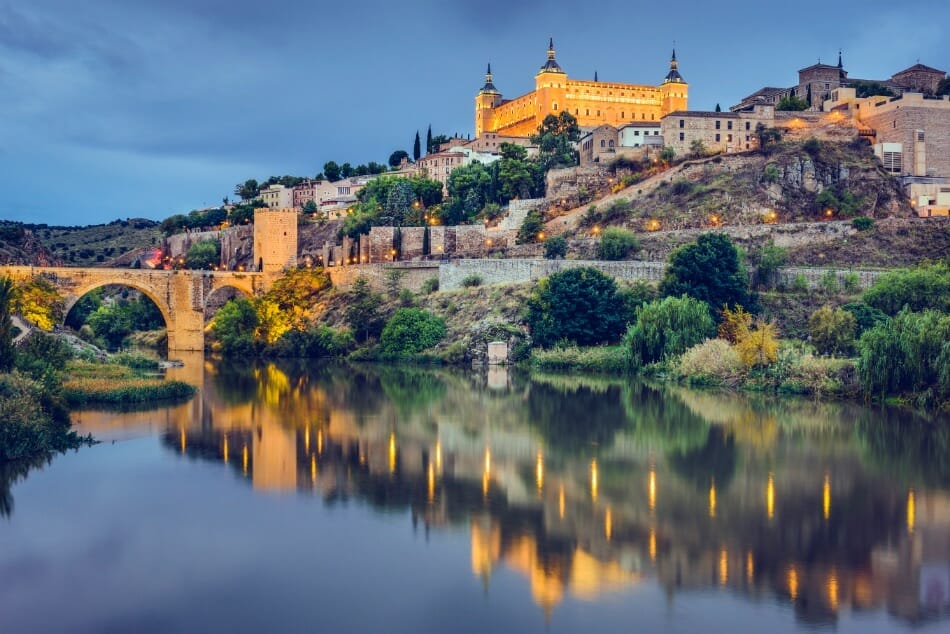
Toledo stands on a steep rock above the Tagus River, about 70 kilometers south of Madrid, and UNESCO inscribed the old city in 1986 as the city of three cultures, where synagogues, mosques and churches share the same narrow streets. Your licensed guide leads the day. Work on the Gothic cathedral began in 1226, and behind the high altar Narciso Tomé and his four sons created the Transparente, a Baroque altarpiece, between 1729 and 1732. A few streets away, Samuel ha-Levi, treasurer to King Peter of Castile, sponsored the synagogue of El Tránsito in 1357, and its prayer hall keeps Nasrid-style stucco under a carved Mudéjar ceiling. The building houses the Sephardic Museum today. Before you leave, taste mazapán de Toledo, an almond sweet with a first written record from 1512. Back in Madrid, a tasting of tapas and Spanish wines leads into a dinner reservation. Logistics: Madrid to Toledo by road, about 1 hour each way, licensed driver, with a licensed guide for the day in Toledo.

Day Three
South to Seville by High-Speed Train
Your licensed driver collects you and your luggage for Madrid's Atocha station. The high-speed line to Seville opened in 1992 and runs about 472 kilometers south, through Córdoba, to Santa Justa, with trains running at up to 300 kilometers an hour. On arrival a second licensed driver takes you to one of Seville's best-known sites before check-in, a first stop our team keeps as a surprise. The rest of the afternoon stays free to settle in. In the evening, where you wish, our team reserves a table, and a tapa of espinacas con garbanzos, the Andalusian spinach and chickpea stew spiced with cumin, makes a good first taste of the city. Logistics: Madrid to Seville by high-speed train, about 2 hours 30 minutes, and a licensed driver meets you at Santa Justa.

Day Four
Seville: The Alcázar, the Cathedral and Santa Cruz
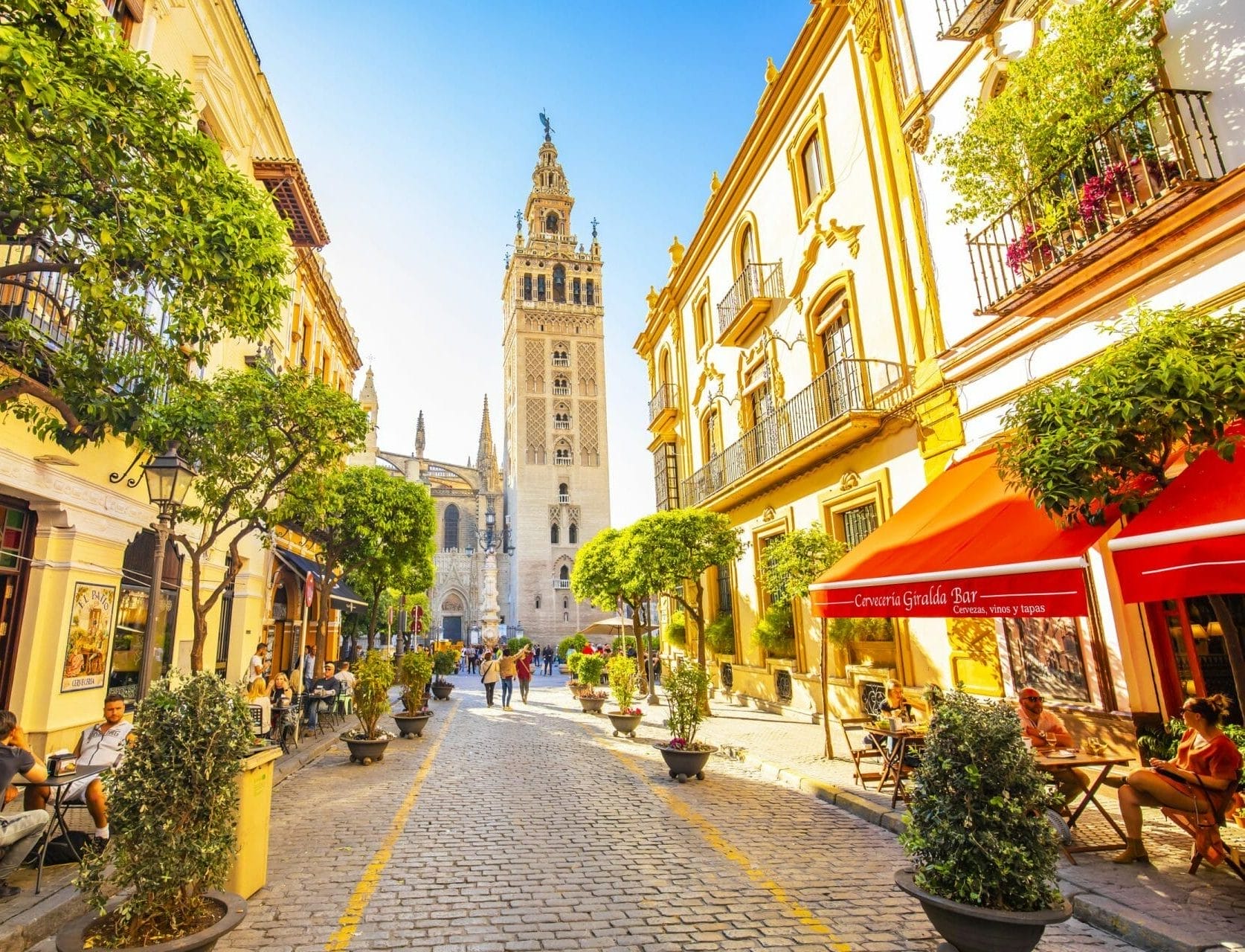
UNESCO inscribed Seville's cathedral, Alcázar and Archivo de Indias together in 1987, and your licensed guide spends the day among them. At the Real Alcázar, King Pedro I built his Mudéjar palace in the 1360s, and inscriptions on its walls carry the dates 1364 and 1366. In the Patio de las Doncellas a long reflecting pool runs between sunken flowerbeds, a garden archaeologists uncovered between 2002 and 2005 after more than four centuries under a marble floor. Across the square, work on the cathedral began in 1402, and Christopher Columbus lies inside. The Giralda, once the minaret of the Almohad great mosque, carries the Giraldillo, a weathervane set on its belfry in 1568. The afternoon ends in Santa Cruz, the medieval Jewish quarter, where the painter Murillo lived. Logistics: a walking day in Seville's old center with your licensed guide, with your licensed driver on call for hotel transfers.
Day Five
Plaza de España, Triana and an Evening of Flamenco
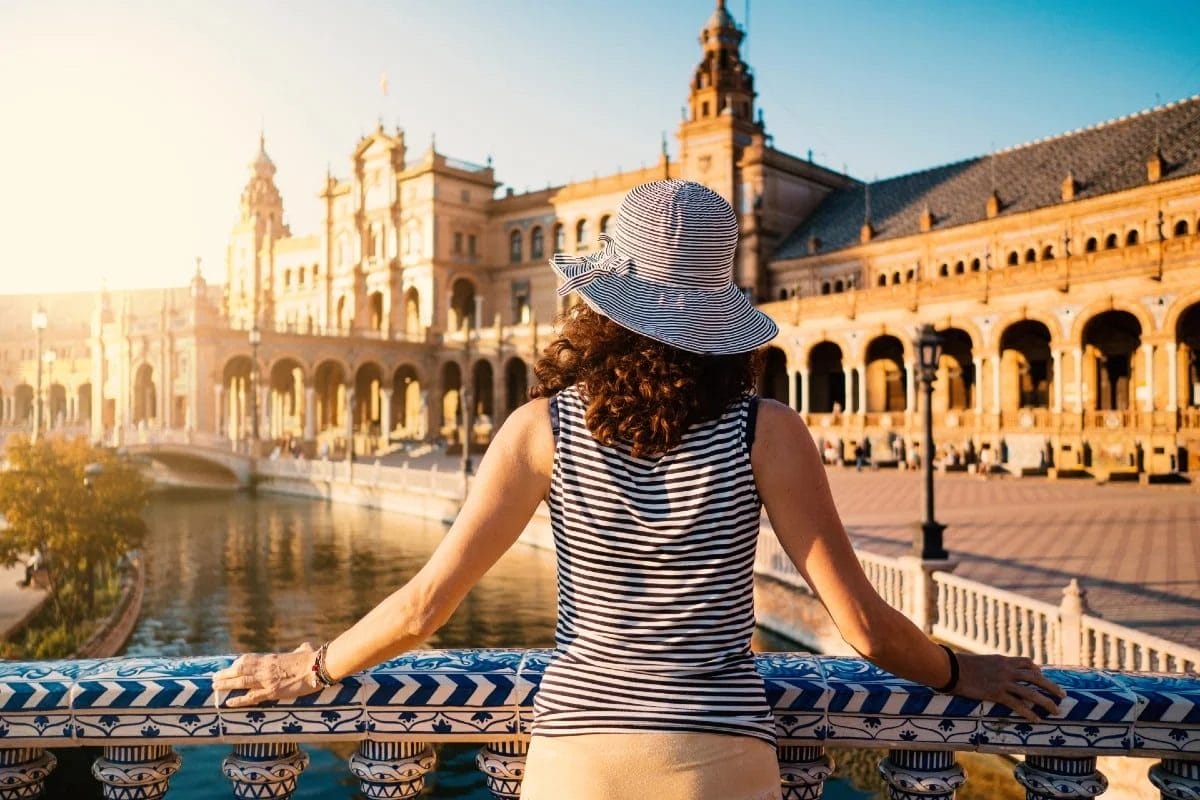
Day five holds a choice, and your planner arranges it around your party. The classic first-visit choice starts in María Luisa Park, which the Infanta Luisa Fernanda gave to the city in 1893, and continues to the Plaza de España, which Aníbal González designed for the Ibero-American Exposition of 1929. Tiled alcoves line its curving walls, one for each Spanish province, and bridges cross its moat. Food lovers cross the river instead to the Mercado de Triana, which has stood since 1823 on the site of the Castle of San Jorge, for a market walk and, where it suits your party, a cooking lesson and lunch with a chef. Active travelers choose a guided e-bike ride along the Guadalquivir past the Torre del Oro, which the Almohad governor of Seville had built in 1220 and 1221 to control the river. In the evening you take your seats for an intimate flamenco performance, where the palmas, the rhythmic handclaps, carry the beat under the guitar and the song. UNESCO recognized flamenco as intangible heritage in 2010. Logistics: a day in Seville on foot, by e-bike or in a chef's kitchen with your licensed guide, and a licensed driver for the evening transfer to and from the flamenco venue.

Day Six
Seville to Granada and the Albaicín at Sunset
Your licensed driver takes the road east across Andalusia to Granada, the last capital of the Nasrid emirs. In the afternoon your licensed guide leads you up into the Albaicín, the hillside quarter across the Darro River from the Alhambra, which UNESCO added to the Alhambra listing in 1994 as one of the best illustrations of Moorish town planning. Its narrow lanes keep the Moorish street plan, and behind high walls the cármenes, the traditional houses of Granada, hide private gardens and small orchards. The walk climbs to the Mirador de San Nicolás, beside a 16th-century church raised on the remains of a mosque. At sunset the light turns the walls of the Alhambra gold against the Sierra Nevada. Where it suits your party, our team reserves a dinner table with a view of the palace. Logistics: Seville to Granada by road, about 2 hours 40 minutes, licensed driver, then an afternoon on foot with your licensed guide.
Day Seven
The Alhambra and the Generalife
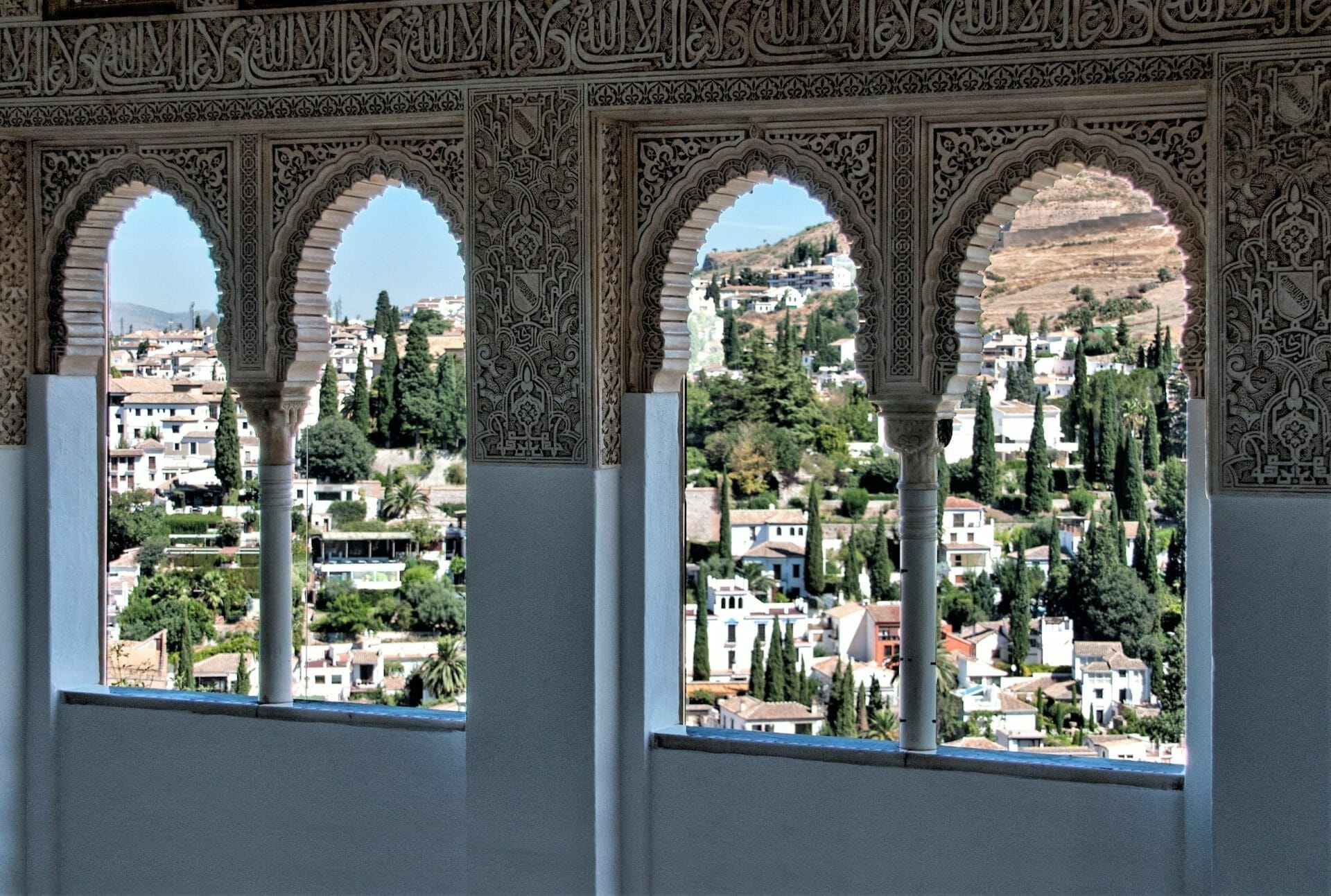
Muhammad I, the first Nasrid emir, began the Alhambra on the Sabika hill in 1238, and its Arabic name means the red one, after the color of its walls. Where your dates allow, Israel, one of our licensed guides in Granada, leads the day. The visit starts in the Alcazaba, the oldest part of the complex, where the flag of Ferdinand and Isabella first rose over the Torre de la Vela on 2 January 1492. Inside the Nasrid Palaces, the Hall of the Ambassadors served as the sultan's throne room, and its wooden ceiling of 8,017 pieces represents the seven heavens. In the Court of the Lions, twelve marble lions carry the fountain of the palace Muhammad V began in 1362. The day ends in the Generalife, the summer palace of the emirs, where jets of water arc across the long channel of the Patio de la Acequia. Logistics: our team books the timed entry to the Nasrid Palaces in advance, the visit runs on foot, and your licensed driver handles the transfers to and from the hill.

Day Eight
To Barcelona: A Market Visit and a Paella Lesson
A short morning flight brings you to Barcelona, and the afternoon goes to food. With your licensed guide you walk a traditional market such as La Boqueria, on La Rambla, which traces its first stalls to 1217, or Santa Caterina, where Enric Miralles and Benedetta Tagliabue set a multicolored ceramic roof over the stalls like a wave in 2005. You pass counters of seafood, fruit and cured ham, and then a chef welcomes you into the kitchen to cook a paella beside you, with Spanish wines at the table. Paella takes its name from the Valencian word for the wide, shallow pan, and the prize sits at the bottom: the socarrat, the layer of toasted rice. Logistics: Granada to Barcelona by direct flight, about 1 hour 30 minutes, and a licensed driver meets you at El Prat.

Day Nine
Gaudí's Barcelona: The Sagrada Família and Park Güell
Work on the Sagrada Família began in 1882, and Gaudí took over in 1883 and gave the project the last 43 years of his life, until his death in 1926. He lies in the crypt. Your licensed guide starts at the Nativity Façade, the first façade completed, where stone turtles at the base stand for time and chameleons at the sides for change. Inside, the columns branch like trees to carry the roof, and Pope Benedict XVI consecrated the basilica in 2010. In the afternoon your licensed driver takes you up the Turó del Carmel to Park Güell, which Gaudí built for the industrialist Eusebi Güell between 1900 and 1914. On the way up, Gaudí's multicolored mosaic salamander, known as El Drac, the dragon, greets visitors, and Josep Maria Jujol's long, curving bench edges the main terrace. From the Hill of the Three Crosses the view runs over the city to the Mediterranean. UNESCO lists Park Güell and the Nativity Façade and crypt among Gaudí's seven World Heritage works. Logistics: a full day in Barcelona with your licensed guide, and your licensed driver handles the transfers between the basilica, Park Güell and the hotel.
Day Ten
Departure from Barcelona
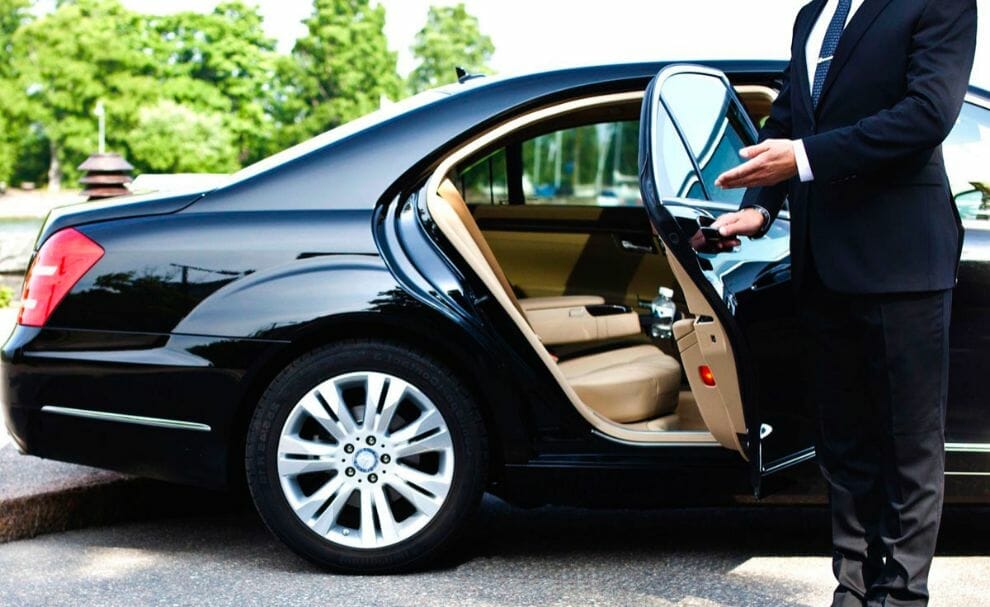
The morning stays free for a last walk along Passeig de Gràcia, past Gaudí's Casa Batlló and Casa Milà, or a coffee on a terrace in the Eixample. Barcelona-El Prat airport lies about 15 kilometers southwest of the city center, and your licensed driver collects you from the hotel with time to spare for your flight home. Our team arranges VIP airport assistance on request. Travelers who want more time in Iberia often extend from Barcelona into Portugal or Morocco, and our team plans those extensions on the same private basis. Logistics: hotel to Barcelona-El Prat airport by road with your licensed driver, with VIP assistance by prior arrangement.
What is the best 10-day itinerary for a first trip to Spain?
A strong 10-day itinerary for a first trip to Spain covers Madrid, Andalusia and Barcelona from four bases, with two or three nights in each. This route spends days one and two in Madrid with the Prado and Toledo, days three to five in Seville with the Alcázar, the cathedral, a choice day and flamenco, days six and seven in Granada with the Albaicín and the Alhambra, and days eight and nine in Barcelona with a market, a paella lesson and Gaudí. It flies into Madrid and home from Barcelona, with one high-speed train, one road day and one short flight between the bases, so the time goes to the cities rather than the connections.
Is 10 days enough to see Spain?
Ten days is enough to see Spain’s four best-known cities well, with at least two nights in each, and it leaves out what a longer trip adds: the white villages and Ronda, Córdoba, Segovia, Montserrat and the coast. If your list stops at Madrid, Toledo, Seville, Granada and Barcelona, ten days fits it without strain. If you also want the mountain villages between Seville and Granada or a day at Montserrat, the 12-day private luxury tour of Spain adds those two days. With a week, choosing two regions serves you better than a rushed version of all three.
Should a first trip to Spain include both Madrid and Barcelona?
For most first-time visitors, yes, because the two cities show two different sides of Spain and an open-jaw flight plan makes both easy. Madrid holds the royal collections of the Prado and the plazas of the capital, and it sits a high-speed train ride from Andalusia. Barcelona brings Gaudí, Catalan food and the Mediterranean. On this route the flight from Granada to Barcelona replaces the long run across the country, so adding Barcelona costs no extra travel day. Travelers who prefer one big city and more of the south often choose the 7-day Madrid and Andalusia journey instead, and our article on flying into Madrid or Barcelona sets out the airport choice.
This 10-day route, the 12-day route or the romantic journey?
Choose this route for a first visit to Spain in ten days, when you want Madrid, Toledo, Seville, Granada and Barcelona at a steady pace and a flight home from the Mediterranean. The 12-day private luxury tour of Spain follows the same arc from Madrid to Barcelona and adds a third night in Madrid, a drive through the white villages, two nights in clifftop Ronda and a day at Montserrat. It suits travelers with two more days who enjoy mountain roads, small towns and wine country.
The 10-day romantic tour of Spain serves couples better. It follows a slower route through the south for honeymoons and anniversaries and leaves Barcelona out, so all ten days go to Madrid and Andalusia. Choose it if the two of you would rather spend extra evenings in Seville and Granada than take a flight to Catalonia.
With a week, the 7-day Madrid and Andalusia journey covers Madrid, Seville and Granada, and the 7-day Madrid, Segovia and Barcelona journey pairs the two big cities. With ten days and a wish for the sea more than the Alhambra, the 10-day Spain journey with Barcelona, Mallorca and Madrid trades Andalusia for an island. All of them start from the Spain destination page, and our team adjusts any of them to your dates.
Who this journey suits
First-time visitors to Spain who want the four classic cities in one trip, with tickets, hotels and transfers in one set of hands. Couples and friends traveling together as a private party, who share a guide and driver and set their own hours. Families with teenage or adult children, who tend to respond to the Alhambra, the flamenco evening and the paella lesson. Travelers who come for art and architecture, from Velázquez and Goya to the Alhambra and Gaudí. Returning visitors who saw one city years ago and now want the full classic route. Your guide is glad to advise on suitability before booking for anyone who prefers shorter walking days.
The people behind the route
Two named specialists lead the visits first-time visitors tend to talk about most afterward. In Granada, where your dates allow, Israel, one of our licensed guides, leads the Alhambra day. He builds the day around your timed entry to the Nasrid Palaces, starts in the Alcazaba with its view over the city, and ends among the water channels of the Generalife.
In Madrid, where your dates allow, Anna, an art historian, leads our Prado visits. On a first visit she keeps the time focused on a few paintings, such as Las Meninas and Goya’s Black Paintings, so the museum stays manageable on your arrival day. Our guide to highlights of the Prado gives a sense of the collection before you go.
What the 10-day journey costs and what it includes
The 10-day route starts from $10,484 per person, double occupancy. The from-price covers nine nights in deluxe four-star properties selected for comfort, location and service. Five-star luxury properties are available by request. It includes licensed guides for the visits described, a licensed driver for airport and road transfers, and timed entry to the Alhambra’s Nasrid Palaces.
Four things move the price: the season, the hotel category and room type, the size of your private party, and the options you choose, such as the cooking lesson in Triana, the e-bike ride in Seville or an extra night in Barcelona. Magical Private Travel maintains excellent ratings on Trustpilot and Google’s independent review platforms.
To shape this route around your dates and your party, speak with our team about your first 10 days in Spain.
Frequently asked questions about the 10-day Highlights of Spain itinerary
How much does the 10-day Highlights of Spain private tour cost?
This 10-day route starts from $10,484 per person, based on two people sharing a room. The from-price covers the route as written: nine hotel nights, licensed guides for the visits described and a licensed driver for every road transfer, with the full list of inclusions set out in your written quote. Four things move the price. The season matters most, since hotel rates rise and fall through the year. Five-star hotels raise it. Party size changes it, because the guide and driver serve the whole party, so larger private parties pay less per person. Added options, such as the cooking lesson in Triana or the e-bike ride in Seville, add to it. Our team sends a written quote for your dates and party before you commit.
When is the best time for a first trip to Spain on this route?
April to June and September to October suit this route best. Spain’s weather agency, AEMET, records average daily highs in Seville of about 23°C (74°F) in April and 26°C (79°F) in October, and about 36°C (97°F) in July. Granada averages about 21°C (69°F) in April and 23°C (74°F) in October, Madrid about 18°C (65°F) and 19°C (67°F), and Barcelona about 18°C (64°F) in April and 22°C (72°F) in October. Summer departures work well with early starts in Seville and Granada, long lunches indoors and evenings outside, and Barcelona stays milder, with July highs of about 28°C (82°F). Winter brings cooler days and shorter light, and our team plans each day around the season you choose.
Do we need to book the Alhambra in advance?
Yes, and our team handles it. Every Alhambra ticket including the Nasrid Palaces carries an assigned entry time for the palaces, and the Alhambra’s own ticket office asks visitors to arrive on time for the slot. Visitors buying or collecting tickets at the monument must do so at least one hour before their assigned time, and every visitor shows an original passport or ID card to enter. For these reasons our team books the timed entry as soon as you confirm your dates, and your licensed guide plans the rest of day seven around it, with the Alcazaba and the Generalife before or after the palaces. Where your dates allow, Israel, one of our licensed guides in Granada, leads the visit. The sunset view from the Mirador de San Nicolás on day six needs no ticket, since the viewpoint sits on a public square in the Albaicín.
How do we travel between Madrid, Seville, Granada and Barcelona?
On this route a high-speed train runs from Madrid to Seville, a licensed driver covers Seville to Granada by road, and a direct flight links Granada to Barcelona. The train takes about 2 hours 30 minutes on the line Spain opened in 1992 and arrives at Santa Justa, where a licensed driver waits. The road day to Granada runs about 240 kilometers, about 2 hours 40 minutes, with time for a coffee stop. The flight from Granada to Barcelona takes about 1 hour 30 minutes, and a licensed driver meets you at El Prat. In every city a driver handles the luggage between station, airport and hotel. Our article on Spain’s high-speed trains to Seville explains the rail options in more depth.
Are the guide and the driver the same person?
In Spain they are two different people. A licensed guide leads the visits, and a licensed driver handles the vehicle and the road transfers. Your licensed guide changes from city to city, so your guide in Seville differs from your guide in Granada or Barcelona, and each one knows the city in depth. The driver stays with you on the road day from Seville to Granada and meets you at the station or airport when you change regions. This split lets your guide focus on the site and your driver focus on the road. Where your dates allow, named specialists lead two of the visits: Israel at the Alhambra, and Anna, an art historian, at the Prado.
Which airports should we fly into and out of?
Fly into Madrid-Barajas and home from Barcelona-El Prat. An open-jaw plan of this kind avoids doubling back across Spain at the end of the trip. Barcelona-El Prat lies about 15 kilometers southwest of the city center, and your licensed driver meets you at arrivals in Madrid and takes you to the airport in Barcelona on day ten. Our team arranges VIP airport assistance in Madrid and Barcelona on request, covering meet-and-greet and help through the terminal, a welcome start after an overnight flight. Our article on flying into Madrid or Barcelona compares the two airports in more detail, and our team aligns the itinerary with your flight times once you have them.
What happens on the open day in Seville?
Day five holds one choice, and your planner arranges it around your party before you travel. The classic option walks María Luisa Park to the Plaza de España, built for the Ibero-American Exposition of 1929, with its tiled alcoves for each Spanish province. Food lovers cross the river to the Mercado de Triana for a market walk and, where it suits your party, a cooking lesson and lunch with a chef. Active travelers take a guided e-bike ride along the Guadalquivir past the Torre del Oro. Whatever the daytime choice, the evening brings an intimate flamenco performance, and a licensed driver handles the transfer to and from the venue. Families often split the day, with the park in the morning and a long lunch in Triana.
How flexible is the 10-day route?
The route works as a starting point, and your planner shapes it around your party. Common changes include a stop in Córdoba on the road from Seville to Granada, a morning in El Retiro park, or a walk through Madrid’s Barrio de las Letras, where Cervantes lies in the Convent of the Barefoot Trinitarians and Lope de Vega’s house survives as a museum. Our article on Córdoba or Ronda between Granada and Seville explains the choice of stop. Some travelers add a night in Barcelona for Montserrat or Casa Batlló, and food lovers read our note on the story of paella before the lesson. The sequence of Madrid, Andalusia and Barcelona also runs in reverse if your flights fit it better. Our team confirms timings, ticketed entries and hotel nights once you settle the shape of the trip.
Does the route suit families or travelers who prefer less walking?
Families travel this route often, because a private guide and driver set the pace around the youngest and the oldest in the party. Teenagers tend to respond to the Alhambra, the flamenco evening, the paella lesson and the mosaic dragon at Park Güell, and the three nights in Seville leave room for a pool afternoon. Several days involve walking on cobbled streets and slopes, especially in Toledo, the Albaicín and the Alhambra, which covers a large hillside site. Your guide is glad to advise on suitability before booking, and our team adjusts walking routes, adds vehicle time between sites, or shortens days where it helps. Our page on accessible travel in Spain sets out how our team plans for travelers who need step-free routes or extra support.
Does the route extend to Portugal or Morocco?
Yes. Portugal lies west of the route and Morocco lies across the Strait of Gibraltar from Andalusia, so the 10-day route extends naturally in either direction. Travelers who add Portugal often finish with three or four nights in Lisbon and Sintra. There, where your dates allow, Luisa, one of our licensed guides in Lisbon and Sintra, leads the days alongside a licensed driver. Travelers who add Morocco usually cross from Andalusia before Barcelona, adding Tangier, Fez or Marrakech, and our Spain and Morocco private journey shows one way to combine the two. In Morocco our team works with private drivers and licensed guides as separate roles. Our multi-country journeys page collects the other combinations, and your planner prices any extension alongside the Spain route so you see the full cost at once.
We keep a list of vetted four- and five-star hotels, well located and enjoyed by our past travelers and by our own team.
Examples for each overnight stop on this route. Choose a deluxe boutique hotel or a five-star stay, and your travel advisor matches each night to your wishes, the season and availability.
Madrid
Boutique: Tótem Madrid. A restored 19th-century building on Calle Hermosilla, steps from Serrano’s shops in the Salamanca district.
Five-star: Rosewood Villa Magna. Reopened by Rosewood in 2021 on the Paseo de la Castellana, with a leafy front garden.
Seville
Boutique: Hotel Casa 1800 Sevilla. A 19th-century mansion with a patio and a rooftop pool facing the cathedral and Giralda.
Five-star: Hotel Alfonso XIII. Built for the 1929 Ibero-American Exposition, a neo-Mudéjar palace of tiles and arches near the Alcázar.
Granada
Boutique: Parador de Granada. A 15th-century Franciscan convent inside the Alhambra precinct, with gardens facing the Generalife.
Five-star: Hospes Palacio de los Patos. A 19th-century palace beside a contemporary wing, linked by gardens, with a spa below.
Barcelona
Boutique: H10 Casa Mimosa. A listed 19th-century Modernista building on Pau Claris, on the same block as Gaudí’s La Pedrera.
Five-star: Mandarin Oriental Barcelona. A former bank on Passeig de Gràcia turned into a calm, pale-toned hotel with a rooftop pool.
What's Included
A Very Personalized Itinerary, Just For You and Your Schedule
Hand-Picked Ultra-Luxury & Boutique Hotel Options
Insider Experiences + Inspiring Sightseeing + Magical Upgrades
Private Touring with Your Own Personal Expert Guide
Private Airport & Train Station Luxury Transfers
Full Breakfasts + Food & Wine Tasting Options
Your Choice of Activities on “Design Your Days”®
Expert Advice, Restaurant Ideas & Reservations
24/7 Support & Concierge Service from Spain, Portugal & Morocco
Magical is an award-winning luxury travel agency
Private journeys with soul & stories
Excellent independent reviews
Only five journeys per country, per week
Hidden gems, insider fun & vetted hotels
Your private guide, deluxe vehicle & flexible pace
24/7 concierge-style support
We handle everything — you live the dream
American Precision, Local Soul
Our Unforgettable Trips Are Tailored Just For You
Hi from Spain & Portugal,
Along with our local partners across Portugal, Spain, Morocco and beyond we believe that our clients deserve the truly tailor-made private luxury trips, not generic "one-size-fits-all" plans.
Get inspired with our sample trips then get in touch about an expert-made personalized custom luxury itinerary, just for you.
Kind regards,
Dan O'Beirne & the MPT team
Request a Quote