






Private journeys through the world’s oldest demarcated wine region, where terraced hillsides fall straight into the river and the light changes the valley by the hour.
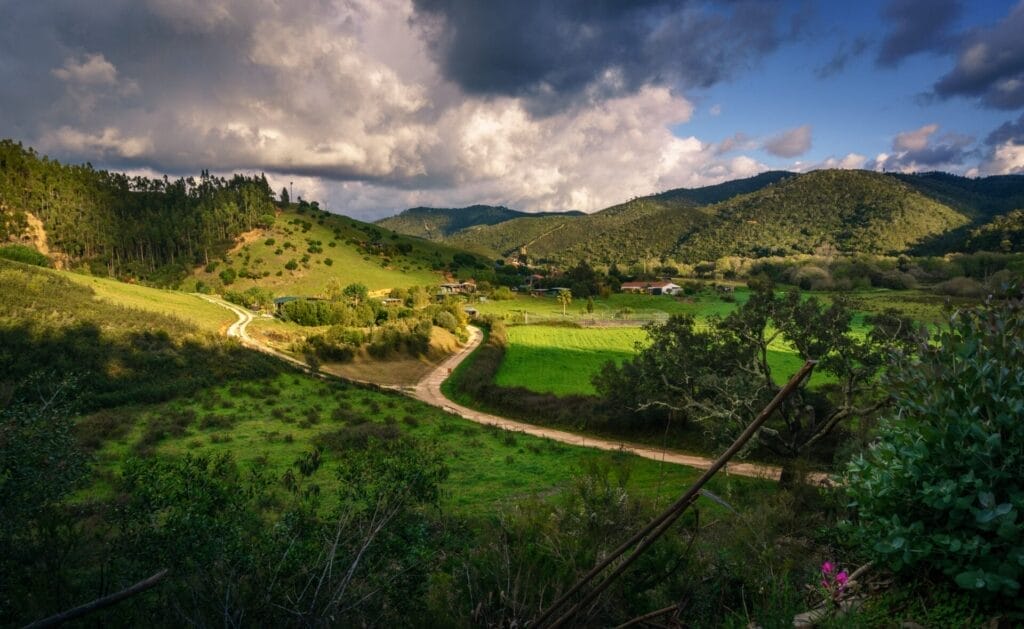
Mornings here are quiet. Mist sits low over the water until the sun clears the ridge, and the terraces above Pinhão turn from grey to gold in the space of an hour. Few wine regions ask you to slow down quite like the Douro does, and few reward it as generously.
The valley also benefits from thoughtful planning. The roads narrow as they climb, the best quinta visits open through relationships built over years rather than a phone call, and the harvest calendar moves with the season rather than the tourist calendar. A private itinerary means a guide who already knows which quintas suit you, which viewpoints are worth the detour, and when the valley is at its best, so the day works with the Douro instead of against it.
Magical Private Travel has been arranging private journeys through the Douro since 2002, working with producers and quinta owners across all three sub-regions. The valley is not a single experience. It depends entirely on when you go and who takes you into it.
Douro Valley at a Glance
Best visited September to October (harvest) or April to June
Minimum 1 night in the valley
Base: Pinhão or a quinta property
Key sub-regions: Baixo Corgo, Cima Corgo, Douro Superior
From Porto: 1 hour 45 minutes by private car
Magical Private Travel has arranged Douro journeys since 2002.
Why Travelers Choose Magical Private Travel for the Douro Valley
Working with Douro producers and quinta owners across all three sub-regions since 2002 has created a specific kind of access: a guide who takes you into a granite lagar during harvest, a lunch served above the river with wines rarely available beyond the estate, a Douro Superior detour most itineraries skip entirely. That comes from long-standing familiarity, not from a longer list of phone numbers.
For American travelers, the Douro is one of the most reliably surprising destinations in Portugal. The wine, the terraces, and the silence of the valley at dawn arrive as a genuine discovery rather than a checked box. The trip earns its place in an itinerary when it is built around that surprise.
What Is the Douro Valley Known For?
The Douro Valley is known as the origin of Port wine and home of the Alto Douro Wine Region, designated a UNESCO World Heritage Site in 2001. It holds a specific historical distinction: in 1756, the Marquis of Pombal formally demarcated and regulated the region, making the Douro the world’s first demarcated and legally regulated wine region. The terraced vineyards carved into schist hillsides above the Douro River constitute one of the most dramatic agricultural landscapes in Europe, the result of centuries of physical labor on terrain that is closer to vertical than horizontal.
Beyond Port, the Douro has become one of Portugal’s most important regions for unfortified table wines: structured reds built on Touriga Nacional, Touriga Franca, and Tinta Roriz, and increasingly serious whites from Rabigato, Viosinho, and Gouveio. The shift is largely a story of the last thirty years. Dirk Niepoort, who took over his fifth-generation Port house in the 1980s and began producing Douro table wines when almost no one in the valley was, led the charge. In the early 2000s, five producers: Niepoort, Quinta do Crasto, Quinta do Vale Meão, Quinta do Vale D. Maria, and Domingos Alves de Sousa, formed an informal alliance known as the Douro Boys to promote the valley’s table wines internationally. The international wine press followed.
The valley is also one of western Europe’s most physically demanding wine regions: summer temperatures in the Douro Superior can exceed 40°C, and occasionally reach 45°C. Winter temperatures fall below zero. The vines survive because the schist, xisto in Portuguese, stores heat during the day, releases it at night, and forces the roots deep enough to find water in the driest summers.
What Are the Three Sub-Regions of the Douro Valley?
The Alto Douro Wine Region spans approximately 250,000 hectares and is divided into three distinct zones. Understanding the differences explains why the valley looks, tastes, and feels different depending on where you are in it.
Baixo Corgo
The westernmost zone, closest to Porto, receives the most Atlantic rainfall and produces the highest volume of wine. Baixo Corgo offers a greener, softer expression of the Douro, and it is the zone most day trips from Porto see when they do not continue on to Pinhão. The terraces around Pinhão and further east reveal the valley most travelers picture when they think of this wine region.
Cima Corgo
The heart of the appellation. Pinhão sits at its center, and the density of historically significant quintas in the surrounding hills is unmatched anywhere in the Douro. The continental climate, hot dry summers and cold winters with minimal rainfall, concentrates the grapes. Touriga Nacional achieves some of its most structured expression in the Cima Corgo’s schist vineyards. Ramos Pinto, Graham’s Quinta dos Malvedos, and Quinta do Crasto anchor this zone, alongside Niepoort, whose old field-blended vineyards produce the Redoma and Batuta wines central to the Douro’s reputation beyond Port. Other celebrated names sit nearby: Taylor’s Quinta de Vargellas in the Douro Superior, Quinta do Vallado in the Baixo Corgo.
Douro Superior
The most remote and least visited sub-region, extending to the Spanish border at Barca d’Alva. Extreme in every dimension: the driest climate, the most dramatic landscapes, and in August, temperatures that make extended outdoor activity difficult. The Symington family’s Quinta do Vesuvio, one of the most admired single-quinta Ports in the world, is located here. Almonds and olive oil are produced alongside wine. The almond blossoms in February turn the hillsides white before the vines have leafed. Travelers who want the Douro without the organized tourism circuits come here. A private car, a guide who knows the roads, and some advance planning make it worth the reach.
What Are the Best Towns and Stops in the Douro Valley?
Pinhão
The most visited town in the Douro Valley, and correctly so. Pinhão sits at the confluence of the Pinhão and Douro rivers, ringed by terraced vineyards on every visible hillside. The train station, small and unhurried, is lined with azulejo panels painted in the 1930s, depicting scenes of the grape harvest, the rabelo boats on the river, and the rural life of the valley as it existed before the dams changed the Douro permanently. The panels function as a visual archive of rural life that no longer exists in quite that form. The town itself rewards an hour of walking, but its primary function is as a base: most of the Cima Corgo’s significant producers and estates are within twenty minutes by private car, and the viewpoints above the town deliver the panorama that defines the Douro’s visual identity.
The Miradouro de Casal de Loivos, reached by a narrow road above Pinhão, offers one of the most complete views of the valley: the river bending through terraced vineyards in both directions, with the Cima Corgo’s hills filling the horizon, and it rarely appears on a first-time visitor’s list. The Miradouro de São Domingos de Roriz and the Miradouro de São Leonardo de Galafura, near Régua, reveal different sections of the same river and can be woven into a longer scenic drive.
Peso da Régua
The commercial hub of the Douro wine region, 25 kilometers west of Pinhão. The Museu do Douro, opened in 2009 on the site of the historic Companhia Geral da Agricultura das Vinhas do Alto Douro, the regulatory body established by Pombal’s 1756 demarcation, traces the valley’s wine history from that founding document to the present. The museum’s collection includes the original demarcation maps, historic Port trade documents, and a wine cellar. Régua is also the departure point for river cruise boats and the Linha do Douro railway services. Less atmospheric than Pinhão but logistically central and historically grounded.
Lamego
Thirty kilometers south of Pinhão, and the Douro Valley’s most complete historic city. The Santuário de Nossa Senhora dos Remédios, a Baroque pilgrimage church reached by a monumental granite staircase of 686 steps built in stages between 1750 and 1905, sits above the town on a forested hill. The cathedral dates to the 12th century. Lamego also produces Raposeira, Portugal’s oldest sparkling wine by the traditional method, aged in caves cut into the hillside below the town. A half-day in Lamego, combined with a morning quinta visit, makes for a well-structured day.
Amarante
Forty-five minutes west of Pinhão on the route between Porto and the Douro. Amarante sits on a bend of the Tâmega River, where the granite São Gonçalo Bridge crosses the water beside the 16th-century church and convent of the same name, together forming the town’s visual center. In 1809, General Silveira held this bridge for fourteen days against Marshal Soult’s forces, preventing the French from advancing further into northern Portugal. The siege left a mark on the town’s identity that lasted well beyond the war.
The Museu Amadeo de Souza-Cardoso is reason enough to build Amarante into an itinerary. Amadeo de Souza-Cardoso (1887 to 1918), a contemporary of Modigliani in Paris, is considered Portugal’s most significant Modernist painter, though his work remained largely unknown internationally until a 2016 retrospective at the Museu do Chiado and the Grand Palais. The museum in his birthplace holds the largest collection of his work anywhere, and is one of the most specific and undervisited museums in northern Portugal. Amarante also produces its own Vinho Verde, lighter and more floral than the coastal versions, worth trying at lunch before continuing into the valley.
What Should I Expect on a Quinta Visit in the Douro Valley?
A private quinta visit in the Douro typically includes a walk through the vineyard, an explanation of production: the difference between how Port is made and how table wine is made, and why the same grape, harvested the same week, produces two entirely different products, and a guided tasting of three to six wines, including aged tawnies and vintage Ports that are rarely available outside the region. In working quintas during harvest, the granite lagares, shallow stone treading tanks where grapes are still foot-trodden for premium lots, are in active use, generally in the evening once the day’s grapes have arrived and been prepared for fermentation. Lunch at a working estate, served above the river, is a different experience from a restaurant.
One detail worth understanding before a quinta visit: the Douro operates on a vineyard classification system called the Cadastro, introduced at the time of Pombal’s 1756 demarcation and refined over centuries. Each plot is graded A through F based on altitude, slope, soil, sun exposure, and grape variety. An A-classified plot commands the highest prices for its grapes. An F plot qualifies only for basic Port. A guide who can read the terrain explains which classification surrounds you in the vineyard, and why two plots a few hundred meters apart produce wines of entirely different levels. None of it takes wine expertise to enjoy. It simply makes the glass in your hand mean more by the time lunch arrives.
Most quintas ask for advance booking, and some of the most rewarding visits are easier to arrange through long-standing relationships. Magical Private Travel selects quinta visits based on the specific traveler: their wine background, interests, and whether the objective is production knowledge or pure tasting.
How Do I Get to the Douro Valley from Porto?
Your private driver covers the route from Porto to Pinhão in approximately 1 hour 45 minutes, following the A4 motorway east toward Vila Real before descending into the valley. The more rewarding alternative is the N222, which your driver takes along the south bank of the Douro from Régua to Pinhão: 27 kilometers following the river through terraced vineyards, the valley on one side and the schist walls on the other. This stretch has been called one of the most beautiful driving roads in Europe. Experienced from a private car at the right pace, with stops at the viewpoints worth stopping for, it functions as the first introduction to the Douro rather than dead time between Porto and Pinhão.
River cruise boats depart from Régua and from Porto, sailing through the Carrapatelo lock, the deepest single-lift river lock in Europe at 35 meters. The Régua to Pinhão stretch, roughly two hours by boat, covers the most scenic reach of the navigable Douro.
The traditional vessel of the Douro is the barco rabelo, a flat-bottomed wooden boat with a square sail once used to carry Port wine barrels downstream to the lodges in Vila Nova de Gaia, a function the valley’s dam system ended permanently in the 1960s and 70s. Today, rabelo boats survive mainly as replicas used for visitor cruises and in Porto’s Rabelo Boat Regatta on the Day of São João, June 24th.

What Is the Douro Valley Grape Harvest Like?
The vindima, the grape harvest, runs from early September through mid-October, with the Douro Superior harvesting first and the Baixo Corgo last. Exact dates shift by ten to fourteen days each year depending on spring and summer weather, though late September is the most consistent window valley-wide.
During harvest, the valley operates at a different frequency. Pickers move through the terraces from first light. The roads carry grape-laden tractors by mid-morning. The quintas run around the clock during the first weeks of the crush. The smell of fermenting must reaches the river. In estates that still use granite lagares for premium lots, foot treading generally happens in the evening. Watching it, or participating, is possible at some properties with advance arrangement through a guide who has an existing relationship with the winemaker.
Accommodation in Pinhão and the Cima Corgo valley books out for harvest weeks up to a year in advance. September in the Douro requires earlier planning than any other season in Portugal.
How Long Should You Spend in the Douro Valley?
A day trip from Porto, covering Amarante en route, one named viewpoint, and a single quinta visit with lunch, works as an introduction. It delivers the terrain and the wines at their source, but arrives after the valley has already had its best hour and leaves before its next one.
Two nights change the experience. Based at a quinta or in Pinhão, the day opens to two or three winery visits, time in Lamego, and the early morning and evening hours a day trip never reaches. Three to four nights covers the Douro as a destination in its own right: all three sub-regions, Lamego, Amarante, the Museu do Douro in Régua, the river in different light at different hours. This is the structure for travelers whose primary interest is wine, or for whom Portugal’s countryside matters as much as its cities.
Traveler profile shapes the choice further. Serious wine travelers find the Douro Superior’s extra travel time worth it for Quinta do Vesuvio and the remote country near Barca d’Alva. Travelers whose primary interest is scenery and culture anchor around Lamego and Amarante, with winery visits as texture rather than the main event. Active travelers find the hiking trails along the terraced slopes put them inside the land in a way no car-based day can match.
When Is the Best Time to Visit the Douro Valley?
Late September through mid-October is the harvest window and the most rewarding time to be in the valley. The valley is at peak color, the producers are in active production, and access to working vintages, not only tastings, is possible with advance arrangement.
April through June offers a green, flowering Douro with mild temperatures and significantly fewer visitors. The vines are growing, the estates are open and unhurried, and the valley has a different character from the harvest intensity or summer heat.
July and August run hot. The Douro Superior regularly exceeds 40°C in August, and the Cima Corgo is not far behind. Itineraries during this window lean on early morning quinta visits, a long midday break, and late afternoon viewpoints once the heat has eased. The scenery stays dramatic. The pace simply shifts to match the sun.
November through February is dormant season. The vines are pruned back, some producers reduce visitor hours, and harvest participation is not available. The valley turns quiet, its terraces bare against the hillsides. February brings one reward specific to the Douro Superior: the almond blossoms, which turn the hillsides white before the vines have leafed.
Our Experience in the Douro Valley
Magical Private Travel has designed private journeys through the Douro since 2002, learning the valley’s harvest schedule, vineyard classification system, and the logistics that separate a well-structured Douro day from one that never quite reaches its potential.
Regular visits keep that knowledge current rather than archival. The quintas on offer are properties visited season after season, and the guides know these producers personally, not by reputation alone. For travelers new to Port and Douro wines, that turns an unfamiliar region into one that makes sense by lunch.
The Douro forms part of many of the Portugal itineraries Magical Private Travel designs each year, often combined with Porto, Lisbon, the Alentejo, and northern Portugal.
Destination expertise by Magical Private Travel, established in 2002.
About Magical Private TravelWhat Our Past Travelers Say

Best planned trip to Portugal!
Our trip to Portugal was planned and carried out beautifully using this company. Carlos was our guide for the week and he was friendly, knowledgable and fun! He was also incredibly adaptable when necessary. Our tour included personal experiences I could have never planned by myself. I hope to use this tour company many more times in the future!
Great trip to Portugal and Madeira
Great trip to Portugal and Madeira. Dan and his krewe leave nothing to chance. All was perfect! This is the second time we have used his agency and would highly recommend
Best way to visit Portugal!
Our trip through Portugal was fantastic. We loved the places we visited and we particularly loved Bernardo, the best tour guide ever!
I have been reflecting on the trip through my jet-lagged brain and fortunately have some great photos to jog our collective memory.
Top three memories? That’s tough. The sunset sail in Lisbon was fabulous and a wonderful finish to our time in Portugal. We absolutely loved the Douro Valley lunch and wine pairing, entertained thoroughly by Rafael. Third top memory was the wine tasting and amazing lunch at Esporao. To Dan and his crew at Magical Spain, thank you for a lovely itinerary through Portugal!
Frequently Asked Questions: Douro Valley Private Tours
Can I visit the Douro Valley as a day trip from Porto?
Yes, and it works well. A private car with driver and guide covers the journey to Pinhão in approximately 1 hour 45 minutes, allowing time for a viewpoint stop, one or two quinta visits with tastings, and lunch in the valley before returning to Porto by early evening. A single day reaches the Cima Corgo around Pinhão. The Douro Superior and Lamego reward an overnight stay. For travelers whose primary interest is wine, an overnight stay opens significantly more of the region.
What is Port wine and how is it produced in the Douro Valley?
Port is a fortified wine produced exclusively from grapes grown in the Douro’s demarcated region. During fermentation, grape spirit, aguardente, is added to stop the process before all the sugar converts to alcohol, leaving residual sweetness and raising the alcohol to approximately 19 to 22 percent. The wine is then transported to the lodges in Vila Nova de Gaia, across the river from Porto, where it ages in oak barrels.
The main style distinction worth knowing before a quinta visit: Tawny Port ages in small barrels over ten, twenty, or forty years, developing nutty dried-fruit character. Vintage Port, declared only in exceptional years, ages in bottle and is built for decades of cellaring. Between these two: Late Bottled Vintage (LBV), from a single year, more accessible and generally ready to drink, and Single Quinta Vintage, from one property in years not formally declared as Vintage. A guided tasting in the valley makes these distinctions clear in a way that any description cannot.
What is the best quinta to visit in the Douro Valley?
There is no fixed answer. The right quinta depends on the traveler. For Douro table wines alongside Port: Quinta do Crasto, with a terrace that puts the Cima Corgo in full view. For a working family property with wine hotel: Quinta do Vallado. For the most remote and dramatic setting: Quinta do Vesuvio in the Douro Superior, producing one of the most respected single-quinta Ports in the world. For historic Port houses with structured visitor experiences: Ramos Pinto’s Quinta do Bom Retiro, downriver from Pinhão, with vineyard classification records going back to the 19th century. Magical Private Travel selects quinta visits based on the specific traveler’s interests and wine background rather than from a standard list.
When is the Douro Valley grape harvest?
The vindima typically runs from early September through mid-October, with the Douro Superior harvesting first and the Baixo Corgo last. Late September is the most reliable window across all three sub-regions, though exact dates shift by ten to fourteen days year to year. Accommodation books out up to a year in advance for harvest weeks.
What are the main grape varieties grown in the Douro Valley?
The Douro is planted with dozens of grape varieties, though a handful define the wines most travelers encounter. For red wines: Touriga Nacional (considered Portugal’s greatest red variety, the backbone of the finest Port and Douro reds), Touriga Franca (aromatic, widely planted), Tinta Roriz (known as Tempranillo in Spain, adds structure and color), Tinta Barroca (performs well at altitude), and Tinta Amarela. For white Port and white Douro wines: Rabigato, Viosinho, Gouveio, and Malvasia Fina. Most quinta visits cover the key varieties in the vineyard walk, connecting the grape to the glass in a way that changes how the tasting is experienced.
Is the Douro Valley accessible for travelers with mobility considerations?
The valley is mountainous and vineyard terrain is steep and uneven. The towns of Pinhão, Régua, and Lamego’s lower center are manageable on foot with some inclines. Most quinta visits involve walking on unpaved vineyard paths, though some properties have accessible routes to the main tasting areas. A private itinerary accounts for mobility needs from the initial planning conversation, selecting quintas and stops that work for the specific traveler.
How do I reach the Douro Valley from Lisbon?
From Lisbon, your private driver reaches the Douro in approximately four to four and a half hours, depending on your final destination within the valley. Many travelers choose to break the journey with a cultural stop along the way, while others prefer to drive directly to the Douro or spend a night in Porto before continuing into the valley. The right approach depends on the overall itinerary.
Why choose Magical Private Travel for the Douro Valley?
Working with Douro producers and quinta owners since 2002 has created a specific kind of access, matched to the traveler: wine background, time of year, and which part of the valley suits their interests. For wine-focused travelers, that means estates in the Douro Superior a standard tour rarely reaches. For travelers new to Port wine, it means a morning built to make sense of the region, without trying to cover everything at once. Some of Magical Private Travel’s guides have worked with the same winemaker for fifteen years, and it shows in what the visit becomes.
How does a Douro Valley private tour differ from a group wine tour?
A private Douro itinerary moves on your schedule and at your pace, with a guide whose sole focus is your party for the day. The difference is most apparent at quinta visits: a private arrangement, built on an existing relationship between guide and winemaker, can reach beyond the standard visitor circuit into the barrel cellar, the old vine blocks, or the winemaker’s own table at lunch. The difference is not in the destination. It is in who opens the door.
What types of Douro Valley itineraries does Magical Private Travel design?
Magical Private Travel designs Douro itineraries across the full range: day trips from Porto for travelers with limited time, two to three night stays based at a quinta or in Pinhão, and extended journeys covering all three sub-regions for serious wine travelers, most often paired with two nights in Porto. For harvest travel, Magical Private Travel builds itineraries specifically around the vindima window.
Types of Douro Journeys We Design
The Douro is not a single itinerary. It changes shape depending on who is traveling, when they arrive, and what they are looking for in the valley.
Harvest itineraries in late September and early October build around the vindima window: morning treading visits at working estates, the smell of fermenting must in the afternoon, and accommodation booked up to a year in advance in properties that sell out fast. For travelers with more time, a full northern Portugal circuit covers Porto, the Douro, and the Minho or Trás-os-Montes before returning south.
Whatever the shape, the Douro rewards an itinerary built around it rather than one squeezed into a day.
Plan Your Douro Valley Journey
The Douro is one of the few destinations in Portugal worth reshaping an entire itinerary around. The question is not whether to go. It is how many days to give it, what time of year to arrive, and which part of the valley to prioritize.
The wine brought people here first. The valley itself is why they come back.
If you are building a Portugal itinerary that includes Porto and thinking about how the Douro fits, the right starting point is a conversation. We have been working with the valley’s producers and quinta owners since 2002.
Contact Us Today