


Portugal · Private and tailor-made
Portugal's Jewish Heritage, Lisbon to Belmonte
Stand under the four columns of Tomar's 15th-century synagogue, the oldest standing in Portugal.
Suggested length
10 days
Price guide
From $9,980 per person, excl. international flights, based on two sharing
Includes hotels, private guiding, experiences and transfers
When
April to June and September to October
or call +1 (727) 699-5439
A planner replies within one business day
American precision with local expertise · Planned from Europe since 2002 · Nearly 17,000 American travelers · Never cancelled a journey
In 1497 King Manuel I forced the conversion of Portugal’s Jews, and many families kept their faith in secret. This private tour of Portugal’s Jewish heritage follows their story from the Shaaré Tikvah synagogue of 1904 in Lisbon to the Jewish Museum in Belmonte. In Tomar you stand under the four columns of the 15th-century synagogue, the oldest standing in Portugal. The old Jewish quarter of Évora, Castelo de Vide and Marvão follow, then Porto and the Douro vineyards. Lunch in the Alentejo might be açorda, a bread soup of garlic, coriander and olive oil. In Lisbon and Sintra, Luisa guides you where your dates allow. Your planner can move or drop any day to follow the stories that matter to you.
Visit Shaaré Tikvah, the synagogue of 1904 behind its courtyard gate, Lisbon.
Stand under the four columns of the 15th-century synagogue, Tomar.
Walk the old Jewish quarter around the Fonte da Vila to the medieval synagogue, Castelo de Vide.
Visit the Jewish Museum and the story of the crypto-Jews, Belmonte.
Visit the Kadoorie Mekor Haim synagogue, Captain Barros Basto’s life work, Porto.
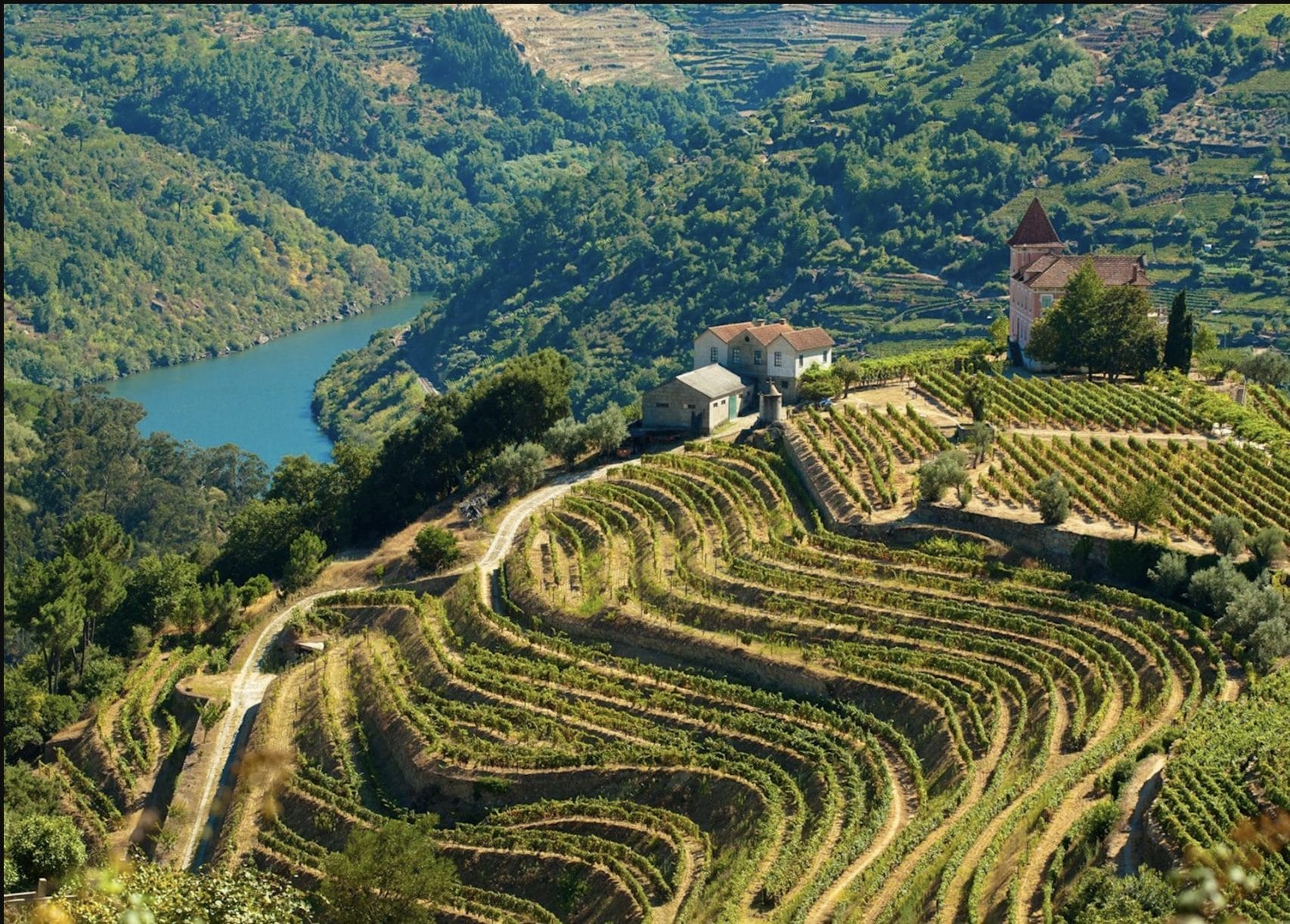
Sail the river on a private boat or walk the terraced vineyards, Douro Valley.

“We love to tailor-make trips you’ll talk about for years, built on our local relationships & story-worthy experiences.” – Magical’s American founder, in Europe since 1998, culinary enthusiast & world traveler.






A Journey Designed Just for You
Our resident experts wrote this itinerary as a starting point, and your planner shapes every day around your interests, pace and travel style.
What do our American travelers say?
The 10-day Portugal Jewish heritage itinerary at a glance
The route uses five bases and nine nights: three in Lisbon, one in Évora, one in Marvão, two in Porto and two in the Douro Valley. Sintra and the day to Óbidos and Tomar run from Lisbon, so the first three nights stay in one hotel. The middle of the trip moves every day, through the Alentejo and the Beiras, and the last four nights slow down again in two places.
Every leg runs by road. Luisa and a licensed driver look after the Lisbon and Sintra days, where your dates allow, and a licensed driver-guide drives and guides from day three to the airport. Lisbon to Évora takes about 1 hour 35 minutes, Évora to Castelo de Vide and Marvão about 1 hour 45 minutes, and Porto to the Douro about 1 hour 15 minutes. Day six runs longest, about 2 hours from Marvão to Belmonte and about 2 hours 30 minutes on to Porto, with the morning and lunch in Belmonte between the two drives.
You stay in deluxe four-star properties selected for comfort, location and service. Five-star luxury properties are available by request. In Évora the hotel sits inside the old walls, in Marvão you sleep within the village walls, and in the Douro your hotel looks over the vineyards near Peso da Régua.
Spring and autumn suit the walking in the old Jewish quarters. IPMA, Portugal’s weather institute, records average daily highs in Lisbon of about 20°C (68°F) in April and 23°C (73°F) in October, and in Porto of about 18°C (64°F) in April and 20°C (69°F) in October.
Licensed guides we work with on this route include Luisa and Anabela in Lisbon, Isabel in Sintra, Elsa and Nuno in Évora, and Susana and Tania in Porto. Each is a highly educated local expert who cares about the people in their group. We request your guides by name, and your planner confirms who leads each day once your dates are set.
Why the route runs from Lisbon to the Douro
The journey reads Portugal’s Jewish story as one of survival in secret, and the order of the bases follows it. Lisbon comes first, where Manuel I forced the conversion of the whole community in 1497 and a mob killed some 2,000 New Christians in April 1506. Tomar keeps the synagogue its community left in 1496, and Évora held one of the tribunals of the Portuguese Inquisition.
Then the road turns toward Spain. In the Alentejo, Castelo de Vide served as one of the crossing points for Jews expelled from Spain in 1492. Further north, in Belmonte, families still kept Jewish prayer behind closed doors when a mining engineer, Samuel Schwarz, met them in 1917. The same man saved the Tomar synagogue in 1923, so day three and day six belong to one story. Porto closes the history with Captain Artur Carlos de Barros Basto, who searched the villages of the Beiras and Trás-os-Montes for families ready to return to Judaism, and built the Kadoorie synagogue for them. The Douro Valley gives the last two days to vineyards and the river. Our Portugal destinations page collects every region on the route.
Journey at a glance
Length
10 days
From
$9,980 per person, double occupancy
Route
Lisbon, Sintra, Óbidos, Tomar, Évora, Castelo de Vide, Marvão, Belmonte, Porto, Douro Valley
Your planner adjusts every day to your dates.

Day One
Arrive in Lisbon: Shaaré Tikvah, the Alfama and São Domingos
Your licensed driver meets you at Lisbon airport and brings you to a hotel in the centre. Where your dates allow, Luisa, one of our licensed guides in Lisbon and Sintra, leads the afternoon alongside your licensed driver. You begin at Shaaré Tikvah, the Doors of Hope, which the community inaugurated in 1904 behind a courtyard on Rua Alexandre Herculano, since the law of the time forbade non-Catholic temples from facing the street. It stands as the first synagogue to rise in Portugal since the late 15th century. In the Alfama, the oldest neighborhood in Lisbon, Luisa follows the Rua da Judiaria through the medieval Jewish quarter, and from the walls of São Jorge Castle the red roofs fall away to the Tagus. The walk ends in the Largo de São Domingos, where a memorial of 2008 recalls the massacre which began at the church on 19 April 1506. Logistics: Lisbon airport to your hotel by road with a licensed driver, then an afternoon on foot and by car with Luisa and your licensed driver.

Day Two
Sintra, the Atlantic Coast and Belém
Where your dates allow, Luisa leads the day with your licensed driver. UNESCO inscribed Sintra in 1995 and calls it the first centre of European Romantic architecture. Our team books the timed entry to the Pena Palace, which King Ferdinand II raised on a summit of the Sintra hills between 1842 and 1854, red and yellow walls above the forest. In the old town the bakeries sell queijadas, small sweets of fresh cheese, eggs, milk and sugar. Where it suits your party, the road continues to Cabo da Roca, the westernmost point of continental Europe, where cliffs drop more than 100 meters to the Atlantic, and on through the seaside town of Cascais. On the way back along the river, Luisa stops at Belém, where the Tower of Belém commemorates the voyage of Vasco da Gama. His fleet sailed with the astronomical tables of Abraham Zacuto, a Jewish scholar from Salamanca who found refuge in Lisbon after 1492. Logistics: Lisbon to Sintra and the coast by road with Luisa and your licensed driver, return to Lisbon in the evening.
Day Three
Óbidos and Tomar: Walls, Templars and a 15th-Century Synagogue
A licensed driver-guide collects you in Lisbon for a day north of the city. Óbidos comes first, a hilltop town inside its ring of walls, where the medieval Jewish quarter stood near the Rua Direita and the church of Santa Maria. Try ginjinha, the local sour cherry liqueur, from a small chocolate cup. In Tomar, Gualdim Pais, grand master of the Knights Templar, founded the Convent of Christ in 1160, and UNESCO inscribed it in 1983 for its 12th-century rotunda and its Manueline carving. Down in the town, the synagogue at Rua Dr. Joaquim Jacinto 73 dates from the mid-15th century and served its community until 1496. Four columns carry the vaults, and eight clay jars in the upper corners carry the sound of the chant. Samuel Schwarz, a Polish mining engineer and historian, bought the building in 1923 and gave it to the Portuguese state in 1939 on condition it become a museum, today the Abraão Zacuto Luso-Hebraic Museum. Logistics: Lisbon to Óbidos by road, about 1 hour, Óbidos to Tomar about 1 hour, and Tomar back to Lisbon about 1 hour 30 minutes, licensed driver-guide.
Day Four
Into the Alentejo: Évora's Judiaria and Roman Temple
Your licensed driver-guide drives east into the Alentejo, past cork oaks, olive groves and vineyards on low rolling hills. UNESCO inscribed the historic centre of Évora in 1986 for its whitewashed houses, azulejos and wrought-iron balconies. Your driver-guide starts at the Roman temple, which dates from around the 1st century and honored Augustus, then walks you into the old judiaria near the Praça do Giraldo, through streets such as the Rua dos Mercadores. Until the 15th century Évora kept one of the largest Jewish communities in Portugal, with two synagogues, a hospital and baths. From 1536 the city also held one of the tribunals of the Portuguese Inquisition, and your guide explains how the same streets changed in a single generation. Lunch brings açorda alentejana, a bread soup of garlic, coriander and olive oil with a poached egg on top. The evening stays free inside the walls. Logistics: Lisbon to Évora by road, about 1 hour 35 minutes, licensed driver-guide, overnight in Évora.

Day Five
Castelo de Vide and Marvão: Two Towns on the Border
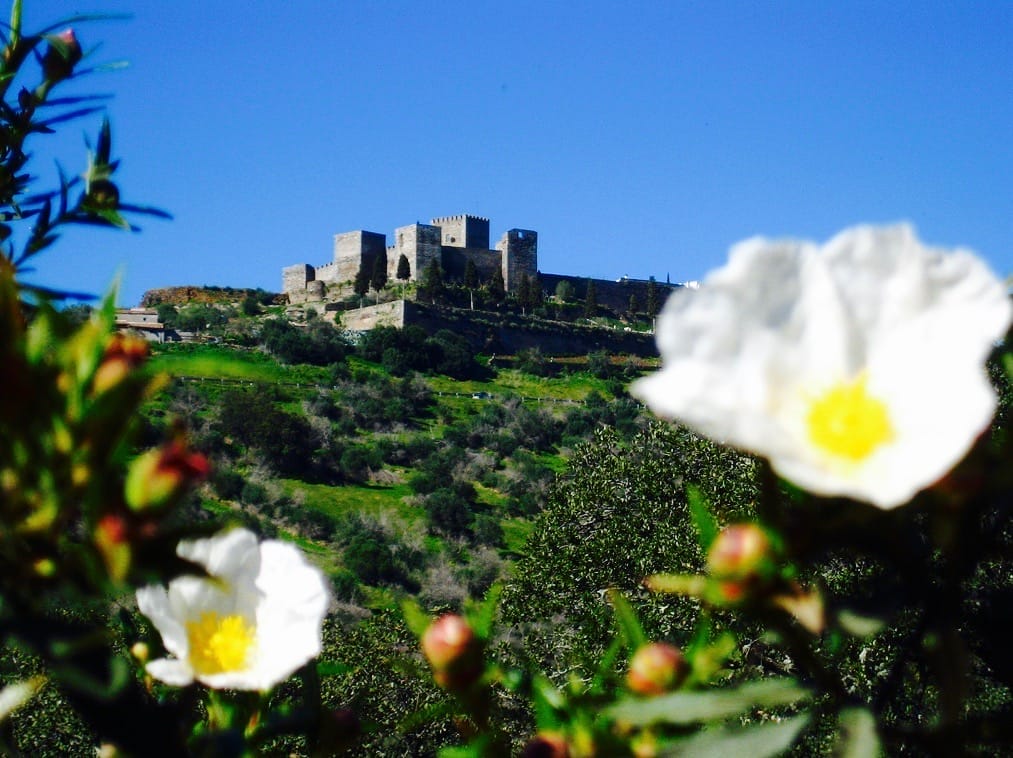
Your licensed driver-guide heads north toward the Spanish border and the Serra de São Mamede. Castelo de Vide served as one of the points where Jews expelled from Spain entered Portugal in 1492, and its community grew considerably at the time. The old Jewish quarter gathers around the Fonte da Vila, the town fountain, and lanes such as the Rua da Judiaria and the Rua da Fonte keep the memory in their names. The small synagogue dates from the late 14th century, keeps a carved stone ark of the 15th century, and has held a museum of the town's Jewish community since 2019. Castelo de Vide also counts as the birthplace of Garcia de Orta, the physician whose study of the medicinal plants of the East appeared in Goa in 1563. In the afternoon you climb to Marvão, a walled village on a quartzite crag, which takes its name from Ibn Marwan, a rebel lord of the Moorish era. Most of its castle dates from after 1299, and from the keep the view runs over the Tagus basin and north toward the Serra da Estrela as the wind crosses the battlements. Logistics: Évora to Castelo de Vide and Marvão by road, about 1 hour 45 minutes, licensed driver-guide, overnight in Marvão.
Day Six
Belmonte's Crypto-Jews, Then North to Porto
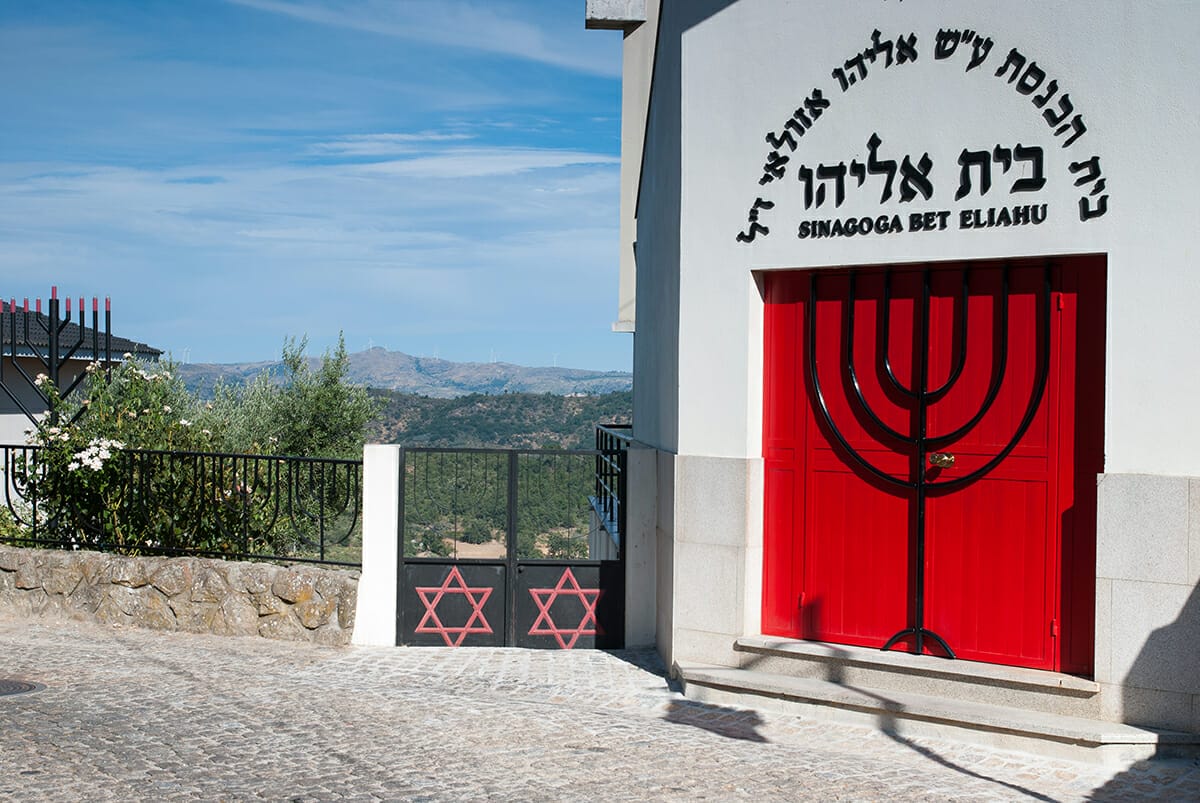
Day six is the longest road day, about 2 hours from Marvão to Belmonte and about 2 hours 30 minutes on to Porto, with the morning and lunch in Belmonte between the drives. Belmonte Castle rose on Monte da Esperança toward the end of the 12th century, and the navigator Pedro Álvares Cabral spent his early years in the family's fortified manor here. After the forced conversions the town became a major centre of New Christian life. In 1917 Samuel Schwarz, the engineer who later saved the Tomar synagogue, met families here who had kept Jewish prayer in secret for generations, and he won their trust by reciting the Shema. He published their story in 1925. The community established itself officially in 1989 and inaugurated the Bet Eliahu synagogue in 1996. In 2005 the town opened the Jewish Museum of Belmonte on Rua da Portela, the first museum in Portugal dedicated to Jewish heritage. You reach Porto in the early evening, and where it suits your party, a food walk or a wine tasting in the old town ends the day. Logistics: Marvão to Belmonte by road, about 2 hours, then Belmonte to Porto about 2 hours 30 minutes, licensed driver-guide.

Day Seven
Porto: Barros Basto, the Kadoorie Synagogue and the Olival Quarter
UNESCO inscribed the historic centre of Porto in 1996, and your licensed driver-guide begins the day on Rua Guerra Junqueiro, at the Kadoorie Mekor Haim synagogue. Its founder, Captain Artur Carlos de Barros Basto, learned of his Jewish ancestry from his dying grandfather. He registered the Jewish Community of Porto in 1923, launched the newspaper Ha-Lapid in 1927 and traveled the Beiras and Trás-os-Montes in search of families ready to return to Judaism. Work on the synagogue began in 1929, the Kadoorie family paid for a large part of it, and the community inaugurated the Art Deco building in 1938. It remains the largest synagogue in the Iberian Peninsula, and the Jewish Museum of Porto opened in 2015. In the old town your guide follows the Rua de Sant'Ana, the street of the oldest Jewish quarter, up to the Olival quarter where João I gathered the community in 1386. You pass the Sé on its hill and the Livraria Lello of 1906, and the afternoon ends on the Ribeira under the iron arch of the Dom Luís I Bridge. Logistics: a full day in Porto on foot and by car with your licensed driver-guide.

Day Eight
Into the Douro Valley: Terraces and a Wine Estate
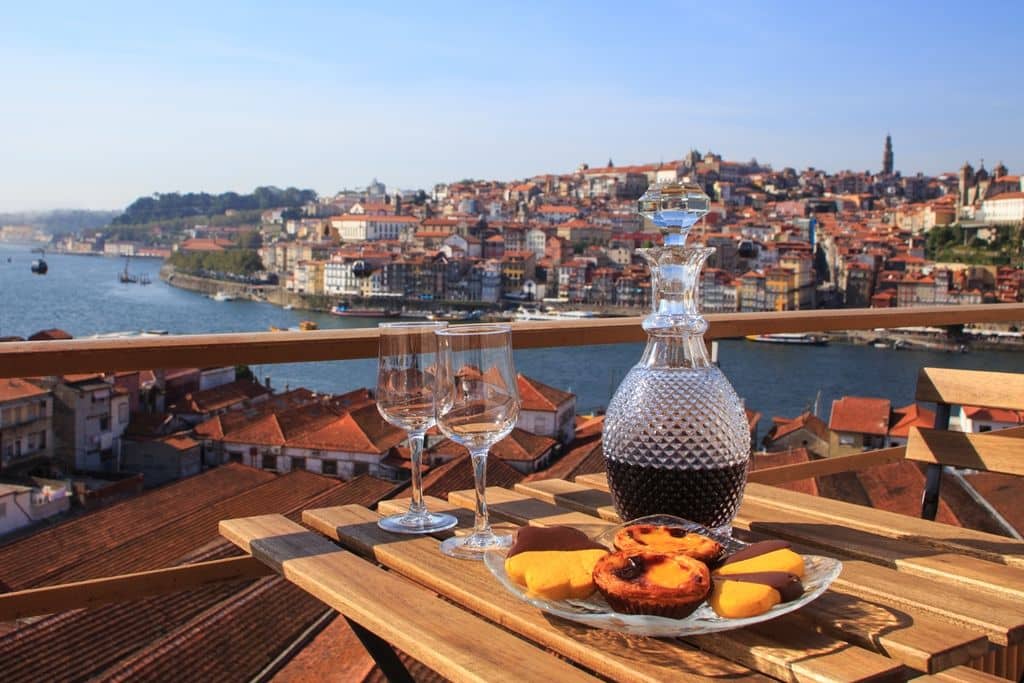
Your licensed driver-guide follows the motorway east out of Porto and down into the Douro. UNESCO inscribed the Alto Douro Wine Region in 2001 and notes some 2,000 years of winemaking here, with rules for the quality of port in force since 1756. Walls of schist hold up terraces which climb the slopes from the river in long rows, green in spring and copper after the harvest. At a family wine estate your guide walks you through the vines and down into the cellar, where the tasting moves from white and red Douro wines to tawny and ruby port. Lunch follows on a terrace above the water. In the late afternoon you settle into your hotel among the vineyards near Peso da Régua for two nights, with the evening light on the far bank. Logistics: Porto to the Douro near Peso da Régua by road, about 1 hour 15 minutes, licensed driver-guide.
Day Nine
The Douro by River or on Foot
Today you choose how to see the valley. Where it suits your party, a private boat takes you along the river between the terraced quintas, the way the rabelo boats once worked this water. These flat-bottomed boats, with a long timber steering oar at the stern, carried people and goods along the Douro for centuries, and before the Douro railway they offered the fastest link between the valley and Porto. If you prefer to walk, your licensed driver-guide leads a vineyard path above the river, with a picnic of local bread, cheese, olives and fruit in the shade. Either way, the day passes through Pinhão, where the station walls carry 24 azulejo panels of more than 3,000 tiles, in place since 1937, showing the harvest and the boats which carried the wine. Your guide is glad to advise on the walk's length before booking. Logistics: a full day in the Douro by private boat or on foot, with your licensed driver-guide for the transfers along the valley.

Day Ten
Departure from Porto
The morning starts slowly, with coffee on the terrace and mist lifting off the river below the vineyards. Your licensed driver-guide collects you at the hotel at the time our team sets around your flight and drives you back west to Porto's Francisco Sá Carneiro Airport, which lies about 11 kilometers northwest of the city centre. Our team stays in touch until you board. Logistics: the Douro near Peso da Régua to Porto airport by road, about 1 hour 15 minutes, licensed driver-guide.
Who were Portugal’s crypto-Jews, and where do you see their story?
Portugal’s crypto-Jews descended from the Jews whom Manuel I forced to convert in 1497, families who went to church in public and kept Jewish prayer and customs at home for centuries. The Portuguese Inquisition, from 1536 to 1821, made the secret a matter of survival. On this route you see the story in order: the 1506 memorial in Lisbon, the synagogue in Tomar closed in 1496, Évora’s judiaria and Inquisition tribunal, the border towns of Castelo de Vide and Marvão, and Belmonte, where Samuel Schwarz met a surviving community in 1917. In Porto the Kadoorie synagogue of 1938 marks the attempt of Captain Barros Basto to bring such families back to open practice.
How many days do you need for a Jewish heritage tour of Portugal?
Ten days covers Portugal’s principal Jewish sites from Lisbon to Porto at a steady pace, with Belmonte and the Alentejo border towns, which shorter trips leave out. A week suits Lisbon, Tomar and Porto alone. Ten days also leaves the last two days for the Douro Valley, which gives the trip a slower close after four days on the move. Twelve to fourteen days add Coimbra and its old Jewish quarter, a second night in the Alentejo or a crossing into Spain.
This 10-day Portugal route, the 14-day Spain and Portugal journey or the 10-day Spain journey?
Choose this route if Portugal is the focus, or if you already know Spain. It gives the most time to the Portuguese chapters of the story, the forced conversions, the crypto-Jews of the interior and the 20th-century revival, and of the three it alone reaches Castelo de Vide, Marvão and Belmonte, with two days in the Douro to finish.
The 14-day Spain and Portugal Jewish heritage tour serves you better if you want the whole arc in one trip, from the medieval quarters of Girona, Toledo, Seville and Córdoba across the border to Évora, Lisbon, Tomar and Porto. It suits a first visit to both countries. The 10-day Jewish heritage tour of Spain suits travelers who want Spain alone, from Seville to Barcelona by high-speed train, with Toledo’s synagogues and a full Prado day.
If Jewish heritage forms one interest among several, the 10-day Portugal Signature journey runs from Porto and the Douro to Lisbon and the Algarve coast, and our team adds a Jewish quarter walk in Lisbon or Porto on request. Our article on Jewish heritage tours of Portugal sets out more of the sites.
Who this journey suits
Families tracing Sephardic or converso roots follow one story from town to town, and multigenerational groups share the same guided days, with the pace set around the oldest and youngest travelers. Couples and friends with an interest in history appreciate the balance of synagogues, castles, old quarters, food and wine.
Synagogue groups and Jewish community organizations travel the route as a private party, with one guide for the whole group. Returning visitors to Portugal find a new reading of Lisbon and Porto and reach the Alentejo and the Beiras, which most first trips miss. Your guide is glad to advise on suitability before booking, especially for the steep lanes of the Alfama, Castelo de Vide and Marvão.
The people behind the route
In Lisbon and Sintra, where your dates allow, Luisa, one of our licensed guides, leads the first two days alongside a licensed driver, from Shaaré Tikvah and the Rua da Judiaria to the Pena Palace and Belém. From day three onward, a licensed driver-guide who knows the Jewish history of the interior looks after you, one person holding both licenses, so the same voice carries the story from Tomar and Évora to Belmonte, Porto and the Douro.
What the 10-day journey costs and what it includes
The 10-day route starts from $9,980 per person, double occupancy, for the route as written. The from-price covers nine nights in hotels in the heart of each town, Luisa and a licensed driver in Lisbon and Sintra where your dates allow, a licensed driver-guide from day three onward, a private vehicle for every transfer and excursion, timed entry to the Pena Palace, and full planning and support from our team.
Four things move the price: the season, the hotel category and room type, the size of your private party, and the options you choose, such as the coast road to Cabo da Roca and Cascais, the evening food walk in Porto, a port tasting in Gaia, a private boat on the Douro, or extra nights in the Alentejo or the Douro. Magical Private Travel maintains excellent ratings on Trustpilot and Google’s independent review platforms.
When you are ready to plan, speak with our team about your dates, your party and the parts of Jewish Portugal you most want to see.
Frequently asked questions about the Portugal Jewish heritage tour
What do you see in Belmonte, and does a Jewish community still live there?
Yes, Belmonte keeps a living Jewish community, and the town gives you three places to understand it. The Jewish Museum of Belmonte, which opened in 2005 on Rua da Portela, presents the hidden practice of the crypto-Jews through prayers, objects and customs, and calls itself the first museum in Portugal dedicated to Jewish heritage. The Bet Eliahu synagogue, which the community inaugurated in 1996, marks the return to open practice, and visits follow the community’s own hours, which our team checks for your dates. The castle, from the late 12th century, overlooks the old streets where New Christian families lived after 1497. Your licensed driver-guide tells the story of Samuel Schwarz, who met the families in 1917 and published their story in 1925, and of the decades of secret prayer behind it.
Which synagogues and Jewish sites does the 10-day tour visit?
The route visits four synagogues and five former Jewish quarters. In Lisbon you see Shaaré Tikvah of 1904, the Rua da Judiaria in the Alfama and the 1506 memorial in the Largo de São Domingos. In Óbidos your guide shows you the quarter near the Rua Direita. Tomar keeps its mid-15th-century synagogue and the Abraão Zacuto Luso-Hebraic Museum. In Évora you walk the judiaria near the Praça do Giraldo. Castelo de Vide keeps a late 14th-century synagogue with a small museum and a Jewish quarter around the Fonte da Vila. Belmonte adds the Jewish Museum and the Bet Eliahu synagogue, and Porto the Kadoorie Mekor Haim synagogue of 1938, the Jewish Museum of Porto and the medieval Olival quarter. Visits to working synagogues follow each community’s hours.
Why did so many Jews from Spain enter Portugal through the Alentejo?
When Isabella and Ferdinand ordered the Jews of their kingdoms to convert or leave in 1492, many families from Castile chose Portugal, and King John II admitted them for a payment of eight cruzados a head. Border towns in the Alentejo, such as Castelo de Vide, served as crossing points, and the town’s Jewish community grew considerably at the time. The refuge lasted a few years. In December 1496 Manuel I ordered every Jew in Portugal to accept baptism or leave, and in 1497 he forced the conversion of the whole community instead. On day five your licensed driver-guide shows you the Jewish quarter of Castelo de Vide, the medieval synagogue and the castle at Marvão, which looks over the same frontier.
Who was Captain Artur Carlos de Barros Basto?
Artur Carlos de Barros Basto was a Portuguese army officer who learned of his Jewish ancestry from his dying grandfather, studied Hebrew and returned to Judaism, taking the name Abraham Israel Ben-Rosh. In 1923 he registered the Jewish Community of Porto, and in 1927 he founded Ha-Lapid, a Jewish newspaper in Portuguese. He visited villages and towns in Trás-os-Montes and the Beiras to find families of New Christian descent who wished to return to Judaism. The Kadoorie synagogue in Porto crowned his work. Building began in 1929, and the community inaugurated it in 1938. In 1937 the army dismissed him over his part in circumcision ceremonies, and Portugal restored his name in 2012. The nickname the Portuguese Dreyfus has followed him since. On day seven your guide tells his story inside the synagogue he built.
How do we travel between the bases, and who guides us?
By road, in a private vehicle, from the airport on day one to the airport on day ten. In Lisbon and Sintra, where your dates allow, Luisa, one of our licensed guides, leads the touring, and a licensed driver drives, two separate people. From day three onward a licensed driver-guide looks after you, one person holding both a guide’s and a driver’s license, on the days to Óbidos and Tomar, across the Alentejo, to Belmonte, around Porto and in the Douro. The longest drive falls on day six, about 2 hours from Marvão to Belmonte and about 2 hours 30 minutes on to Porto, with the morning in Belmonte between them. Other legs run about 1 hour 45 minutes or less. Our team coordinates each handover, so luggage stays in one vehicle from hotel to hotel.
When is the best time to take this tour?
April to June and September to October give the most comfortable walking weather for the old Jewish quarters and the hill towns. IPMA, Portugal’s weather institute, records average daily highs in Lisbon of about 20°C (68°F) in April and 23°C (73°F) in October, and in Porto of about 18°C (64°F) in April and 20°C (69°F) in October. The Alentejo runs warmer inland in summer, so July and August trips work well with early starts in Évora and Castelo de Vide and lunch indoors. September brings the grape harvest to the Douro, and spring turns the terraces green. Winter brings cooler days and quieter museums, which suits a journey built around synagogues and collections. Our team also checks opening days for your dates, since several small museums keep limited weekly hours.
Is this tour only for Jewish travelers?
No. The route suits anyone interested in the history of Portugal, and many travelers choose it for the depth it brings to places they planned to visit anyway. Lisbon, Sintra, Porto and the Douro appear on most first trips to Portugal, and this journey adds the Alentejo, Marvão and Belmonte, which most visitors never reach. Your guides present the history plainly and in context, with the Templars of Tomar, the Romans of Évora and the navigators of Belém alongside the Jewish story. The Pena Palace, the port cellars and the Douro terraces keep the trip in balance, and travelers of every background leave with a fuller sense of how Portugal took shape.
Does the journey suit multigenerational families?
Yes. A private guide and vehicle set the pace around the youngest and the oldest in your party, and the story of the route gives grandparents and grandchildren something to talk about at every lunch. Teenagers tend to respond to the Pena Palace, the cliffs at Cabo da Roca, the walls of Marvão and the boats on the Douro. Several days involve walking on cobbles and slopes, especially in the Alfama, Castelo de Vide and Marvão. Your guide is glad to advise on suitability before booking, and our team adjusts walking routes, adds vehicle time between sites or shortens days where it helps. Our page on accessible travel sets out how our team plans for travelers who need step-free routes or extra support.
Is the route fixed, and does it extend into Spain?
The route as written shows one balanced order, and our team adjusts it around your dates, interests and pace. Common changes include a departure from Lisbon instead of Porto, a second night in the Alentejo to slow the middle of the trip, a stop in Coimbra on the way north, or a third night in the Douro. American travelers who want Spain as well often start in Madrid or Seville, add Toledo and Córdoba, and cross into Portugal by road through the Alentejo, the direction many families took in 1492. Each change keeps a licensed guide and driver in Spain, and in Portugal Luisa in Lisbon and Sintra and a licensed driver-guide elsewhere. You receive a revised day-by-day plan and price before you commit.
Who do we contact if something goes wrong or we want a change?
Your planner designs your journey with you and stays in touch after you land. For the fastest response at any hour, message your private WhatsApp group, where our 24/7 support team works alongside Rachel or Dan. Because we begin no more than five journeys per country each week, peak spring and fall dates fill early, and that limit is what lets us stay this close to every trip.
We keep a list of vetted four- and five-star hotels, well located and enjoyed by our past travelers and by our own team.
Examples for each overnight stop on this route. Choose a deluxe boutique hotel or a five-star stay, and your travel advisor matches each night to your wishes, the season and availability.
Lisbon
Boutique: Memmo Alfama. A design hotel on an Alfama lane, with a pool beside its wine-bar terrace over the Tagus.
Five-star: Four Seasons Hotel Ritz Lisbon. A 1959 landmark beside Eduardo VII Park, filled with mid-century Portuguese art and tapestries.
Évora and the Alentejo
Boutique: Albergaria do Calvário. A 16th-century olive-oil mill inside Évora’s old walls, now a 22-room boutique hotel.
Five-star: Convento do Espinheiro. A restored 15th-century convent near Évora, with arched patios and an underground wine cellar.
Marvão
Boutique: Pousada de Marvão. Four small village houses inside Marvão’s walls, with views across the Alentejo plains into Spain.
Five-star: Torre de Palma Wine Hotel (Monforte). A whitewashed wine estate near Monforte, with a spa, its own winery and a namesake tower.
Porto
Boutique: Torel 1884. An 1884 palace near São Bento station, with rooms themed on Portugal’s voyages of discovery.
Five-star: The Yeatman. Terraced into the Gaia hillside among the port lodges, every room with a terrace facing Porto.
Douro Valley
Boutique: Quinta do Vallado Wine Hotel. An 18th-century house once owned by Dona Antónia Ferreira, plus a modern schist building among vineyards.
Five-star: Six Senses Douro Valley. A restored 19th-century manor near Lamego, above Douro vine terraces, with a large spa.
What's Included
A Very Personalized Itinerary, Just For You and Your Schedule
Hand-Picked Ultra-Luxury & Boutique Hotel Options
Insider Experiences + Inspiring Sightseeing + Magical Upgrades
Private Touring with Your Own Personal Expert Guide
Private Airport & Train Station Luxury Transfers
Full Breakfasts + Food & Wine Tasting Options
Your Choice of Activities on “Design Your Days”®
Expert Advice, Restaurant Ideas & Reservations
24/7 Support & Concierge Service from Spain, Portugal & Morocco
Magical is an award-winning luxury travel agency
Private journeys with soul & stories
Excellent independent reviews
Your private WhatsApp group with our 24/7 team and Rachel or Dan
Hidden gems, insider fun & vetted hotels
Your private guide, deluxe vehicle & flexible pace
24/7 concierge-style support
We handle everything — you live the dream
American Precision, Local Soul
Our Unforgettable Trips Are Tailored Just For You
Hi from Europe,
Along with our local partners across Portugal, Spain, Morocco and beyond we believe that our clients deserve the truly tailor-made private luxury trips, not generic "one-size-fits-all" plans.
Get inspired with our sample trips then get in touch about an expert-made personalized custom luxury itinerary, just for you.
Kind regards,
Dan O'Beirne & the MPT team
Request a Quote