

Private Spain Luxury Travel: What Every American Traveler Should Know Before They Go





80+ verified 5-star reviews
Why Do A Luxury Private Spain Trip?
Exploring the medieval Alhambra Palace in Andalusia at sunset with our expert guide. Savoring pintxos in San Sebastian’s Parte Vieja district or tapas in the shadow of Cordoba’s Mezquita. Experiencing flamenco guitar, song and dance in a 16th-century Seville courtyard. Spain rewards travelers who have a personalized expert plan made to fit their interest. Another reason is to maximize your enjoyment by avoiding the lines, tourist traps and logistics stress.
This access comes from 20+ years of relationships from living here and planning successful trips for fellow Americans. In medieval Toledo, Juanjo and Diego open doors into an ancient walled city on a hill once peacefully inhabited by Moors, Jews, and Christians. In the Ribera del Duero region, Carmelo Rodero walks through his vineyards in Pedrosa de Duero with travelers eager to discover what great wine tastes like at its source. In Seville, artist Beatriz reveals art that feels intimate, creative, and one-of-a-kind. In Caceres and Merida, Paco leads you into the UNESCO medieval and Roman sites. Fernando Remírez de Ganuza opens the doors of his Rioja winery in Samaniego to guests who want to understand España from the inside.
These are not contacts. They are people with knowledge, craft, and genuine passion to share the best of Spain that few tourist have access to.
Why Spain Rewards Well Planned Luxury Travel
Unlike countries where the highlights are concentrated in one or two cities, Spain which is 1.7x larger than Italy, unfolds across distinct regions and cultures with 4 official languages not just Spanish!
The variety of experiences is surprising; the Canary Island charms, San Sebastián’s food culture, Galicia’s Atlantic coastline, Priorat’s wine country, the Pyrenees mountains, Mediteranean Mallorca and the Roman city of Mérida all belong to Spain, yet feel entirely different from one another.
That is why the structure of the journey matters so much.
The sequence matters. The pacing matters. And the guides matters enormously, not only for what they know, but for how they understand your interests, rhythm, and travel style on any given day.
American travelers arrive with high expectations and fewer days than they would like. Travel across Spain needs to feel purposeful and seamless, not improvised. After 24 years designing luxury private travel in Spain, we know how to build tailor-made journeys that move well, feel effortless, and leave room for the moments that genuinely surprise you.
A private tour of Spain, planned well, is not simply a more comfortable version of a group tour. It is a fundamentally different way to experience the country, shaped around who you are, what moves you, and the places that will stay with you long after you return.

Spain at a Glance for Private Luxury Tours
The twelve regions we most frequently build private Spain journeys around. Use this as your starting map — tap or click any row to open the full briefing.
| Region | Known for | Strongest for | Typical days |
| Madrid & central Spain | Art, royal heritage, UNESCO day trips | First-time visitors, art, history | 3–5 |
| Andalusia | Moorish architecture, flamenco, sherry | First-time visitors, atmosphere | 4–6 |
| Barcelona & Catalonia | Gaudí, food, Mediterranean coast | Architecture, food & wine | 2–4 |
| Valencia & the Mediterranean | Paella origin, modern architecture, Silk Exchange | Food culture, architecture | 2–3 |
| Basque Country & La Rioja | Michelin dining, pintxos, Tempranillo reds | Food & wine travelers | 4–5 |
| Castilla y León | Romanesque churches, Ribera del Duero wines | Uncrowded history, wine lovers | 3–4 |
| Extremadura | UNESCO Roman Mérida, Jamón Ibérico, Medieval Cáceres, Guadalupe & Dehesa nature | Discovery travelers, history | 2–3 |
| Galicia | Camino de Santiago, seafood, Albariño | Pilgrims, Atlantic seafood | 3–5 |
| Asturias | Picos de Europa, cider, pre-Romanesque art | Nature, off-the-beaten-path | 2–4 |
| Cantabria | Altamira cave, coastal food, mountain access | History, Altamira visitors | 1–3 |
| Canary Islands | Volcanic landscapes, Mount Teide, astronomy | Decompression, geology | 3–5 |
| Balearic Islands | Serra de Tramuntana UNESCO, medieval Palma, Menorca’s prehistory, Ibiza’s Dalt Vila | Couples, nature and culture seekers | 4–7 |
Spain’s Regions
Madrid and the Capital Region
Spain’s capital and the natural anchor for most Spain itineraries. Within a two-hour radius: Toledo, Segovia, Ávila, Salamanca, El Escorial, and more.
Madrid is one of Europe’s great capital cities and the natural anchor for any Spain itinerary. The Prado, home to Velázquez, Goya, and El Bosco, is among the finest art museums in the world. The Reina Sofía holds Picasso’s Guernica. The Royal Palace is the largest functioning royal palace in Western Europe by floor area. Madrid also rewards the visitor who looks beyond the museums: the neighborhood of La Latina for tapas, the Sunday Rastro flea market, the Retiro Park on a weekday morning.
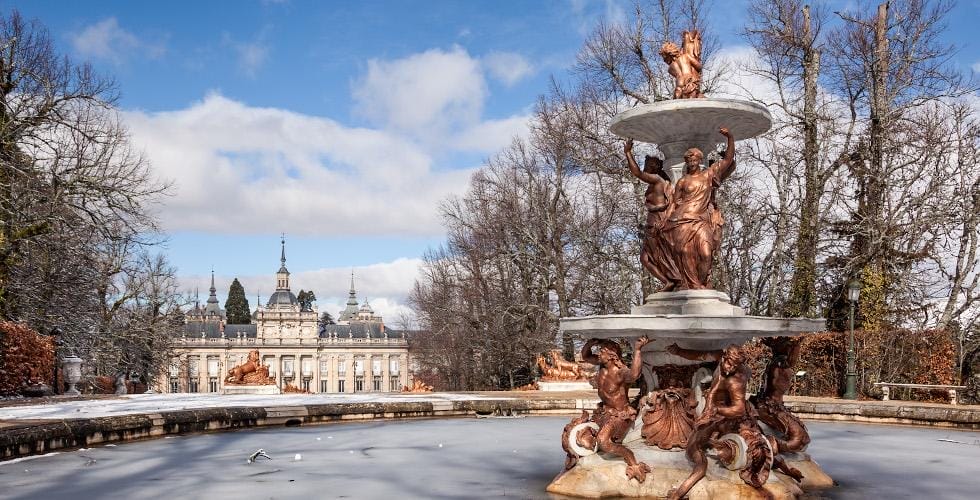
What makes Madrid exceptional as a base is what it unlocks within a two-hour radius. No other European capital sits within easy reach of so many UNESCO World Heritage sites and historically significant destinations. Each of the following can be done as a private day trip from Madrid, or woven into a longer itinerary:
- Toledo. Former medieval capital of Spain and one of the most historically layered cities in Europe. Built on a granite hill above the Tagus River, Toledo was where Christian, Islamic, and Jewish cultures coexisted and collaborated for centuries. El Greco lived and painted here. The Cathedral, the Synagogue of Santa María la Blanca, and the Mosque of Cristo de la Luz stand within walking distance of each other. UNESCO World Heritage site.
- Segovia. Home to a Roman aqueduct built in the first century AD without mortar, still intact and still standing in the center of the city. The Alcázar, a medieval castle on a rock promontory, is among the most recognizable silhouettes in Spain. UNESCO World Heritage site.
- Ávila. The best-preserved medieval city walls in Spain encircle a compact old city at 1,130 meters elevation. Ávila is the birthplace of Saint Teresa, whose convents and legacy are woven through the city’s identity. UNESCO World Heritage site.
- Salamanca. One of the oldest universities in the world, founded in 1218, anchors a city of golden sandstone architecture. The Plaza Mayor is widely considered the finest baroque square in Spain. UNESCO World Heritage site.
- El Escorial. Felipe II’s sixteenth-century monastery-palace complex in the foothills of the Sierra de Guadarrama is one of the largest Renaissance buildings in the world and the burial site of Spanish monarchs from Carlos I onward. UNESCO World Heritage site.
- Palacio Real de La Granja de San Ildefonso. A Bourbon royal palace built in the early eighteenth century, modeled in part on Versailles, with formal French gardens and fountains that remain among the finest in Europe. Located in the Sierra de Guadarrama north of Segovia.
- Chinchón. A small historic village south of Madrid with one of Spain’s most celebrated arcaded central plazas, a working castle, and a local aniseed liqueur tradition that has been producing its characteristic drink for centuries. Rarely included in standard itineraries and consistently one of our clients’ most memorable afternoons.
This concentration of heritage within reach of a single city is genuinely unusual. Few destinations in Europe offer this density of historically significant sites in this proximity. Planning which to include, and in what order, is one of the first and most consequential decisions in any Madrid-anchored itinerary.
MPT angle. We know the right private guide for each of these destinations, including Toledo specialists who arrange early access to the Cathedral’s sacristy before general admission, and historians who connect the threads between all seven sites into a coherent story rather than a checklist.
Andalusia
The region where first-time visitors feel Spain arrive. Seville, Córdoba, Granada, the white villages, sherry country, and the flamenco traditions of Triana.
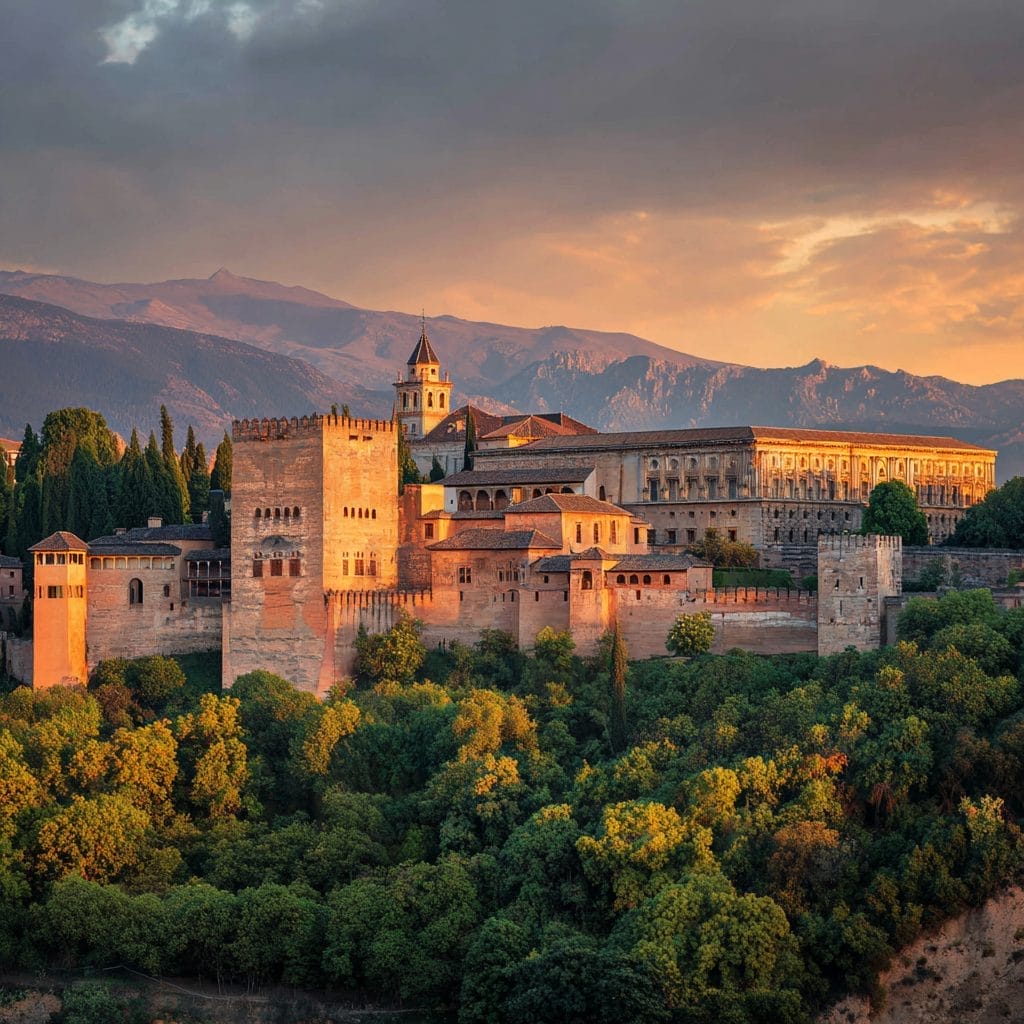
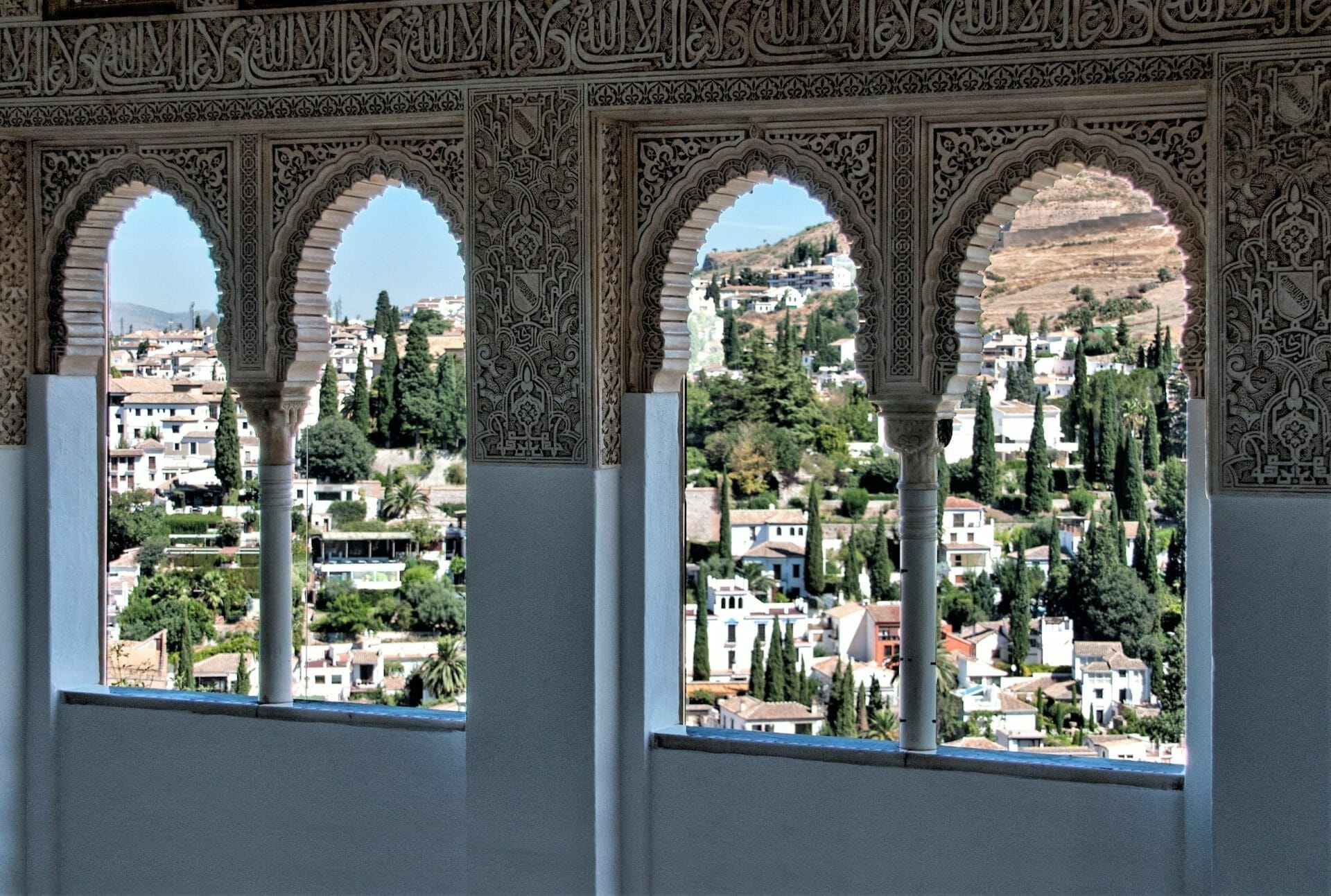
Andalusia is where most first-time visitors to Spain feel the destination arrive. Seville’s Real Alcázar, a working royal residence and UNESCO World Heritage site, is widely considered one of the finest examples of Mudéjar architecture in existence. The Mezquita-Catedral in Córdoba is one of the most architecturally remarkable buildings in the world: a forest of 856 columns with a Renaissance cathedral built inside a medieval mosque. Granada’s Alhambra Palace requires advance planning and a guide who can bring the history to life rather than recite dates.

Beyond the three main cities, Andalusia holds the white villages of the Sierra de Grazalema and the Ronda gorge, the sherry producers of Jerez de la Frontera, and the flamenco traditions of the Triana neighborhood in Seville, a form of flamenco distinct from the tourist-facing performances and accessible only through the right local contacts.
The region is also where Spain’s food culture is most immediate: the Mercado de Triana, jamón ibérico carved at a counter in a village bar, cold fino sherry on a warm afternoon.
MPT angle. In Seville, our flamenco contacts can bring clients into private performances that do not appear in guidebooks. In Jerez, we visit sherry bodegas that are closed to big tour groups but open for us. The olive oil estates outside Córdoba where we send our clients are family operations, not show farms. Twenty-plus years of relationship, not a booking platform. We connect the threads between all of Andalusia´s sites into a bespoke story rather than a checklist.
Barcelona and Catalonia
The one Spanish city where architecture is the primary argument. Gaudí, the Gothic Quarter, and a distinct Catalan cultural identity.
Barcelona is the one Spanish city where architecture is the primary argument. Gaudí’s Sagrada Família has been under construction since 1882 and is expected to be completed in the 2030s. What exists now is remarkable. Casa Batlló, Casa Milà, and Park Güell are all within the city. The Gothic Quarter contains Roman wall foundations, a medieval Jewish quarter, and the Picasso Museum. El Born is one of the finest urban neighborhoods in Europe for food, wine bars, and independent culture.
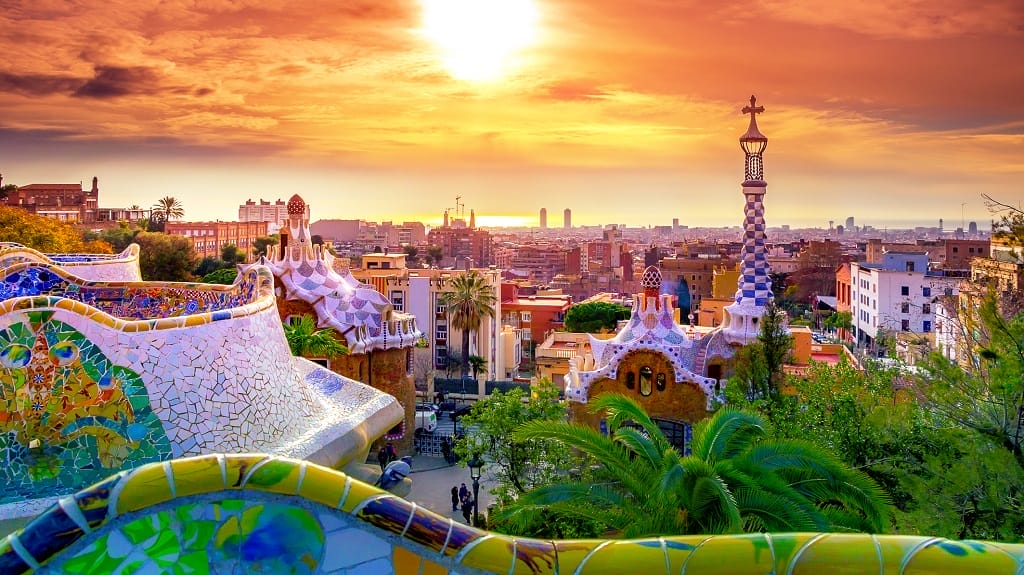
Catalonia beyond Barcelona adds the monastery of Montserrat, the volcanic landscape of La Garrotxa, and the Penedès wine region, home to Spain’s finest cava producers and increasingly interesting still wines.
One important note for planning: Barcelona has a different rhythm from the rest of Spain. It is more cosmopolitan, more architecturally driven, and operates with a distinct Catalan cultural identity. Travelers who expect it to feel like Andalusia will be surprised. That difference, properly framed, is part of what makes a Spain itinerary that includes both regions so compelling.
MPT angle. Our Barcelona guides read Gaudí’s architecture as much as his biography, and we arrange private morning access to the Sagrada Família before public opening, when the basilica is quiet and the stained-glass light is at its best.
Valencia and the Mediterranean Coast
Spain’s third city, the origin of paella, and the natural Mediterranean complement to Madrid by high-speed train.
Madrid connects to Valencia by high-speed AVE train in approximately one hour and thirty-five minutes, making it one of the most natural combinations in any Spain itinerary, and one that shifts the entire character of a trip from the elevated Castilian interior to the Mediterranean.
Valencia is Spain’s third-largest city and one of its most architecturally interesting. The Ciudad de las Artes y las Ciencias, the City of Arts and Sciences, is a complex of cultural buildings designed by Valencian architect Santiago Calatrava, built primarily between 1998 and 2005. The Oceanogràfic is Europe’s largest aquarium. The Palau de les Arts Reina Sofía hosts opera and classical performance. Together they form one of the most ambitious urban design projects completed in Europe in recent decades, and they are best understood with an architectural guide rather than a map.

The historic center offers a different scale. The Silk Exchange, La Lonja de la Seda, is a UNESCO World Heritage site, a Gothic trading hall built between 1482 and 1548 that functioned as the commercial heart of one of the Mediterranean’s wealthiest medieval cities. The Valencia Cathedral holds what many historians identify as the most credible candidate for the Holy Grail, a Roman-era agate cup venerated since the medieval period. The Barrio del Carmen, the old quarter, contains layers of Roman, Islamic, and medieval Christian history compressed into a walkable neighborhood.
Valencia is also the origin of paella. Not as a brand, but as a practical reality: the rice paddies of the Albufera natural park south of the city have been cultivated for over a thousand years, and the dish developed here as a working meal for farmers and fishermen, cooked over wood fire in the open air. The original Valencian paella contains chicken, rabbit, green beans, and garrofón beans, no seafood, no chorizo. Eating it in Valencia, prepared correctly, with Valencian rice, over a wood fire, is a different experience from every version served outside the region.
The Mediterranean connection runs deeper than the city itself. The Valencian coast and the interior of the region carry evidence of Greek, Phoenician, Iberian, Roman, and Moorish settlement, a sequence of civilizations drawn to the same coastline for the same reasons over three thousand years.
MPT angle. Our strongest use of Valencia is as a natural two-city opening or closing for a Spain itinerary paired with Madrid, using the AVE as a feature rather than a logistics detail. In Valencia we arrange private architectural visits to the Ciudad de las Artes and private paella experiences in the Albufera with producers who still use traditional methods.
Basque Country and La Rioja
Spain’s most important food and wine pairing. San Sebastián’s Michelin density, Bilbao’s Guggenheim, and Rioja’s Tempranillo cellars.
The Basque Country and La Rioja together form one of the most compelling food and wine routes in the world, and one of the most undervisited by American travelers who haven’t done Spain before.
San Sebastián has more Michelin stars per capita than any city on earth. The pintxos culture of the Old Quarter, small bar snacks that are sophisticated compositions in their own right, is not a tourist approximation of something else. It is the real thing, at its source. Bilbao’s Guggenheim, designed by Frank Gehry, transformed an industrial port city into a cultural destination and remains one of the most significant buildings completed in the twentieth century.

La Rioja, directly south, is Spain’s most established wine region. The Tempranillo-based reds from producers like López de Heredia, CVNE, and Muga represent some of the best age-worthy wine made anywhere. The region also contains the walled medieval village of Laguardia, the monasteries of San Millán de Yuso and Suso where the first written words in Castilian Spanish are preserved, and a landscape that changes dramatically between the highland and lowland zones.
Navarre, neighboring La Rioja and the Basque Country to the east, is a natural addition for clients with more time. Pamplona and the San Fermín festival are the entry point for most Americans, but Navarre’s wine country, Pyrenean foothills, and the stretch of the Camino Francés that crosses the region are worth the extension on their own terms.
MPT angle. Our relationship with several Rioja family producers opens their older cellars and library wines to our clients, tastings that are not on any public menu. In San Sebastián, we book the pintxos bars the local food writers actually use rather than the three listed in every guidebook.
Castilla y León
The largest region in Spain. Romanesque churches, Gothic cathedrals, walled medieval cities, and the wines of Ribera del Duero.
Castilla y León is the largest region in Spain and one of the least understood by international travelers. It is where Spain’s history as a unified kingdom began, and the landscape holds the evidence: Romanesque churches, Gothic cathedrals, walled medieval cities, and the vast, spare meseta that shaped the Spanish character as much as any geography in the country.

Salamanca’s Plaza Mayor is widely considered the finest baroque square in Spain. The university, founded in 1218, makes it one of the oldest continuously operating educational institutions in the world. Burgos contains the Gothic cathedral where El Cid is buried. Segovia, shared with the Madrid day-trip circle depending on how the route is built, anchors the eastern edge.
The Ribera del Duero wine region runs through the heart of the territory, producing wines made from Tempranillo (known locally as Tinto Fino) that rival anything from La Rioja in quality and surpass them in age-worthiness. Vega Sicilia’s Único is among the most collectible wines produced anywhere in the world.
MPT angle. For clients who want Spain without the crowds, Castilla y León is consistently our answer. We have found more space, more history, and less competition from other travelers here than anywhere else in mainland Spain. We combine it naturally with Madrid or with La Rioja depending on the rhythm a client wants.
Extremadura
The least visited region in mainland Spain. Roman Mérida, Cáceres’s Game of Thrones medieval streets, Guadalupe monastery, Templar castles, cork dehesa, and jamón ibérico.
Extremadura is the least visited region in mainland Spain and, for the right traveler, one of the most rewarding. It sits in the far west, bordering Portugal, and it produced a disproportionate number of Spain’s conquistadors. Hernán Cortés was born in Medellín; Francisco Pizarro in Trujillo. Both towns are still standing, largely as they were.
Trujillo is the more complete of the two. Its medieval plaza mayor, overlooked by a castle dating to the ninth century, sits largely unchanged from the period when its native sons were dividing up the Americas. The Palacio de la Conquista, built by Pizarro’s family with New World wealth, still anchors one corner of the square. The town is small, relatively unvisited, and one of those places that requires almost no effort to imagine as it was five hundred years ago.
Mérida contains the most extensive Roman ruins in Spain: a theater built in 16 BC that still hosts performances, an amphitheater, a circus, a bridge across the Guadiana, and a Roman dam. The National Museum of Roman Art, designed by Rafael Moneo, is one of Spain’s finest museums and sees a fraction of the visitors it deserves.
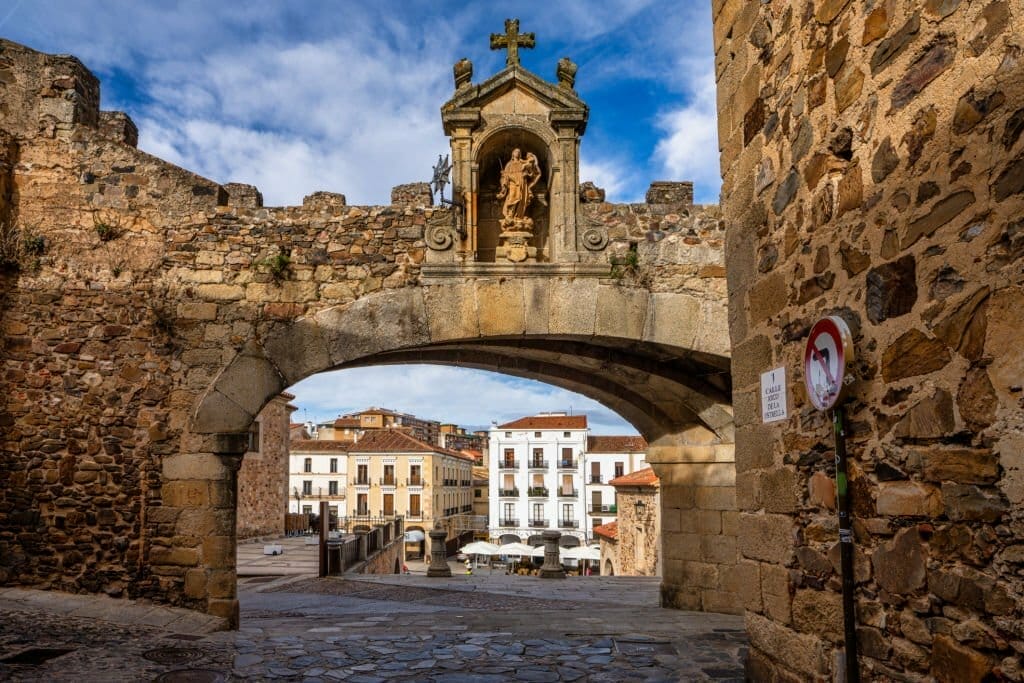
Cáceres, a UNESCO World Heritage city, has a medieval old town so intact that Game of Thrones used it as a filming location for King’s Landing street scenes in Season 7. The production chose Cáceres over alternatives precisely because nothing needed to be hidden or dressed. It is the kind of city where you walk streets that have been there for five hundred years and encounter almost no other travelers.
The Royal Monastery of Santa María de Guadalupe, also a UNESCO World Heritage site, sits in the mountains of the Sierra de Guadalupe and has been a pilgrimage destination since the fourteenth century. Its Mudéjar cloister, Gothic chapter house, and sacristy holding Zurbarán’s cycle of paintings on the life of Saint Jerome make it one of the most important religious and artistic complexes in Spain. It is also among the most overlooked, which is part of its appeal.
Extremadura’s food and landscape identity runs deep. The dehesa, a managed oak woodland ecosystem unique to the western Iberian Peninsula, covers much of the region and sustains the Iberian pig herds that produce Spain’s finest jamón ibérico de bellota. The same landscape produces cork, harvested from oak bark in a traditional cycle that does not harm the tree and has been practiced here for centuries. Spain produces roughly half the world’s cork, and Extremadura is a significant part of that. The region also produces artisan cheeses, notably Torta del Casar, a raw sheep’s milk cheese with a soft, almost liquid interior that is among the most distinguished in Spain and rarely found outside the region.
The Templar Knights established a significant presence in Extremadura during the Reconquista, and their legacy is visible in the fortified towns and castle complexes of the region. The castle at Jerez de los Caballeros, where the Templars made their last stand in Spain after the order’s dissolution in 1312, remains standing. The town takes its name from the knights who died there.
MPT angle. When clients tell us they want Spain without the crowds, without the performance, and with a sense of genuine discovery, Extremadura is consistently our answer. We arrange private visits to jamón producers during the autumn montanera, after-hours access to Cáceres’s old city with a local historian, and visits to Guadalupe that go beyond the monastery church into the sacristy and Zurbarán collection that most visitors never reach.
Galicia
Spain’s Atlantic northwest. The Camino de Santiago, some of Europe’s best seafood, Albariño, and a Celtic cultural inheritance.
Galicia sits in Spain’s northwest corner, on the Atlantic, and is unlike anywhere else in the country. The landscape is green, wet, and Celtic in character. Bagpipes are a traditional instrument here, and the coast is cut into deep inlets called rías that produce some of the finest seafood in Europe: percebes (goose barnacles), nécoras (velvet crabs), pulpo á feira (Galician-style octopus), and the Albariño white wine that pairs with all of it.
Santiago de Compostela is the endpoint of the Camino de Santiago pilgrimage routes and one of the most emotionally resonant cities in Europe. The cathedral has been receiving pilgrims since the ninth century. The old city, a UNESCO World Heritage site, is compact, walkable, and best experienced with a guide who knows its history beyond the religious.

For travelers who want to walk a section of the Camino privately, with a support vehicle, a selected route, and the freedom to end each day when ready rather than when a hostel bed demands, Galicia offers the best conditions.
MPT angle. A significant share of our Galicia work is private Camino planning for clients who want the walk without the hostel logistics: baggage transfer, curated accommodation each night, a historian on the sections that reward context, and the freedom to walk the parts that matter most rather than all of them.
Asturias
Green Spain’s mountain and coast region. Picos de Europa, cider culture, and pre-Romanesque churches that predate the Romanesque by two centuries.
Asturias is called the natural paradise of Spain for reasons that hold up: the Picos de Europa mountain range, the green coast, and the medieval pre-Romanesque churches that predate the Romanesque style by two centuries and hold UNESCO World Heritage status. The region never fell fully to the Moorish conquest. It was from here that the Christian Reconquista began in 722 AD, and that history is visible in the architecture.
The food culture here is anchored in cider: natural, slightly cloudy, poured from height in a specific ritual that aerates the drink. The sidrerías of Gijón and Oviedo are as much a cultural experience as a culinary one. The seafood, from the same Atlantic waters as Galicia, is exceptional.
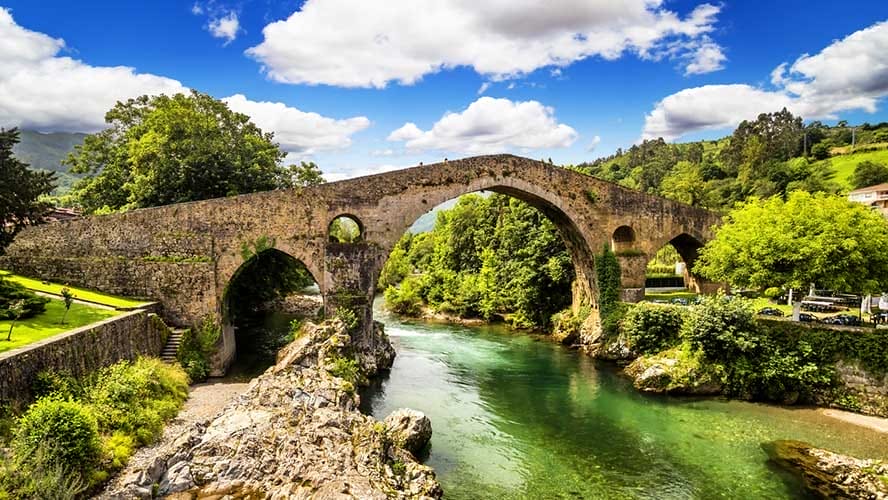
Oviedo’s old city is elegant and well-preserved, with a cathedral that holds one of Spain’s most important collections of pre-Romanesque art. The city is small enough to walk entirely and honest enough to feel like it has not been arranged for visitors.
MPT angle. Asturias pairs most naturally with Galicia and Cantabria for clients who want Green Spain as an alternative or addition to the Andalusian south. The combination gives clients two Spains on one trip, which for many is the entire point.
Cantabria
Small region between Asturias and the Basque Country. Altamira’s prehistoric cave art, Santander’s coast, and Picos de Europa access.
Cantabria is a small region between Asturias and the Basque Country, often overlooked in favor of its neighbors and worth including precisely because of that. The Altamira Cave contains Paleolithic paintings dated to as early as approximately 36,000 years ago, among the oldest and finest examples of prehistoric art in the world. The original cave is closed to preserve the paintings, but the replica is exact and the museum context is genuinely illuminating.
Santander is a graceful port city with good beaches, a fine arts museum, and a working-class food culture untouched by culinary tourism. The Picos de Europa extend into Cantabria and offer some of the range’s best hiking, with the village of Potes as a base.
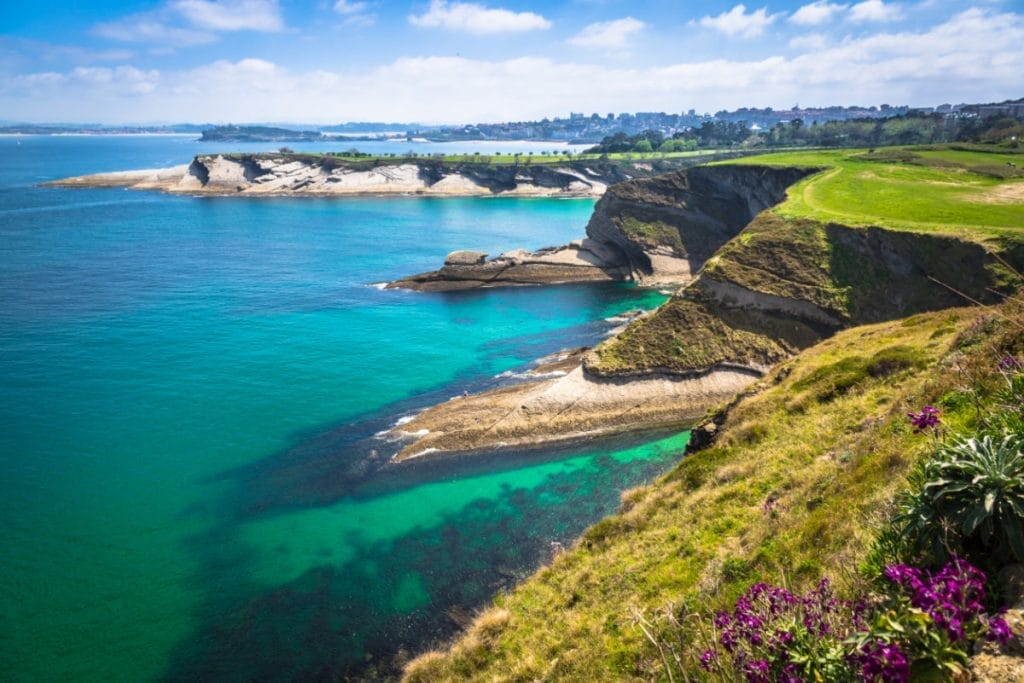
The region also produces Quesucos de Liébana, small mountain cheeses that are among Spain’s most interesting and virtually unknown outside the north.
MPT angle. On any northern Spain itinerary we include Cantabria specifically for Altamira and for Picos access. It adds material that changes the historical scope of the trip without adding significant travel time, and clients consistently cite Altamira as one of the most moving sites in the north.
The Canary Islands
Volcanic archipelago off the Moroccan coast. Mount Teide, Lanzarote’s lava fields, La Palma’s night skies.
The Canary Islands sit off the northwest coast of Africa, closer to Morocco than to Madrid, and their volcanic geology, year-round mild climate, and distinct culture place them in a category apart from mainland Spain. They are not a beach alternative to the mainland. They are a different argument entirely.
Tenerife’s Mount Teide is a 3,718-meter active volcano and Spain’s highest peak. The national park surrounding it has a lunar quality that is unlike anything else in the country. Lanzarote was shaped by eruptions in the eighteenth century that covered a third of the island in lava fields. Timanfaya National Park preserves this landscape in a form that requires a guide to fully understand. César Manrique, the Lanzarote-born artist and architect, spent his career designing structures that worked with the volcanic landscape rather than against it. His Jameos del Agua and Fundación César Manrique are among the most interesting artist-environment fusions in Europe.

La Palma, smaller and less visited, has one of the clearest night skies in the world and is home to the Roque de los Muchachos Observatory. For travelers with an interest in astronomy, it is a serious destination.
MPT angle. We recommend the Canary Islands as either the beginning or the end of a mainland Spain itinerary, a few days that feel genuinely unlike anything else on the trip and serve as a natural decompression from the intensity of the mainland.
The Balearic Islands
Mallorca, Menorca, and Ibiza. Exceptional in May, June, and September. Difficult and expensive in high summer — and worth understanding before you plan.
The Balearic Islands occupy a category of their own within Spain. Mallorca, Menorca, and Ibiza are each distinct in character, and the decision between them is one of the first and most important in any Balearic itinerary.
Mallorca is the largest and most varied. The Serra de Tramuntana, the mountain range that runs along the island’s northwest coast, is a UNESCO World Heritage site — a dramatic limestone landscape of terraced olive groves, hilltop villages, and coastal cliffs that has nothing in common with the beach resort areas to the south. Deià, Valldemossa, and Sóller are the anchors of this interior; Robert Graves lived and wrote in Deià for decades, and the village remains relatively untouched. Palma, the capital, has a Gothic cathedral that rivals any on the mainland, a vibrant food scene, and one of the finest collections of contemporary art in the western Mediterranean at the Es Baluard museum. Mallorca rewards travelers who look past its reputation.

Menorca is smaller, quieter, and more intact. The island has resisted mass development and retains an unhurried pace that is increasingly rare in the Mediterranean. Its prehistoric talayot monuments — megalithic stone structures dating to the Bronze Age — are scattered across the interior in a density found nowhere else in Spain. The island is a UNESCO Biosphere Reserve, and its unspoiled beaches and coastal paths make it the best choice in the Balearics for travelers who want genuine tranquility.
Ibiza is internationally known for its summer nightlife, which is real and very present in July and August. What is less known is that the island has a quieter identity in the north and in the shoulder months: farmhouses, old fishing villages, the UNESCO-listed Dalt Vila (the historic fortified old town of Ibiza City, whose walls date to the sixteenth century), and a food scene that has developed considerably. For the right traveler at the right time of year, Ibiza is not what most Americans expect.
A candid note on timing and availability.
The Balearics are among the most seasonal destinations in Spain, and planning here requires more lead time than anywhere else we work. In July and August, the finest hotels, private villas, and traditional fincas on all three islands are typically committed twelve months or more in advance. Availability is genuinely limited, and pricing in high summer reflects significant demand from European travelers with different vacation rhythms than Americans.
We recommend May, early June, and September as the strongest windows for private travel in the Balearics. The weather is excellent, the landscapes are at their most vivid, the best properties are accessible with appropriate lead time, and the islands feel like themselves rather than like a crowd. If July or August is the only possibility, we can work with that — but we will be direct about what is and is not achievable, and we will need to begin early.
MPT angle. We plan Balearic itineraries primarily for clients who want to see the islands properly — the Tramuntana, the prehistoric sites of Menorca, the old Ibiza that exists outside the summer season — rather than for those looking for beach access and nightlife. If you have flexibility on dates, we will tell you which month to come.
Planning Essentials for Americans
When is the best time to visit Spain?
Late April through early June and mid-September through October offer the best combination of weather, light, and moderate crowds.
Spain rewards private travel year-round, but the experience changes dramatically by season.
Late April through early June and mid-September through October offer the best combination of weather, daylight, and moderate crowds. These are also the windows when hotels and guides book out earliest, so planning ahead matters more than in other seasons.
Summer is hot across most of the country. Madrid and Andalusia regularly exceed 35°C (95°F) in July and August, and many Spaniards leave the cities for the coast or the north. If summer is your window, the north (Basque Country, Galicia, Asturias, Cantabria) and the Canary Islands are where we send clients; interior Spain is harder work in that heat than it needs to be.
Winter is mild in Andalusia and along the Mediterranean, excellent for food, wine, and uncrowded museums, though cooler in the interior and the north. Madrid in January has the Prado essentially to yourself.
Festival calendars matter more than most American travelers expect:
- Holy Week in Seville (Semana Santa, late March or April)
- The Feria de Abril, two weeks after Holy Week
- San Fermín in Pamplona, early July
- The Bienal de Flamenco in Seville, September of even-numbered years
- Fallas in Valencia, mid-March
Any of these can reshape an itinerary entirely. For clients who want to be present, we plan deliberately around the dates. For clients who want to avoid the crowds, we route around them. The worst outcome is landing in Seville during Semana Santa without having known it was coming, which happens more often than it should.
How many days should we spend in Spain?
Ten days minimum for a meaningful trip. Fourteen is our recommended sweet spot for a first-time visit covering two or three regions.
Most of our American clients plan Spain in ten to fourteen days.
A week is enough for a single region done well (Andalusia, or Madrid with central Spain day trips) but not enough for the sequencing that makes Spain exceptional. The risk with a week is that you are choosing which Spain to visit, rather than experiencing more than one Spain.
Fourteen days is the sweet spot for a first-time visit: Madrid and central Spain, one southern region (usually Andalusia), and one northern or eastern region (Barcelona and Catalonia, or the Basque Country and La Rioja). Three cultural registers, one trip.
Three weeks opens up Galicia, Asturias, Extremadura, the Canary Islands, or the Balearics as additions, and is where the trip starts to feel like a lived experience rather than a curated tour. Our strongest recommendation is always against cramming. Spain rewards travelers who linger, and the difference between four nights in Andalusia and two nights in Andalusia is larger than any equivalent swap elsewhere in Europe.
How much does a private Spain trip cost?
From $799 per person per day with vetted guides, private touring, tailor-made itinerary, select well-located hotels.
From $799 per person per day with vetted guides, private touring, tailor-made itinerary, select well-located hotels.
That is the entry point for a private Spain journey with our agency. From there, pricing scales based on three variables, which we discuss openly with every client in the initial conversation.
- Hotel category. Our clients typically choose between our category 4 (excellent four-star properties and small luxury hotels) and category 5 (Relais & Châteaux, heritage paradores, top urban five-stars). The price step between them is significant and reflects a real difference in experience.
- Season. April through June and September through October carry peak pricing. January, February, and November offer genuine value for clients with flexibility.
- Access. Private dinners, estate visits, Michelin bookings, same-day museum access outside public hours, helicopter or private aviation, and a yacht day on the Mediterranean from Valencia all add incrementally. Most of our clients include some of this selectively; few include all of it.
We are transparent about pricing because we believe under-promising and over-delivering is the right way to begin a client relationship. A detailed, itinerary-specific proposal is free, carries no obligation, and is the only way to answer the cost question precisely for your trip.
Common Questions from Americans
Do we need to speak Spanish?
No. Our team and guides operate in English. A few phrases go a long way, but nothing in our itineraries depends on your Spanish.
No. English is spoken in the travel, hospitality, and guiding infrastructure we use, and our team in Madrid is fully bilingual. That said, Spain rewards even a basic attempt at the language more than most countries, and our guides will help you use what you know.
Is Spain safe for American travelers?
Yes. Spain is consistently among the safer countries in Europe. The main practical concern is standard pickpocket awareness in crowded tourist areas.
Yes. Spain is consistently among the safer countries in Europe on every credible metric. The main practical concern is standard pickpocket awareness in crowded tourist areas of Barcelona and Madrid, which our guides and logistics avoid by design. We advise specific precautions for each city before departure.
Do credit cards work everywhere?
Yes in hotels, restaurants, and shops. Small rural establishments, some taxis, and traditional markets may be cash-only.
Major credit cards (Visa, Mastercard, American Express where accepted) work in almost all hotels, restaurants, and shops. Small rural establishments, some taxis, and some traditional markets are cash-only or prefer cash. We advise our clients on how much cash to carry and where to draw it before departure.
How far in advance should we book?
For peak season (April–June, September–October), twelve to nine months is ideal. Six months is workable. Less than three months is possible but significantly harder, especially during festivals.
For peak season (April through June, September through October), twelve to nine months is ideal. Six months is workable. Three months is possible for flexible clients willing to accept tradeoffs on top-tier hotels and Michelin bookings. Less than three months becomes significantly harder, especially during festival periods like Semana Santa in Seville or the Feria de Abril.
What if someone in our group has mobility concerns?
Tell us at the start. Private touring is designed around your pace, but Spain’s historic centers involve cobblestones and some uneven surfaces.
Tell us at the start. Private touring is designed around your pace, but Spain’s historic centers (Toledo, Granada’s Albaicín, old Seville, the Gothic Quarter in Barcelona) involve cobblestones and some walking on uneven surfaces.
We can restructure routing, increase motorized transport, and select hotels with step-free access when needed. Raising this early changes how we plan. Raising it late limits what we can do.
Can you arrange private or early access to sites like the Alhambra?
Yes in many cases. We handle Alhambra booking and licensed guiding, plus early-access arrangements at a number of major sites.
Yes, in many cases. The Alhambra specifically requires advance booking and a licensed guide; we handle both. Early-access arrangements exist at a number of major sites, including the Cathedral sacristy at Toledo, the Sagrada Família before public opening, and certain museums on request. What is possible varies by site and season, and we are honest with clients about where access is available and where it is not.
Can we combine Spain with Portugal or Morocco?
Yes, and many of our clients do. Spain pairs naturally with either, or both. The sequencing and logistics matter, and we have been planning combined itineraries for more than twenty years.
Yes, and many of our clients do. Spain pairs naturally with either, or both. The logistics matter more than most travelers realize, and we have been planning combined Iberian and Iberia-plus-Morocco itineraries for more than twenty years.
The most common combination is Spain and Portugal together in fourteen to eighteen days. The sequencing we most often recommend: fly into Madrid, travel south through Andalusia, cross into Portugal through the Alentejo or the Algarve, move north through Lisbon and the Douro Valley, and fly home from Porto. That arc gives you two countries, four distinct cultural registers, and a logical geographic flow without backtracking.
The alternative is to fly into Lisbon and out of Barcelona — which works well for clients who want to begin with Portugal’s quieter pace before building toward Barcelona’s energy. It is a less natural geographic sequence but a very good experiential one. Spain and Morocco together typically requires a minimum of sixteen days to do both justice. The most common routing is Spain first, Morocco second, using a ferry crossing from Tarifa to Tangier or a flight from Málaga or Madrid to Casablanca or Marrakech. We plan this combination regularly and are happy to discuss which sequence works best for a given group.
What is your relationship with the guides, hotels, and local partners on our trip?
Direct, longstanding, and personal. Our guides and partners are people we know, not contractors pulled from a marketplace.
Direct, longstanding, and personal. Our guides, winemakers, chefs, historians, and access partners are people we know, not contractors pulled from a marketplace. They are paid at the top of the scale and treated as partners rather than vendors. This is the single biggest operational difference between us and the large multi-country agencies, and it is why our clients are treated as personal guests rather than clients of a booking system.
What Our Past Travelers Say

Dream Trip to Madrid and Barcelona – Perfectly Planned!
We recently returned from a stress-free, absolutely magical trip to Madrid and Barcelona arranged by Dan at Magical Spain & Portugal Luxury Private Tours. From arrival to departure, every detail was seamless. The hotels were top-notch, offering both comfort and style.
Wonderful, high-touch travel agent
We used Dan and his team at Magical Spain & Portugal Luxury Private Tours to create a 2 week, multi-city tour of Madrid and Andalusia. All aspects of the logistics were perfect. Every tour guide was exceptional, tickets to attractions were flawless, and all transfers (trains and private drivers) went without a hitch.
5 Stars Across the Board for Magical Spain!
From start to finish, our experience with Magical Spain was absolutely exceptional. Dan and his talented team worked closely with me every step of the way to create a bespoke trip that exceeded all expectations.
The accommodations they selected were not only comfortable but ideally located, with welcoming staff and beautiful surroundings. Every aspect of our transportation was thoughtfully arranged, eliminating the usual travel stress and allowing us to fully enjoy our time in Spain.
Just back from two weeks in Spain and…
Just back from two weeks in Spain and Portugal with a group of 12 friends. Dan and his team put together an amazing private, personalized trip. We gave him our input and they took care of the rest!
Our Difference: Your Time, Well Spent in Spain
Our Founder
Dan O’Beirne moved to Madrid in 1998 and has not left. He is American, has spent more than half his life in Spain, and has been building private journeys for fellow Americans since 2002. He is not managing these destinations remotely. He is here.
Our Dual Fluency
We are American-owned and Madrid-based. We understand how Americans think about travel: the value of limited vacation time, the preference for logistical confidence, the desire for genuine access rather than the appearance of it. And we understand Spain at the level that only comes from being inside it for decades. That combination is uncommon. We think it matters.
Our Guides
Selected as much for how they read a room as for what they know. Our winemakers, chefs, historians, and access partners are people we have relationships with, built over twenty-plus years, not assembled for a brochure. They are paid at the top of the scale, treated as partners rather than vendors, and they in turn treat our clients as personal guests.
Groups Welcome
We plan private journeys for couples, families, and private groups of eight to twenty travelers — wine clubs, golf groups, pickleball trips, multigenerational families, and affinity groups united by a shared interest. Every trip is private and built for the specific people on it, regardless of size.
Time Well Spent
Every decision we make, from which hotel to book to which afternoon to leave open, is measured against one question: does this spend your time in a way that justifies it? For clients who have limited vacation weeks in a year, that question is the difference between a well-organized trip and a trip you remember for the rest of your life.
Get the Private Spain Expert Planning Guide
Before you start building an itinerary, read this.
After 24 years and more than 15,000 travelers, we have learned what makes a Spain trip exceptional and what quietly compromises one. We put the most important of it into a short planning guide: the regional decisions, the timing considerations, the questions to ask any agency before you book.
No sales pitch. No generic advice. Just what we would tell a friend who asked.
"*" indicates required fields
Private Spain Travel Itineraries
Spain
12-Day Private Spain Tour: Madrid to Barcelona via Toledo, Seville & Granada
A private Spain tour from Madrid to Barcelona via Andalusia. from $9,250 per person

Spain
7-Day Private Cultural Tour of Spain: Madrid & Moorish Andalusia
Discover Spain in 7 days – private guided tour Madrid, Moorish Andalusia, Seville & Granada – from $ 5184 pp.
Spain
Secrets of Andalusia Private Tour: Seville, Córdoba & Granada – 7 days
A private Andalusia journey with Seville, Córdoba, Granada, the Alpujarras, and Aracena. from $5.772 per person.

Spain
A Taste of Northern Spain: Food & Wine Private Luxury Tour
Savor Northern Spain’s food & wine on a private luxury tour: Rioja, Basque Country, Ribera Duero – 10 days from $12,484 pp.

Spain
Secrets of Southern Spain’s Andalusia: Seville to Granada
Andalucía’s Icons: Seville, Córdoba, Carmona & Granada’s Alhambra Palace! …7 day private tour from $4994 pp.

Spain
Private Spain Family Tour: Madrid, Barcelona & Andalusia
Private Spain Family Tour: Madrid, Toledo, Granada, Seville & Barcelona – 10 days from $ 6492 pp.
Ready To Start Planning?
We start every Spain journey with a thirty-minute conversation, not a form, not a brochure request. We ask the questions most agencies don’t think to ask, and we listen to the answers before we suggest anything.
If you’re curious about Spain, that conversation is the right place to begin.
Start a ConversationNo obligation. No sales cycle. Thirty minutes, and you will know whether we are the right fit.
