







Plan two or three nights in Valencia, ideally from March to June or in September and October, under two hours from Madrid by high-speed train. Your licensed guide leads you through the old town, the Mercado Central and the City of Arts and Sciences, then out to the Albufera rice fields, the Borgia town of Xàtiva or the wine caves of Requena. Private journeys including Valencia start from $884 per person per day, based on double occupancy, excluding flights.
At a glance. Ideal stay: two or three nights · Best months: March to June, September and October · Nearest airport: Valencia (VLC), about 20 minutes from the old town, or Madrid, under two hours by high-speed train · From $884 per person per day, double occupancy, excl. flights
Every Thursday at noon, eight farmers in black smocks take their seats outside the Apostles’ Door of Valencia’s cathedral and settle disputes over irrigation water, as the Water Tribunal has done for centuries. There are no lawyers, the hearing is spoken, and the verdict is final. Your guide brings you there in time, then walks you through the Mercado Central, where the stalls under its modernist domes sell the bomba rice, saffron and flat garrofó beans that go into a true paella valenciana.
What does a licensed guide show you in Valencia?
The old town
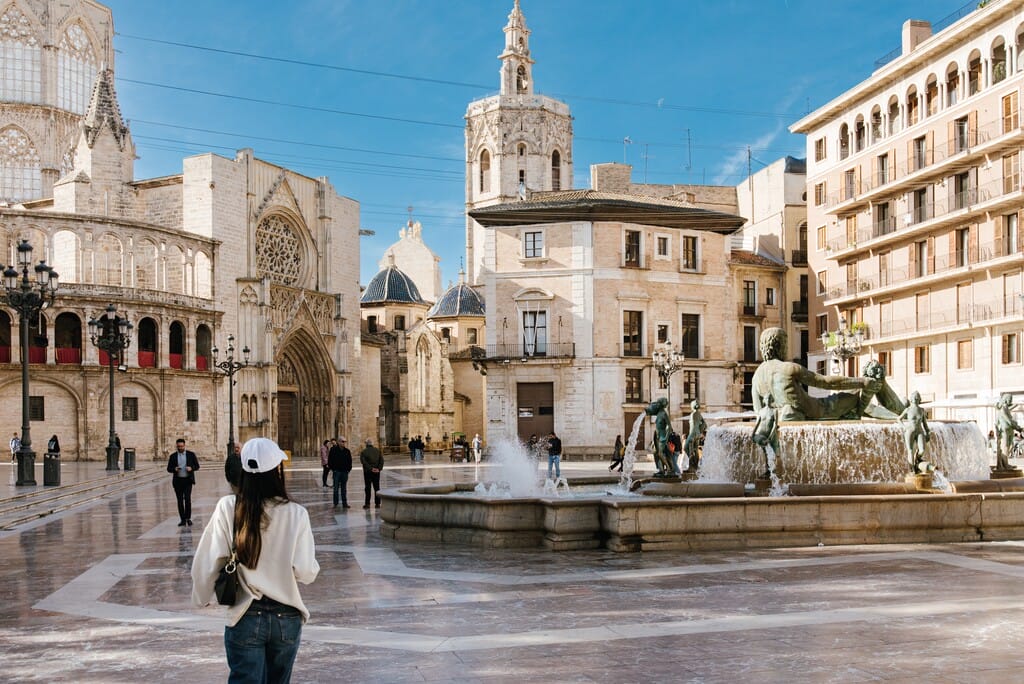
The Plaza de la Virgen opens onto the cathedral, where a side chapel keeps a stone chalice venerated for centuries as the Holy Grail, and the Micalet bell tower looks out over the rooftops to the sea. A short walk away, the Gothic Silk Exchange, a UNESCO World Heritage site, raises its vaults on twisted columns like palm trunks, and the church of San Nicolás glows under ceilings painted from end to end.
The Mercado Central
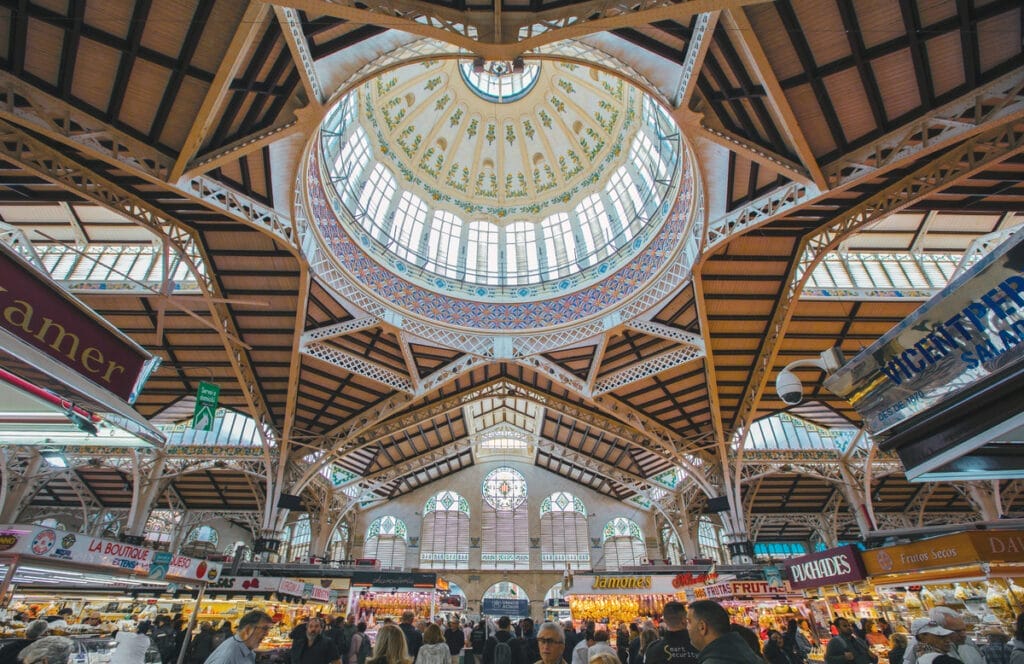
Built between 1914 and 1928, the Mercado Central covers more than 8,000 square meters under iron, glass and ceramic domes. Your guide introduces you to the stallholders, from the rice and saffron sellers to the fishmongers, and on request a chef shops with you before a private paella class.
The City of Arts and Sciences and the Turia Gardens
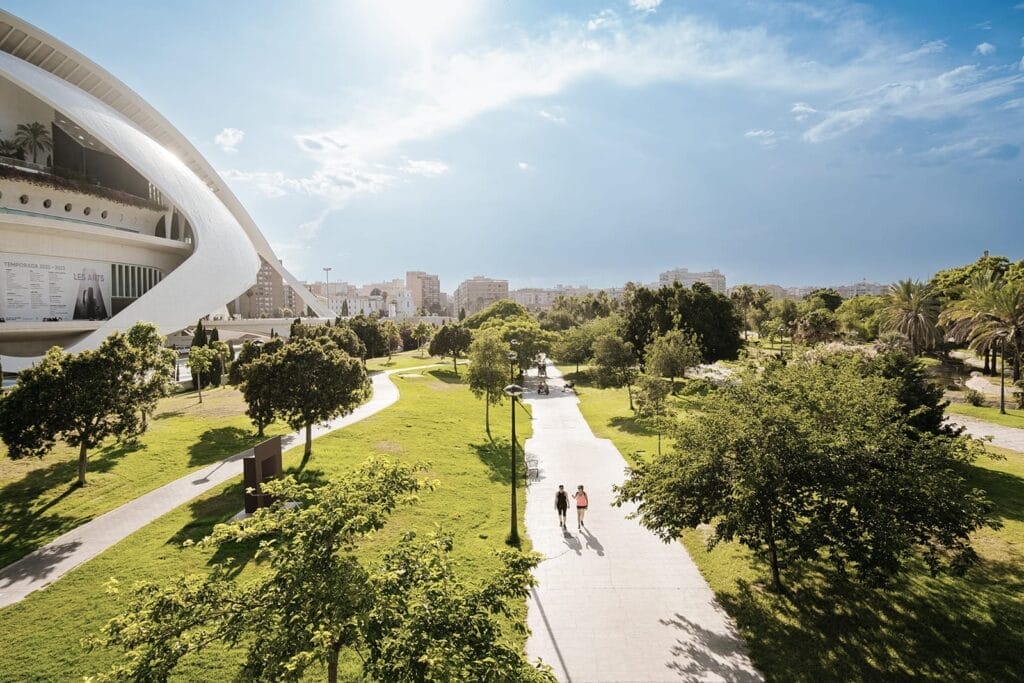
After a flood in 1957, Valencia moved its river out of the city and turned the old riverbed into the Turia Gardens, a green ribbon of about nine kilometers that you can cross on foot or by bike. At its end, Santiago Calatrava’s white buildings for the City of Arts and Sciences rise from shallow pools, beside the Oceanogràfic, the largest aquarium complex in Europe.
What lies beyond Valencia?
The Valencia region reaches from the rice fields south of the city to medieval castles on the coast and in the hills. These four make the best private days out, each with your licensed driver.
The Albufera and El Palmar
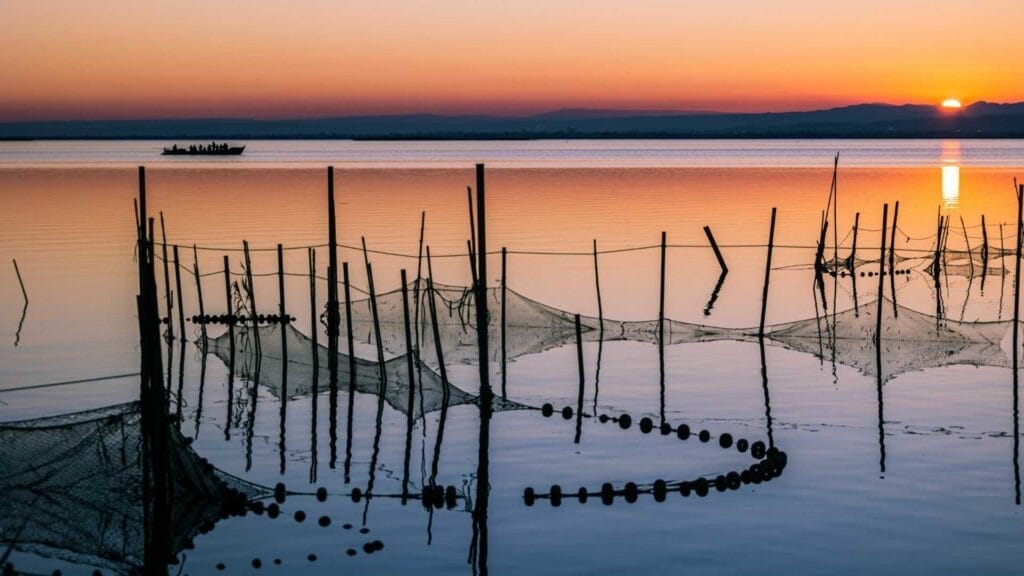
About 20 minutes south of the city, the Albufera lagoon and its rice fields form a natural park where rice has been grown for more than a thousand years. In the village of El Palmar, where Valencians say paella was born, families still cook it over a wood fire, and at sunset a traditional flat-bottomed boat takes you out across the lagoon as the light turns gold.
Requena and the Utiel-Requena wine country
An hour inland, the walled old town of Requena sits above the Cuevas de la Villa, caves dug in Moorish times where wine and grain were once stored, the wine in great earthenware jars. The vineyards around it grow mostly bobal, the local red grape, and on request your planner arranges tastings at family wineries and cava cellars.

Xàtiva, the town of the Borgia popes
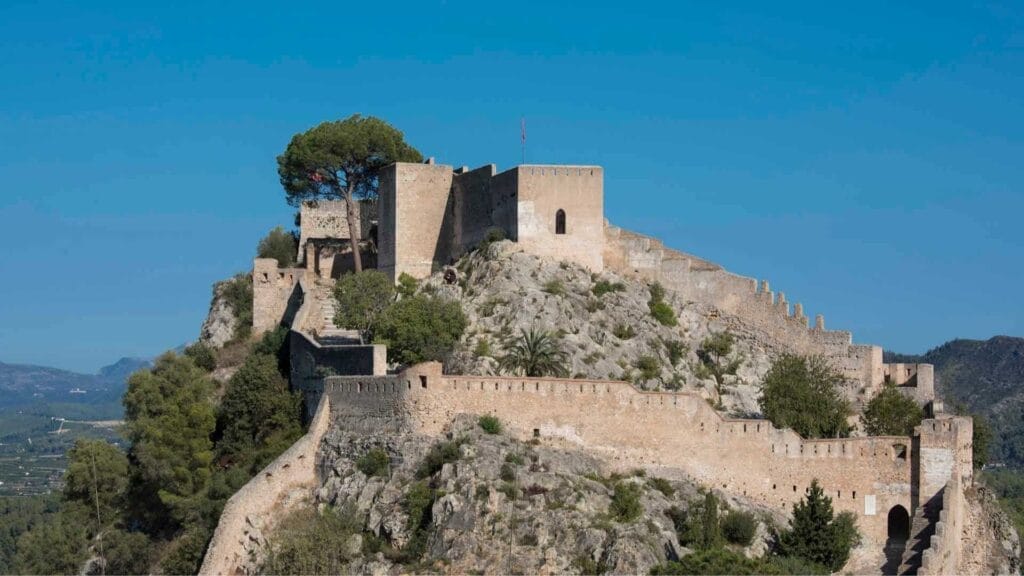
Under an hour south, Xàtiva climbs to a long castle on its hilltop, where Hannibal is said to have camped before the siege of Saguntum. Alexander VI, the Borgia pope, was born here, and his uncle Callixtus III just outside town, and bronze statues of both stand at the doors of the Collegiate Church of Santa María.
Peñíscola and Morella
About an hour and a half north, the Templar castle of Peñíscola crowns a rocky headland above the sea, the last home of the antipope Benedict XIII and a filming location for El Cid and Game of Thrones. Inland, the walled hill town of Morella keeps a medieval aqueduct and a Gothic basilica, best seen with a night in the region.

Where do Valencians eat and drink?
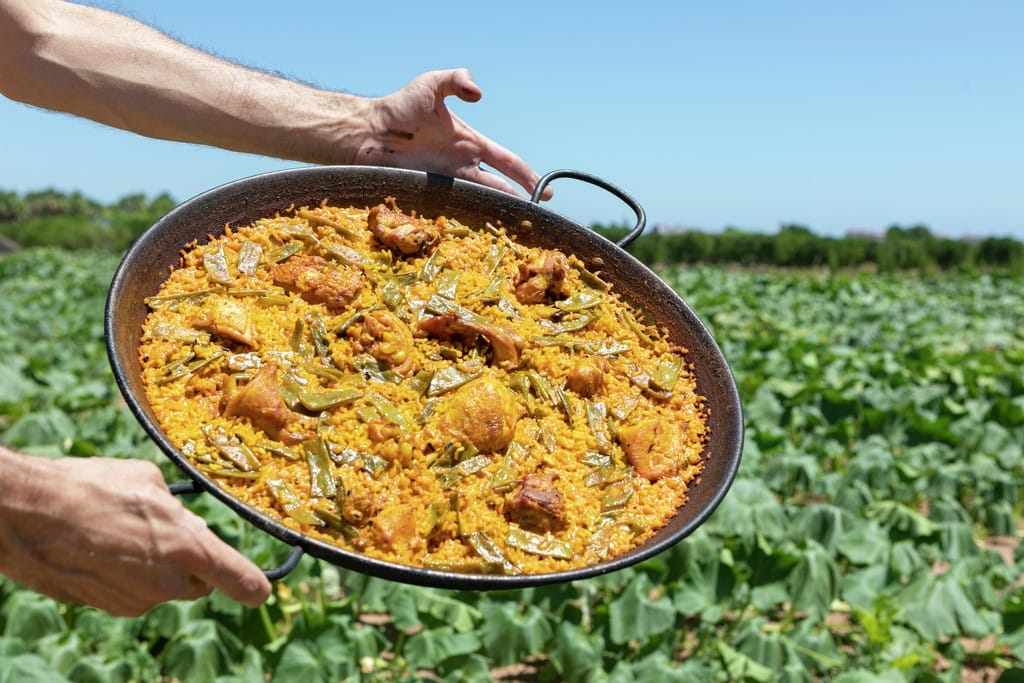
A true paella valenciana is chicken, rabbit, green beans and garrofó beans, cooked in a wide, shallow pan over an orange-wood fire and eaten at lunch, not at dinner. In summer, locals cool off with horchata, a drink of crushed tiger nuts, served with long, soft fartons for dipping, at old horchaterías in the city center and in Alboraya, where the tiger nuts grow.
Valencia’s dining runs to Michelin level. Ricard Camarena and El Poblet each hold two stars in the city, and about an hour and a half south, Quique Dacosta in Dénia holds three. On request, your planner reserves the tables, and in the evenings your guide knows the tapas bars of Ruzafa and the old town.
What are the best hotels in Valencia?
The finest is Hospes Palau de la Mar, a five-star hotel made from two nineteenth-century palaces joined into one, with a garden patio, a spa with an indoor pool and the old town about 500 meters away. For a four-star stay with a modern feel, the Barceló Valencia stands directly across from the City of Arts and Sciences, with a tenth-floor terrace and pool looking over the city. Your planner matches the hotel to your pace and your route.
How many days should you spend in Valencia?
Two or three nights. Two cover the old town, the Mercado Central, the City of Arts and Sciences and an evening on the Albufera. A third adds a day beyond the city, to Xàtiva, Requena or Peñíscola, keeping the same hotel.
When is the best time to visit Valencia?
March to June and September to October bring warm days and the sea at its best. Summers are hot and humid, with highs in the mid to upper 80s°F, and winters stay mild, in the 60s°F. Las Fallas, from March 15 to 19, fills the streets with giant sculptures, fireworks and crowds, and ends with the sculptures set alight. Hotels, like airlines, use dynamic pricing, so rates rise with demand. A higher price marks a popular week, not a poor time to travel.
What can you do outdoors in Valencia?
You can cycle the length of the Turia Gardens to the City of Arts and Sciences, walk the long sand of the Malvarrosa beach, or take a boat across the Albufera at sunset. We know the light hiking trails with the finest views, including the canyon trail at Chulilla, about an hour inland, with its hanging footbridges over the Turia river.

How does Valencia fit a journey through Spain?
Valencia sits on the Mediterranean between Madrid and Barcelona. The high-speed train reaches Madrid in under two hours and a fast train reaches Barcelona in about three. Many of our American travelers add two or three nights in Valencia between the two cities, or fly from Valencia to the Balearic Islands. Your licensed driver handles every transfer.
Private Valencia Journeys

Spain
22-Day Private Tour of Spain: Madrid, Andalusia, the Basque Country, Rioja and Barcelona
Madrid, Seville, the Alhambra, Málaga, Bilbao, San Sebastián, Rioja and Barcelona. 22 days from $24,484 pp.

Spain
7-Day Private Spain Tour: Madrid, Segovia and Barcelona
Madrid, the Prado, Segovia’s aqueduct, the Gothic Quarter and Gaudí’s Barcelona. 7 days from $6,188 pp.

Multi-Country, Portugal, Spain
22-Day Spain and Portugal Private Tour: Rioja, Andalusia and the Douro in Three Weeks
Barcelona, Rioja, Madrid, the Alhambra, Seville, Porto, the Douro and Lisbon. 22 days from $23,624 pp.
Swipe to see all three journeys
How do you want Valencia to feel?
Our sample trips are a starting point. Tell us your dates and what you love. Your first itinerary carries no planning fee and no obligation, and you’ll hear back within one business day.
Start planningWhat do our travelers say about Spain?
Frequently asked questions about private Valencia tours
What are the top attractions in Valencia?
The cathedral and the Plaza de la Virgen, the Silk Exchange, the Mercado Central, the Turia Gardens and the City of Arts and Sciences, with the Albufera lagoon just south of the city.
What are the best day trips from Valencia?
The Albufera and El Palmar for paella and a sunset boat ride, Requena for its caves and wineries, Xàtiva for its castle and its Borgia history, and Peñíscola for its castle above the sea.
What do most people not know about Valencia?
The Water Tribunal still meets every Thursday at noon outside the cathedral. Locals eat paella at lunch, not at dinner. And the city’s cathedral keeps a chalice venerated as the Holy Grail.
Why take a private tour of Valencia?
Valencia’s best days combine the city with the countryside around it. Your planner books the guides, tables and visits, our licensed guides bring the history to life, and your licensed driver takes you from the old town to the rice fields and castles without a wasted hour.
Can a private Valencia tour include Madrid and Barcelona?
Yes. Every journey is tailor-made, and Valencia fits naturally between Madrid and Barcelona by high-speed train.
Plan your private Valencia journey
Our sample journeys are a starting point. The 7-Day Private Spain Tour travels from Madrid and Segovia to Barcelona from $6,188 per person, the 22-Day Private Tour of Spain joins Madrid and Andalusia to the Basque Country, the Rioja and Barcelona from $24,484, and the 22-Day Spain and Portugal Private Tour travels from Barcelona to Andalusia and Portugal from $23,624. Each can add two or three nights in Valencia. Each is tailor-made, so your planner shapes the route, the hotels and the pace around you.
Since 2002, nearly 17,000 travelers have journeyed with us. Your journey is planned by our Spain team, led by founder Dan O’Beirne, an American in Europe since 1998, and Magical Private Travel maintains excellent ratings on Trustpilot and Google’s independent review platforms. Planned from Europe. American precision with local expertise.
More answers on our FAQ page. Explore more of private Spain journeys.
Ready when you are. Your first itinerary carries no planning fee and no obligation.
Start planning