


Multi-CountryPortugalSpain · Private and tailor-made
Spain and Portugal, Rioja to the Douro
Have the National Palace of Sintra to yourselves after closing, from its tiled halls to its great kitchen.
By arrangement · How private access worksSuggested length
22 days
Price guide
From $23,624 per person, excl. international flights, based on two sharing
Includes hotels, private guiding, experiences and transfers
When
April to June and September to October
or call +1 (727) 699-5439
A planner replies within one business day
American precision with local expertise · Planned from Europe since 2002 · Nearly 17,000 American travelers · Never cancelled a journey
A glass of Rioja poured in the old cellars of Haro’s station quarter makes a fine first lesson in Spanish wine. This 3-week private tour of Spain and Portugal runs from Gaudí’s Barcelona through Bilbao and La Rioja to Madrid, then south to Granada, Seville and Córdoba before Porto, the Douro Valley and Lisbon. In Granada, Israel, our Alhambra guide, walks you through the Nasrid Palaces where your dates allow. Toledo, the Prado and the Mezquita fill the days between. The journey ends in Sintra, where, by arrangement, you have the National Palace to yourselves after closing, from its tiled halls to its great kitchen. Your planner reshapes any day around you, so you pay only for what you want.
Walk the Nasrid Palaces and the Court of the Lions with Israel, Granada.
Study Velázquez’s Las Meninas and Goya’s Black Paintings with Ana at the Prado, Madrid.
Taste Rioja in the old cellars of the Barrio de la Estación, Haro.
Walk among the red-and-white arches of the Mezquita, Córdoba.
Sail the Douro under the Dom Luís I bridge to the port cellars of Gaia, Porto.
Ride up to the red and yellow walls of the Pena Palace with Luisa, Sintra.

“We love to tailor-make trips you’ll talk about for years, built on our local relationships & story-worthy experiences.” – Magical’s American founder, in Europe since 1998, culinary enthusiast & world traveler.







A Journey Designed Just for You
Our resident experts wrote this itinerary as a starting point, and your planner shapes every day around your interests, pace and travel style.
What do our American travelers say?
The 22-day Spain and Portugal itinerary at a glance
The route uses ten bases and twenty-one nights: three in Barcelona, one in Bilbao, two in La Rioja, three in Madrid, two in Granada, two in Seville, two in Córdoba, two in Porto, two in the Douro Valley and two in Lisbon. Fifteen nights fall in Spain and six in Portugal. Bilbao is the only one-night stop, because the Guggenheim and the old town fill one full day and La Rioja lies about an hour to the south.
Two short flights and one high-speed train cover the three long connections, so the road days stay short. A direct flight links Barcelona and Bilbao in about 1 hour 15 minutes, the high-speed train runs from Madrid to Granada in about 3 hours, and a direct flight from Seville to Porto takes about 1 hour 15 minutes. A licensed driver handles everything else by road: about 1 hour from Bilbao to Haro, a little over 3 hours from La Rioja to Madrid, about 2 hours 45 minutes from Granada to Seville, about 1 hour 45 minutes from Seville to Córdoba, about 1 hour 15 minutes from Porto into the Douro Valley, and about 3 hours 30 minutes to 4 hours from the Douro to Lisbon.
Spring and autumn suit a route this long, from the Bay of Biscay to Andalusia. Spain’s weather agency, AEMET, records average daily highs in Seville of about 23°C (74°F) in April and 26°C (79°F) in October, against 36°C (97°F) in July, while Bilbao averages about 18°C (64°F) in April and 21°C (71°F) in October. Portugal’s weather institute, IPMA, records average highs in Lisbon of about 20°C (68°F) in April and 23°C (73°F) in October, and in Porto about 18°C (64°F) and 20°C (69°F).
Licensed guides we work with on this route include Irma and Mariona in Barcelona, Ana and Alicia in Madrid, Melanie in Toledo, Israel and Rafael in Granada, Andrés and Rosario in Seville, Susana and Tania in Porto, and Luisa and Anabela in Lisbon. Each is a highly educated local expert who cares about the people in their group. We request your guides by name, and your planner confirms who leads each day once your dates are set.
Why the route runs from Barcelona to Lisbon
The route follows the peninsula from northeast to southwest, so you never double back across a country. Barcelona and the north come first, with Gaudí, Montserrat, the Guggenheim and the vineyards of La Rioja. Madrid sits at the center, the hinge between the north and the south, and Toledo lies about an hour from the capital. From Madrid the high-speed train drops straight into Granada, and the road runs on to Seville and back east to Córdoba, so Córdoba gets two full days instead of a rushed stop between trains.
Portugal comes last and runs north to south. The flight from Seville lands you in Porto, at the mouth of the Douro, and the river leads inland to the terraced vineyards of the Douro Valley. From the valley the road runs south to Lisbon, where the journey ends with Belém, Alfama, Sintra and the Atlantic cliffs at Cabo da Roca. Lisbon’s airport sits about 7 kilometers northeast of the historic center, so the last transfer stays short.
The thread through all three weeks is wine and building. The route pairs two wine regions, La Rioja and the Douro, with the three great monuments of al-Andalus in Granada, Seville and Córdoba, and with the modern work of Gaudí, Frank Gehry, Santiago Calatrava, Zaha Hadid and Álvaro Siza. Your planner treats the route as a starting point and moves nights between bases to fit your dates and interests.
Journey at a glance
Length
22 days
From
$23,624 per person, double occupancy
Route
Barcelona, Montserrat, Bilbao, La Rioja, Madrid, Toledo, Granada, Seville, Córdoba, Porto, Douro Valley, Lisbon, Sintra
Your planner adjusts every day to your dates.

Day One
Barcelona: The Gothic Quarter and La Boqueria
Your licensed driver meets you at Barcelona-El Prat, about 15 kilometers southwest of the city, and brings you to a hotel near the old town. In the afternoon your licensed guide walks you into the Gothic Quarter, where stretches of the city's Roman wall stand among medieval streets. The carved stone bridge over Carrer del Bisbe looks medieval, yet Joan Rubió built it in 1928 in a Flamboyant Gothic style, one of the stories your guide reads in the stones. The walk ends at La Boqueria, entered from La Rambla, a market with records from 1217 and a metal roof from 1914, where stalls of jamón, olives, fruit and fresh fish line the aisles. Logistics: Barcelona-El Prat airport to central Barcelona by road with your licensed driver, then a light afternoon on foot with your licensed guide.

Day Two
Gaudí's Barcelona
UNESCO lists seven works by Antoni Gaudí as World Heritage, first in 1984 and with an extension in 2005, and today your licensed guide takes you through the best known of them. The morning starts at the Sagrada Família, where the Nativity Façade and the crypt, Gaudí's own work, form part of the listing. Your licensed driver then climbs to Park Güell on the slopes of Carmel Hill, built between 1900 and 1914 and opened as a public park in 1926. On the main terrace, the long serpentine bench by Josep Maria Jujol curves around the edge in bright ceramic mosaic, and below it the multicolored salamander Barcelonans call El Drac guards the stairway. Logistics: a full guided day in Barcelona with your licensed guide, and your licensed driver handles the transfers between sites.

Day Three
Montserrat and the Catalan Countryside
Montserrat rises to 1,236 meters at the summit of Sant Jeroni, about 48 kilometers northwest of Barcelona, and Abbot Oliba founded its Benedictine monastery in 1025. Your licensed guide leads you into the basilica, where La Moreneta, the dark Virgin of Montserrat and patron saint of Catalonia, draws pilgrims every day. Where the schedule allows, you hear the Escolania, one of the oldest boys' choirs in Europe, sing in the basilica, and the voices carry up into the vaults. In the afternoon you choose a light walk on the mountain paths among the saw-toothed rock towers, or a visit and tasting at a winery in the countryside below, where your dates allow. Logistics: Barcelona to Montserrat by road, about 48 kilometers each way, licensed driver and licensed guide.

Day Four
Bilbao and the Guggenheim
A short morning flight brings you to the Basque Country. Frank Gehry designed the Guggenheim Museum Bilbao, which opened on 18 October 1997, and about 33,000 titanium plates cover its curving walls in overlapping scales beside the river. Your licensed guide walks you through the galleries and out to Jeff Koons's Puppy at the entrance. In the late afternoon you cross into the Casco Viejo, where Bilbao began as three streets and grew to the Siete Calles, the Seven Streets, in the 15th century. The evening belongs to the pintxos bars, where small slices of bread piled with the day's toppings line the counters and the talk runs in Spanish and Basque. Logistics: Barcelona to Bilbao by direct flight, about 1 hour 15 minutes, and a licensed driver meets you at Bilbao airport.
Day Five
La Rioja: Haro and the Station Quarter
Your licensed driver heads south from Bilbao to Haro, about an hour away. Seven Rioja bodegas stand together in the Barrio de la Estación, the quarter beside the railway station, and R. López de Heredia, founded in 1877, is among them. In 2006 Zaha Hadid Architects completed a pavilion at López de Heredia to enclose a timber stand the founding family commissioned for the 1910 world fair, and your licensed guide shows you how the old and the new sit together. Where your dates allow, our team arranges tastings at family wineries in the quarter, and you walk through cellars where the air turns cool and damp and smells of oak. Logistics: Bilbao to Haro by road, about 1 hour, licensed driver, with a licensed guide for the wineries.

Day Six
Laguardia and the Rioja Alavesa
Laguardia sits on a hilltop above the vineyards, ringed by stone walls King Sancho the Strong ordered built, with five of its old gates still standing. Your licensed guide walks you through the medieval lanes to the church of Santa María de los Reyes, whose Gothic portal keeps its 17th-century paint, one of the few polychrome portals left in Spain. Wine cellars sit beneath some of the town's hotels and restaurants, and the vineyards roll away below the walls on every side. Outside the town, Santiago Calatrava designed the Bodegas Ysios winery, and your guide stops for a look at the building among the vines. In the afternoon you choose a countryside walk through the vineyards or a picnic lunch with local wines and cheeses, where your dates allow. Logistics: a full day in the Rioja Alavesa with your licensed driver and licensed guide, with short drives between Laguardia, the vineyards and your hotel.

Day Seven
Madrid and the Prado
Your licensed driver takes the road south across Castile to Madrid. The Prado opened to the public in November 1819, and Goya has more works in its collection than any other artist. Where your dates allow, Ana, an art historian, leads the afternoon through Velázquez's Las Meninas and Goya's Black Paintings, which Baron Emile d'Erlanger gave to the museum in 1881. The museum stands on the Paseo del Prado, which UNESCO inscribed with the Buen Retiro park in 2021, and where time allows your guide adds the Reina Sofía or the Thyssen. In the early evening, where your dates allow, a tasting of Spanish olive oils, cheeses and wines rounds off the day. Logistics: La Rioja to Madrid by road, a little over 3 hours with a stop, licensed driver, then the afternoon on foot with Ana.
Day Eight
Royal Madrid and the Retiro
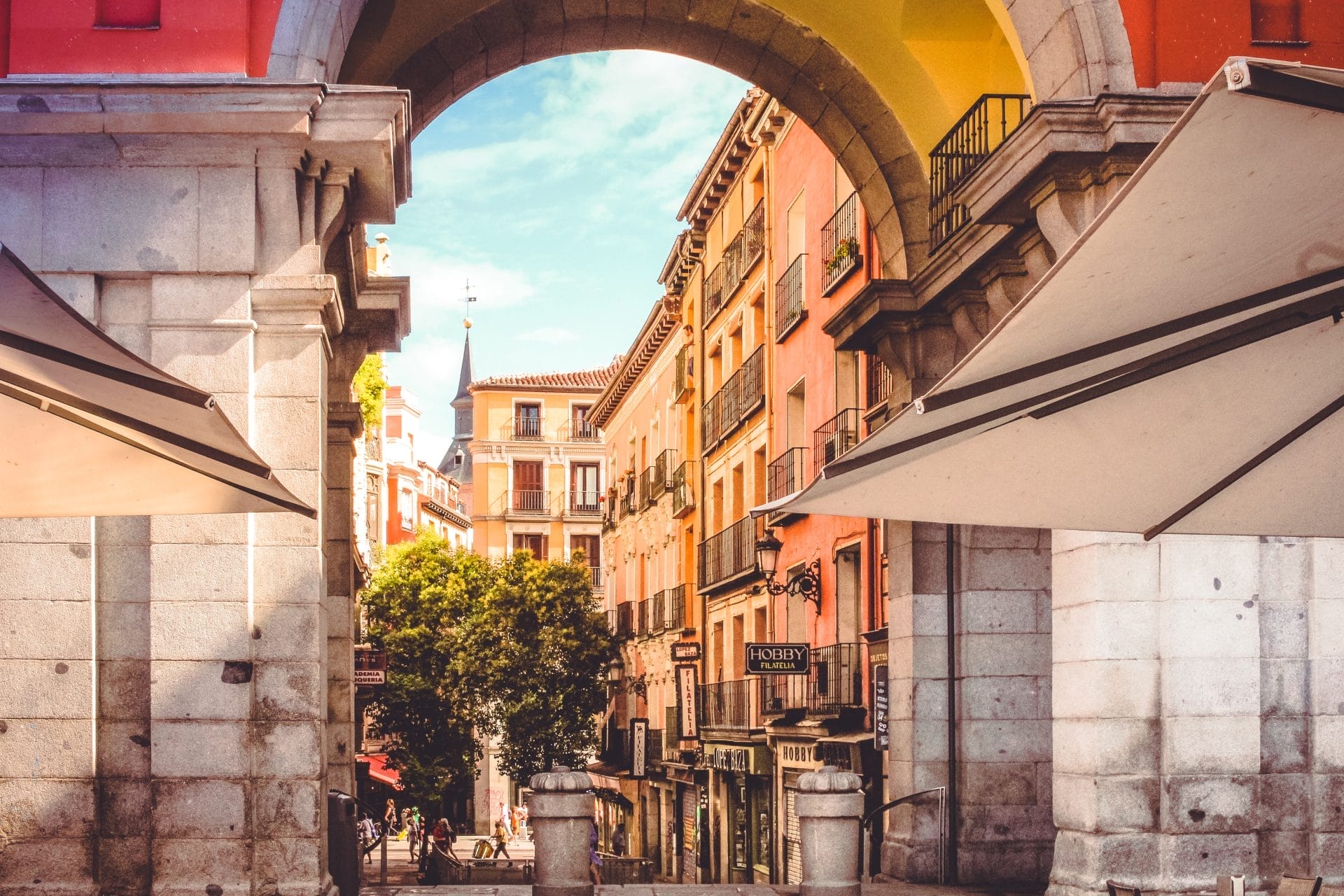
The Royal Palace of Madrid holds 3,418 rooms across more than 135,000 square meters, and builders raised it between 1738 and 1755. The royal family uses it for state ceremonies, and your licensed guide leads you through the state rooms to a complete Stradivarius string quintet in the royal collection. From the palace you walk east to the Puerta del Sol, where a plaque in the pavement marks Kilometer Zero, the point from which Spain measures its road distances, and a bronze bear reaches up into a strawberry tree, the emblem of Madrid. The afternoon ends in the Retiro, 120 hectares of gardens and shaded paths, the largest part of the World Heritage site. Logistics: a walking day in central Madrid with your licensed guide, and your licensed driver collects you for the return to the hotel.
Day Nine
Toledo, City of Three Cultures
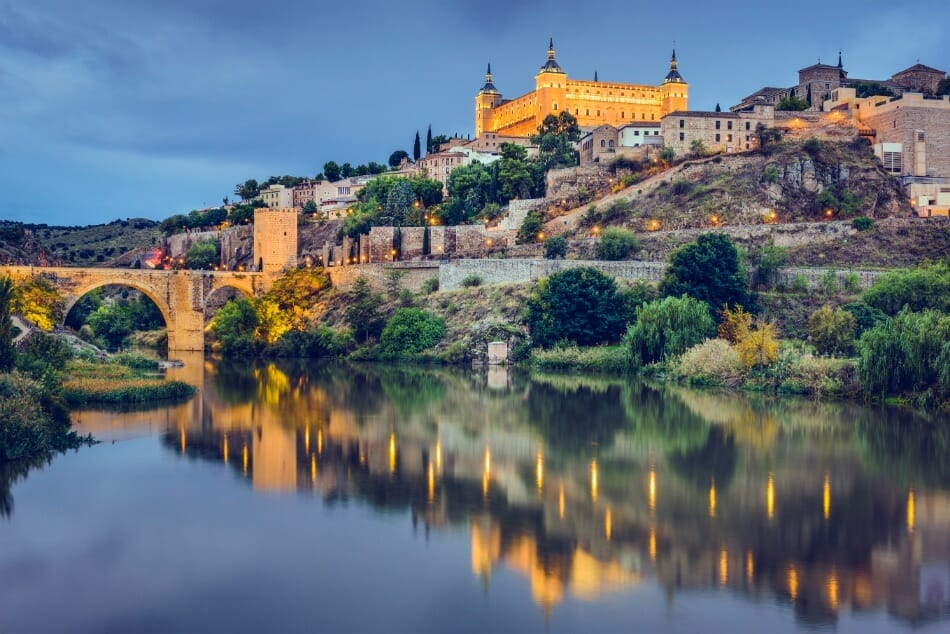
UNESCO inscribed the Historic City of Toledo in 1986, and for centuries Christian, Jewish and Muslim communities shared its streets on a rock above the Tagus. Your licensed guide starts at the cathedral, begun in the 1220s, where the sacristy holds fifteen paintings by El Greco, among them El Expolio. A few streets away, Samuel ha-Levi, treasurer to King Peter of Castile, built the Synagogue of El Tránsito in 1357, and the building now houses the Sephardic Museum. Above the old town, the Alcázar holds the Army Museum. Before you leave, taste mazapán de Toledo, the almond sweet the European Union protects with a geographical indication. Logistics: Madrid to Toledo by road, about 1 hour each way, licensed driver, with a licensed guide for the day in Toledo.

Day Ten
Granada and the Alhambra
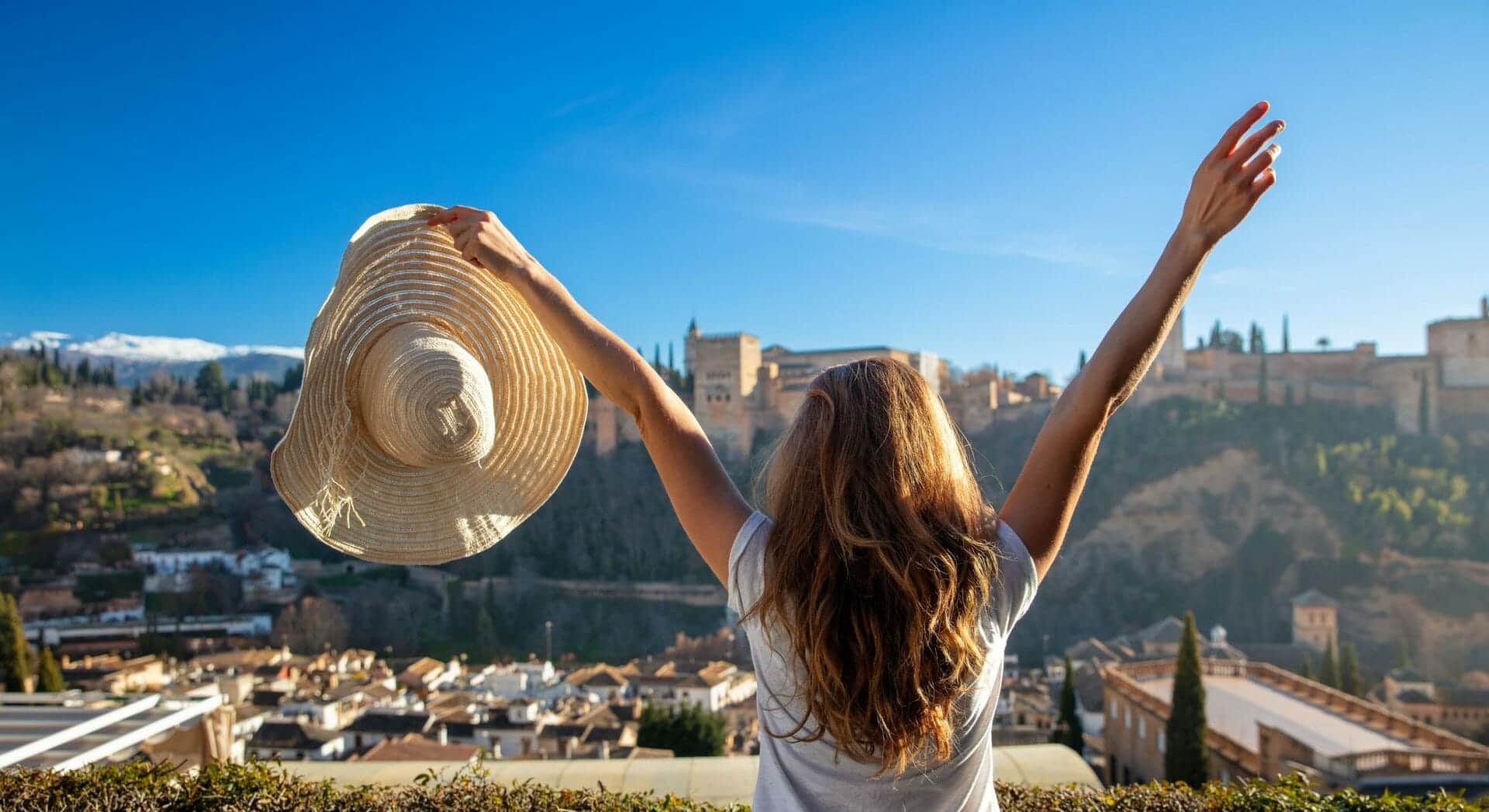
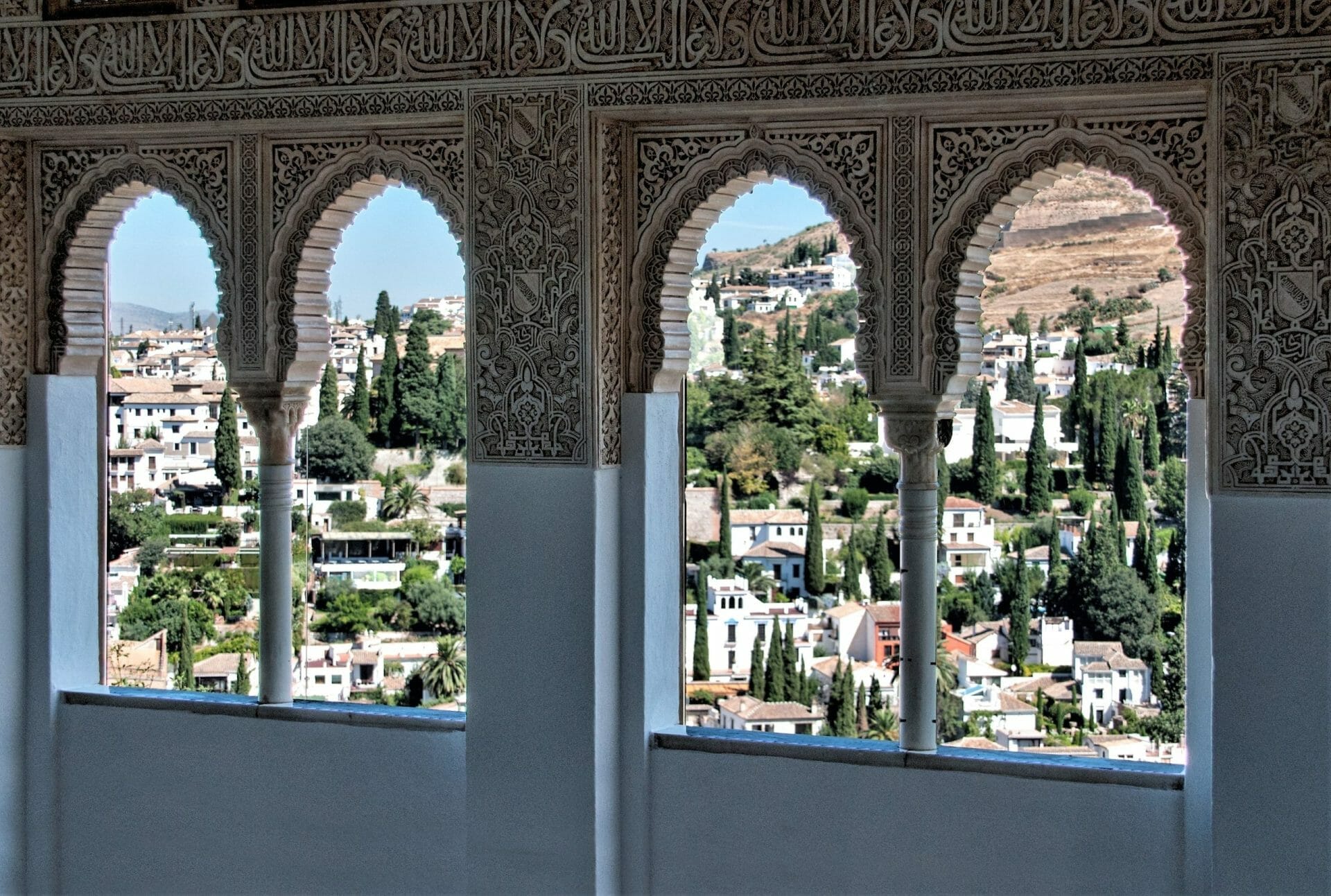
UNESCO describes the Alhambra as the only preserved palatine city of the Islamic period and the finest example of Nasrid art, and it inscribed the site in 1984. Where your dates allow, Israel, one of our licensed guides in Granada, leads the afternoon visit. Inside the Palace of the Lions, built by Muhammad V, twelve marble lions carry the fountain, and a poem by Ibn Zamrak runs around the rim of its basin. Water slides through narrow channels across the courtyards, and the Generalife, the summer estate of the Nasrid emirs, steps down the hill to the east among orchards and gardens. Logistics: Madrid to Granada by high-speed train, about 3 hours, our team books the timed entry to the Nasrid Palaces, and a licensed driver meets you at Granada station.
Day Eleven
Granada: The Albaicín and the Cármenes
In 1994 UNESCO extended the Alhambra listing to include the Albaicín, the hillside quarter whose narrow streets and small squares keep the plan of the Moorish town. Your licensed guide walks you up through its lanes, past cármenes, freestanding whitewashed houses with their own gardens and small orchards. At the Mirador de San Nicolás, beside the church of the same name, the whole length of the Alhambra faces you across the valley, its towers warm in the late afternoon sun. In the evening your guide recommends a table in the lower town, and the day closes without a transfer. Logistics: a walking day in Granada with your licensed guide, and your licensed driver handles the climb to the Albaicín.
Day Twelve
Seville: The Cathedral and Santa Cruz
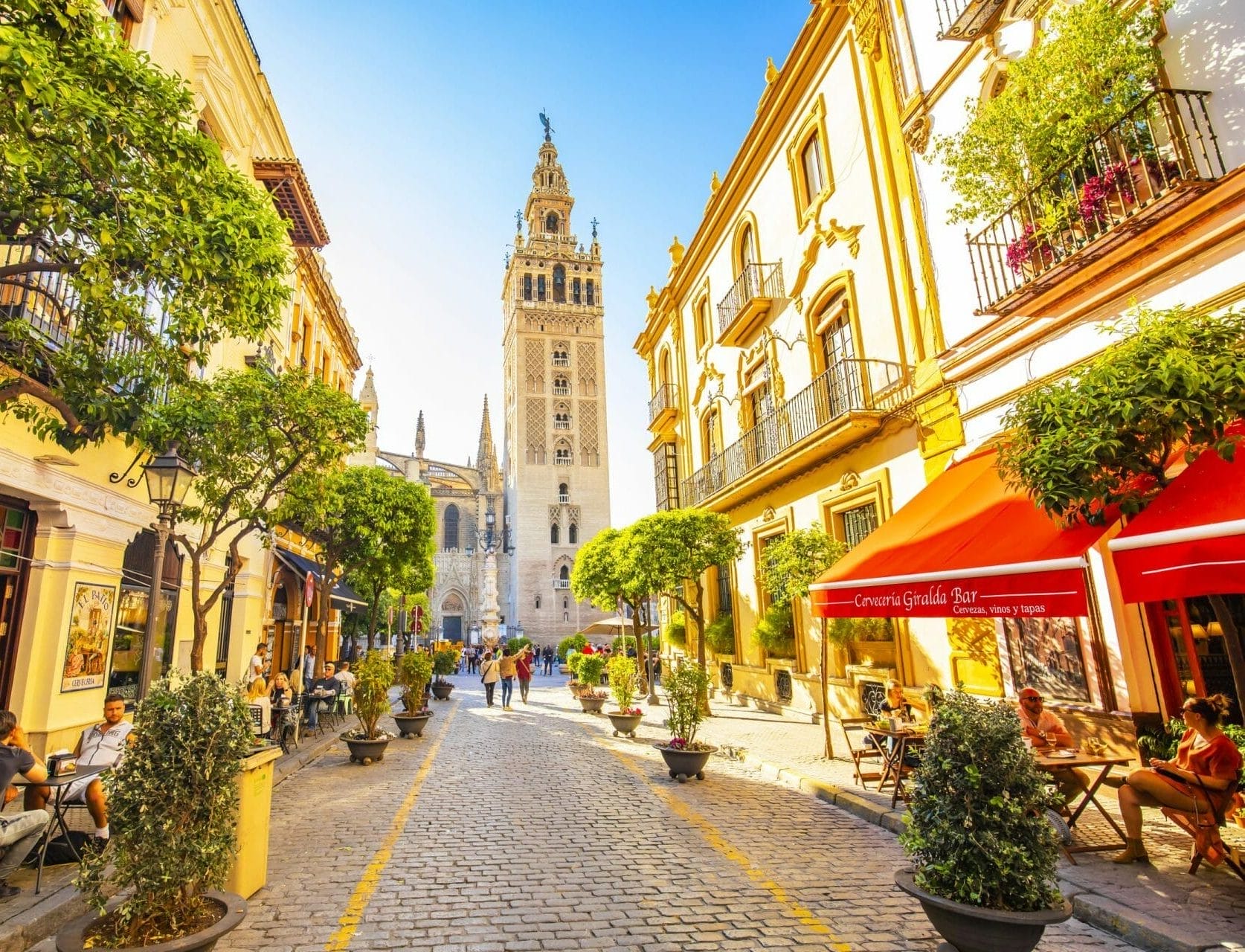
UNESCO inscribed Seville's cathedral, Alcázar and Archivo de Indias together in 1987. UNESCO dates the cathedral's foundation to 1403, on the site of the great mosque, and the Giralda, once the Almohad minaret, now serves as its bell tower under a Renaissance top by Hernán Ruiz. Christopher Columbus lies inside. Your licensed guide leads you through the Patio de los Naranjos, the mosque's old ablution court, where a fountain sits among rows of orange trees, and on into the Santa Cruz quarter, where narrow lanes open onto small squares shaded by more orange trees. Logistics: Granada to Seville by road, about 2 hours 45 minutes, licensed driver, then an afternoon on foot with your licensed guide.

Day Thirteen
Seville: The Alcázar, Plaza de España and Triana
King Pedro I built his Mudéjar palace inside the Real Alcázar between about 1364 and 1366, and the royal family still uses the upper floors when it visits Seville. Your licensed guide takes you through its courtyards and gardens in the morning, then on to the Plaza de España, which Aníbal González designed for the Ibero-American Exposition of 1929, with tiled alcoves for the provinces of Spain. In the afternoon you cross the Isabel II bridge into Triana, a neighborhood of potters, tile makers and flamenco, where the market beside the bridge keeps food stalls and tapas counters. Where your dates allow, the day ends with lunch above the city or an evening of flamenco. Logistics: a walking day in Seville with your licensed guide, and a licensed driver for the transfers between the Alcázar, the Plaza de España and Triana.

Day Fourteen
Córdoba and the Mezquita
Abd al-Rahman I ordered the Great Mosque of Córdoba built in 785, and today roughly 850 columns of jasper, onyx, marble and granite carry its arches of red brick and white stone. The Christian cathedral took its place inside the building in 1236, and your licensed guide shows you how the two sit one inside the other. The mihrab added under al-Hakam II forms a room rather than a niche, the earliest known of its kind. In the afternoon you walk the old Jewish quarter and the flower-filled patios of the historic center, and lunch starts with salmorejo, Córdoba's cold cream of tomato, bread, olive oil and garlic, topped with diced ham and egg. Logistics: Seville to Córdoba by road, about 1 hour 45 minutes, licensed driver, then a full afternoon with your licensed guide.

Day Fifteen
Medina Azahara or a Córdoba Kitchen
Abd ar-Rahman III founded Medina Azahara in 936 as a palace-city a few kilometers west of Córdoba, and UNESCO inscribed it as World Heritage in 2018. Your licensed guide leads you across its terraces, through the remains of its reception halls, gardens and streets, and back over a thousand years to the court of the caliphate. Alternatively, where your dates allow, the day turns to food, with an olive oil tasting and a chef's show-cooking of Andalusian dishes, from old recipes to new ones, and the smell of garlic and good oil filling the kitchen. Córdoba's UNESCO listing also covers the Roman Bridge and the Calahorra Tower, and an evening walk across the river ends the day. Logistics: a short drive from Córdoba to Medina Azahara and back with your licensed driver, and a licensed guide for the site.
Day Sixteen
Porto: São Bento, Ribeira and the Dom Luís I Bridge
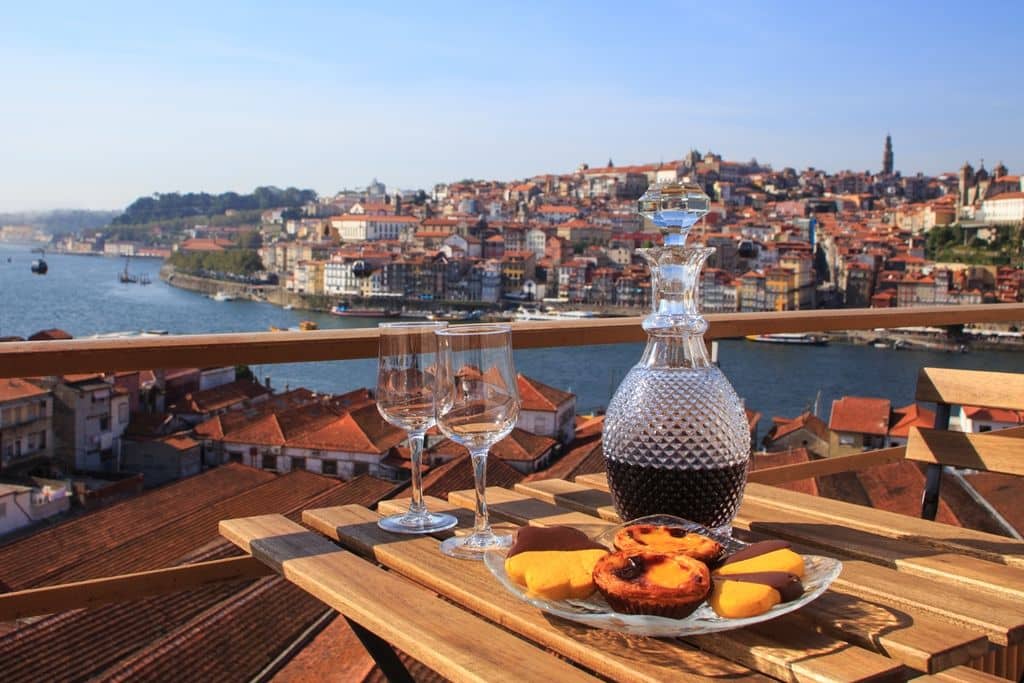
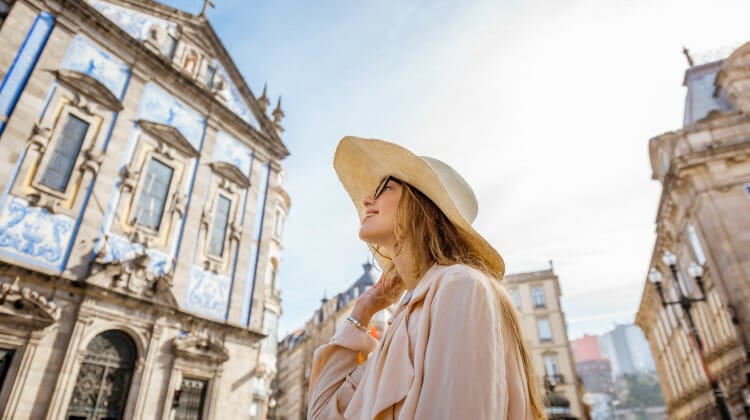
Day sixteen is a travel day, and the afternoon belongs to Porto. UNESCO inscribed the historic center of Porto, the Dom Luís I bridge and the Monastery of Serra do Pilar in 1996. At São Bento station, Jorge Colaço covered the entrance hall with about 20,000 blue-and-white azulejo tiles between 1905 and 1916, and your licensed driver-guide stops with you under the panels. Down in the Ribeira you look up at the Dom Luís I bridge, designed by Théophile Seyrig, a former partner of Gustave Eiffel, and opened in 1886 with two decks. For dinner, try a francesinha, Porto's toasted sandwich of layered meats under melted cheese and a tomato and beer sauce. Logistics: Córdoba to Seville airport by road, about 1 hour 45 minutes, licensed driver, then a direct flight to Porto, about 1 hour 15 minutes, and your licensed driver-guide meets you at Porto airport.
Day Seventeen
Porto: The River, Gaia and Serralves
Where your dates allow, a private boat carries you along the Douro under Porto's bridges in the morning, with the colored houses of the Ribeira stacked up the north bank. Across the river in Vila Nova de Gaia, port wine ages in cellars the locals call caves, and your licensed driver-guide leads a visit and tasting among the barrels. In the afternoon Serralves shows a different Porto: Álvaro Siza designed its contemporary art museum, which opened in 1999, and the Art Deco Casa de Serralves stands in about 18 hectares of park and garden. Logistics: a day in Porto with your licensed driver-guide, who handles the crossing to Gaia and the drive to Serralves.
Day Eighteen
Into the Douro Valley
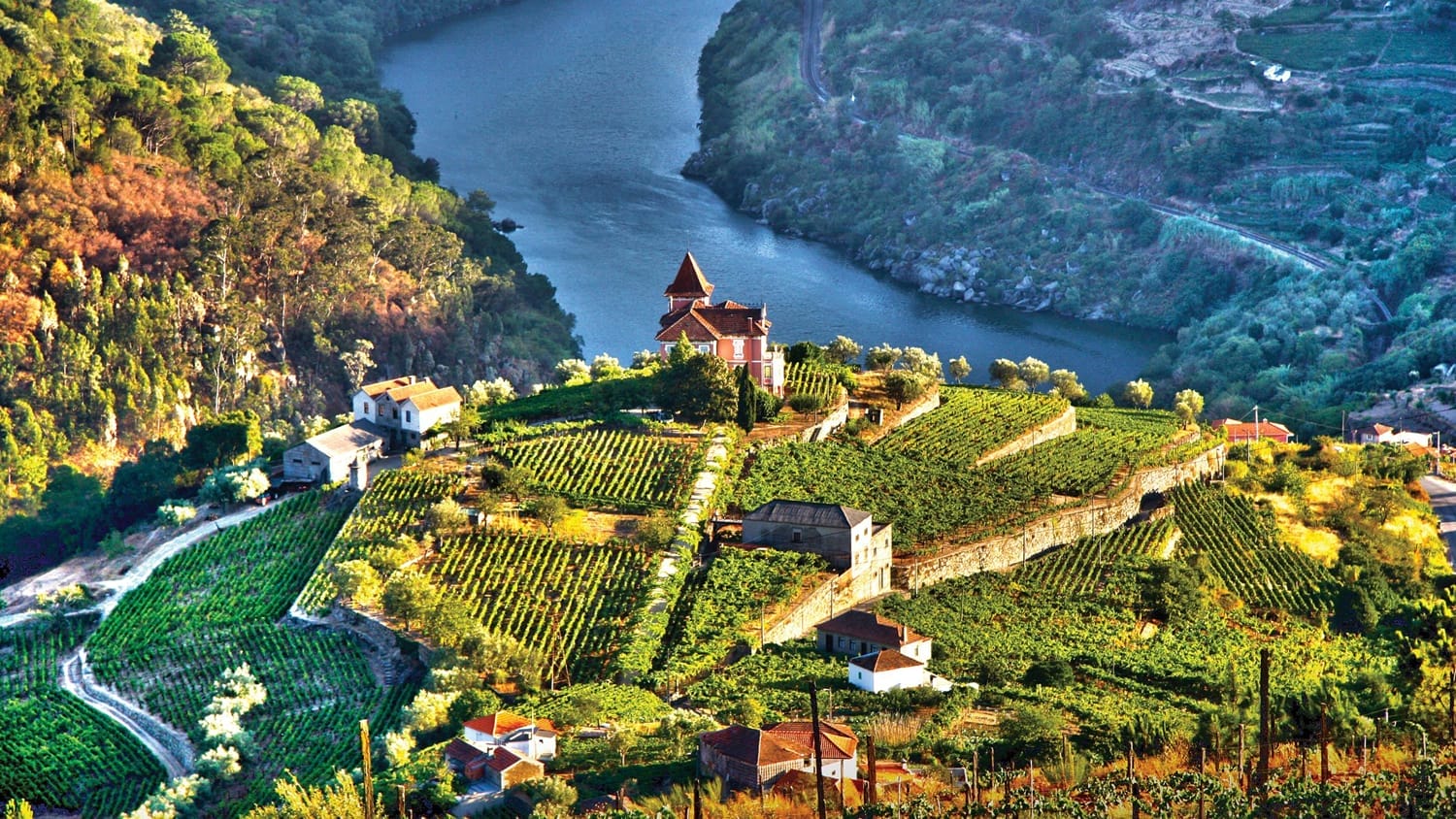
UNESCO inscribed the Alto Douro Wine Region in 2001, and growers have made wine on these slopes for some 2,000 years. The oldest terraces, the socalcos, date from before the 1860s, narrow and irregular and held up by walls of schist, and later terraces climb the hills in long, regular rows. At Pinhão station, blue-and-white tile panels from the 1930s show the grape harvest and the boats carrying port down the river. Your licensed driver-guide leads you through the river villages and up to viewpoints over the bends of the Douro, where the terraces fold away in every direction. Logistics: Porto to the Douro Valley by road, about 1 hour 15 minutes to Peso da Régua, licensed driver-guide.

Day Nineteen
Douro Valley Wine Estates
The terraced vineyards of the Alto Douro cover some 24,600 hectares, and many estates, the quintas, receive visitors for tours and tastings. Where your dates allow, our team arranges a private visit and lunch at a family quinta, with wines from the estate's own terraces poured on a shaded terrace above the river. Your licensed driver-guide walks you through the vines and the winery, and in September, where available, you see grapes crushed by foot in granite lagares. In the afternoon you choose a slow hour on the river, a walk among the vines or a quiet terrace at your hotel above the valley. Logistics: a day in the Douro with your licensed driver-guide, with short drives between the estates.

Day Twenty
Lisbon: Belém and the Castle
Day twenty is a long road day, about 3 hours 30 minutes to 4 hours from the Douro to Lisbon, with a stop for lunch on the way. In the afternoon, where your dates allow, Luisa, one of our licensed guides in Lisbon and Sintra, meets you in Belém. Work on the Jerónimos Monastery began in 1502, the Tower of Belém commemorates the expedition of Vasco da Gama, and UNESCO inscribed both in 1983. Nearby, the Fábrica de Pastéis de Belém has sold its custard tarts since 1837, from the recipe of the Jerónimos monks, and they come warm from the oven. Where time allows, Luisa takes you up at dusk to São Jorge Castle, which Afonso Henriques took from Moorish rule in 1147, for the view over Lisbon and the Tagus. Where your dates allow, the evening ends with fado, on UNESCO's intangible heritage list since 2011. Logistics: Douro Valley to Lisbon by road, about 3 hours 30 minutes to 4 hours, licensed driver, then Belém and the castle with Luisa alongside your licensed driver.

Day Twenty One
Sintra, Cabo da Roca and Cascais
UNESCO inscribed Sintra as World Heritage in 1995, and where your dates allow, Luisa leads the day. King-consort Ferdinand II built the Pena Palace on a summit of the Sintra hills between 1842 and 1854, and its red and yellow walls, restored to their first colors in the late 20th century, rise above the forest. From Sintra your licensed driver continues to Cabo da Roca, the westernmost point of continental Europe, where cliffs drop more than 100 meters to the Atlantic and the wind carries salt off the sea. The day ends in Cascais, once a quiet fishing village, which King Luís I made his summer residence, with time for a seafood dinner by the bay. Logistics: Lisbon to Sintra by road, about 30 minutes, then Cabo da Roca and Cascais, with Luisa and your licensed driver.

Day Twenty Two
Departure from Lisbon
The morning stays free for a last coffee in the Chiado or a walk along the river. Lisbon's airport lies about 7 kilometers northeast of the historic center, and your licensed driver collects you from the hotel with time to spare for your flight home. Our team arranges VIP airport assistance on request. Travelers who want more time often add the Alentejo or the Algarve before the flight home, and our team plans those extensions on the same private basis. Logistics: hotel to Lisbon airport by road with your licensed driver, with VIP assistance by prior arrangement.
What does a 3-week Spain and Portugal itinerary look like?
A good 3-week Spain and Portugal itinerary gives about two weeks to Spain and one to Portugal, and links the regions with a few short flights and one fast train so no day goes to a long transfer. This 22-day route spends fifteen nights in Spain, across Barcelona, the Basque Country, La Rioja, Madrid, Granada, Seville and Córdoba, and six in Portugal, across Porto, the Douro Valley and Lisbon. It covers the four big cities of the two countries, the Moorish south and two wine regions, and it ends a short drive from Lisbon’s airport. Our team plans it as a starting point and moves nights between bases to fit your interests.
Is three weeks enough for Spain and Portugal?
Three weeks covers the main regions of Spain and the classic line of Portugal from Porto to Lisbon at an unhurried pace, with two or three nights in most places. It leaves out the Azores, the Algarve, the Alentejo, San Sebastián and Segovia, which the longer 25 and 30-day routes add. Most travelers find the balance right: enough time in each base to settle in, and enough variety across the two countries to see how different the Basque Country, Andalusia and the Douro feel. Our Spain and Portugal destination guides set out what else each country offers if you want to swap a region in.
What does a 22-day Spain and Portugal tour add over two weeks?
The extra week buys Barcelona, the north of Spain and the time to slow down. Our 14-day Spain and Portugal private tour runs Madrid, Toledo, Granada, Seville, Lisbon, Sintra, Porto and the Douro, and leaves out Barcelona, Bilbao, La Rioja and Córdoba. This 22-day route keeps all of those cities and adds the Basque Country and La Rioja, with Gaudí at one end and the Atlantic at the other. It also gives most bases two nights instead of one, so the Alhambra, the Mezquita and the Douro each get a full day.
Three weeks, or 18, 25 or 30 days in Spain and Portugal?
Choose this 22-day route if you want Barcelona, the north of Spain, Andalusia and the Porto to Lisbon line in one trip, with two wine regions, no islands and no day longer than about four hours on the road. It suits travelers who prefer cities and vineyards to beaches, and who have three weeks rather than a month.
The 14-day Barcelona to Lisbon tour serves you better if three weeks feels long or you favor the south. It keeps Barcelona, Madrid, Granada and Seville, adds the Algarve coast, and reaches Lisbon, Sintra and Évora. It leaves out Bilbao, La Rioja, Córdoba, Porto and the Douro, and starts from $14,892 per person.
The 30-day Grand Tour of Spain and Portugal suits travelers who want the Azores. It starts on São Miguel, then runs Porto, the Douro, Lisbon, Sintra, the Alentejo, the Algarve, Seville, Córdoba, Ronda, Granada, Madrid with Toledo and Segovia, La Rioja and San Sebastián, and ends in Barcelona.
The 30-day Spain and Portugal private tour suits travelers with a full month. It keeps most of the cities on this page, swaps Bilbao for San Sebastián, adds the Azores, the Alentejo, the Algarve coast, Ronda, the white villages and Segovia, finishes in Barcelona and starts from $29,940 per person. If you would rather spend all three weeks in one country, our 22-day private tour of Spain trades Portugal for Málaga, Ronda, the Basque coast and San Sebastián. Our multi-country journeys page collects every combination.
Who this journey suits
Couples and friends with three weeks free, often at a stage of life when a long trip finally fits, who want both countries in one journey and prefer two or three nights in a place to a new hotel every day. The private format sets the pace around you, with lunches, rest afternoons and early starts where the heat calls for them.
Wine travelers, since the route pairs La Rioja and the Douro, with tastings in the cellars of Haro, among the vines around Laguardia, in the port cellars of Gaia and at a family quinta above the river. Architecture travelers, since the same three weeks run from the Alhambra, the Mezquita and the Jerónimos Monastery to Gaudí, Gehry, Calatrava, Zaha Hadid and Siza.
Families with teenage or adult children, who share the guide’s attention and the vehicle and set their own rhythm. Returning visitors, who saw Madrid or Barcelona years ago and now want the north, Córdoba and the Douro around the cities they remember.
The people behind the route
Three people lead the visits most travelers remember on this route. Where your dates allow, Israel, one of our licensed guides in Granada, leads Alhambra days. On this route the visit falls on the afternoon of day ten, after the morning train from Madrid, and the Albaicín follows on day eleven.
In Madrid, where your dates allow, Ana, an art historian, leads our Prado visits through Velázquez, Goya and the Spanish court painters. Our article on the highlights of the Prado covers the collection in more depth. In Lisbon and Sintra, where your dates allow, Luisa, one of our licensed guides, leads the Belém, castle and Sintra days alongside a licensed driver. Everywhere else on the route our team works with top licensed guides selected for their experience, knowledge and engaging personalities, not egos.
What the 22-day journey costs and what it includes
The 22-day route starts from $23,624 per person, double occupancy. The from-price covers twenty-one nights in deluxe four-star properties selected for comfort, location and service. Five-star luxury properties are available by request. It includes licensed guides for the visits described, licensed drivers for airport and road transfers, and timed entry to the Alhambra’s Nasrid Palaces.
Four things move the price: the season, the hotel category, the size of your party and the experiences you add, such as the private boat on the Douro, winery lunches in La Rioja and the Douro, an olive oil tasting in Córdoba, flamenco in Seville or fado in Lisbon. Our team sends a written quote for your dates and party before you commit.
To shape these three weeks around your dates and your party, speak with our team about your Spain and Portugal journey.
Frequently asked questions about the 22-day Spain and Portugal tour
How much does a 22-day private tour of Spain and Portugal cost?
This 22-day route starts from $23,624 per person, based on two people sharing a room. The from-price covers the route as written: twenty-one hotel nights, licensed guides for the visits described and licensed drivers for the road transfers, with the full list of inclusions set out in your written quote. Four things move the price. The season matters most, since hotel rates rise and fall through the year. Five-star properties raise it. Party size changes it, because the guides and drivers serve the whole party, so larger private parties pay less per person. Added experiences, such as a private boat on the Douro, a winery lunch in La Rioja or a fado evening in Lisbon, add to it. Our team sends a written quote for your dates and party before you commit.
When is the best time for three weeks in Spain and Portugal?
April to June and September to October suit this route best, because it runs from the Bay of Biscay to Andalusia. AEMET, Spain’s weather agency, records average daily highs in Seville of about 23°C (74°F) in April and 26°C (79°F) in October, against 36°C (97°F) in July. Granada averages about 21°C (69°F) in April and 23°C (74°F) in October, Madrid about 18°C (65°F) and 19°C (67°F), Barcelona about 18°C (64°F) and 22°C (72°F), and Bilbao about 18°C (64°F) and 21°C (71°F). IPMA, Portugal’s weather institute, records average highs in Porto of about 18°C (64°F) in April and 20°C (69°F) in October, and in Lisbon about 20°C (68°F) and 23°C (73°F). Summer departures work well with early starts in the south and lunch indoors. September brings the grape harvest to the Douro, and our team plans each day around the season you choose.
How do you travel between Spain and Portugal on this route?
A direct flight from Seville to Porto, about 1 hour 15 minutes, carries you across on day sixteen. Your licensed driver takes you from Córdoba to Seville airport in the morning, about 1 hour 45 minutes by road, and your licensed driver-guide meets you at Porto airport. The flight replaces a long day on the road across the west of the peninsula and gives you the afternoon in Porto. Inside Spain, the route uses one more direct flight, Barcelona to Bilbao, about 1 hour 15 minutes, and the high-speed train from Madrid to Granada, about 3 hours. Every other connection runs by road with a licensed driver, and within Portugal the road carries you from Porto into the Douro Valley and on to Lisbon. If you prefer to stay on the ground, our team prices a road crossing into Portugal instead and adjusts the days to fit.
Are the guide and the driver the same person?
In Spain they are two different people. A licensed guide leads the visits and a licensed driver handles the vehicle and the road transfers, so your guide focuses on the site and your driver on the road. Your guide changes from region to region, so the guide in Granada knows Granada in depth and the guide in Barcelona knows Barcelona. In Lisbon and Sintra, where your dates allow, Luisa, one of our licensed guides, leads the days alongside a licensed driver. In Porto and the Douro Valley a licensed driver-guide, one person holding both licenses, looks after you. Where your dates allow, named specialists lead the key visits: Israel at the Alhambra and Ana, an art historian, at the Prado. Our team coordinates every handover, so you meet each new guide at the hotel or the station.
Which airports should we fly into and out of?
Fly into Barcelona and home from Lisbon. An open-jaw ticket of this kind avoids doubling back across two countries at the end of the trip. Barcelona-El Prat lies about 15 kilometers southwest of central Barcelona, and Lisbon’s airport about 7 kilometers northeast of the historic center, so both transfers stay short. Your licensed driver meets you at arrivals in Barcelona on day one and takes you to Lisbon airport on day twenty-two. Our team arranges VIP airport assistance at both ends on request, covering the meet-and-greet and help through the terminal. If your flights fit better the other way, the route runs from Lisbon to Barcelona with the same bases in reverse. Our article on flying into Porto or Lisbon compares the two Portuguese gateways, and our team aligns the itinerary with your flight times once you book them.
Do we need to book the Alhambra in advance?
Yes, and our team handles it. Every Alhambra ticket including the Nasrid Palaces carries a set time for entering the palaces, and the Alhambra’s own ticket office asks visitors to arrive on time for the slot. Visitors buying or collecting tickets at the monument must do so at least one hour before their assigned time. For these reasons our team books the timed entry as soon as you confirm your dates, and your licensed guide plans the rest of the day around it, with the Alcazaba and the Generalife before or after the palaces. On this route the train from Madrid arrives in time for an afternoon slot on day ten. Where your dates allow, Israel, one of our licensed guides in Granada, leads the visit.
How many hotel changes does the 22-day route involve?
Nine changes across ten bases. Barcelona and Madrid get three nights each, Bilbao gets one, and every other base gets two, so every base except Bilbao gives you at least one full day with no transfer. Bilbao is the only one-night stop, because the Guggenheim and the old town fill one full day and La Rioja lies about an hour south. American travelers who prefer fewer moves often drop the Bilbao night and visit the Guggenheim as a day trip from La Rioja, or stay in Seville for both Seville and Córdoba, and our team rebalances the nights to suit. Your licensed driver handles the luggage on every road day, so a hotel change means a morning departure and an afternoon arrival, nothing more.
How flexible is the 22-day route?
The route works as a starting point, and your planner shapes it around your party. Common changes include adding a night in Madrid for Segovia, swapping Córdoba for Ronda and the white villages between Granada and Seville, adding San Sebastián after Bilbao, or ending with a few nights in the Alentejo or on the Algarve coast before Lisbon. Our article on Córdoba or Ronda between Granada and Seville explains the first of those choices. Food lovers often add a market tour or a cooking class in Seville or Porto, and art lovers add the Reina Sofía in Madrid for Picasso’s Guernica. Our team confirms timings, ticketed entries and hotel nights once you settle the shape of the trip.
Does this journey suit families or travelers with limited mobility?
Families travel this route often, because a private guide and driver set the pace around the youngest and the oldest in the party. Teenagers tend to respond to the Guggenheim, the Alhambra, the Gaudí buildings and the boat on the Douro, and the two-night bases leave room for a pool afternoon. Several days involve walking on cobbled streets and slopes, especially in Toledo, the Albaicín in Granada, Laguardia and Sintra, and the Alhambra visit runs on foot across a large hillside site. Your guide is glad to advise on suitability before booking, and our team adjusts walking routes, adds vehicle time between sites, or shortens days where it helps. Our page on accessible travel sets out how our team plans for travelers who need step-free routes or extra support.
Who do we contact if something goes wrong or we want a change?
Your planner designs your journey with you and stays in touch after you land. For the fastest response at any hour, message your private WhatsApp group, where our 24/7 support team works alongside Rachel or Dan. Because we begin no more than five journeys per country each week, peak spring and fall dates fill early, and that limit is what lets us stay this close to every trip.
We keep a list of vetted four- and five-star hotels, well located and enjoyed by our past travelers and by our own team.
Examples for each overnight stop on this route. Choose a deluxe boutique hotel or a five-star stay, and your travel advisor matches each night to your wishes, the season and availability.
Barcelona
Boutique: H10 Casa Mimosa. A listed 19th-century Modernista building on Pau Claris, on the same block as Gaudí’s La Pedrera.
Five-star: Mandarin Oriental Barcelona. A former bank on Passeig de Gràcia turned into a calm, pale-toned hotel with a rooftop pool.
Bilbao
Boutique: Hotel Miró. Fashion designer Antonio Miró’s hotel on Alameda Mazarredo, across from the Guggenheim.
Five-star: The Artist Grand Hotel of Art. Directly opposite the Guggenheim, with Javier Mariscal interiors and a large art-filled atrium.
La Rioja
Boutique: Hotel Viura. Stacked concrete cubes beside the village church in Villabuena de Álava, with a rooftop terrace.
Five-star: Hotel Marqués de Riscal. Frank Gehry’s titanium ribbons over the Marqués de Riscal winery in Elciego.
Madrid
Boutique: Tótem Madrid. A restored 19th-century building on Calle Hermosilla, steps from Serrano’s shops in the Salamanca district.
Five-star: Rosewood Villa Magna. Reopened by Rosewood in 2021 on the Paseo de la Castellana, with a leafy front garden.
Granada
Boutique: Parador de Granada. A 15th-century Franciscan convent inside the Alhambra precinct, with gardens facing the Generalife.
Five-star: Hospes Palacio de los Patos. A 19th-century palace beside a contemporary wing, linked by gardens, with a spa below.
Seville
Boutique: Hotel Casa 1800 Sevilla. A 19th-century mansion with a patio and a rooftop pool facing the cathedral and Giralda.
Five-star: Hotel Alfonso XIII. Built for the 1929 Ibero-American Exposition, a neo-Mudéjar palace of tiles and arches near the Alcázar.
Córdoba
Boutique: Balcón de Córdoba. A century-old house with three patios and a rooftop terrace looking at the Mezquita.
Five-star: Hospes Palacio del Bailío. A 16th-century palace built over Roman remains, seen through the glass floor of its patio.
Porto
Boutique: Torel 1884. An 1884 palace near São Bento station, with rooms themed on Portugal’s voyages of discovery.
Five-star: The Yeatman. Terraced into the Gaia hillside among the port lodges, every room with a terrace facing Porto.
Douro Valley
Boutique: Quinta do Vallado Wine Hotel. An 18th-century house once owned by Dona Antónia Ferreira, plus a modern schist building among vineyards.
Five-star: Six Senses Douro Valley. A restored 19th-century manor near Lamego, above Douro vine terraces, with a large spa.
Lisbon
Boutique: Memmo Alfama. A design hotel on an Alfama lane, with a pool beside its wine-bar terrace over the Tagus.
Five-star: Four Seasons Hotel Ritz Lisbon. A 1959 landmark beside Eduardo VII Park, filled with mid-century Portuguese art and tapestries.
What's Included
A Very Personalized Itinerary, Just For You and Your Schedule
Hand-Picked Ultra-Luxury & Boutique Hotel Options
Insider Experiences + Inspiring Sightseeing + Magical Upgrades
Private Touring with Your Own Personal Expert Guide
Private Airport & Train Station Luxury Transfers
Full Breakfasts + Food & Wine Tasting Options
Your Choice of Activities on “Design Your Days”®
Expert Advice, Restaurant Ideas & Reservations
24/7 Support & Concierge Service from Spain, Portugal & Morocco
Magical is an award-winning luxury travel agency
Private journeys with soul & stories
Excellent independent reviews
Your private WhatsApp group with our 24/7 team and Rachel or Dan
Hidden gems, insider fun & vetted hotels
Your private guide, deluxe vehicle & flexible pace
24/7 concierge-style support
We handle everything — you live the dream
American Precision, Local Soul
Our Unforgettable Trips Are Tailored Just For You
Hi from Europe,
Along with our local partners across Portugal, Spain, Morocco and beyond we believe that our clients deserve the truly tailor-made private luxury trips, not generic "one-size-fits-all" plans.
Get inspired with our sample trips then get in touch about an expert-made personalized custom luxury itinerary, just for you.
Kind regards,
Dan O'Beirne & the MPT team
Request a Quote