Portugal’s four great monasteries are the Jerónimos Monastery in Lisbon, the Monastery of Batalha, the Monastery of Alcobaça and the Convent of Christ in Tomar. All four are UNESCO World Heritage sites, and three of them sit within about an hour’s drive of each other between Lisbon and Coimbra, which makes them easy to add to a private journey from Lisbon to Porto.
What makes each monastery worth the visit?
Jerónimos Monastery, Lisbon
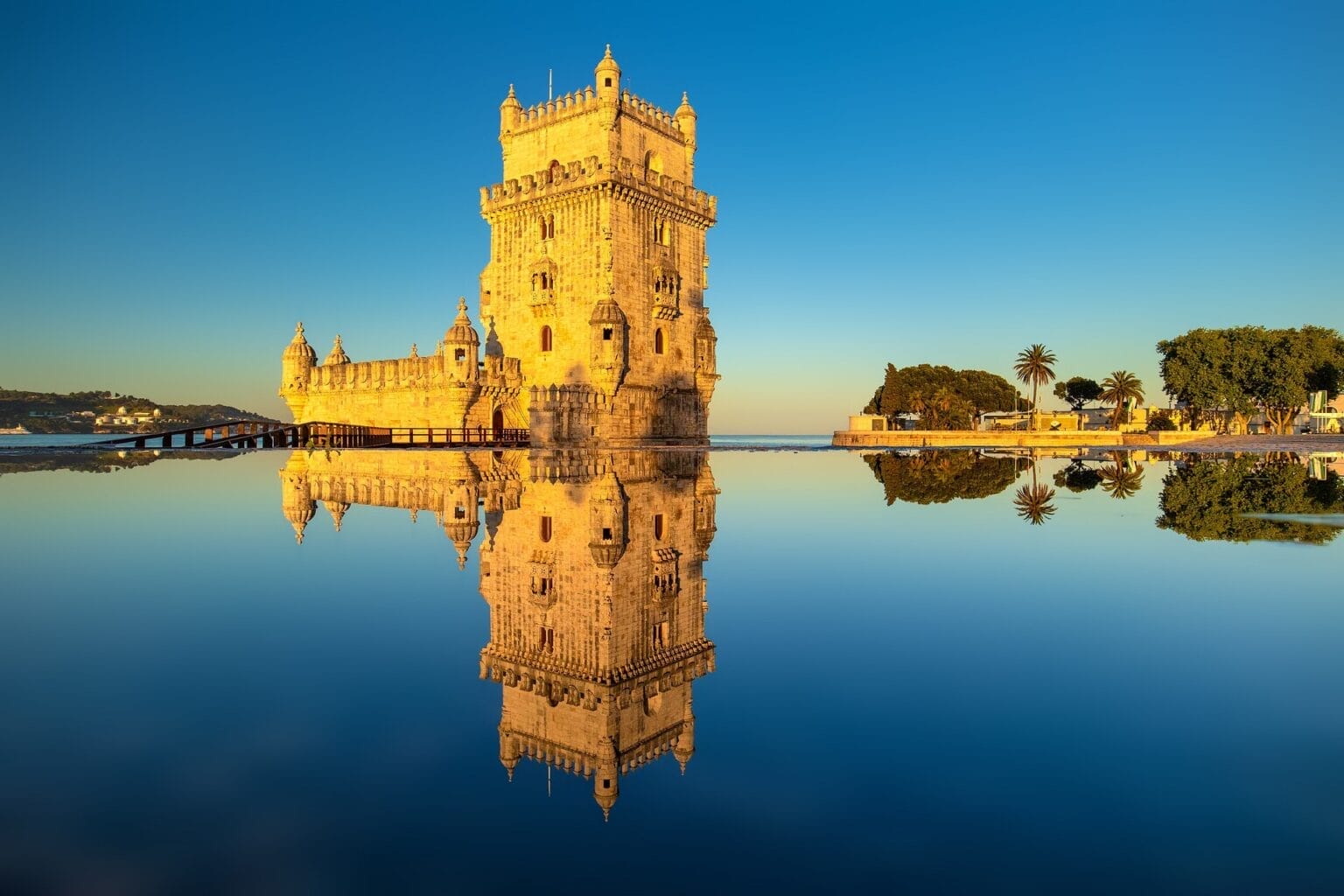
King Manuel I began the Jerónimos Monastery in Belém in the early 1500s, close to where Vasco da Gama set sail for India, and the wealth of the spice trade paid for it. It is the masterpiece of the Manueline style, Portugal’s own late Gothic, with stone carved into twisted ropes, sea creatures and armillary spheres. Inside the church lie the tombs of Vasco da Gama and the poet Luís de Camões, and the two-story cloister is one of the most beautiful in Europe. The monastery and the nearby Belém Tower share a single UNESCO listing. Jerónimos draws large crowds, so your guide plans the visit for the quieter hours. See more of the city on our Lisbon page.
Monastery of Batalha
Batalha means battle. King John I built the monastery to give thanks for his victory at Aljubarrota in 1385, which secured Portugal’s independence from Castile, and the work went on for more than a century. In the Founder’s Chapel, John I and his English queen, Philippa of Lancaster, lie side by side with their stone hands joined. Behind the church, the Unfinished Chapels stand open to the sky, their carved Manueline arches never roofed.
Monastery of Alcobaça
Portugal’s first king, Afonso Henriques, gave this land to the Cistercian order in 1153, and its abbey church became one of the first Gothic buildings in Portugal. The long, bright nave is strikingly plain, and the facing tombs of King Pedro I and Inês de Castro tell the most famous love story in Portuguese history. Save time for the monks’ kitchen, with its vast chimney and a stream channeled through the room.
Convent of Christ, Tomar
The Knights Templar founded their castle at Tomar in 1160, and the round church at its heart, the Charola, was inspired by the Church of the Holy Sepulchre in Jerusalem. When the Templars were dissolved, their Portuguese lands passed to the new Order of Christ, which helped fund Portugal’s voyages of discovery. The great window of the chapter house, carved with ropes, coral and seaweed, is one of the most celebrated works of Manueline art. If you are weighing Tomar against Coimbra, read our guide to Tomar or Coimbra.
Can we see all four on one trip?
Yes. Jerónimos fits into a day in Lisbon. Alcobaça and Batalha sit about 20 kilometers apart on the road north, and together they fill one rich day between Lisbon and Coimbra, often with a stop in Óbidos. Tomar lies about 50 kilometers east of Batalha and suits a second day or a route through central Portugal. Your planner shapes the order around your hotels and your pace.
How long should we allow at each monastery?
Allow about an hour and a half at Jerónimos for the church and the cloister, about an hour each at Batalha and Alcobaça, and around two hours at the Convent of Christ, whose cloisters and corridors cover a large hilltop site.
Who will enjoy these monasteries most?
Travelers who love architecture, history and art will find the clearest story of Portugal’s golden age in these four buildings, from the first Gothic church to the stone ropes and sea creatures of the age of discovery. For more practical planning answers, see our Portugal travel guides.