



Morocco · Private and tailor-made
Morocco's Four Imperial Cities
Step through the blue-tiled Bab Bou Jeloud into the car-free medina Fez has lived in for twelve centuries.
Suggested length
10 days
Price guide
From $9,980 per person, excl. international flights, based on two sharing
Includes hotels, private guiding, experiences and transfers
When
March to April and late September to November
or call +1 (727) 699-5439
A planner replies within one business day
American precision with local expertise · Planned from Europe since 2002 · Nearly 17,000 American travelers · Never cancelled a journey
Bab Bou Jeloud wears blue tiles on its outer face and green on the inner. Step through it into the car-free medina Fez has lived in for twelve centuries, the heart of this private tour of Morocco’s imperial cities. The route links all four royal capitals. In Rabat you climb to the Kasbah of the Udayas, and near Meknes, the city Moulay Ismail ringed with great gates, you stand beneath the Roman arch of Volubilis. The road then crosses the cedar forests of the Middle Atlas to Marrakech, for the Bahia Palace, the cobalt paths of the Majorelle Garden and the Agafay desert. A private driver and your own guides travel with you throughout. Every day can be reshaped around you.
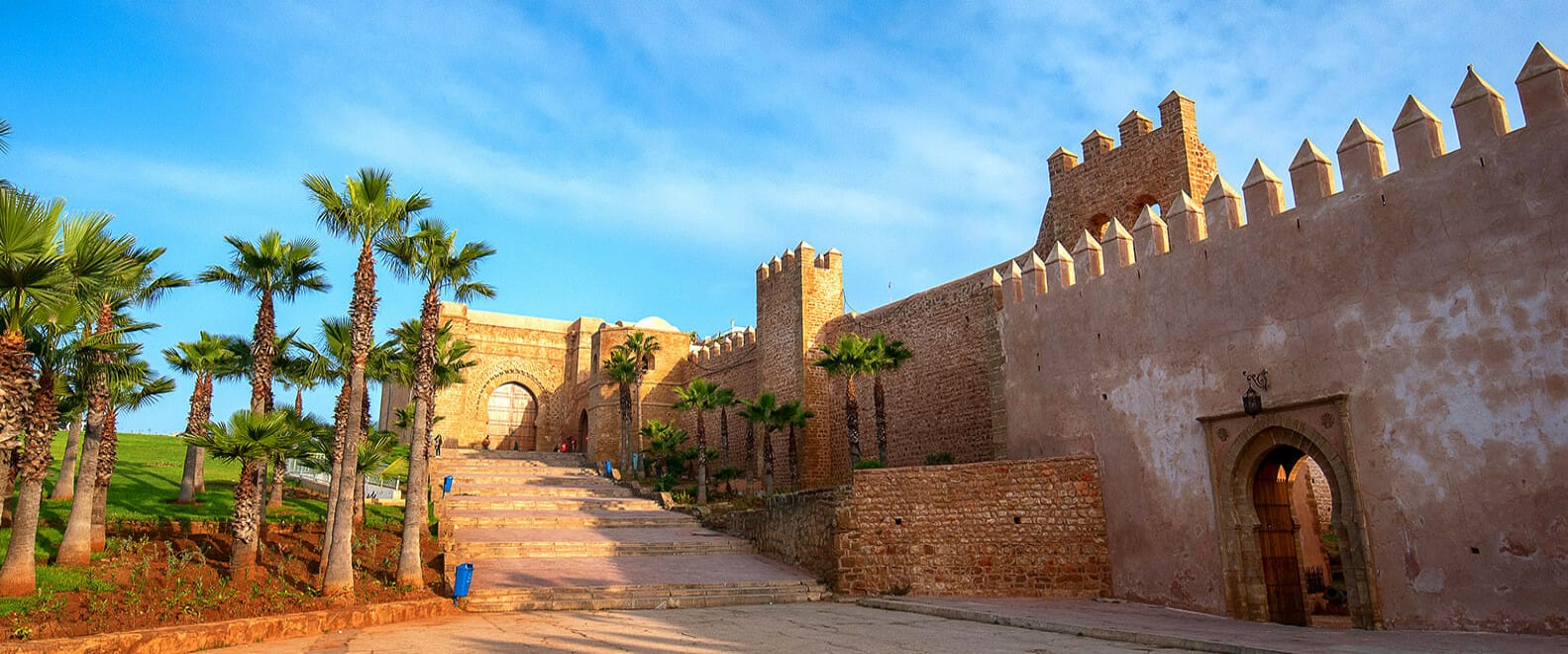
Walk the blue and white lanes of the Kasbah of the Udayas above the Bou Regreg, Rabat.
Stand beneath the Arch of Caracalla in the Roman town of Volubilis.
Enter the car-free medina of Fes el-Bali through the blue-tiled Bab Bou Jeloud, Fez.
Visit the Nejjarine Museum of Wooden Arts in its 1711 merchants’ inn, Fez.
Watch storytellers, musicians and food stalls fill Jemaa el-Fna at dusk, Marrakech.
Walk the cobalt-blue paths of the Majorelle Garden, Marrakech.

“We love to tailor-make trips you’ll talk about for years, built on our local relationships & story-worthy experiences.” – Magical’s American founder, in Europe since 1998, culinary enthusiast & world traveler.






A Journey Designed Just for You
Our resident experts wrote this itinerary as a starting point, and your planner shapes every day around your interests, pace and travel style.
What do our American travelers say?
“Our trip was very smooth, organized from start to finish, excellent guides, comfortable transfers, luxury hotels in good locations, well chosen experiences, and all the details handled.”
“We also really appreciated the suggestion and planning of a winery visit. We did not even know that was an option in Morocco, and it turned out to be a wonderful treat and one of the special surprises of the trip.”
The 10-day imperial cities itinerary at a glance
The route uses four bases and nine nights: one in Casablanca, one in Rabat, three in Fez and four in Marrakech. Day three links Rabat to Fez by way of Meknes, Moulay Idriss and Volubilis, so three of the four imperial cities fall within the first three days. Days four and five stay in Fez, day six crosses the mountains, and days seven to nine belong to Marrakech, with day ten for the flight home.
Road days link every base, and your private driver stays with you from Casablanca to Marrakech. Casablanca to Rabat runs about 1 hour, Rabat to Meknes about 1 hour 30 minutes, and Volubilis to Fez about 1 hour 15 minutes. Day six is the one long road day, about 7 hours across the Middle Atlas by Ifrane and Beni Mellal to Marrakech. Each time leaves out stops, and the road days carry plenty of them.
Spring and autumn suit the route best, since the cities, the gardens and the mountain road all sit comfortably in the shoulder months. Summer and winter departures both work with a different daily rhythm, and our team plans the hours of each day around the season you choose.
Licensed guides we work with on this route include Yassine and Amine, who guide travelers across Morocco. Each is a highly educated local expert who cares about the people in their group. We request your guides by name, and your planner confirms who leads each day once your dates are set.
Why the route runs from the Atlantic capitals to Marrakech
Casablanca has Morocco’s busiest airport, so the trip opens on the Atlantic with a short transfer, and Rabat, the capital since independence in 1956, lies about an hour up the coast. From Rabat the road turns inland, and Meknes, Moulay Idriss and Volubilis sit close together on the way to Fez, so the third day covers an imperial city, a holy town and a Roman site without doubling back. Fez then gets two full days, one for the old medina of Fes el-Bali and one for the royal quarter of Fes el-Jdid.
From Fez the route takes the mountain road over the Middle Atlas rather than the motorway, for Ifrane, the cedar forests and lunch in Beni Mellal, and it ends in Marrakech with its own international airport. Four nights there give three full days, enough for the medina, the gardens and a choice of the Agafay desert, the souks or a cooking class. The order also tells a story in stone. You see the unfinished Almohad minaret of the Hassan Tower in Rabat on day two and the finished Koutoubia minaret in Marrakech on day seven.
Journey at a glance
Length
10 days
From
$9,980 per person, double occupancy
Route
Casablanca, Rabat, Meknes, Volubilis, Fez, Middle Atlas, Marrakech, Agafay Desert
Your planner adjusts every day to your dates.
Day One
Arrival in Casablanca and the Hassan II Mosque
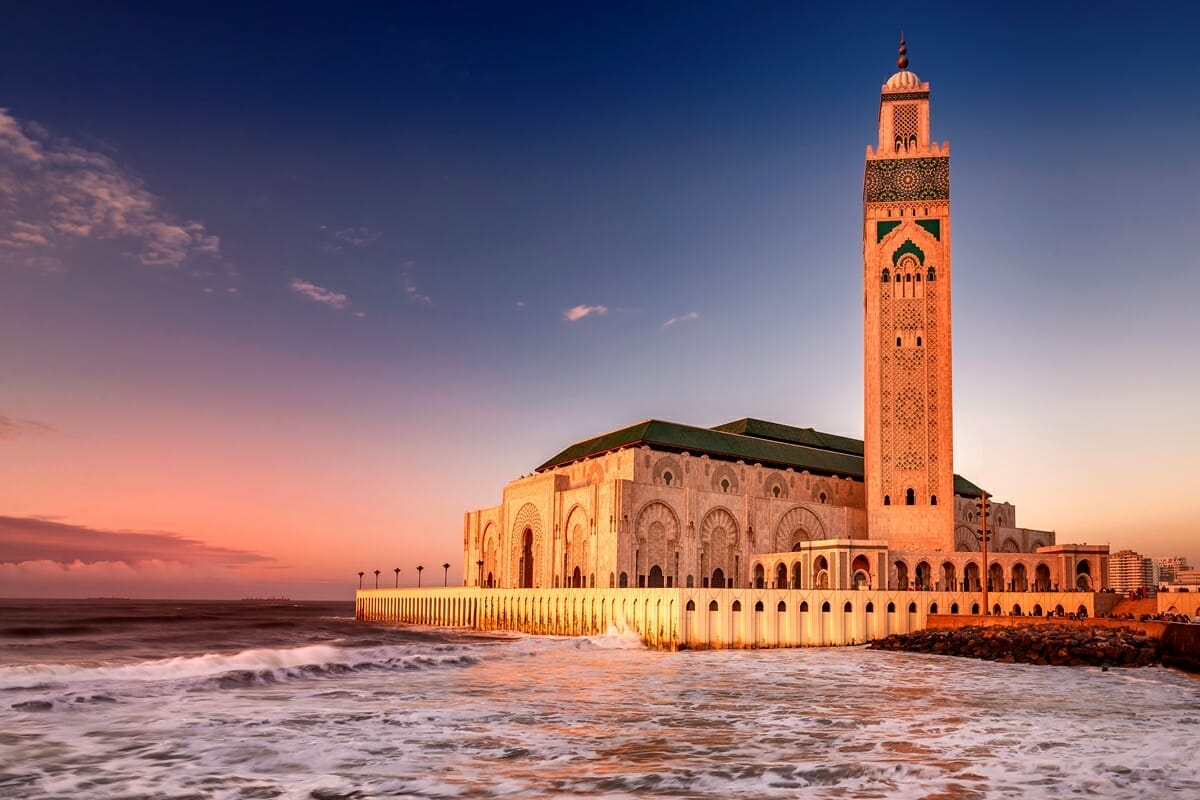
Your private driver meets you at Mohammed V airport, the busiest in Morocco, and brings you into Casablanca on the Atlantic. Where your flight times allow, your licensed guide leads an afternoon visit to the Hassan II Mosque, which stands partly over the ocean and ranks among the few mosques in Morocco open to non-Muslim visitors, on guided tours. Builders completed it in 1993 to designs by Michel Pinseau, and its minaret rises 210 meters. The guide then follows the Corniche past the shrine of Sidi Abderrahmane on its rocky islet, with the Atlantic surf breaking below the promenade, and turns inland to the Habous quarter, which the French planner Henri Prost laid out from 1916, with bookshops of Moroccan and Arabic publishers, mosques and the Mahkama du Pacha, which went up in 1941 and 1942. Where it suits your party, dinner follows at Rick's Café, which a former US diplomat opened in 2004 in a 1930 house against the medina walls, in homage to the 1942 film. Logistics: Mohammed V airport to central Casablanca by road, about 30 minutes, private driver.
Day Two
Rabat: The Kasbah of the Udayas, the Hassan Tower and Chellah
The road runs up the coast to Rabat, Morocco's capital since 1956, which UNESCO inscribed in 2012 for its planned new town from the French Protectorate and its older Almohad walls and gates. Your licensed guide begins at the Kasbah of the Udayas, which the Almohad caliph Abd al-Mu'min founded around 1150 on a hill above the mouth of the Bou Regreg. You enter through Bab Oudaia, the gate Ya'qub al-Mansur built between 1195 and 1199, follow blue and white lanes to the Andalusian Gardens, which the French Protectorate laid out between 1915 and 1918, and take mint tea at the Café Maure with Salé across the river. Ya'qub al-Mansur also began the great mosque whose minaret, the Hassan Tower, stands 44 meters high among about 348 stone columns, unfinished since his death in 1199. Across the esplanade rises the Mausoleum of Mohammed V, which the Vietnamese architect Cong Vo Toan designed and builders completed in 1971. In the afternoon the guide walks you through Chellah, where the Roman port of Sala gave way to a Marinid royal necropolis behind a gate Abu al-Hasan completed in 1339, and storks nest on the minaret of the ruined zawiya. Logistics: Casablanca to Rabat by road, about 1 hour, private driver, then a night in Rabat.
Day Three
Meknes, Moulay Idriss and Volubilis on the Road to Fez
Day three is a full day on the road with three stops. Meknes became Morocco's capital under Sultan Moulay Ismail, who ruled from 1672 to 1727 and ringed the city with high walls and great gates, and UNESCO inscribed it in 1996. Your licensed guide starts at Bab Mansour on Place el-Hedim, the gate his son Moulay Abdallah completed in 1732, with polychrome zellige across its facade, and its marble columns likely carried over from Volubilis. Nearby, the Mausoleum of Moulay Ismail, which dates from 1703, holds the sultan's tomb among zellige floors, carved stucco and two grandfather clocks, gifts from Louis XIV of France. The road then climbs to Moulay Idriss Zerhoun, spread across two foothills of the Zerhoun mountains around the tomb of Idris I, founder of the Idrisid dynasty, where the Sentissi Mosque raises a cylindrical minaret of green tiles with white Kufic-style lettering. Below the town lies Volubilis, a Mauritanian capital from the 3rd century BC and later a Roman outpost, which UNESCO inscribed in 1997. Olive oil made it rich, and excavators have found 58 oil-pressing complexes. Your guide walks you to the Arch of Caracalla, which the governor Marcus Aurelius Sebastenus raised in 217, and to the mosaic floors, where Orpheus plays his harp to trees, animals and birds and Hercules performs his twelve labours. Logistics: Rabat to Meknes by road, about 1 hour 30 minutes, then about 30 minutes to Moulay Idriss, a short drive to Volubilis and about 1 hour 15 minutes on to Fez, private driver and licensed guide.

Day Four
Fes el-Bali: Bab Bou Jeloud, the Qarawiyyin and the Tanneries
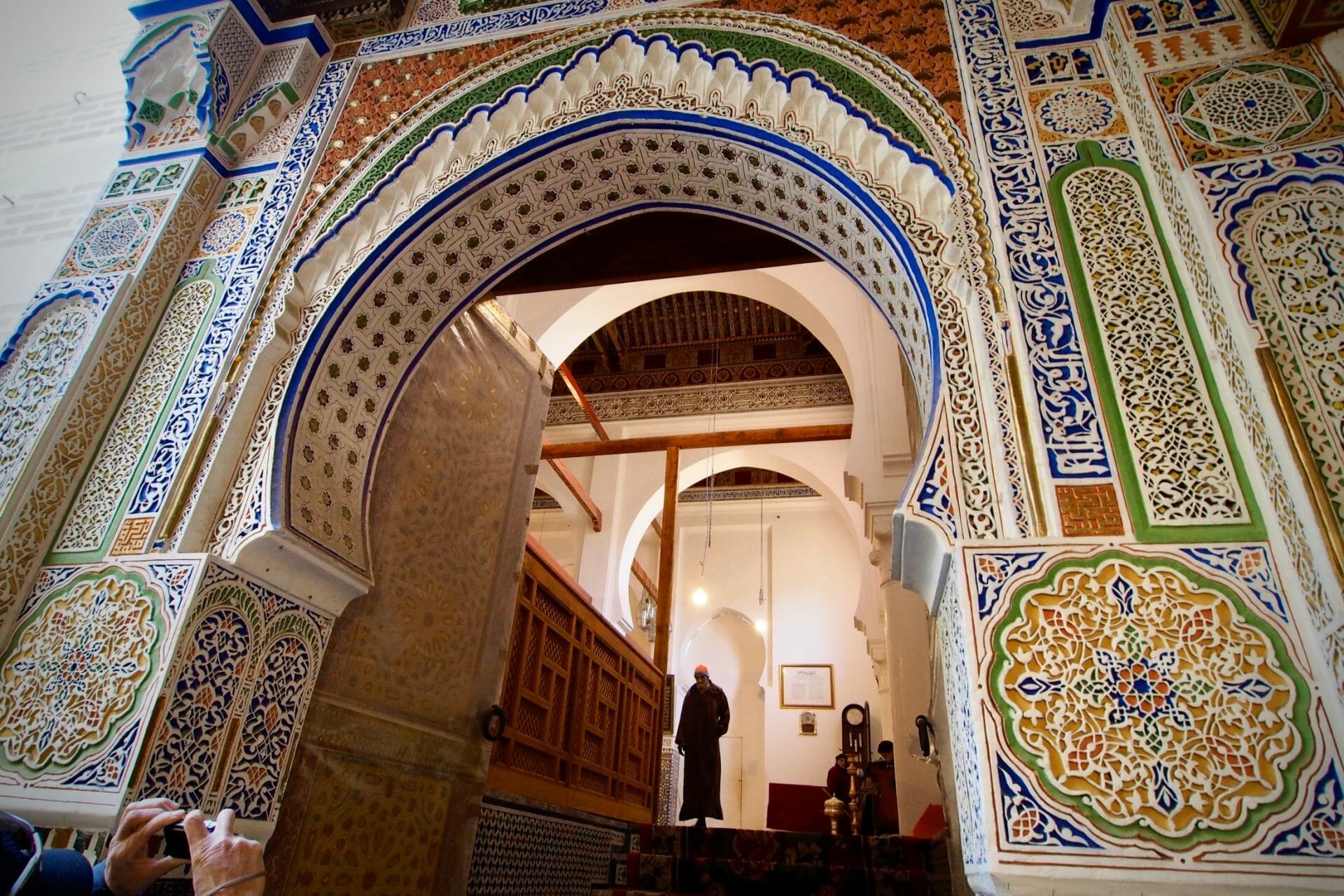
The Idrisid dynasty founded Fez between 789 and 808, and UNESCO inscribed its medina in 1981. Fes el-Bali, the old city, covers about 300 hectares without cars, so the day runs on foot with your licensed guide. You enter through Bab Bou Jeloud, which the French administration built in 1913, blue tiles on its outer face and green on the inner, with the minarets of the Bou Inania Madrasa and the Sidi Lazzaz Mosque framed in its arch. The lanes lead down to the Qarawiyyin, which Fatima al-Fihri founded as a mosque in the 850s and which Guinness lists as the oldest existing, continually operating educational institution in the world. On Nejjarine Square, Sultan Abd al-Rahman added a tiled public fountain in the 19th century beside a merchants' inn from 1711, which reopened in 1998 as the Nejjarine Museum of Wooden Arts and Crafts. In the Andalusian quarter, Fatima's sister Maryam al-Fihri founded the Andalusian Mosque in 859 and 860, and its monumental gate dates from the Almohad rebuilding. The hammers of the coppersmiths ring around Place Seffarine, and from a terrace above the Chouara Tannery you look down on round stone vats of poppy red, indigo and henna. The guide closes the day at the Batha Museum, a late 19th-century palace of Sultan Hassan I, which reopened in February 2025 as the Al Batha Museum of Islamic Arts and keeps a 9th-century minbar from the Andalusian Mosque. Logistics: a walking day in the medina with your licensed guide, and your private driver for the transfers at each end.
Day Five
Fes el-Jdid: The Royal Palace Gates, the Mellah and Jnan Sbil
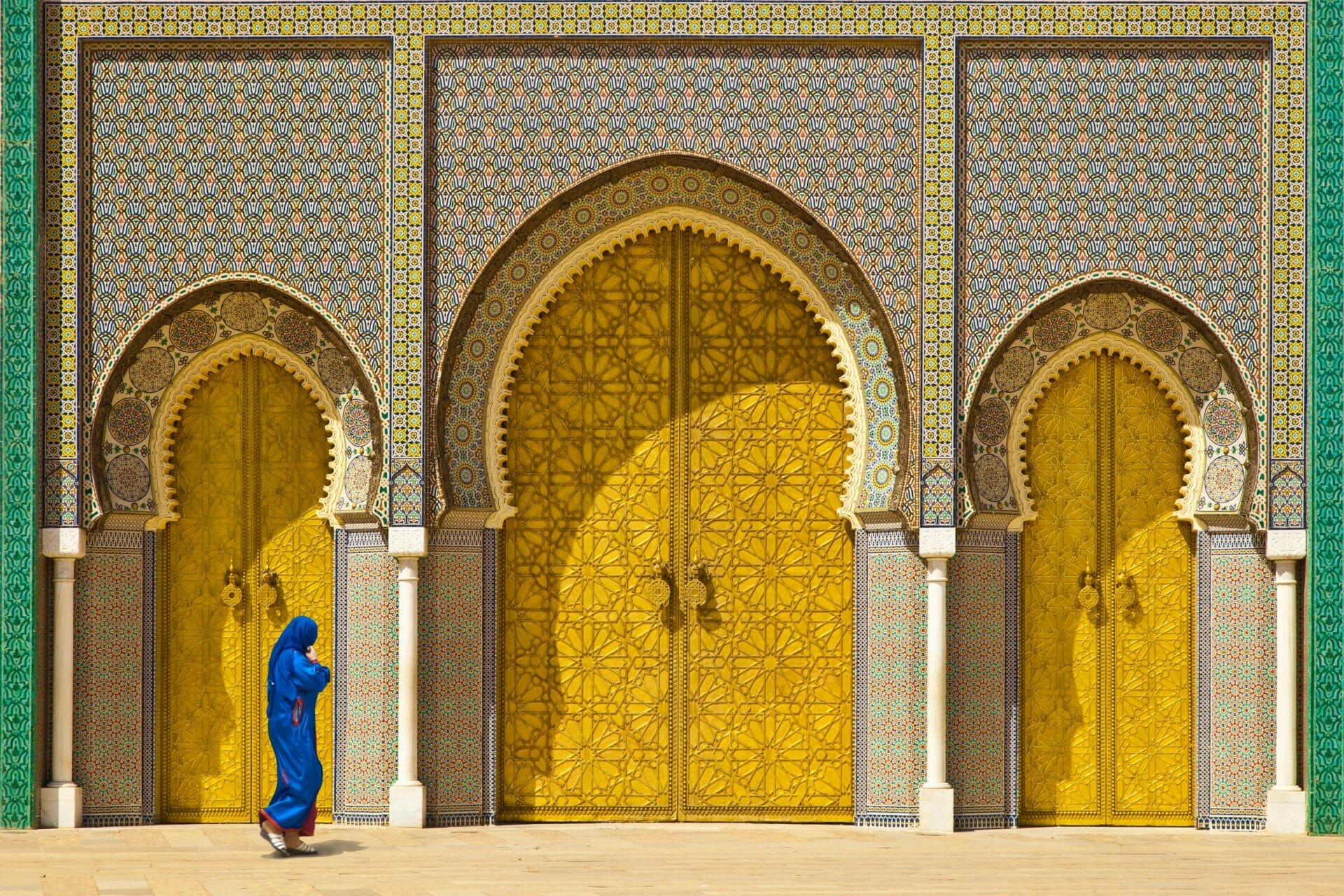
The Marinid sultan Abu Yusuf Ya'qub founded Fes el-Jdid in 1276 as a royal citadel beside the old city, and the royal palace, Dar al-Makhzen, still fills much of it. Your licensed guide starts at Place des Alaouites, where King Hassan II added a new palace entrance in the late 1960s and early 1970s, its gates a showcase of Fez craftsmanship. Beside the palace lies the Mellah, the first Jewish quarter in Morocco to carry the name, where the Ibn Danan Synagogue, which a merchant built in the late 17th century, reopened after restoration in 1999. The guide then leads you into Jnan Sbil, the 7.5-hectare garden Sultan Moulay Hassan I created in the 19th century, which opened to the public in 1917 and reopened in 2011 after restoration. Waterwheels creak at its eastern and western edges, a bamboo garden shades the paths, and a large pool lies beneath the 16th-century Borj Sheikh Ahmed. The afternoon stays open, and where it suits your party our team arranges an Arabic calligraphy lesson, a picnic in the hills above Fez or a cooking class. Logistics: a day in Fez with your licensed guide, and your private driver for transfers across the city.
Day Six
Across the Middle Atlas by Ifrane and Beni Mellal to Marrakech
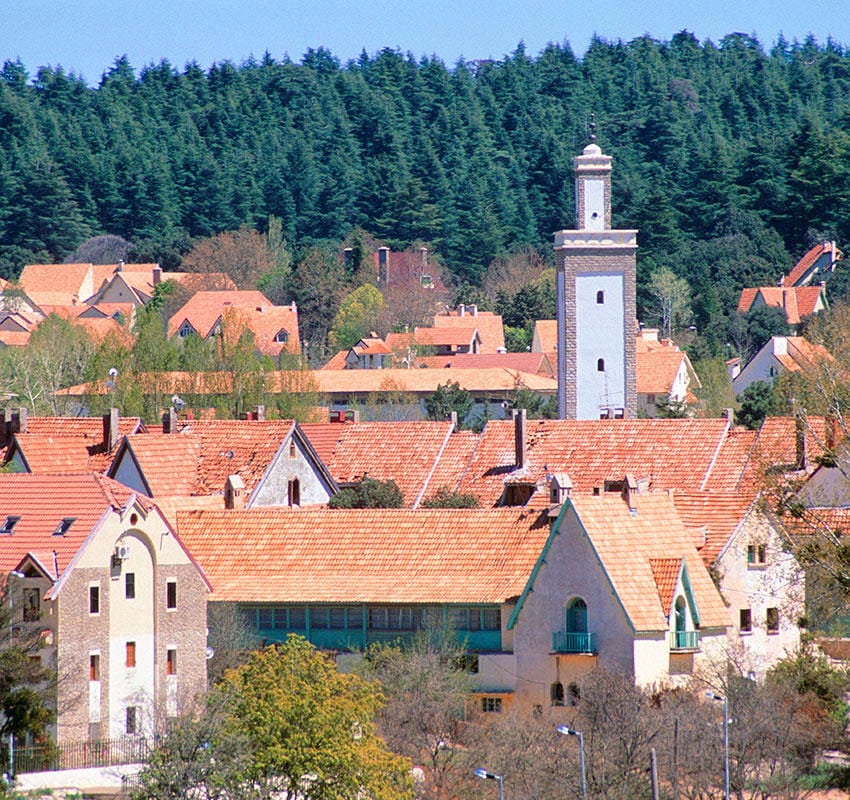
Day six is the long road day of the trip, about 7 hours of driving, with stops along the way. The road climbs about an hour south of Fez to Ifrane, a hill town the French administration founded in 1929 at about 1,665 meters, which locals call Little Switzerland for the snow on its slopes in autumn and winter, with a stone lion from 1930. Beyond it the Cèdre Gouraud Forest of Atlas cedar shelters the Barbary macaque, an endangered monkey native to the Middle Atlas, and volcanic plateaus with small lakes break up the forest. The road then drops to Beni Mellal at the foot of Jbel Tassemit, where Sultan Moulay Ismail built a kasbah in the late 17th century to guard a spring, beside the garden of Ain Asserdoun. Lunch follows in the town, where the markets sell oranges, olives and figs, and in the afternoon the road runs across the plains to Marrakech, with the High Atlas on the horizon as you arrive. Logistics: Fez to Marrakech by road via Ifrane and Beni Mellal, about 7 hours plus stops, private driver and licensed guide.
Day Seven
Marrakech: The Koutoubia, the Bahia Palace and Jemaa el-Fna
The Almoravids founded Marrakech in 1070 to 1072, and UNESCO inscribed its medina in 1985. Your licensed guide starts beneath the Koutoubia, which the Almohad caliph Abd al-Mu'min rebuilt around 1158 and whose minaret rises about 77 meters. Its name comes from the booksellers who once worked at its base, and its minaret likely inspired the Hassan Tower you saw in Rabat. The grand vizier Si Musa began the Bahia Palace in the 1860s, his son Ba Ahmed expanded it, and Carrara marble paves its grand courtyard. The guide continues into the Mellah, which Sultan Abdallah al-Ghalib created in 1558, and, where it suits your party, the Miâara Jewish cemetery. As darkness falls, storytellers, musicians and Gnaoua dancers fill Jemaa el-Fna, which UNESCO proclaimed a masterpiece of oral and intangible heritage in 2001, and smoke rises from the grills of the food stalls. Where it suits your party, dinner follows at a restaurant in the medina. Logistics: a walking day in the medina with your licensed guide, and your private driver for transfers across the city.

Day Eight
The Majorelle Garden, the Palmeraie and a Hammam
The painter Jacques Majorelle began his garden in 1923 and worked on it for almost forty years, and in 1931 the architect Paul Sinoir designed the Cubist villa at its heart, in a cobalt shade Majorelle later patented as Majorelle blue. Yves Saint Laurent and Pierre Bergé rescued the neglected garden in the 1980s, the villa now holds the Berber Museum, and the Yves Saint Laurent Museum opened nearby in October 2017. Your licensed guide walks you along the shaded paths before the afternoon heads out to the Palmeraie on the northern edge of the city, a grove about 8 kilometers long where more than 100,000 date palms grow among olive and fruit trees. Underground channels, the khettaras, have watered it since the Almoravid period, and the guide tells the old legend of warriors' date stones taking root in the sand. Back in the medina, where it suits your party, a traditional hammam closes the day with warm steam, a scrub and mint tea. Logistics: a day in Marrakech with your licensed guide, and your private driver for the Majorelle Garden and the Palmeraie.
Day Nine
The Agafay Desert, the Souks or a Cooking Class
The last full day follows your party's choice. The Agafay desert, about 30 minutes from the city, is a stone plateau of gravel ridges and dry riverbeds at the foot of the High Atlas, with no sand dunes, and where it suits your party a camel ride or a quad bike tour crosses it, with snow on the High Atlas peaks behind in the cooler months. Travelers who prefer the city take a shopping walk with their licensed guide, from Rahba Kedima, the spice square, where shops sell saffron, cinnamon sticks and ras el hanout, a blend of up to 30 spices, to the carpet souks and the specialty shops beyond. On request, a cooking class closes the day, with a tagine of your own and the meal at the table afterward. Logistics: Marrakech to the Agafay desert by road, about 30 minutes, private driver, or a walking day in the souks with your licensed guide.

Day Ten
Bslama: Departure from Marrakech
The morning stays free for a last mint tea on a terrace or a final walk in the souks. Your private driver collects you from the hotel with time to spare for your flight from Marrakech Menara, a short drive from the medina, and our team arranges VIP airport assistance on request. The Menara gardens near the airport, whose water basin and pavilion appear in the UNESCO listing of the medina, make a calm last stop if your flight leaves in the afternoon. Bslama, the Moroccan goodbye, often comes with an invitation to return, and travelers who want more time add Essaouira, the High Atlas villages or a crossing to Spain on the same private basis. Logistics: hotel to Marrakech Menara airport by road, a short drive, private driver, with VIP assistance by prior arrangement.
How many days do you need for Morocco’s imperial cities?
Ten days cover all four imperial cities at a comfortable pace, and this route gives Rabat a full day, Meknes a morning, Fez two full days and Marrakech three. With a week, most travelers drop Rabat or Meknes, or move fast through Fez, and the medina of Fes el-Bali alone fills a whole day on foot. The tenth day here goes to the flight home, and the arrival day in Casablanca adds the Hassan II Mosque, so the trip opens and closes at an international airport.
Is 10 days in Morocco enough without the Sahara?
Yes. This route spends its ten days in the four imperial cities and the Middle Atlas, with no overnight drive to the dunes, and the Agafay desert gives a taste of open desert on day nine, about 30 minutes from Marrakech. The dunes of Erg Chebbi lie about 9 hours 30 minutes by road from Marrakech, so a Sahara visit needs at least two extra days and a different shape of route. For travelers who want the dunes in the same ten days, our 10-day Fez, Sahara and Marrakech journey trades Rabat and the extra city days for two nights at Erg Chebbi.
How many nights in Fez and Marrakech?
Three nights in Fez and four in Marrakech suit a 10-day trip focused on the cities, and this route uses exactly those numbers. Fez needs two full days, one in Fes el-Bali for the Qarawiyyin, the tanneries and the souks, and one in Fes el-Jdid for the palace gates, the Mellah and Jnan Sbil. Marrakech gets three full days, one for the Koutoubia, the Bahia Palace and Jemaa el-Fna, one for the Majorelle Garden and the Palmeraie, and one for the Agafay desert, the souks or a cooking class.
This imperial cities route, or another Morocco journey?
Choose this route if you prefer cities, palaces and gardens to long desert drives, and want all four imperial capitals in ten days with shorter road days and four nights in one Marrakech hotel. The 10-day Fez, Sahara and Marrakech journey shares the length and the start in Casablanca, but leaves out Rabat and one day each in Fez and Marrakech to spend two nights in a desert camp among the Erg Chebbi dunes and return along the road of the kasbahs. Desert camps can be reserved for your party alone or shared with a few other guests, and your travel advisor helps you choose. It suits first-time visitors who want the Sahara and accept two long road days. The 12-day southern Morocco journey leaves Fez out and spends the time on the Anti-Atlas, the desert and Marrakech, and it suits returning visitors who have already seen the imperial cities.
With two weeks, the 15-day Morocco journey covers the whole country, from Tangier and Chefchaouen through Fez to the Sahara, the High Atlas and Marrakech, and it keeps Fez and Volubilis from this route while adding the north and two nights in the Sahara. With a week, the 7-day northern Morocco journey keeps to Rabat, Tangier, Chefchaouen and Fez, and the 8-day journey from Marrakech stays close to the city with the Agafay desert, the High Atlas and the coast at Oualidia. Every route starts from our Morocco destination page, and our team adjusts any of them to your dates.
Who this journey suits
First-time visitors who want Morocco’s great cities in one trip without a night in a desert camp. Couples who like a slower rhythm, with three nights in Fez, four in Marrakech and time for a hammam and a garden. Families with teenage or adult children, who share a driver and guide and tend to remember the tanneries, the Roman mosaics and the evening in Jemaa el-Fna. Travelers drawn to history and architecture, since the route runs from Roman Volubilis through Almohad, Marinid and Alaouite monuments to the 20th-century new towns of Casablanca and Rabat. Travelers with an interest in Morocco’s Jewish heritage, who find the Mellah of Fez and the Ibn Danan Synagogue, and the Mellah of Marrakech. Your guide is glad to advise on suitability before booking for anyone who prefers shorter walking days.
What the 10-day journey costs and what it includes
The 10-day route starts from $9,980 per person, double occupancy. The from-price covers nine nights in deluxe four-star properties selected for comfort, location and service: one in Casablanca, one in Rabat, three in a hotel or riad close to the Fez medina and four in Marrakech. Five-star luxury properties are available by request. The from-price includes a private driver for airport transfers and every road day, and licensed guides for the visits described.
Four things move the price: the season, the hotel category, the size of your private party, and added experiences such as the Agafay desert outing, a cooking class or a hammam in Marrakech, a calligraphy lesson in Fez or an extra night on the route. Magical Private Travel maintains excellent ratings on Trustpilot and Google’s independent review platforms.
To shape this route around your dates and your party, speak with our team about your 10 days in the imperial cities.
Frequently asked questions about the imperial cities tour
How much does a private 10-day imperial cities tour of Morocco cost?
This 10-day route starts from $9,980 per person, based on two people sharing a room. The from-price covers the route as written: nine nights, a private driver for every road day and transfer, and licensed guides for the visits described, with the full list of inclusions set out in your written quote. Four things move the price. The season matters most, since hotel rates rise and fall through the year. Five-star hotels raise it. Party size changes it, because the driver and guides serve the whole party, so larger private parties pay less per person. Added experiences, such as the Agafay desert outing, a cooking class or a hammam in Marrakech, a calligraphy lesson in Fez or an extra night anywhere on the route, add to it. Our team sends a written quote for your dates and party before you commit.
What are the four imperial cities of Morocco?
Fez, Marrakech, Meknes and Rabat, each a royal capital at some point in Morocco’s history, and this route visits all four. Fez served as capital under the Idrisids from the early 9th century and again under the Marinids from 1244 to 1465, and under the Alaouites for long stretches until 1912. Marrakech, which Yusuf ibn Tashufin founded in 1070 or 1071, served as capital under the Almoravids and the Almohads and later under the Saadians. Meknes became capital in 1673 under Sultan Moulay Ismail, who built its walls, gates and granaries. Rabat has served as capital since independence in 1956, and its Almohad monuments, such as the Hassan Tower, date from an earlier plan for a great capital on the Atlantic. Each city shows a different dynasty in stone, so the route reads as a history of Morocco from the 9th century to today.
Why does this route leave out the Sahara, and how do we add it?
The route keeps to the imperial cities and the Middle Atlas, so the road days stay short and the nights stay in four bases. The dunes of Erg Chebbi lie about 7 hours 15 minutes by road from Fez and about 9 hours 30 minutes from Marrakech, and a worthwhile visit needs two nights in a desert camp, which adds at least two days to the trip. Day nine offers a taste of open desert instead, in the Agafay, a stone plateau at the foot of the High Atlas about 30 minutes from Marrakech. Our note on the Agafay or the Sahara compares the two. If the dunes matter to you, the 10-day Fez, Sahara and Marrakech journey fits them into ten days, and our team adds a Sahara stage to this route on request, with a revised day-by-day plan and price.
How long are the drives between the imperial cities?
Most road days on this route run short. Mohammed V airport to Casablanca takes about 30 minutes, Casablanca to Rabat about 1 hour, and Rabat to Meknes about 1 hour 30 minutes. On day three, Meknes to Moulay Idriss runs about 30 minutes, Volubilis sits a short drive beyond, and Volubilis to Fez takes about 1 hour 15 minutes. Day six is the long one, about 7 hours from Fez to Marrakech by Ifrane and Beni Mellal, with stops for the cedar forest, the macaques and lunch. The motorway between the two cities runs about 5 hours 15 minutes, and your private driver takes it instead if your party prefers a quicker day. In Marrakech the Agafay desert lies about 30 minutes away, and the airport a short drive from the medina. Every time here leaves out stops.
Are the driver and the guide the same person?
In Morocco they are two different people. A private driver handles the vehicle and the road, and a licensed guide leads the visits. On this route your private driver stays with you from the airport in Casablanca to the airport in Marrakech, so you keep the same vehicle and the same face across the country. Licensed guides lead the visits in Casablanca, Rabat, Meknes, Moulay Idriss and Volubilis, Fez, and Marrakech, and a guide rides along on the mountain day to Marrakech. This split lets your driver focus on the road and your guide focus on the place, its history and its people. Both work for your own party only, and they set the pace around you, whether the day calls for an early start in the Fez medina or lunch in Beni Mellal.
Which mosques on this route welcome non-Muslim visitors?
The Hassan II Mosque in Casablanca welcomes non-Muslim visitors on guided tours, and your licensed guide arranges the visit on day one or around your flight. Most other mosques in Morocco serve worshippers only, including the Koutoubia in Marrakech and the Qarawiyyin and the Andalusian Mosque in Fez, so your guide shows them from the street, the square or a nearby terrace and explains the buildings. The route also takes you into buildings of the same tradition of carved cedar and tilework, open to all visitors: the Bou Inania Madrasa in Fez, which Sultan Abu Inan Faris built between 1350 and 1355 in carved cedar, stucco and zellige, the Bahia Palace in Marrakech and the Batha Museum in Fez, now a museum of Islamic arts. Modest dress, with shoulders and knees covered, suits every visit.
Which airports should we fly into and out of?
Fly into Casablanca’s Mohammed V airport and home from Marrakech Menara. Mohammed V is the busiest airport in Morocco, and Marrakech Menara serves the city at the end of the route, so an open-jaw ticket of this kind avoids a return drive to Casablanca on the last day. Your private driver meets you at arrivals in Casablanca, about 30 minutes from the city, and takes you to Menara on day ten. Our team arranges VIP airport assistance at both ends on request, covering meet-and-greet and help through the terminal, and aligns the itinerary with your flight times once you book them. If your flights suit it better, the route reverses well, from Marrakech to Casablanca.
When is the best time for the imperial cities?
March, April and late September to November suit this route best, since it spends its days walking medinas, palaces and gardens, and the shoulder months sit comfortably for all three. Summer departures work well with early starts in the medinas, lunch indoors in the heat of the afternoon and evenings on the squares. Winter brings clear, cool days in the cities and snow on the slopes around Ifrane, and our team plans the mountain day around the weather. If your dates fall during Ramadan, our guide to the best time to visit Morocco explains how the days change. Our team plans each day around the season you choose.
Does this journey suit families or travelers who prefer less walking?
Families travel this route often, because a private driver and guide set the pace around the youngest and the oldest in the party, and the four bases mean little packing. Teenagers tend to respond to the tanneries of Fez, the Roman mosaics of Volubilis, the macaques near Ifrane and the evening in Jemaa el-Fna. The walking itself stays moderate. The medinas of Fez and Marrakech run on foot along narrow, sloping lanes, Volubilis spreads across an open hillside, and Moulay Idriss climbs two hills. Your driver waits close to each medina gate, so a tired walker rides to the next stop. Your guide is glad to advise on suitability before booking, and our page on accessible travel sets out how our team plans for travelers who need step-free routes or extra support.
How do we add Chefchaouen, Essaouira or more time to the route?
Chefchaouen fits best between Rabat and Fez, with a night or two in the blue town of the Rif before the third day, and our 7-day northern Morocco journey shows how the north links to Fez. Essaouira works as a day from Marrakech, about 2 hours 30 minutes each way by road, or as a night on the Atlantic before the flight home. A night in the High Atlas villages slows the end of the trip, and a desert stage at Erg Chebbi turns the route into a longer loop. Each addition changes the road plan, so your planner reworks the whole route and price rather than adding days at the end. American travelers who want Spain as well often start in Andalusia, and our Spain and Morocco private journey and multi-country journeys show how the two countries fit together.
Who do we contact if something goes wrong or we want a change?
Your planner designs your journey with you and stays in touch after you land. For the fastest response at any hour, message your private WhatsApp group, where our 24/7 support team works alongside Rachel or Dan. Because we begin no more than five journeys per country each week, peak spring and fall dates fill early, and that limit is what lets us stay this close to every trip.
We keep a list of vetted four- and five-star hotels, well located and enjoyed by our past travelers and by our own team.
Examples for each overnight stop on this route. Choose a deluxe boutique hotel or a five-star stay, and your travel advisor matches each night to your wishes, the season and availability.
Casablanca
Boutique: Hôtel Particulier Le Doge, Relais & Châteaux. A 16-room Art Deco private mansion in central Casablanca, with a spa and hammam.
Five-star: Royal Mansour Casablanca. A rebuilt and raised 1950s landmark in the Art Deco city center, near the port.
Rabat
Boutique: Villa Mandarine. A villa hotel in a grove of 700 orange trees in Rabat, with a heated pool.
Five-star: Fairmont La Marina Rabat-Salé. Opened in 2022 where the Bou Regreg meets the Atlantic, facing Salé marina and Rabat.
Fez
Boutique: Dar Bensouda. A traditional riad in the Fes medina, with a spa, pool and roof terrace.
Five-star: Riad Fès, Relais & Châteaux. A restored medina palace with tiled patios, a contemporary 14-meter pool and a bar.
Marrakech
Boutique: El Fenn. A color-filled medina hotel near Bab Ksour, with a large rooftop terrace and bar facing the Atlas.
Five-star: Royal Mansour Marrakech. A walled estate of 53 private riads by the medina ramparts, each with a rooftop terrace.
What's Included
A Very Personalized Itinerary, Just For You and Your Schedule
Hand-Picked Ultra-Luxury & Boutique Hotel Options
Insider Experiences + Inspiring Sightseeing + Magical Upgrades
Private Touring with Your Own Personal Expert Guide
Private Airport & Train Station Luxury Transfers
Full Breakfasts + Food & Wine Tasting Options
Your Choice of Activities on “Design Your Days”®
Expert Advice, Restaurant Ideas & Reservations
24/7 Support & Concierge Service from Spain, Portugal & Morocco
Magical is an award-winning luxury travel agency
Private journeys with soul & stories
Excellent independent reviews
Your private WhatsApp group with our 24/7 team and Rachel or Dan
Hidden gems, insider fun & vetted hotels
Your private guide, deluxe vehicle & flexible pace
24/7 concierge-style support
We handle everything — you live the dream
American Precision, Local Soul
Our Unforgettable Trips Are Tailored Just For You
Hi from Europe,
Along with our local partners across Portugal, Spain, Morocco and beyond we believe that our clients deserve the truly tailor-made private luxury trips, not generic "one-size-fits-all" plans.
Get inspired with our sample trips then get in touch about an expert-made personalized custom luxury itinerary, just for you.
Kind regards,
Dan O'Beirne & the MPT team
Request a Quote