
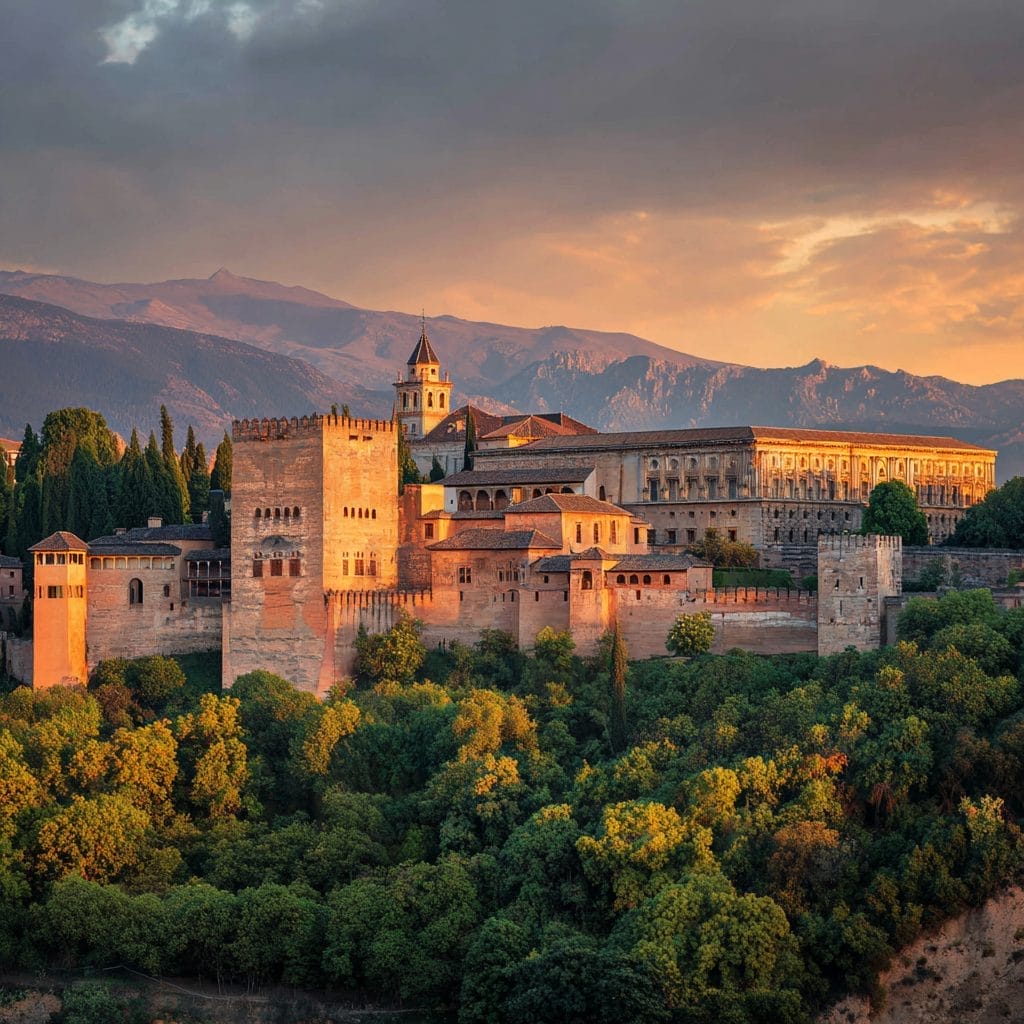
There are holidays, and then there are the ones you find yourself recounting at dinner tables years later — the ones that altered something, quietly, in how you see the world. A private tour of Spain, Portugal and Morocco has an unusual capacity to be the latter. Three countries, three entirely distinct personalities, and yet when you move through them as a single, unhurried journey, something remarkable happens: the contrasts don’t jar, they accumulate. Flamenco gives way to fado. Fado gives way to the call to prayer. And somewhere between Seville and Marrakech, you realise you’ve been transported rather than merely relocated.
What follows is not a definitive list — such a thing would require several lifetimes and a remarkable tolerance for olive oil. These are, rather, fourteen experiences that our clients tend to remember with particular clarity. The kind that surface unprompted, months after the suitcases have been put away.
A note on active experiences: several of the entries below involve moving through a landscape on foot. None require specialist fitness or equipment. All can be adapted to pace and ability. What they share is a quality that museums and restaurants — excellent as those are — cannot quite replicate: the particular aliveness that comes from engaging a place with your own two feet.
Spain
1. The Prado After Hours — with an Art Historian, and No One Else
There is a version of the Museo del Prado that most people experience: shuffling forward in a queue, craning past other visitors to catch a few seconds with Velázquez’s Las Meninas, reading wall text in the ambient noise of several hundred simultaneous conversations. And then there is the other version — the one arranged for after closing, when the galleries fall silent, the crowds are gone, and a private art historian leads you through five centuries of Spanish and European masterwork with the unhurried attention the paintings actually deserve.
The Prado’s permanent collection is among the greatest in the world: Velázquez, Goya, El Greco, Bosch, Titian, Rubens — not reproductions, not highlights reels, but the originals, at close quarters, in good light, with someone alongside you who has spent their professional life thinking about what these objects mean and why they were made. Standing in front of Goya’s Black Paintings at ten o’clock in an empty room is an experience of a different order entirely from doing so at noon in a crowd. Some works of art require a degree of quiet to properly enter. The Prado after hours provides it.
2. Itálica — Rome’s First City on the Iberian Peninsula, Just Beyond Seville
Nine kilometres northwest of Seville, in the quiet municipality of Santiponce, lies one of the most extraordinary archaeological sites in Spain. Itálica was founded in 206 BC — the first Roman city established in Hispania — and because no modern city was built over much of it, the result is an unusually well-preserved Roman cityscape, with cobbled streets and mosaic floors still largely in situ. Wikipedia
Its amphitheatre — one of the largest in the Roman Empire — could seat some 25,000 spectators; visitors today can still walk the very passages through which gladiators once moved before their bouts. It was also the birthplace of not one but two Roman emperors: Trajan and Hadrian.
The experience, done well, means arriving privately by car from Seville — the surrounding terrain and road network make it a drive, not a walk — and spending unhurried time inside the site itself with a private historian or archaeologist as guide. Someone who can place what you’re looking at in genuine context, and who understands that the mosaics — particularly those in the House of the Birds — deserve far more time than most visitors give them. This is not a day trip. It is an encounter with the deep roots of western civilisation, on ground that has barely been disturbed in two millennia.
3. The Alhambra, Before the Crowds Arrive
Granada’s Alhambra is one of those places that is genuinely impossible to overstate and simultaneously very easy to undermine — with poor timing. The solution is simple, if not always easily arranged: early access, a knowledgeable private guide who understands that silence is sometimes more instructive than commentary, and the particular quality of morning light falling across the Nasrid Palaces before the day’s visitors have begun to arrive.
The geometry of the place — Islamic architecture at its most mathematically sublime — rewards the kind of slow attention that crowds make impossible. A UNESCO World Heritage Site since 1984, it remains one of the most visited monuments in Europe; the difference between experiencing it in a group and experiencing it privately is, frankly, the difference between reading about music and hearing it played.
4. Walking the Camí de Ronda — the Costa Brava’s Ancient Coastal Path
The Costa Brava takes its name from the terrain: costa brava means wild coast, and the name was earned. The Camí de Ronda — a coastal trail originally built by fishermen and border patrols watching for smugglers — winds along more than 200 kilometres of coastline past hidden coves, sleepy villages, and clifftops that offer some of the most dramatic Mediterranean views in Europe. Velvet Escape One particularly rewarding stretch includes the Sant Sebastià lighthouse, perched 170 metres above sea level, as well as an eighteenth-century chapel, a fifteenth-century watchtower, and an Iberian archaeological site dating to the sixth century BC. Costabrava
A private tour of a carefully chosen section — say, between Begur and Calella de Palafrugell, or the wilder northern reaches near Cap de Creus — paired with a long lunch in a clifftop village afterwards, is an afternoon that has the structure of exercise and the feeling of something much richer. The Mediterranean below is turquoise in a way that photographs consistently fail to convey. The pine forests smell of warmth. And the coves, reached by stone steps cut into the cliff face, are the kind of places that make you wonder why you ever went anywhere else.
5. Dining Privately in a Centuries-Old Bodega in Rioja
The Rioja Alta has been producing wine since before most countries had borders. Arrange a private dinner inside one of the region’s great historic bodegas — the kind where the cellar walls carry a century of vintage dates chalked in white — and you have something that transcends a wine tasting. The best of these evenings pair extraordinary older vintages with a meal prepared specifically for your group, guided by a winemaker who has been here long enough to talk about the land as though it were a person. It very nearly is.
6. A Private Wine Tasting and Dinner at a Friend’s Estate in Rioja
There is a meaningful difference between visiting a bodega as a tourist and visiting one as a guest. The latter involves a different kind of welcome, a different quality of access, and an entirely different conversation. At this particular estate — a family property whose vines have been farmed across generations, and whose wines appear on the lists of restaurants that have thought carefully about what they serve — the afternoon begins in the vineyard itself, understanding how the elevation and the particular clay-limestone soils of the Sierra Cantabria foothills shape what ends up in the glass. The tasting that follows is not a presentation. It is a dialogue. And the dinner that concludes the visit — long, unhurried, around a table that has hosted people worth knowing — is the kind of meal that is difficult to describe without sounding as though you are exaggerating.
Portugal
7. The Douro Valley at Harvest Time, Entirely on Your Own Terms
September in the Douro Valley is when the valley earns its reputation. The terraced vineyards — a feat of agricultural engineering so dramatic they feel almost theatrical — are at their most alive, and the quintas that dot the steep slopes are in the midst of the harvest. The right private tour opens doors that don’t appear in any booking system: an invitation to join the harvest itself, a private boat journey along the river at dusk, a table set on a terrace above the valley with a view that explains, finally, why the Portuguese were so determined to plant vines here in the first place. The valley has been a UNESCO World Heritage Site since 2001 — one of the oldest continuously cultivated wine regions on earth.
8. Hiking the Algarve’s Sea Cliffs at Golden Hour
The Algarve’s coastline is one of those landscapes that photographs have made familiar almost to the point of cliché — until you are standing on top of it, in the late afternoon, with the Atlantic light doing what Atlantic light does in October. The Seven Hanging Valleys Trail — which follows the dramatic limestone cliffs between Praia da Marinha and Praia de Vale Centeanes — delivers sweeping views of sea caves, natural arches, and hidden beaches, all from a path that requires nothing more than reasonable footwear and a willingness to stop frequently. Siesta Campers
The southernmost tip of the cape at Sagres is another exceptional vantage point for the sunset, the land giving way to open Atlantic in a manner that feels genuinely final — Europe simply ending, as it does here, at the edge of the known world. Places Without Doors
The private version of this walk — departing at a time calibrated to arrive at the best viewpoints as the light drops, with transport arranged at both ends and a table booked at a quiet restaurant nearby for afterwards — is one of those itinerary decisions that costs very little extra and pays dividends for years. Sunsets here are not subtle.
9. A Private Sunset Sail on the Tagus, with Appetisers and Portuguese Sparkling Wine
Lisbon is, among other things, a city built around water — around the wide, light-filled estuary of the Tagus (or Tejo, as the Portuguese know it) and the oceanic sense of possibility it has always carried. There is no better way to understand the city’s relationship with that water than from the water itself. A private sailing yacht departing from Doca de Belém at dusk passes the Belém Tower, the Monument to the Discoveries, the Cristo Rei statue across the estuary, and the great span of the 25 de Abril Bridge Cooltouroporto — all softened and made strange by the particular quality of evening light on the Tagus.
On board: Portuguese sparkling wine, a small selection of traditional appetisers, the sound of rigging, and a city gradually illuminating itself in the distance. It adds up to one of those hours that is difficult to account for in any rational evaluation of a trip’s highlights, and yet invariably lands near the top of the list.
10. Sintra by Night — and Without the Guidebook
Most visitors experience Sintra the same way: by day, in sensible shoes, following an established circuit between the Palace of Pena and the Moorish Castle. This is not without its pleasures. But Sintra at dusk, with a private guide who grew up nearby and treats the place as a living landscape rather than an attraction, is something else entirely. The palaces — stranded in thick Atlantic forest above the town — take on a different quality in the fading light. The gardens feel older. The whole place, which Lord Byron once called a kind of Eden, briefly justifies the comparison. A UNESCO World Heritage Site, it is one of the few places in Portugal that rewards the decision to linger after the coaches have left.
Morocco
11. Rabat — Morocco’s Most Overlooked City, Experienced from the Inside
Most itineraries either skip Morocco’s capital altogether or pass through it at pace, en route somewhere considered more dramatic. This is a significant miscalculation — and, frankly, a telling one. The operators who rush past Rabat are the same ones who built their Morocco knowledge at a trade show rather than on the ground.
Rabat is still relatively undiscovered by international tourists, which adds considerably to its charm — and that window will not remain open indefinitely. Fleewinter What it offers, done properly, is a version of Morocco that feels lived-in rather than performed. The Kasbah des Oudayas — a twelfth-century Almohad fortress overlooking the Bou Regreg River and the Atlantic — is a UNESCO World Heritage Site whose blue-and-white alleyways carry a distinct Andalusian atmosphere, a legacy of the Moorish families expelled from Spain in the seventeenth century who made this their home. Barcelo
A short distance away, the Chellah — an ancient royal necropolis built over the ruins of a Roman city — contains gardens of extraordinary calm, with storks nesting above Merinid mausoleums and cats claiming the warm stones of monuments that have been standing, in various forms, since before the Christian era. Morocco.com
The private version of Rabat — a guide who grew up here, who knows the city’s rhythms rather than its landmarks, who can arrange tea at Café Maure at the exact moment the river light is worth photographing — is one of those half-days that resets your understanding of what Morocco actually is. Not a spectacle. A civilisation that has been quietly getting on with things for a very long time.
12. A Night in the Sahara, Properly Done
The Erg Chebbi dunes near Merzouga are not a secret — but the experience of sleeping there varies enormously depending on how it is arranged. Done well, it involves a private camp set apart from the main cluster, a sunset camel journey that earns its cliché, a dinner under a sky that makes light pollution seem like a moral failure, and an early morning that belongs, genuinely, to you and the silence. Done poorly, it involves proximity to strangers and the particular disenchantment of a packaged version of something that should feel ancient. The difference, entirely, is in the arrangement. We can guarantee the best of the best assuming availability. This is a very popular experience, so consult with us as soon as possible about your future trip.
13. Behind the Walls of Fès el-Bali — with Someone Who Lives There
Fès el-Bali is the world’s largest living medieval city, a UNESCO World Heritage Site, and the single place most likely to disorient a first-time visitor within approximately four minutes of entering. It is also, with the right companion, one of the most extraordinary places on earth. A private guide who grew up in the medina — who knows the tanneries at the time of day when the light falls correctly, who can arrange a private visit to an active madrasa, who understands the difference between what visitors are shown and what the city actually is — transforms the experience completely. The medina rewards those who move slowly and with purpose, rather than those who move quickly and hopefully.
14. The Atlas Mountains — and the Villages Tourism Hasn’t Found Yet
The High Atlas Mountains above Marrakech are not unknown, but most visitors experience them as scenery rather than as a place. A private tour arranged through relationships on the ground offers something different: a genuine introduction to Berber villages where the welcome is not staged, a walk through landscapes that have changed very little in several centuries, and a lunch in a home rather than a restaurant. The Atlas are one of those places that recalibrate your sense of what daily life actually requires. The return to Marrakech, an hour or so down the mountain, feels like a different kind of arrival.
A Final Thought
The word unforgettable is used in travel writing with a frequency that has long since stripped it of meaning. We have used it in the title of this post and make no apology for that — the experiences above genuinely have that capacity, provided they are arranged with care, with the right people, and at the right pace.
That, as it happens, is what a private tour of Spain, Portugal and Morocco is for.
If any of the above has stirred something — a half-formed idea about a trip you’ve been meaning to take, a destination you’ve been circling for years — we’d be glad to talk.
[Plan your private tour of Spain, Portugal & Morocco →]
Frequently Asked Questions
What makes a private tour of Spain, Portugal and Morocco different from a group tour?
A private tour means the itinerary, pace, and experiences are designed entirely around you and your companions desires — no fixed departure dates, no shared coaches, and access to experiences simply unavailable on a group basis. Your guide, your driver, your table, your pace.
When is the best time to visit Spain, Portugal and Morocco together?
Spring (April–June) and autumn (September–October) offer the most comfortable conditions across all three destinations. Morocco’s Sahara is best avoided in peak summer, when temperatures become extreme, while the Algarve’s cliff walks and the Douro harvest are at their finest in the shoulder months.
How long does a combined Spain, Portugal and Morocco private tour typically take?
To do justice to all three countries, allow a minimum of two weeks — though three weeks permits the kind of pace that makes travel feel like travel rather than logistics. Many of our clients find that their first combined itinerary becomes the blueprint for a return trip that goes deeper into each country.
Can a private tour include active experiences like hiking without being an adventure trip?
Absolutely. Several of the experiences above — the Camí de Ronda coastal walk, the Algarve cliff trails, the Atlas Mountains — involve walking through remarkable landscapes at a comfortable pace. None require specialist fitness or equipment, and all can be adapted for different abilities and group compositions.
Is Rabat worth visiting on a Morocco itinerary?
Very much so — and it is consistently underestimated. Rabat is Morocco’s capital and a UNESCO World Heritage Site, with a medina, a twelfth-century kasbah, Roman ruins at the Chellah, and a quality of daily life that feels entirely different from Marrakech or Fès. It rewards those who slow down and approach it with a knowledgeable local guide rather than a tight schedule.
Can a private tour of Morocco include the Sahara Desert?
Yes. A well-designed itinerary can incorporate Marrakech, the Atlas Mountains, Fès, Rabat, and the Erg Chebbi dunes — before or after time in Spain and Portugal. Be sure to ask about the transport time from Marrakesh. The logistics require care, but that is precisely what a good private tour operator is for.
Is it possible to visit working wineries and vineyards as part of a private tour?
Yes — and it is one of the experiences most consistently remembered by our clients. Both the Rioja region of Spain and the Douro Valley in Portugal offer extraordinary access to working estates, private tastings, and winemaker-hosted dinners when arranged through the right relationships. Even Morocco produces wine, and we know the best vineyards.
Contact us to begin planning your Spain, Portugal, and Morocco trip of a lifetime.
——————————-
“Traveling – It Leaves You Speechless, Then Turns You Into A Storyteller.”
Ibn Battuta