

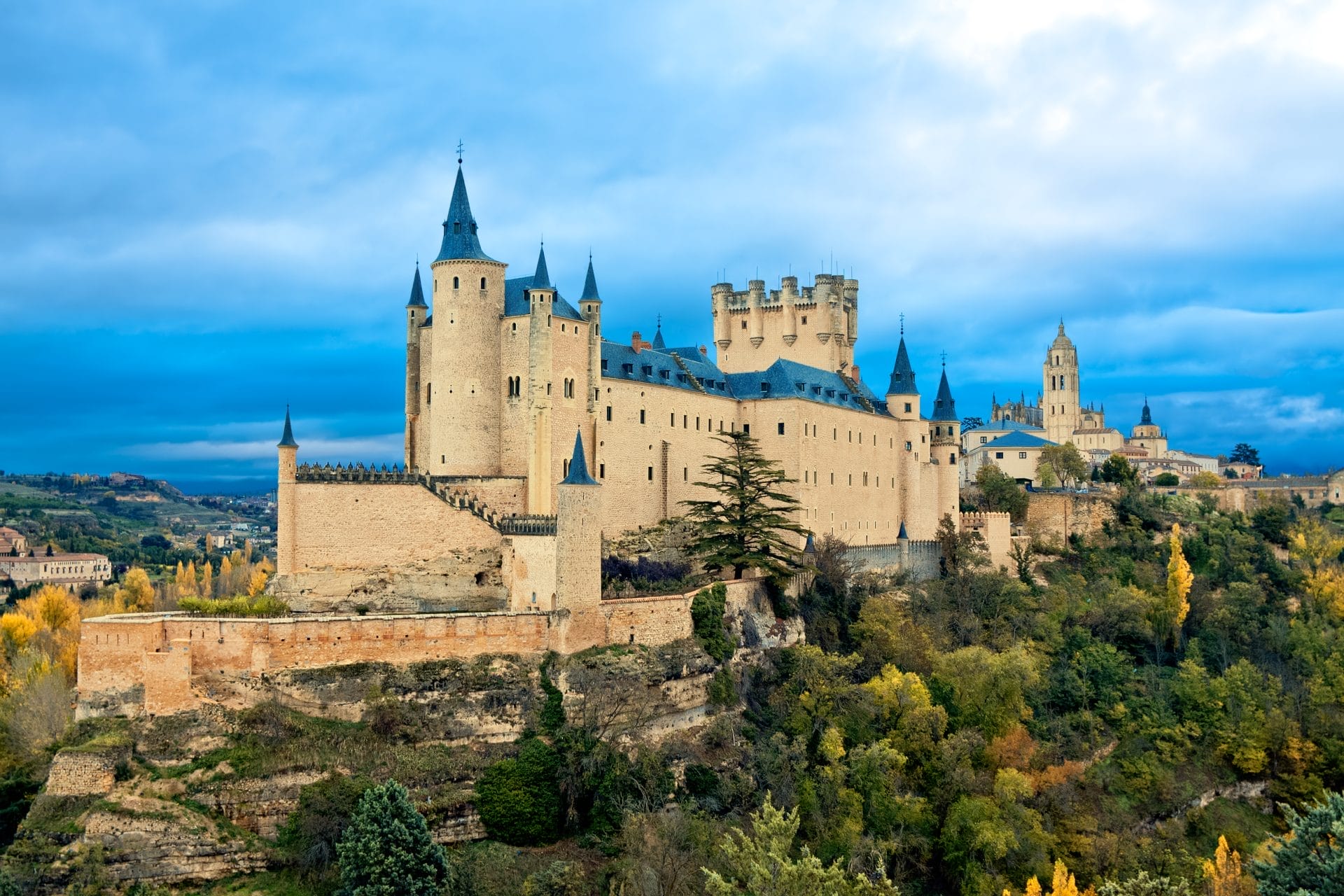


Multi-Country · Private and tailor-made
Madrid to Porto: Spain and Portugal in One Sweep
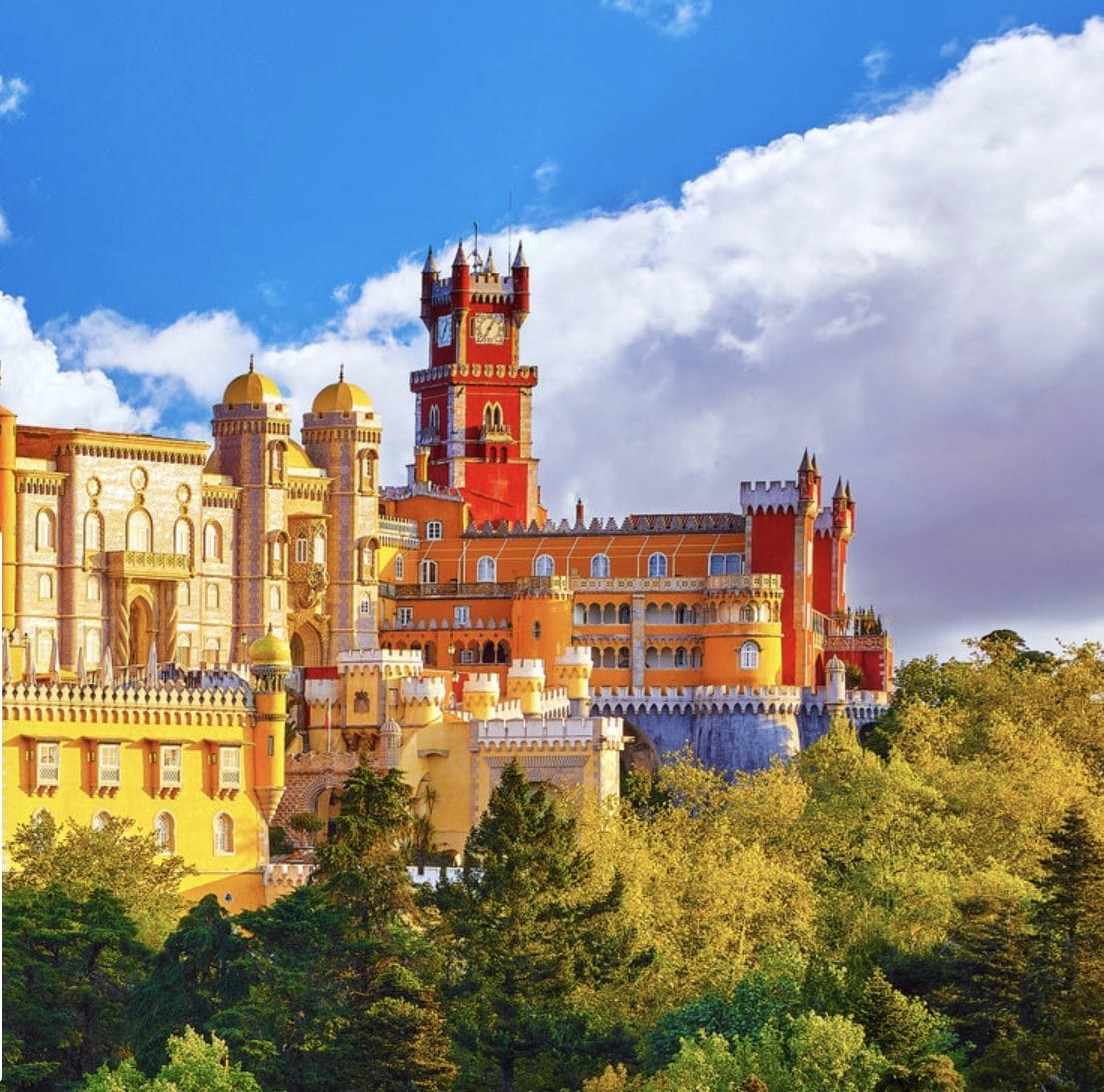
Have Sintra's Pena Palace and its terraces to yourselves after it closes to the public.
By arrangement · How private access worksSuggested length
14 days
Price guide
From $13,972 per person, excl. flights, based on two sharing
Includes hotels, private guiding, experiences and transfers
When
April to June and September to October
or call +1 (727) 699-5439
A planner replies within one business day
American precision with local expertise · Planned from Europe since 2002 · Nearly 17,000 American travelers · Never cancelled a journey
How much of Spain and Portugal can a first visit hold in two weeks? On this 14-day private tour, enough to run in one line from Madrid to Porto without doubling back. Madrid starts you off with the Prado, the Royal Palace and a day in Toledo. The Alhambra in Granada and the Alcázar of Seville follow before Évora leads you into Portugal. Near Lisbon, by arrangement, you have Sintra’s Pena Palace and its terraces to yourselves after it closes to the public. Coimbra, Porto and a family winery in the Douro end the journey, and Porto offers the francesinha, its toasted sandwich under melted cheese. Private guides and drivers stay with you throughout. Change any day, and the price follows what you keep.
Study Velázquez’s Las Meninas and Goya’s Black Paintings with Ana at the Prado, Madrid.
Walk the Nasrid Palaces and the Court of the Lions with Israel, Granada.
Cook a Sevillian meal with a local chef after the stalls of the Triana market, Seville.
Sail the Tagus at sunset under the 25 de Abril bridge, Lisbon.
Ride up to the red and yellow walls of the Pena Palace with Luisa, Sintra.
Taste a family winery’s wines over a long lunch at the quinta, Douro Valley.

“We love to tailor-make trips you’ll talk about for years, built on our local relationships & story-worthy experiences.” – Magical’s American founder, in Europe since 1998, culinary enthusiast & world traveler.







A Journey Designed Just for You
Our resident experts wrote this itinerary as a starting point, and your planner shapes every day around your interests, pace and travel style.
What do our American travelers say?
The 14-day Spain and Portugal itinerary at a glance
The route uses five bases and thirteen nights: three in Madrid, two in Granada, two in Seville, three in Lisbon and three in Porto. Seven nights fall in Spain and six in Portugal, close to an even split, and every base gives you at least one full day with no hotel change. Toledo runs as a day trip from Madrid, Sintra and Cascais as a day out from Lisbon, and the Douro Valley as a day out from Porto. Évora and Coimbra sit on travel days as stops on the road.
One high-speed train and the road link the five bases. The train runs from Madrid to Granada in about 3 hours. A licensed driver covers the rest of Spain: about 1 hour each way to Toledo and about 2 hours 45 minutes from Granada to Seville. Day eight is the long one, about 3 hours 30 minutes from Seville to Évora and about 1 hour 35 minutes on to Lisbon. In Portugal the road runs about 2 hours from Lisbon to Coimbra, about 1 hour 15 minutes from Coimbra to Porto, and about 1 hour 15 minutes from Porto to Peso da Régua in the Douro Valley.
Spring and autumn suit this route best. Spain’s weather agency, AEMET, records average daily highs in Seville of about 23°C (74°F) in April and 26°C (79°F) in October, against 36°C (97°F) in July, and in Madrid about 18°C (65°F) in April and 19°C (67°F) in October. Portugal’s weather institute, IPMA, records average highs in Lisbon of about 20°C (68°F) in April and 23°C (73°F) in October, and in Porto about 18°C (64°F) and 20°C (69°F).
Licensed guides we work with on this route include Ana and Alicia in Madrid, Melanie in Toledo, Israel and Rafael in Granada, Andrés and Rosario in Seville, Luisa and Anabela in Lisbon, Elsa and Nuno in Évora, and Susana and Tania in Porto. Each is a highly educated local expert who cares about the people in their group. We request your guides by name, and your planner confirms who leads each day once your dates are set.
Why the route runs from Madrid to Porto
A first visit to both countries works best as one line across the peninsula, so the route never doubles back. Madrid comes first, the capital at the center of Spain, where the Prado, the Royal Palace and a day in Toledo set the frame for everything south. The high-speed train then drops straight into Granada, and the road runs west to Seville, so the three great Moorish and Gothic monuments of a first trip, the Alhambra, Seville Cathedral and the Alcázar, fall within four days.
Portugal then runs south to north. The road from Seville crosses the Alentejo to Évora and on to Lisbon, where three nights leave room for Alfama, Belém and Sintra. From Lisbon the route climbs north through Coimbra to Porto and the Douro Valley. Porto’s airport lies about 11 kilometers from the center, so the last transfer stays short, and flying into Madrid and home from Porto avoids a return across two countries at the end of the trip.
The trip leaves out Barcelona on purpose. Two weeks with Barcelona in the plan usually means a flight across Spain and a shorter stay in Portugal, often Lisbon alone. This route gives those days to Portugal instead, so a first visit covers both capitals, Andalusia and the north of Portugal, with two or three nights in every base. Your planner treats the route as a starting point and moves nights between bases to fit your dates and interests.
Journey at a glance
Length
14 days
From
$13,972 per person, double occupancy
Route
Madrid, Toledo, Granada, Seville, Lisbon, Sintra, and Porto,
Your planner adjusts every day to your dates.
Day One
Madrid: Plaza Mayor and the Austrias Quarter
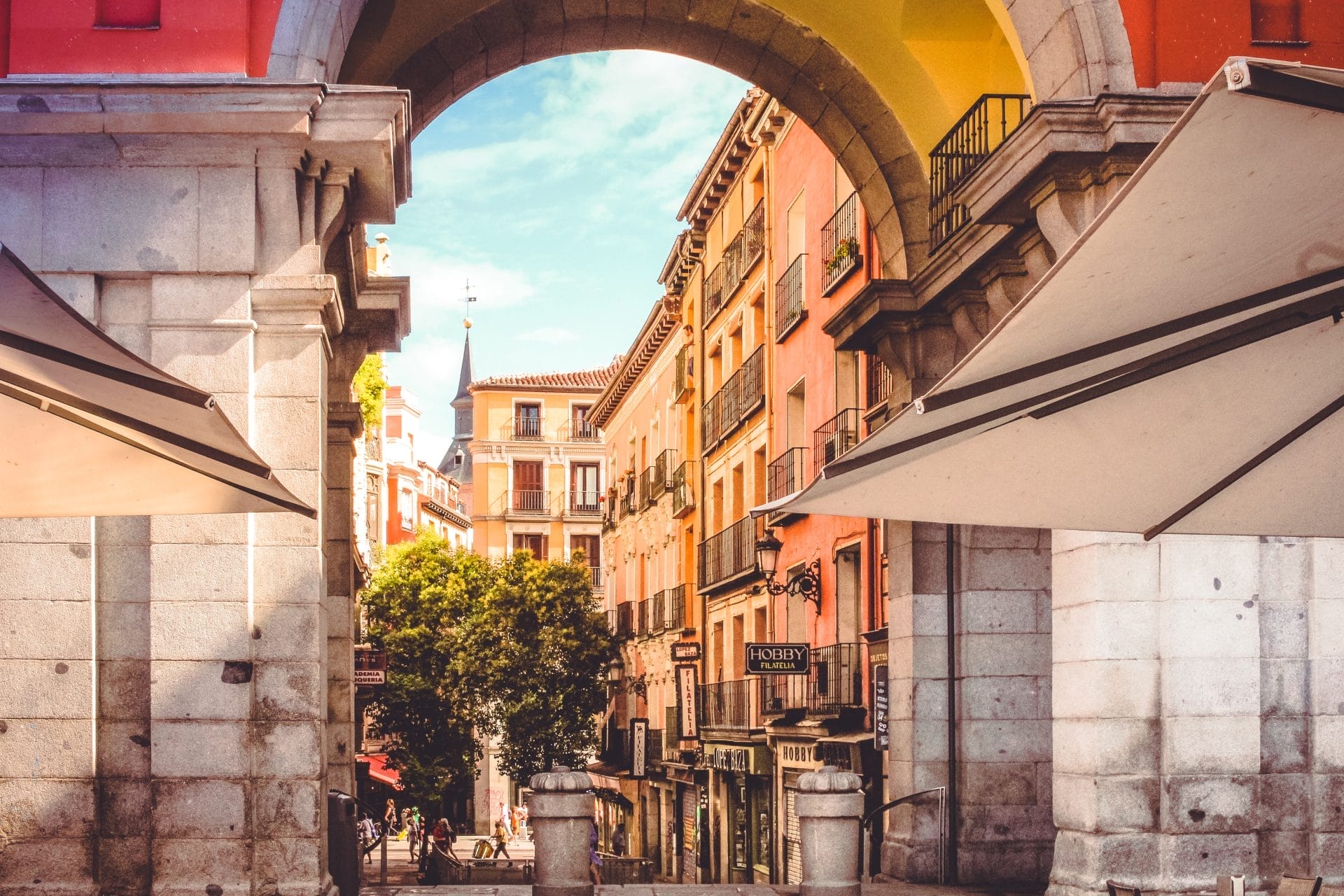
Your licensed driver meets you at Madrid-Barajas and brings you to a hotel in the center of the city, and the rest of the day stays open. Where it suits your party, your licensed guide leads a gentle late-afternoon walk through the Madrid of the Austrias, the old Habsburg quarter, to the Plaza Mayor, which Juan Gómez de Mora completed for Philip III in 1619 and where 237 balconies look down on the square. A few steps away, the Mercado de San Miguel opened in 1916 under a roof of wrought iron and glass, and its counters serve Iberian ham, olives, cheeses from Castile and the Basque Country and small plates of the day. Logistics: Madrid-Barajas airport to central Madrid by road with your licensed driver, then an optional evening walk with your licensed guide.

Day Two
Madrid: The Royal Palace and the Prado
The Royal Palace of Madrid stands on the site of a 9th-century Muslim fortress, holds 3,418 rooms and serves the royal family for state ceremonies. Your licensed guide leads you through the state rooms to the Stradivarius Room, home to the only complete Stradivarius string quintet in the world. Near the Puerta del Sol, Capas Seseña has cut the traditional Spanish cape since 1901 and counts Picasso and Hemingway among its past clients. In the afternoon, where your dates allow, Ana, an art historian, leads you through the Prado, which opened to the public in November 1819, from Velázquez's Las Meninas to Goya's Black Paintings, which Baron Emile d'Erlanger gave to the museum in 1881. Logistics: a full guided day in Madrid with your licensed guide and Ana, and your licensed driver handles the transfers between sites.
Day Three
Toledo, City of Three Cultures
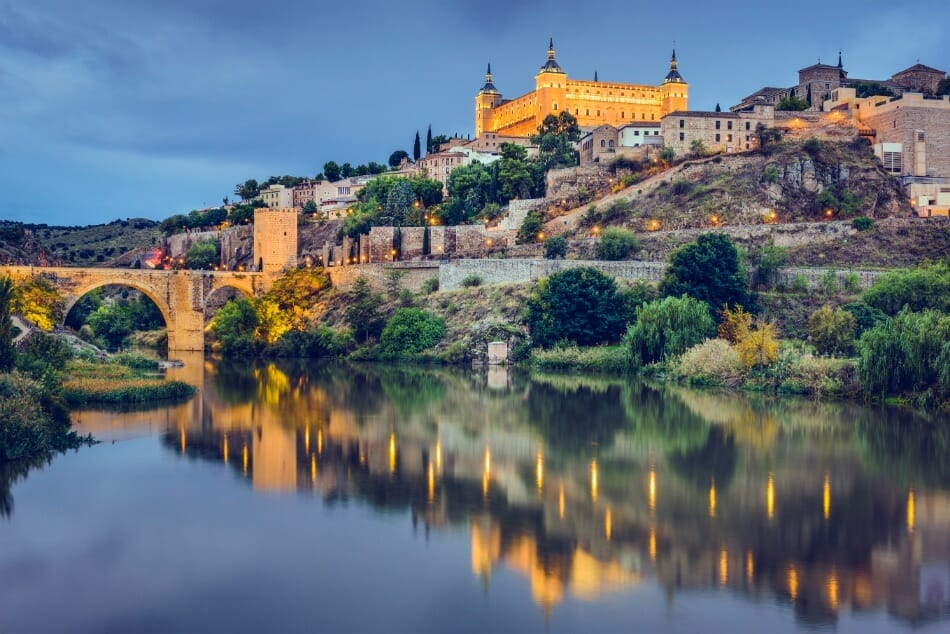
UNESCO inscribed the Historic City of Toledo in 1986 and calls it the city of the three cultures, for the Jewish, Christian and Muslim communities who shaped it on its rock above the Tagus. Your licensed guide starts at the cathedral, begun in the 1220s, where the sacristy holds fifteen paintings by El Greco, El Expolio among them. Samuel ha-Levi, treasurer to King Peter of Castile, built the Synagogue of El Tránsito in 1357, and the building now houses the Sephardic Museum. Up the hill, a small mosque of 999, roughly 8 meters square, became the church of Cristo de la Luz after 1085. Before you leave, taste mazapán de Toledo, the almond sweet with protected geographical status, which the Cistercian nuns of San Clemente still make among their convent sweets. Logistics: Madrid to Toledo by road, about 1 hour each way, licensed driver, with a licensed guide for the day in Toledo.

Day Four
Granada: The Albaicín and the Royal Chapel
The morning train carries you south to Granada. In 1994 UNESCO extended the Alhambra listing to the Albaicín, the hillside quarter across the Darro river whose narrow, winding streets keep the plan of the Moorish town. Your licensed guide walks you up past cármenes, freestanding whitewashed houses with their own gardens, and past aljibes, underground cisterns, some from the 11th century, which once fed water to the houses. From the Mirador de San Nicolás the Alhambra fills the view across the valley, its walls warm in the late light. On the slope above, the cave houses of Sacromonte keep the zambra, a flamenco dance with its origins in the quarter. In the lower town, Ferdinand and Isabella lie in the Royal Chapel, built between 1505 and 1517, in tombs by Domenico Fancelli. Logistics: Madrid to Granada by high-speed train, about 3 hours, and a licensed driver meets you at Granada station.
Day Five
Granada: The Alhambra and the Generalife
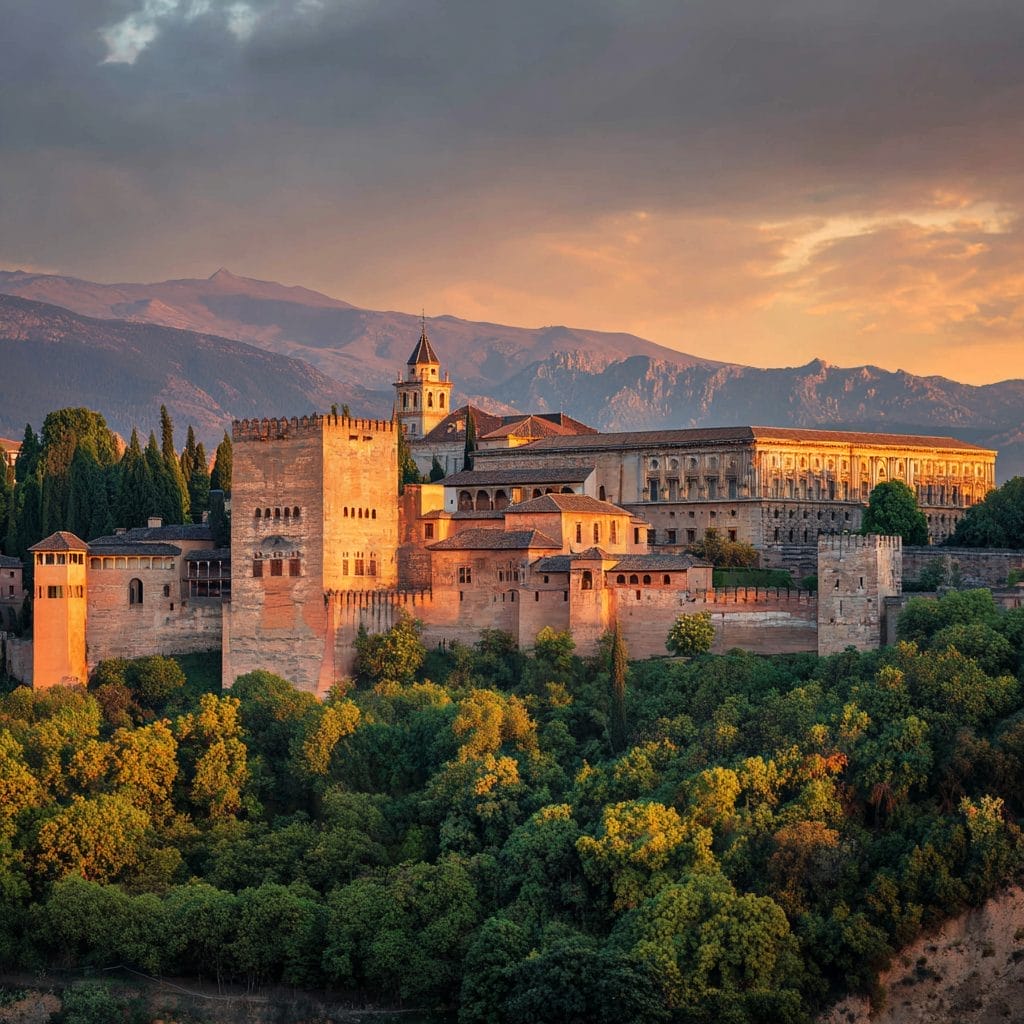
UNESCO calls the Alhambra the only preserved palatine city of the Islamic period and the finest example of Nasrid art, and it inscribed the site in 1984. Where your dates allow, Israel, one of our licensed guides in Granada, leads the day. In the Hall of the Ambassadors, the sultan's throne room, a ceiling of 8,017 wooden pieces maps the seven heavens. In the Court of the Lions, built under Muhammad V, twelve stone lions ring a marble basin, and a poem by Ibn Zamrak runs around its rim and describes how the water works. The Alcazaba, the oldest surviving part, guards the western tip, and the Generalife, the summer estate of the emirs, lies to the east among orchards and running water. Logistics: our team books the timed entry to the Nasrid Palaces, and your licensed driver takes you up the hill and back to the hotel.
Day Six
Seville: The Cathedral, the Alcázar and Santa Cruz
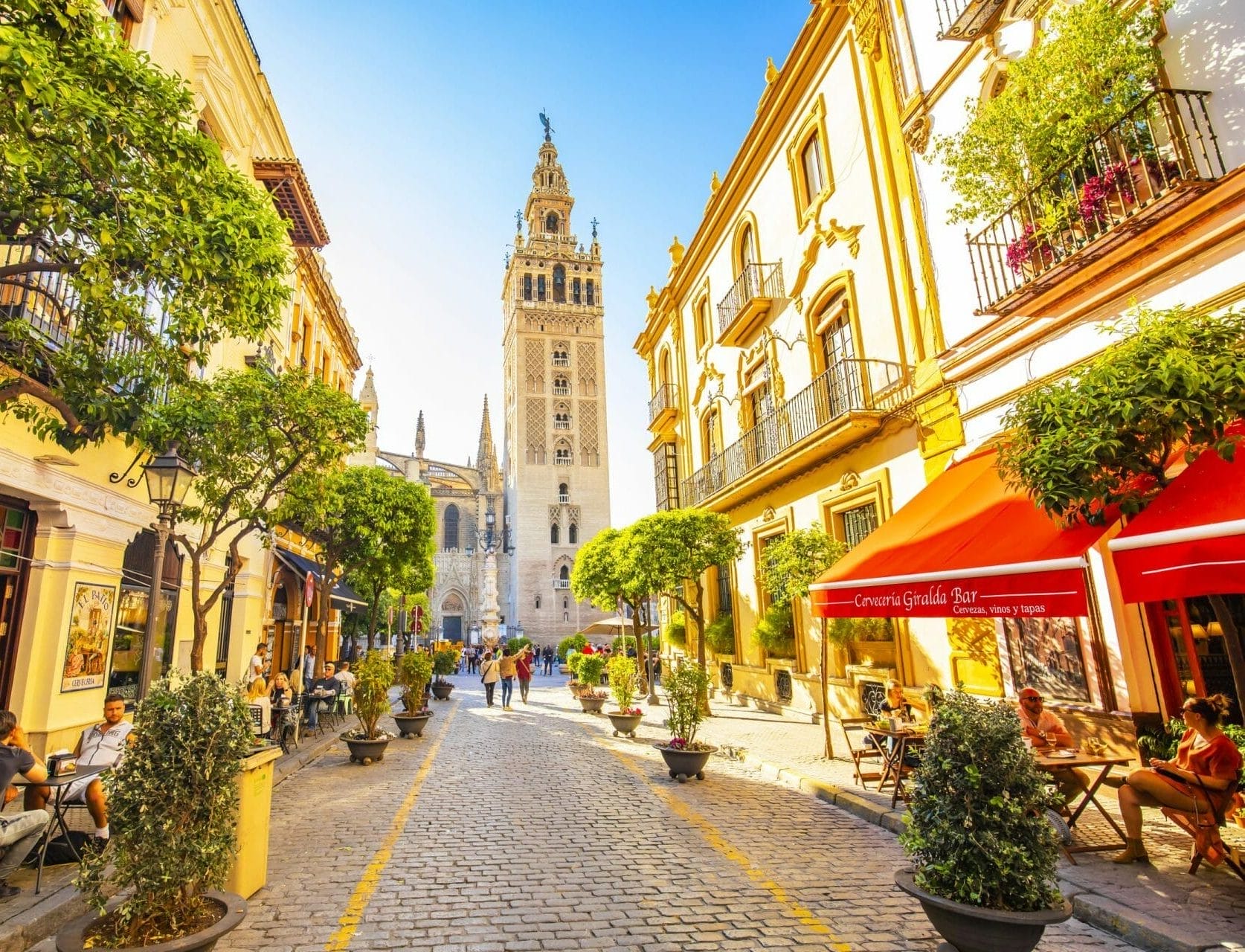
The road west through the olive groves of Andalusia brings you to Seville by late morning. UNESCO inscribed the cathedral, the Alcázar and the Archivo de Indias together in 1987. Builders began the cathedral in 1403 on the site of the great mosque, and the Almohads finished its minaret, the Giralda, in 1198, with 35 ramps inside in place of stairs. Christopher Columbus lies inside the cathedral, and in the Patio de los Naranjos, the mosque's old ablution court, a fountain plays among rows of orange trees. In the Alcázar, King Pedro I rebuilt the palace in the Mudéjar style in the 1360s, and the royal family still uses the upper floors on visits. Your licensed guide ends the afternoon in Santa Cruz, the old Jewish quarter, where the painter Murillo lived. Logistics: Granada to Seville by road, about 2 hours 45 minutes, licensed driver, then the afternoon on foot with your licensed guide.
Day Seven
Seville: Triana, a Chef's Kitchen and Flamenco
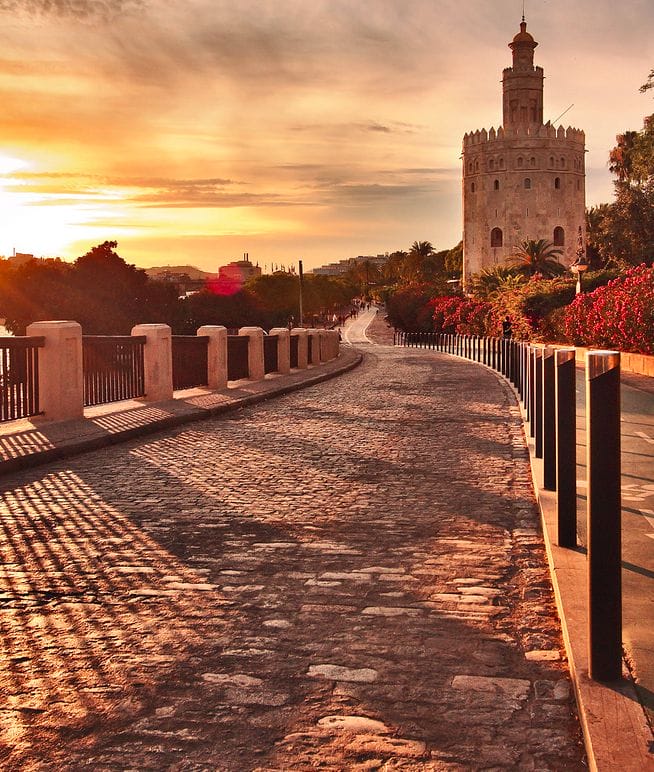
Your licensed guide crosses the Isabel II bridge with you into Triana, the river quarter of potters, tile makers and flamenco singers. The Mercado de Triana stands on the site of the Castillo de San Jorge, headquarters of the Spanish Inquisition from 1481, and an interpretation center in the ruins beneath the market tells its story. Upstairs, the stalls fill with olives, cured ham, fresh fish and the morning's vegetables, and the tapas counters open early. Where it suits your party, a Sevillian chef then cooks a traditional meal with you and talks through the ingredients and techniques of the Andalusian kitchen. Where your dates allow, an evening of flamenco closes the day, the guitar and the clapping of hands filling a small room. Logistics: a walking day in Seville with your licensed guide, and a licensed driver for the transfers.

Day Eight
Évora and On to Lisbon
Day eight is the longest road day, about 5 hours of driving in all, with the afternoon in Évora to break it. The road crosses into Portugal through the Alentejo, the most important cork-growing region in the world, among cork oaks and olive groves. UNESCO inscribed the historic center of Évora in 1986. Its Roman temple, from about the 1st century, stands in the old forum, and scholars link it to the emperor Augustus, though a 17th-century legend gave it the name Temple of Diana. The Jesuits taught at the university here from 1553 until Pombal expelled them in 1759. Beside the Church of São Francisco, Franciscan friars lined the Chapel of Bones with the bones of some 5,000 people, and a line over the door tells visitors the bones here wait for theirs. Logistics: Seville to Évora by road, about 3 hours 30 minutes, then Évora to Lisbon, about 1 hour 35 minutes, with a licensed driver-guide for the drive and the visit in Évora.
Day Nine
Lisbon: Alfama, Belém and the Tagus at Sunset
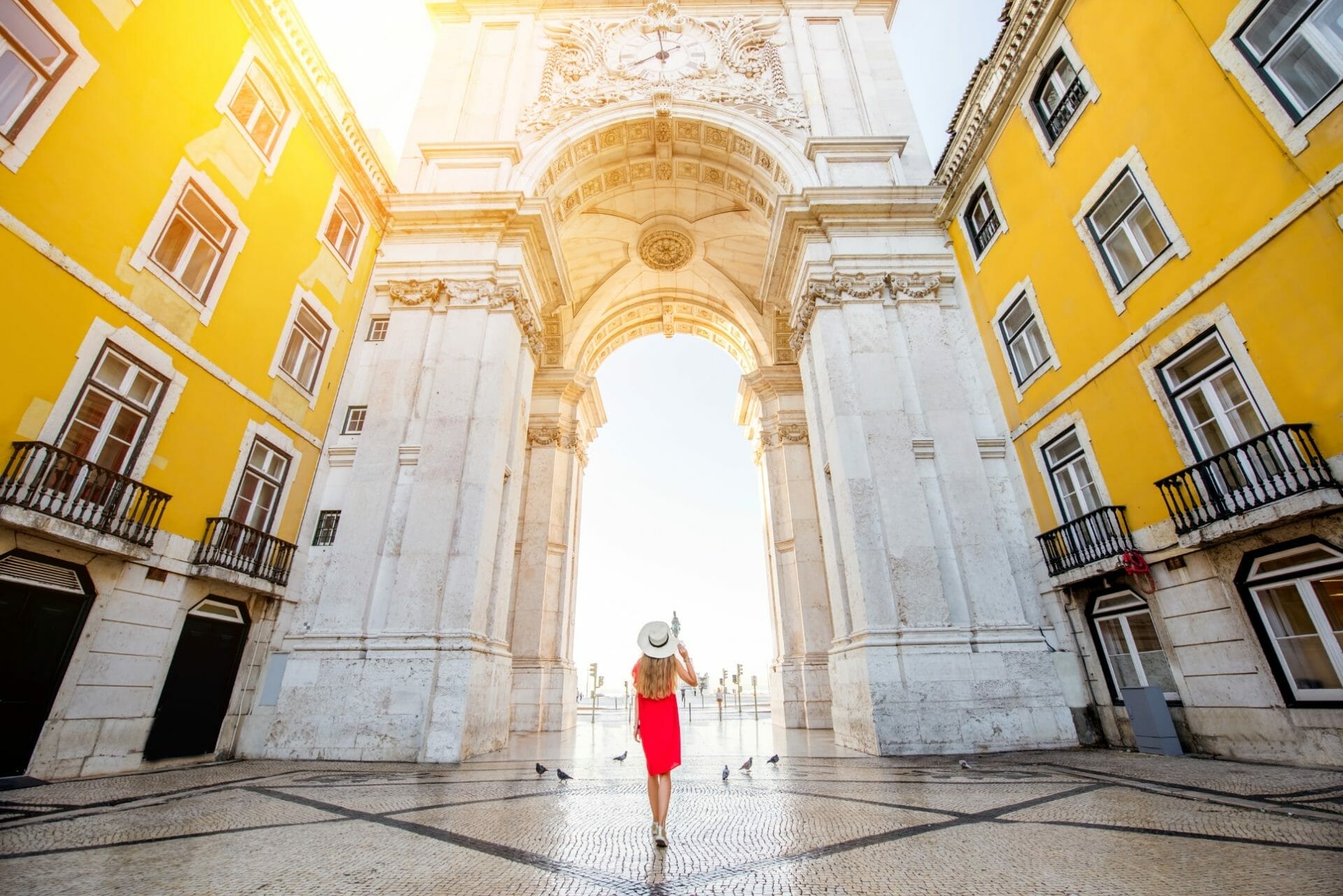
Where your dates allow, Luisa, one of our licensed guides in Lisbon and Sintra, leads the day. You start in Alfama, Lisbon's oldest neighborhood, which survived the earthquake of 1755 and keeps its maze of narrow streets and small squares below São Jorge Castle, and from the Miradouro de Santa Luzia the roofs step down to the river. In Belém, work on the Jerónimos Monastery began in 1502, the Tower of Belém commemorates the expedition of Vasco da Gama, and UNESCO inscribed both in 1983. Nearby, the Fábrica de Pastéis de Belém has sold its custard tarts since 1837, warm from the oven with a dusting of cinnamon. In the Chiado, Café A Brasileira has poured coffee since 1905, with a bronze of the poet Fernando Pessoa at a table outside. Where it suits your party, the day ends on a sailboat on the Tagus at sunset, under the 25 de Abril bridge, painted the same International Orange as the Golden Gate. Logistics: a full day in Lisbon with Luisa alongside your licensed driver, and a short transfer to the marina for the sail.

Day Ten
Sintra, the Atlantic Coast and Cascais
UNESCO inscribed Sintra as World Heritage in 1995 and calls the town the first center of European Romantic architecture. Where your dates allow, Luisa leads the day. King-consort Ferdinand II built the Pena Palace between 1842 and 1854 on the ruins of a Hieronymite monastery, and its red and yellow walls rise above the forest on a peak of the Serra, often wrapped in cool Atlantic mist. In the town below, the Sintra National Palace, the best-preserved medieval royal residence in Portugal, lifts a pair of tall conical chimneys over its kitchens. Where time allows, Luisa adds Quinta da Regaleira, where a spiral stair winds 27 meters down the Initiation Well, or Monserrate, the summer palace Francis Cook began in 1863. The coast road then follows the cliffs to Cascais, the fishing village King Luís I made his summer residence from 1870. Logistics: Lisbon to Sintra by road, about 30 minutes, then the coast to Cascais and back to Lisbon, with Luisa and your licensed driver.

Day Eleven
Coimbra and On to Porto
King Dinis founded Portugal's university in 1290, and in 1537 it settled in the old royal palace on the hill above Coimbra. UNESCO inscribed the University of Coimbra, Alta and Sofia, in 2013. Your licensed driver-guide walks you to the Joanina Library, which King João V founded in 1717, a baroque hall on three floors. A colony of bats lives inside and eats the insects which threaten the books, and each night the staff cover the tables with leather sheets. Coimbra keeps its own fado, sung by men in the dark robe and cape of the university, often at night on the steps of the Santa Cruz Monastery, with a Coimbra guitar tuned to its own sound. Logistics: Lisbon to Coimbra by road, about 2 hours, then Coimbra to Porto, about 1 hour 15 minutes, licensed driver-guide.
Day Twelve
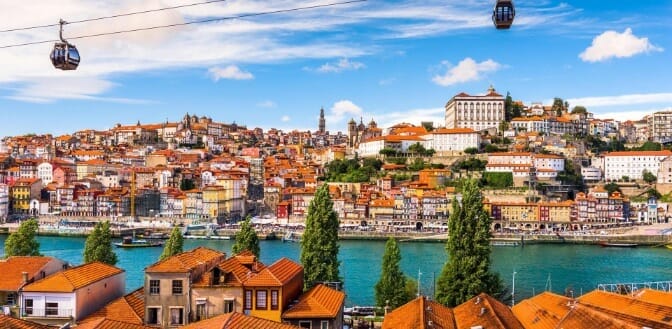
Porto: The Ribeira, the Bridge and the Port Lodges of Gaia
UNESCO inscribed the historic center of Porto, the Dom Luís I bridge and the Monastery of Serra do Pilar in 1996. Your licensed driver-guide walks you down through the Ribeira, the riverfront quarter, past the Palácio da Bolsa, which the city's merchants began in 1842, with a Moorish Revival Arab Room finished in 1880. Théophile Seyrig, a former partner of Gustave Eiffel, designed the two-deck Dom Luís I bridge, which opened in 1886, and you cross it to Vila Nova de Gaia, where port ages in cellars along the river. A tasting in one of the lodges closes the afternoon, with the old town across the water. Where time allows, your guide adds Livraria Lello, with its forked wooden staircase, and the cathedral with its Romanesque choir. For dinner, try a francesinha, Porto's toasted sandwich of layered meats under melted cheese and a tomato and beer sauce. Logistics: a day on foot in Porto and Gaia with your licensed driver-guide, no hotel change.

Day Thirteen
The Douro Valley: Terraces, Pinhão and a Family Winery
UNESCO inscribed the Alto Douro Wine Region in 2001, and growers have made wine on these slopes for about 2,000 years. The oldest terraces, the socalcos, date from before the 1860s, narrow and held up by walls of schist, and later terraces climb the hills in long, regular rows. Your licensed driver-guide follows the river through Peso da Régua to Pinhão, where 24 tile panels from 1937, more than 3,000 tiles in all, show the harvest and the rabelo boats carrying wine down to Gaia. Where your dates allow, a family-run winery receives you for a walk through the vines, a tasting with the producer and a long Portuguese lunch at the quinta, with wines from the estate's own terraces. Logistics: Porto to Peso da Régua by road, about 1 hour 15 minutes, then along the river to Pinhão, licensed driver-guide, with the return to Porto in the evening.

Day Fourteen
Departure from Porto
The morning stays free for a last pastel de nata or a walk along the river. Porto's airport lies about 11 kilometers northwest of the Clérigos Tower, and your licensed driver-guide collects you from the hotel with time to spare for your flight home. Where it suits your party, our team arranges VIP airport assistance. Logistics: hotel to Porto airport by road with your licensed driver-guide.
Is two weeks enough for Spain and Portugal?
Two weeks covers a first visit to both countries at an unhurried pace when the route keeps to one line and stays two or three nights in each place. This 14-day plan uses five bases, Madrid, Granada and Seville in Spain and Lisbon and Porto in Portugal, with Toledo, Évora, Sintra, Coimbra and the Douro Valley as day trips or stops on the road. It leaves out Barcelona, the Algarve and the islands, which the longer routes add. Most first-time visitors find the balance right: enough time to see the places they came for, and enough rest between them for the long lunches and late dinners of both countries.
How do you split two weeks between Spain and Portugal?
Split the fortnight close to evenly, about seven nights in Spain and six in Portugal, as this route does. Spain gets Madrid with Toledo, then Granada and Seville in Andalusia. Portugal gets Lisbon with Sintra, then Coimbra, Porto and the Douro Valley. American travelers who lean toward art and Moorish history often move a night from Porto to Seville, and wine travelers move one from Madrid to the Douro. Our Spain and Portugal destination guides set out what else each country offers if you want to swap a region in.
What should a first trip to Spain and Portugal include?
A first trip to Spain and Portugal usually centers on six places: Madrid and the Prado, Granada and the Alhambra, Seville, Lisbon, Sintra, and Porto with the Douro Valley. This route covers all six and adds three more places on UNESCO’s World Heritage List, Toledo, Évora and the university of Coimbra, as a day trip and two stops on the road. Licensed guides explain what you see, so the first visit builds a frame for every return trip after it.
This 14-day route or another Spain and Portugal journey?
Choose this route for a first visit to both countries in two weeks, with Madrid, Andalusia, Lisbon and Porto in one line, nearly half the nights in Portugal and no flights inside the trip.
The Barcelona to Lisbon private tour serves you better if Barcelona matters more to you than Porto. It also runs 14 days, starts with Gaudí’s Barcelona, crosses Madrid and Andalusia, and reaches Portugal along the Algarve coast before Lisbon, Sintra and the Alentejo. It leaves out Porto and the Douro.
The Classic Spain and Lisbon private tour, another 14-day route, suits travelers who want Spain at the center and Portugal as a finale. It runs Barcelona, Montserrat, Madrid, Toledo, Granada, Ronda, the white villages and Seville, with Lisbon and Sintra at the end.
The 16-day Spain and Portugal tour with Mallorca and Madeira suits travelers who want islands with their cities: Barcelona and Mallorca, Madrid and Seville, Lisbon and Sintra, Madeira, then Porto and the Douro.
With four more days, the 18-day Best of Spain and Portugal tour adds Barcelona, Montserrat, Ronda and the white villages, and reaches Lisbon through Évora and the Alentejo village of Monsaraz, without Porto. With three weeks, the 22-day Spain and Portugal tour keeps most of this route and adds Barcelona, Bilbao, La Rioja and Córdoba, with two nights in most bases.
With ten days, the 10-day Madrid, Seville and Lisbon tour keeps Madrid, Toledo, Seville, Lisbon and Sintra, adds Córdoba and the Algarve coast, and leaves out Granada and Porto. If you prefer one country, our Spain and Portugal pages list single-country journeys, and our multi-country journeys page collects every combination.
Who this journey suits
First-time visitors to both countries, couples and friends who want the classic places of Spain and Portugal in two weeks, with a guide to explain what they see and a driver to handle the roads. The private format sets the pace around you, with long lunches, rest afternoons and early starts where the summer calls for them.
Art and history travelers, since the route runs from the Prado and El Greco’s Toledo to the Alhambra, Seville’s cathedral and Alcázar, the Jerónimos Monastery and the Joanina Library. Wine travelers, since the last days bring the port lodges of Gaia and a family quinta in the Douro Valley.
Families with teenage or adult children, who share the guide’s attention and the vehicle and set their own rhythm. Travelers who prefer the ground to the air, since after the arrival flight one train and the road carry the whole route.
The people behind the route
Three people lead the visits most travelers remember on this route. Where your dates allow, Israel, one of our licensed guides in Granada, leads Alhambra days. On this route the Alhambra fills day five, the day after the train from Madrid, with the Albaicín on the afternoon of day four.
In Madrid, where your dates allow, Ana, an art historian, leads our Prado visits through Velázquez, Goya and El Greco. Our article on the highlights of the Prado covers the collection in more depth. In Lisbon and Sintra, where your dates allow, Luisa, one of our licensed guides, leads the Alfama, Belém and Sintra days alongside a licensed driver. Elsewhere in Portugal, from Évora to Coimbra, Porto and the Douro, a licensed driver-guide, one person holding both licenses, looks after you, and in Spain our team works with top licensed guides chosen for their experience, knowledge and engaging personalities, not egos.
What the 14-day journey costs and what it includes
The 14-day route starts from $13,972 per person, double occupancy. The from-price covers thirteen nights in deluxe four-star properties selected for comfort, location and service. Five-star luxury properties are available by request. It includes licensed guides for the visits described, licensed drivers in Spain, Luisa with a licensed driver in Lisbon and Sintra, licensed driver-guides elsewhere in Portugal, and timed entry to the Alhambra’s Nasrid Palaces.
Four things move the price: the season, the hotel category, the size of your party and the experiences you add, such as the cooking session and flamenco in Seville, the sunset sail on the Tagus and the winery lunch in the Douro. Our team sends a written quote for your dates and party before you commit.
To shape these two weeks around your dates and your party, speak with our team about your Spain and Portugal journey.
Frequently asked questions about the 14-day Spain and Portugal tour
How much does a 14-day private tour of Spain and Portugal cost?
This 14-day route starts from $13,972 per person, based on two people sharing a room. The from-price covers the route as written: thirteen hotel nights, licensed guides for the visits described, licensed drivers in Spain, Luisa with a licensed driver in Lisbon and Sintra, and licensed driver-guides elsewhere in Portugal. Four things move the price. The season matters most, since hotel rates rise and fall through the year. Five-star properties raise it. Party size changes it, because the guides and drivers serve the whole party, so larger private parties pay less per person. Added experiences, such as the cooking session in Seville, the sail on the Tagus or the winery lunch in the Douro, add to it. Our team sends a written quote for your dates and party before you commit.
When is the best time to spend two weeks in Spain and Portugal?
April to June and September to October suit this route best, because it runs from Andalusia to the Atlantic north of Portugal. AEMET, Spain’s weather agency, records average daily highs in Seville of about 23°C (74°F) in April and 26°C (79°F) in October, against 36°C (97°F) in July. Granada averages about 21°C (69°F) in April and 23°C (74°F) in October, and Madrid about 18°C (65°F) and 19°C (67°F). IPMA, Portugal’s weather institute, records average highs in Lisbon of about 20°C (68°F) in April and 23°C (73°F) in October, and in Porto about 18°C (64°F) and 20°C (69°F). Summer departures work well with early starts in Andalusia and long lunches indoors. September brings the grape harvest to the Douro, and our team plans each day around the season you choose.
How does the route cross from Spain into Portugal?
By road, on day eight. A licensed driver-guide collects you in Seville and drives west across the Alentejo to Évora, about 3 hours 30 minutes, where the afternoon goes to the Roman temple, the old university and the Chapel of Bones. From Évora the road runs on to Lisbon in about 1 hour 35 minutes, so you reach the city in the evening. The day carries about 5 hours of driving in all, broken by lunch and the visit, and it trades a morning at an airport for a first look at the cork oak country of southern Portugal. Inside Portugal the road continues north from Lisbon to Coimbra and Porto, with no flights or trains. Our article on the travel time between Lisbon and Porto sets out the stops along the way.
Are the guide and the driver the same person?
In Spain they are two different people. A licensed guide leads the visits and a licensed driver handles the vehicle and the road transfers, so your guide focuses on the site and your driver on the road. Your guide changes from city to city, so the guide in Granada knows Granada in depth and the guide in Seville knows Seville. In Lisbon and Sintra, where your dates allow, Luisa, one of our licensed guides, leads the days alongside a licensed driver. Elsewhere in Portugal, on the road from Seville through Évora and in Coimbra, Porto and the Douro Valley, a licensed driver-guide, one person holding both licenses, looks after you. Where your dates allow, named specialists lead the key visits: Israel at the Alhambra and Ana, an art historian, at the Prado.
Which airports should we fly into and out of?
Fly into Madrid and home from Porto. An open-jaw ticket of this kind avoids a return across two countries at the end of the trip. Your licensed driver meets you at arrivals at Madrid-Barajas on day one, and on day fourteen your licensed driver-guide takes you to Porto’s airport, about 11 kilometers northwest of the Clérigos Tower, so the last transfer stays short. Our team arranges VIP airport assistance at both ends on request, covering the meet-and-greet and help through the terminal. If your flights fit better the other way, the route runs from Porto to Madrid with the same bases in reverse. Our guides to arriving at Madrid-Barajas and VIP airport services in Portugal explain both ends, and our team aligns the itinerary with your flight times once you have them.
Do we need to book the Alhambra in advance?
Yes, and our team handles it. Every Alhambra ticket including the Nasrid Palaces carries a set time for entering the palaces, and the Alhambra’s ticket office asks visitors to arrive on time for the slot. Visitors buying or collecting tickets at the monument must do so at least one hour before their assigned time. For these reasons our team books the timed entry as soon as you confirm your dates, and your licensed guide plans the rest of the day around it, with the Alcazaba and the Generalife before or after the palaces. On this route the Alhambra fills day five, a full day in Granada with no transfer. Where your dates allow, Israel, one of our licensed guides in Granada, leads the visit.
How many hotel changes does the 14-day route involve?
Four changes across five bases. Madrid, Lisbon and Porto get three nights each, and Granada and Seville get two, so every base gives you at least one full day with no transfer. Toledo, Sintra and the Douro Valley run as day trips from the nearest base, and Évora and Coimbra sit on travel days as stops on the road. Your licensed driver or driver-guide handles the luggage on every road day, so a hotel change means a morning departure and an afternoon or evening arrival. Travelers who want fewer moves sometimes add a third night in Seville and use it for a slower day in Triana and the Alcázar gardens, and our team rebalances the nights to suit.
How flexible is the 14-day route?
The route works as a starting point, and your planner shapes it around your party. Common changes include adding Barcelona at the start, adding a night in Córdoba between Granada and Seville, or adding the Algarve coast before Lisbon in place of the drive through Évora. Food lovers often add a market tour or a cooking session in Lisbon or Porto, and art lovers add the Reina Sofía or the Thyssen in Madrid. Our article on Córdoba or Ronda between Granada and Seville explains one of those choices. Our team confirms timings, ticketed entries and hotel nights once you settle the shape of the trip, and every added day keeps the same private basis, with your own guide, driver and pace.
Does this journey suit families or travelers with limited mobility?
Families travel this route often, because a private guide and driver set the pace around the youngest and the oldest in the party. Teenagers tend to respond to the Alhambra, the Chapel of Bones in Évora, the Initiation Well at Quinta da Regaleira and the sail on the Tagus, and the three-night bases leave room for a slower afternoon. Several days involve walking on cobbled streets and slopes, especially in Toledo, the Albaicín in Granada, Alfama in Lisbon, Sintra and Porto, and the Alhambra visit runs on foot across a large hillside site. Your guide is glad to advise on suitability before booking, and our team adjusts walking routes, adds vehicle time between sites, or shortens days where it helps. Our page on accessible travel sets out how our team plans for travelers who need step-free routes or extra support.
We keep a list of vetted four- and five-star hotels, well located and enjoyed by our past travelers and by our own team.
Examples for each overnight stop on this route. Choose a deluxe boutique hotel or a five-star stay, and your travel advisor matches each night to your wishes, the season and availability.
Madrid
Boutique: Tótem Madrid. A restored 19th-century building on Calle Hermosilla, steps from Serrano’s shops in the Salamanca district.
Five-star: Rosewood Villa Magna. Reopened by Rosewood in 2021 on the Paseo de la Castellana, with a leafy front garden.
Granada
Boutique: Parador de Granada. A 15th-century Franciscan convent inside the Alhambra precinct, with gardens facing the Generalife.
Five-star: Hospes Palacio de los Patos. A 19th-century palace beside a contemporary wing, linked by gardens, with a spa below.
Seville
Boutique: Hotel Casa 1800 Sevilla. A 19th-century mansion with a patio and a rooftop pool facing the cathedral and Giralda.
Five-star: Hotel Alfonso XIII. Built for the 1929 Ibero-American Exposition, a neo-Mudéjar palace of tiles and arches near the Alcázar.
Lisbon
Boutique: Memmo Alfama. A design hotel on an Alfama lane, with a pool beside its wine-bar terrace over the Tagus.
Five-star: Four Seasons Hotel Ritz Lisbon. A 1959 landmark beside Eduardo VII Park, filled with mid-century Portuguese art and tapestries.
Porto
Boutique: Torel 1884. An 1884 palace near São Bento station, with rooms themed on Portugal’s voyages of discovery.
Five-star: The Yeatman. Terraced into the Gaia hillside among the port lodges, every room with a terrace facing Porto.
What's Included
A Very Personalized Itinerary, Just For You and Your Schedule
Hand-Picked Ultra-Luxury & Boutique Hotel Options
Insider Experiences + Inspiring Sightseeing + Magical Upgrades
Private Touring with Your Own Personal Expert Guide
Private Airport & Train Station Luxury Transfers
Full Breakfasts + Food & Wine Tasting Options
Your Choice of Activities on “Design Your Days”®
Expert Advice, Restaurant Ideas & Reservations
24/7 Support & Concierge Service from Spain, Portugal & Morocco
Magical is an award-winning luxury travel agency
Private journeys with soul & stories
Excellent independent reviews
Only five journeys per country, per week
Hidden gems, insider fun & vetted hotels
Your private guide, deluxe vehicle & flexible pace
24/7 concierge-style support
We handle everything — you live the dream
American Precision, Local Soul
Our Unforgettable Trips Are Tailored Just For You
Hi from Spain & Portugal,
Along with our local partners across Portugal, Spain, Morocco and beyond we believe that our clients deserve the truly tailor-made private luxury trips, not generic "one-size-fits-all" plans.
Get inspired with our sample trips then get in touch about an expert-made personalized custom luxury itinerary, just for you.
Kind regards,
Dan O'Beirne & the MPT team
Request a Quote