


Multi-Country · Private and tailor-made
A Month from the Azores to Barcelona
Walk Chillida Leku's sculpture meadow near San Sebastián, hosted by the Chillida family.
Suggested length
30 days
Price guide
From $29,642 per person, excl. flights, based on two sharing
Includes hotels, private guiding, experiences and transfers
When
April to June and September to October
or call +1 (727) 699-5439
A planner replies within one business day
Planned from Madrid since 2002 · 15,000+ travelers · Never cancelled a journey
When Eduardo Chillida acquired the Zabalaga farmhouse near San Sebastián, it was almost in ruins. Today its meadow holds more than forty of his monumental sculptures, and you walk among them hosted by the Chillida family. This 30-day private tour of Spain and Portugal spends a month between the Azores and the Mediterranean, through Porto, the Douro, Lisbon, the Alentejo and the Algarve cliffs, then Seville, Ronda, the Alhambra, Madrid, La Rioja and Barcelona. In Madrid, Anna, our art historian at the Prado, shows you Las Meninas where your dates allow. San Sebastián pours txakoli, the Basque white wine, from a height above your glass. Change any day, and you pay only for what suits you.
Taste cozido das Furnas, slow-cooked in the volcanic ground beside Lagoa das Furnas, São Miguel.
Walk Sintra’s Pena Palace and its hilltop park with Luisa, Sintra.
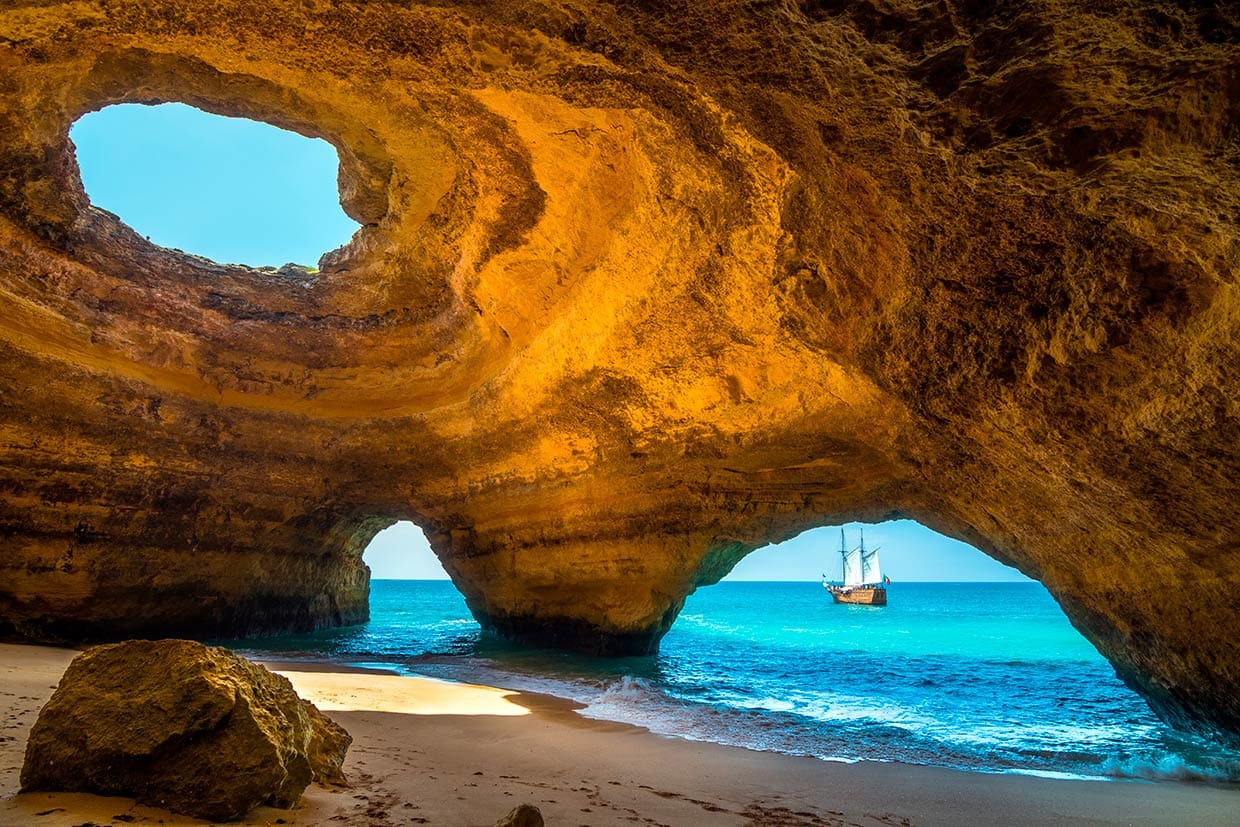
Sail along the Algarve cliffs to the mouth of the Benagil sea cave, Lagoa.
Walk the Alhambra’s Nasrid Palaces with Israel, Granada.
Visit the Prado with Anna, an art historian, Madrid.
Taste pintxos and txakoli poured from a height in the Parte Vieja, San Sebastián.

“We love to tailor-make trips you’ll talk about for years, built on our local relationships & story-worthy experiences.” – Magical’s American founder, in Europe since 1998, culinary enthusiast & world traveler.







A Journey Designed Just for You
Our resident experts wrote this itinerary as a starting point, and your planner shapes every day around your interests, pace and travel style.
What do our travelers say?
The 30-day Spain and Portugal itinerary at a glance
The route spends 12 nights in Portugal and 17 in Spain. In Portugal you sleep two nights each in Ponta Delgada on São Miguel in the Azores, Porto, the Douro Valley, Lisbon (with a day in Sintra), Évora in the Alentejo and the Algarve. In Spain you sleep three nights in Seville, two in Ronda, two in Granada, four in Madrid, two in La Rioja, two in San Sebastián and two in Barcelona.
Two short flights and one high-speed train cover the longest gaps: Ponta Delgada to Porto (about 2 hours 20 minutes), Granada to Madrid by AVE (about 3 hours 30 minutes) and San Sebastián to Barcelona (about 1 hour 10 minutes). Licensed drivers handle every other transfer by private vehicle. Three days carry three hours or more on the road: Day 7 from the Douro to Lisbon, Day 16 through the white villages to Ronda, and Day 24 from Madrid to La Rioja.
April to June and September to October suit the route best. AEMET’s 1981 to 2010 averages give Seville a mean daily high of 23.4°C (about 74°F) in April and 26.0°C (about 79°F) in October, against 36.0°C (about 97°F) in July. IPMA’s averages for Lisbon over the same period show 19.8°C (about 68°F) in April and 22.5°C (about 72°F) in October.
Why the route runs from the Azores to Barcelona
The route runs west to east because São Miguel sits in the Atlantic between North America and the mainland, and Azores Airlines flies nonstop to Ponta Delgada from Boston. From there a short flight lands you in Porto, and Portugal unfolds north to south: the port lodges, the Douro terraces, Lisbon, the Alentejo plains and the Algarve cliffs. The border crossing comes by road from the Algarve to Seville, so nothing doubles back.
In Spain the route loops through Andalusia, rides the high-speed train north to Madrid, then follows the road to the Rioja vineyards and the Basque coast. A one-hour flight replaces the long drive across the north to Barcelona, whose airport sits about 15 kilometers from the center for the flight home.
The angle is pace. A month lets every base hold at least two nights, with three in Seville and four in Madrid, so Córdoba, Toledo and Segovia become day trips without a hotel change. Sixteen of the 30 days carry no hotel change, and the three long road days come with planned stops. The route as written is a starting point, and our team shapes it around your dates and interests.
Journey at a glance
Length
30 days
From
$29,642 per person, double occupancy
Route
Ponta Delgada, Porto, Douro Valley, Lisbon, Sintra, Cascais, Évora, Algarve, Seville, Córdoba, White Villages, Ronda, Granada, Madrid, Toledo, Segovia, Valencia, Bilbao, San Sebastián, Barcelona
Your planner adjusts every day to your dates.

Day One
Arrival on São Miguel, Azores
Your journey opens on São Miguel, the largest island of the Azores and the one known as the Green Island. Ponta Delgada, its main city, faces the Atlantic on the south coast, and the first afternoon stays light: a walk along the harbor front, time to settle in, and a first taste of São Miguel pineapple, an island export crop since the nineteenth century. Logistics: a licensed driver meets you at Ponta Delgada airport for the private transfer to your hotel.

Day Two
Furnas Valley and Terra Nostra Park
Your licensed driver-guide takes you east to Furnas, where fumaroles steam along the shore of Lagoa das Furnas. Local cooks bury pots of cozido in the hot ground early in the morning and lift them out a little under seven hours later, filled with beef, pork, chicken, cabbage and sweet potato cooked by volcanic steam. After lunch, Terra Nostra Park spreads over 12.5 hectares around the summer house Thomas Hickling, the American consul, built in 1775, with a thermal pool of iron-rich, amber water at about 37°C. Logistics: Ponta Delgada to Furnas by road, about 45 minutes each way, licensed driver-guide.
Day Three
Flight to Porto and São Bento Station
UNESCO inscribed Porto's historic center, the Luiz I Bridge and the Monastery of Serra do Pilar as one World Heritage Site in 1996. Your licensed driver-guide starts the afternoon at São Bento station, where Jorge Colaço spent eleven years, from 1905 to 1916, covering the hall with about 20,000 painted tiles. From there the walk drops through the old streets to the Ribeira waterfront, with the iron arch of the Luiz I Bridge overhead and the port lodges across the river. Logistics: Ponta Delgada to Porto by nonstop flight, about 2 hours 20 minutes, and your licensed driver-guide meets you on arrival.
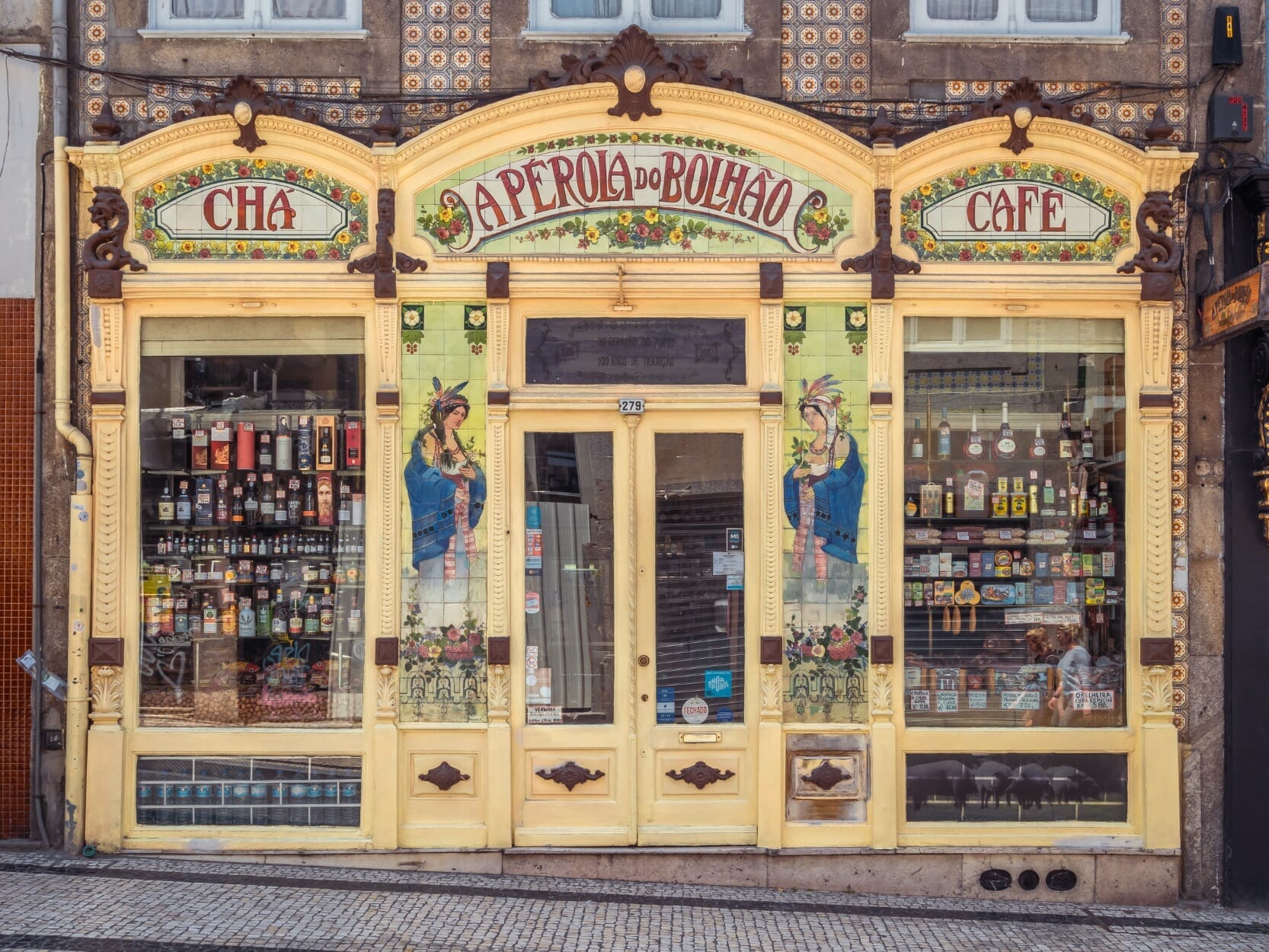
Day Four
Port Lodges of Gaia and Serralves
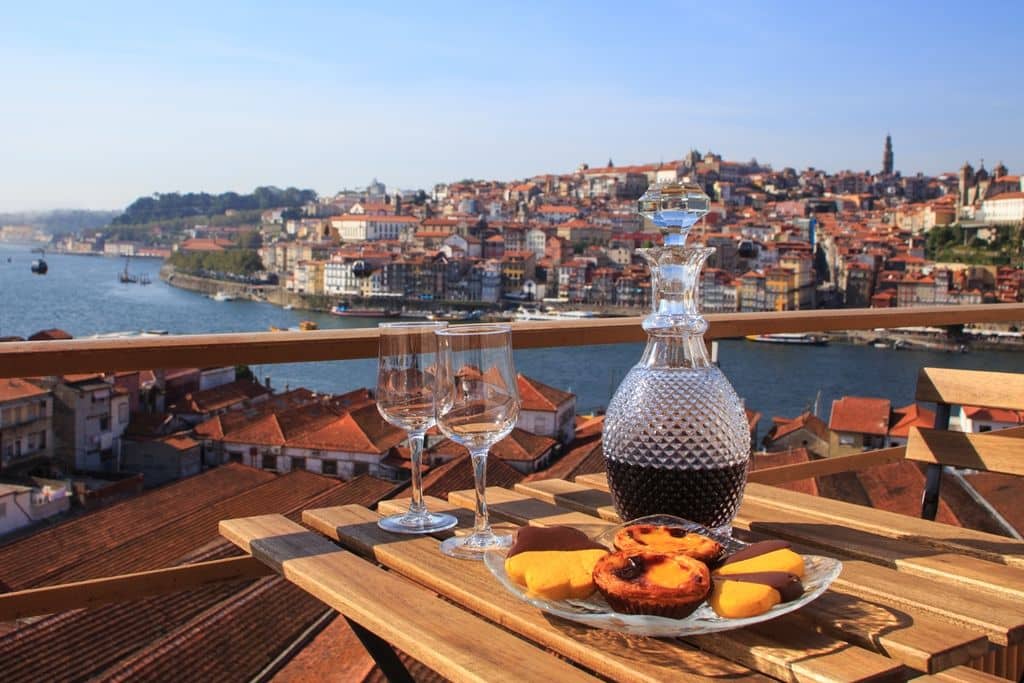
Across the Douro in Vila Nova de Gaia, the port houses age their wines in cellars, and Gaia became the official storage place for port exporters in 1777. Your guide arranges a tasting in one of the lodges, with a tawny poured in the cool of the cellar. In the afternoon, Serralves pairs a contemporary art museum by Álvaro Siza, opened in 1999, with an 18-hectare park and the Art Deco Casa de Serralves. Where the weather suits, a private boat on the Douro ends the day. Logistics: a full day in Porto and Gaia with your licensed driver-guide, no hotel change.
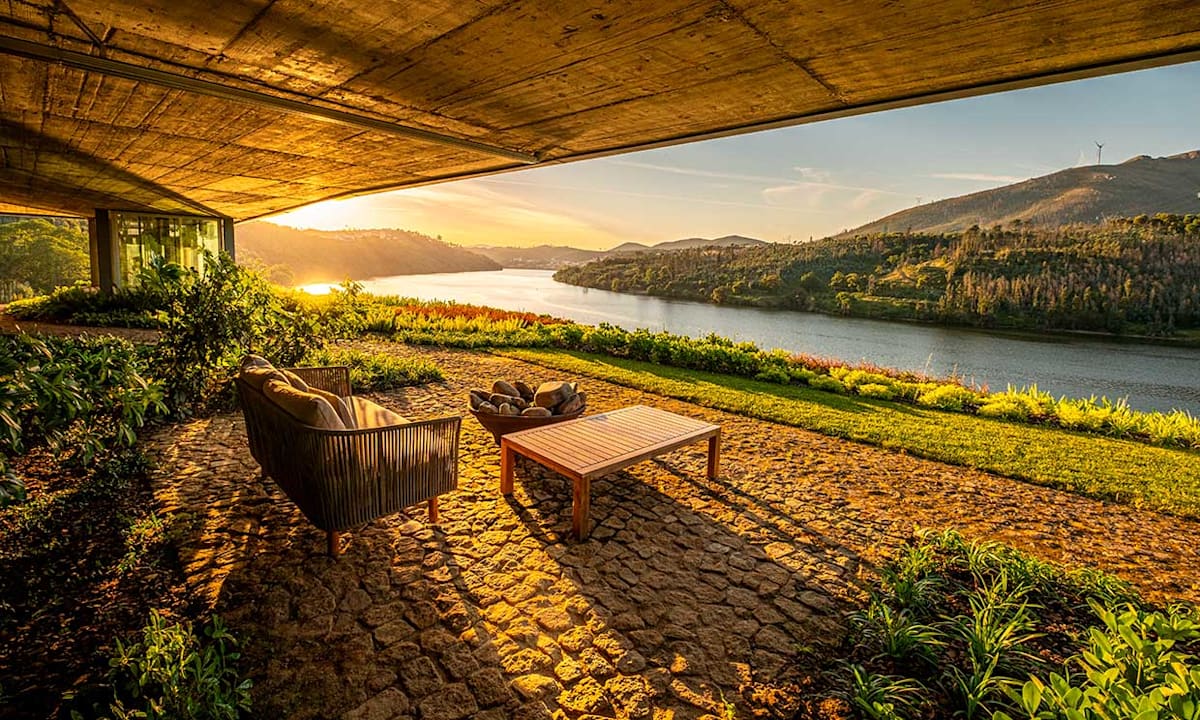
Day Five
Into the Douro Valley
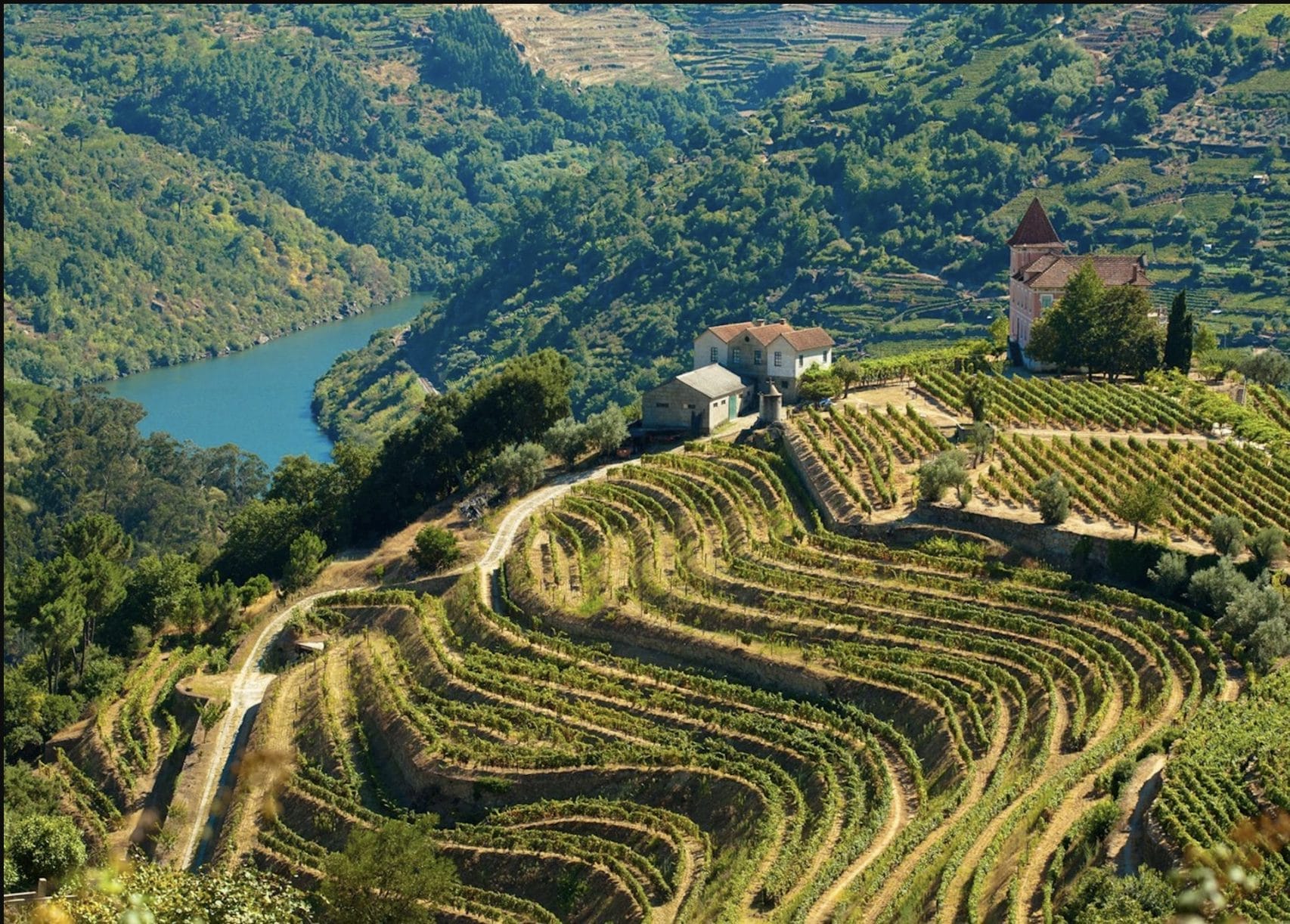
UNESCO inscribed the Alto Douro Wine Region in 2001, recognizing some 2,000 years of winemaking on terraces cut into schist hillsides. On the way east, your licensed driver-guide stops at Pinhão station, where 24 tile panels from 1937 show grape treading and rabelo boats carrying wine downriver to the cellars of Gaia. The evening belongs to the quinta country around your hotel, with the river below and terraced vines running up every slope. Logistics: Porto to the Douro Valley by road, about 1 hour 15 minutes to Peso da Régua, licensed driver-guide.
Day Six
A Quinta Visit and a Long Lunch
Rules for port quality in the Douro date to 1756, and the oldest narrow terraces, called socalcos, predate 1860. Today your licensed driver-guide takes you to a family quinta for a walk through the vines, a tasting in the lodge and a long lunch paired with the estate's wines, often on a terrace above the river. The afternoon stays open for a vineyard walk or a slow river cruise, where available. Logistics: a day inside the valley with your licensed driver-guide, no hotel change.
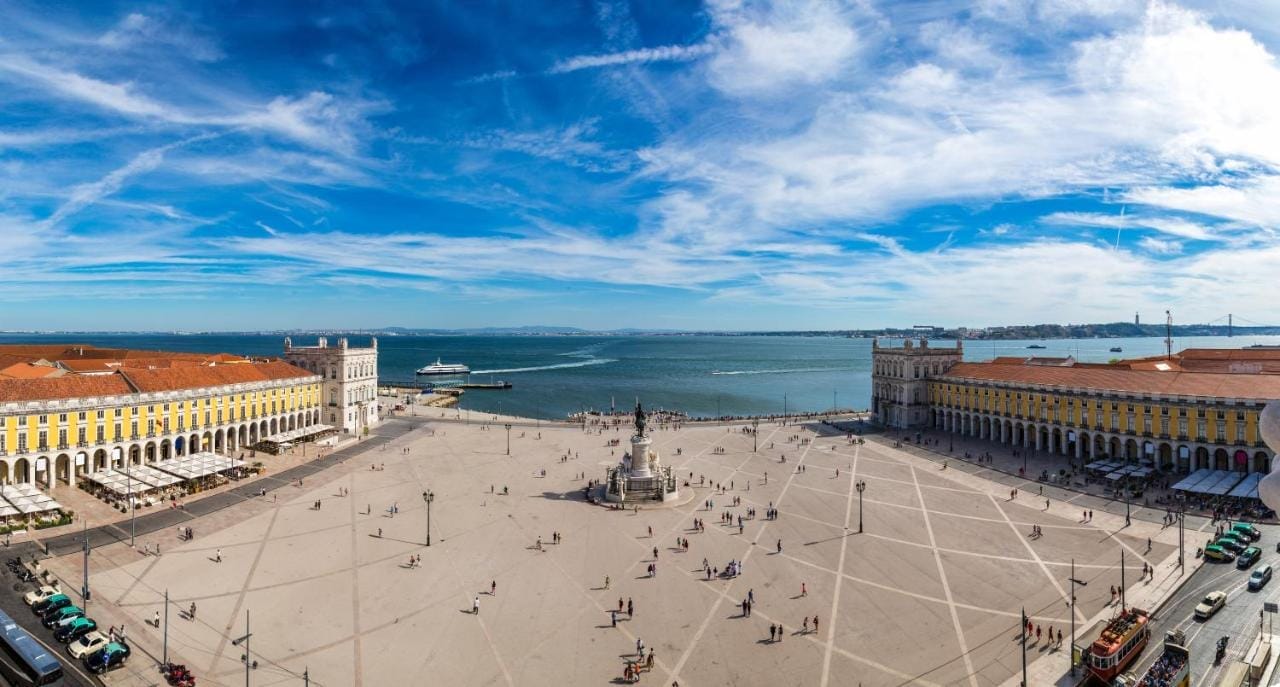
Day Seven
South to Lisbon and Belém
Day seven is a long road day, about three and a half hours, with a lunch stop on the way. In Belém, on the Tagus west of the center, UNESCO listed two monuments in 1983: the Jerónimos Monastery, which King Manuel I began in 1502, and the Belém Tower, which Francisco de Arruda built around 1514 to mark Vasco da Gama's voyage. Monks at Jerónimos created the pastel de nata, and the bakery beside the monastery has baked the custard tarts from their recipe since 1837. Logistics: Douro Valley to Lisbon by road, about 3 hours 30 minutes, licensed driver.
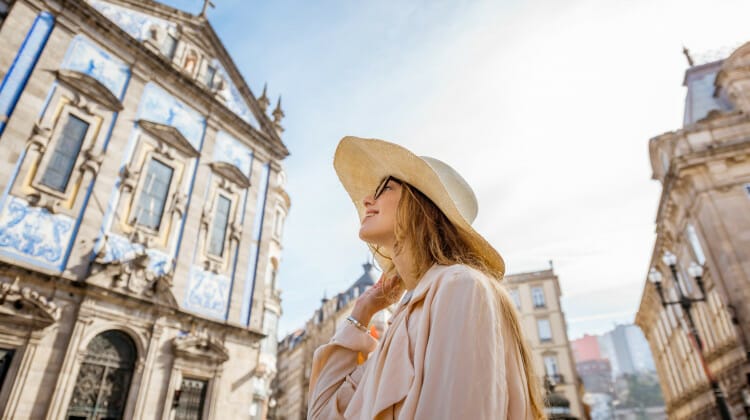
Day Eight
Sintra and Cascais with Luisa
Where your dates allow, Luisa, one of our licensed guides in Lisbon and Sintra, leads the day. UNESCO listed Sintra in 1995 and describes it as the first center of European Romantic architecture. King Ferdinand II turned a ruined monastery on the summit into the Pena Palace in the 1840s, finished it in 1854, and planted the park below with trees from North America, Asia and New Zealand. In the afternoon the road drops to the sea air of Cascais, with a sunset sail from Lisbon as an option. Logistics: Lisbon to Sintra by road, about 30 minutes, with Luisa and a licensed driver, then on to Cascais and back to Lisbon.

Day Nine
Évora and the Alentejo
UNESCO inscribed Évora's historic center in 1986. The Roman Temple of Diana still stands at the top of town, and Portuguese kings lived here often in the fifteenth century, building convents and palaces. Your licensed driver-guide walks you through lanes of low, lime-washed houses with tiles and wrought-iron balconies, most of them from the sixteenth to eighteenth centuries, bright white under the Alentejo sun. Lunch brings the region's olive oil and red wines. Logistics: Lisbon to Évora by road, about 1 hour 35 minutes, licensed driver-guide.
Day Ten
Monsaraz and the Dark Sky Reserve
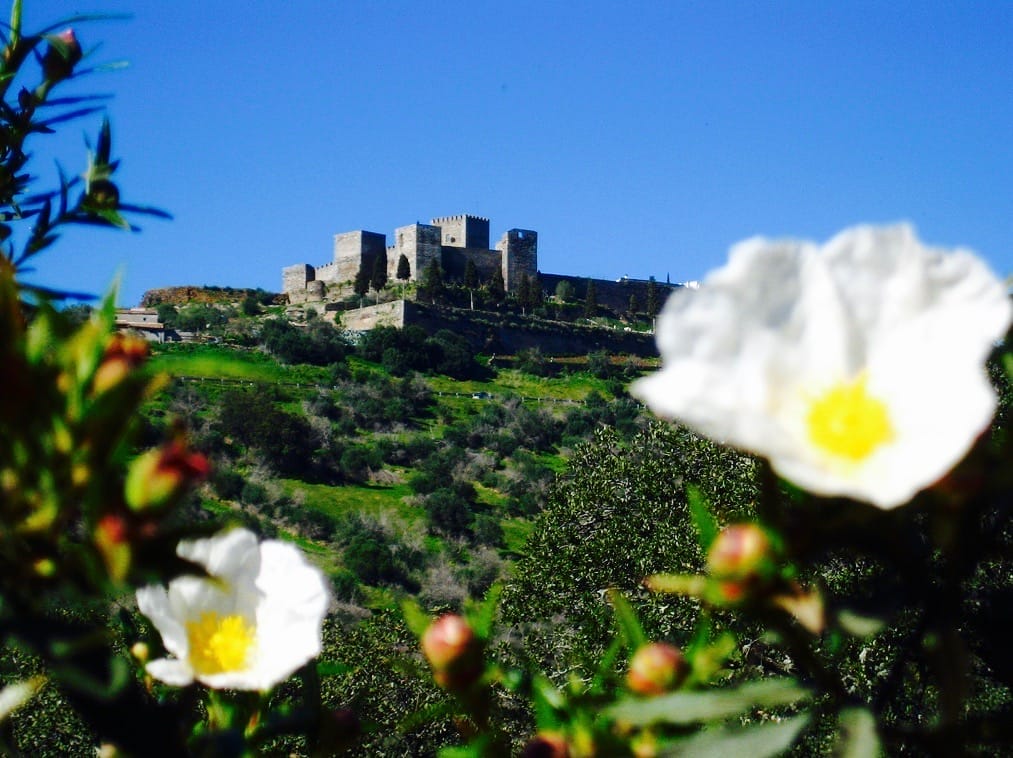
Monsaraz is a walled medieval village with a castle, looking over Alqueva, the largest artificial lake in Western Europe at about 250 square kilometers. The surrounding Dark Sky Alqueva reserve became the first place in the world certified as a Starlight Tourism Destination, and Monsaraz recorded some of its darkest readings. Your licensed driver-guide spends the afternoon in the village and the cork oak country below, and where available the evening ends with a stargazing session, the Milky Way overhead on clear nights. Logistics: Évora to Monsaraz by road, about 50 minutes each way, licensed driver-guide.
Day Eleven
The Algarve Cliffs and Benagil
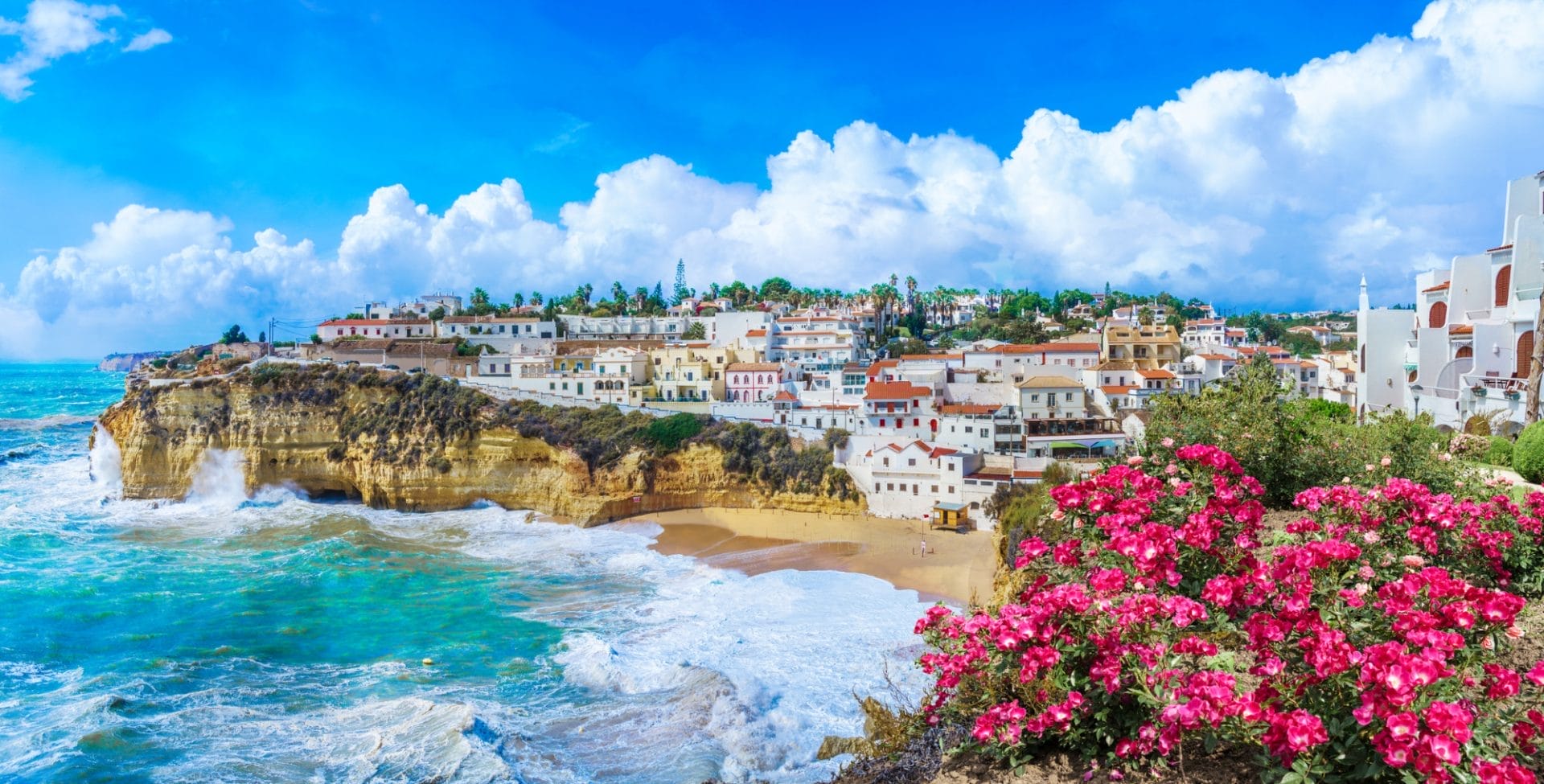
The Seven Hanging Valleys trail runs about 5.6 kilometers along the clifftops between Vale de Centeanes and Praia da Marinha, in the municipality of Lagoa. Below, the Benagil sea cave opens to the sky through a hole in its roof, and sunlight falls onto the sand inside. Your guide books a licensed boat trip along the coast to the grotto where sea conditions suit, and the walk on the cliffs is yours to take at any length. Logistics: Évora to the Algarve by road, about 2 hours 30 minutes, licensed driver-guide.
Day Twelve
Sagres and Cape St. Vincent
Cape St. Vincent, about six kilometers from Sagres, is the southwesternmost point of mainland Europe. Its 24-meter lighthouse dates from 1846 and stands over the ruins of a sixteenth-century Franciscan convent, with the Atlantic breaking against the cliffs below. Lunch on the coast brings amêijoas na cataplana, clams cooked and served in the Algarve's copper cataplana. Logistics: a coastal day west to Sagres and Cape St. Vincent with your licensed driver-guide, back to the same hotel.
Day Thirteen
Into Spain: Seville's Alcázar
King Pedro I rebuilt Seville's royal palace in the Mudéjar style in the 1360s, and an Arabic inscription in the Hall of Ambassadors dates the work to 1366. The Spanish royal family still uses the upper floors on visits to the city. Your licensed guide leads a late-afternoon visit through the Courtyard of the Maidens, then walks you into Santa Cruz, the old Jewish quarter, where the painter Murillo lived. Dinner is tapas in the quarter's small squares. Logistics: the Algarve to Seville by road, about 2 hours 40 minutes from the Portimão area, licensed driver.

Day Fourteen
Seville Cathedral, the Giralda and Triana
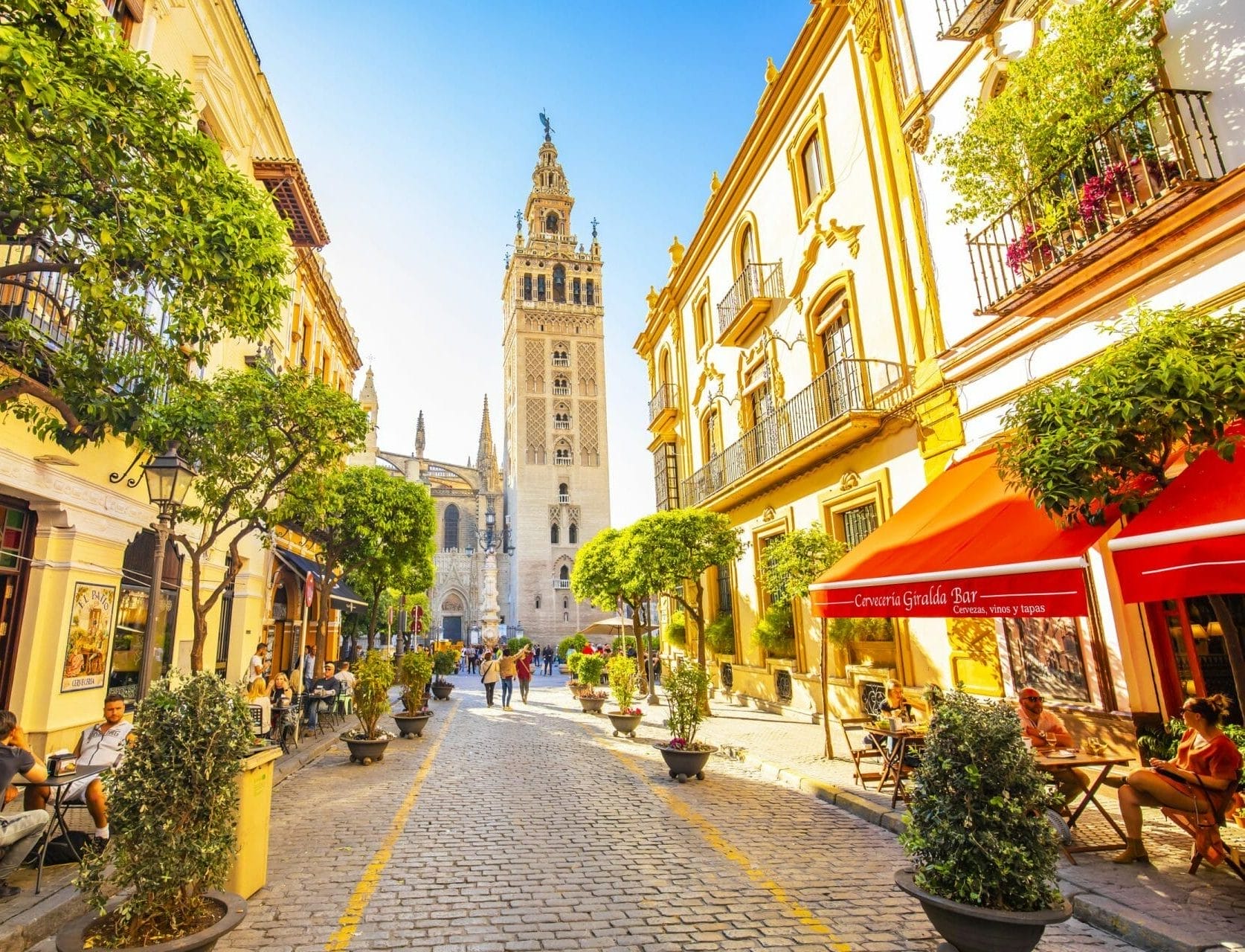
The Almohads completed the Giralda in 1198 as the minaret of Seville's great mosque, and Hernán Ruiz the Younger added the Renaissance belfry from 1558 to 1568. Thirty-five ramps in place of stairs lead to the top. The cathedral, founded in 1403 on the mosque site, holds the tomb of Columbus. After lunch your licensed guide takes you to Plaza de España, which Aníbal González designed for the 1929 Ibero-American Exposition, with a tiled alcove for each Spanish province, then across the river to Triana, home of Seville's potters and flamenco families. Logistics: a day on foot in Seville with your licensed guide, licensed driver on hand, no hotel change.
Day Fifteen
Day Trip to Córdoba
Builders began Córdoba's great mosque around 785 and enlarged it over three centuries. Some 850 columns of jasper, onyx, marble and granite carry double arches striped in red brick and white stone, and al-Hakam II's mihrab glows with gold and glass mosaic. Christians installed a cathedral inside in 1236 and rebuilt its center from 1523 to 1599. Afterward your licensed guide crosses the Roman Bridge with you and stops for salmorejo, Córdoba's cold cream of tomato and bread topped with ibérico ham and hard-boiled egg. Logistics: our team books the high-speed train from Seville to Córdoba, about 45 minutes each way, and your licensed guide meets you at Córdoba station.
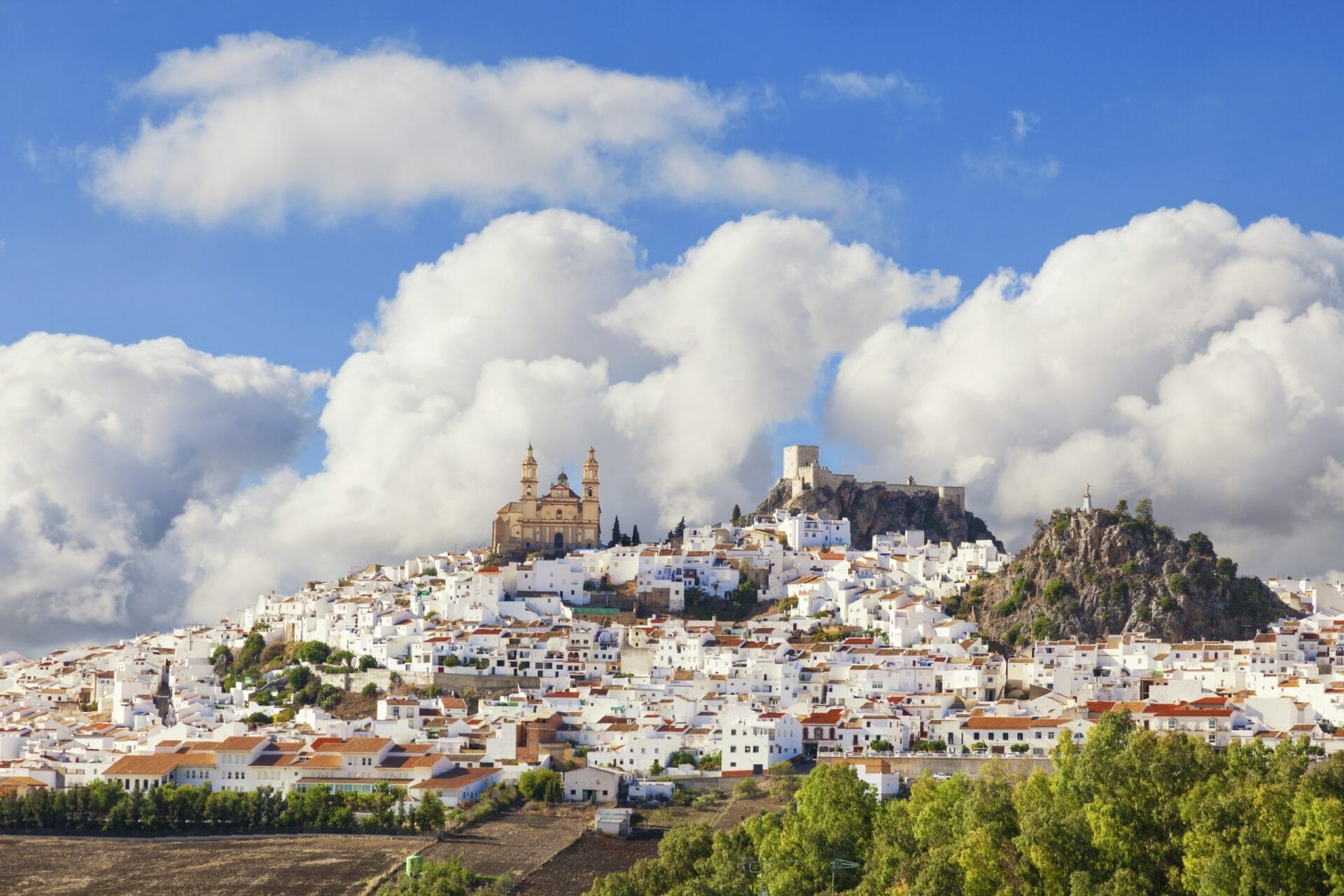
Day Sixteen
The White Villages to Ronda
Today's road climbs into the sierra on a route of pueblos blancos. Villages such as Arcos de la Frontera on its cliff edge, Grazalema inside the Sierra de Grazalema Natural Park and Zahara de la Sierra below its castle preserve whitewashed lanes and hilltop churches. The park shelters the pinsapo, a Spanish fir found only in the Iberian Peninsula and northern Morocco. Lunch is in a village, and the day ends on Ronda's clifftop. Logistics: Seville to Ronda through the white villages, about 4 hours with stops, licensed driver. The direct road takes about 1 hour 45 minutes.
Day Seventeen
Ronda and the Tajo Gorge
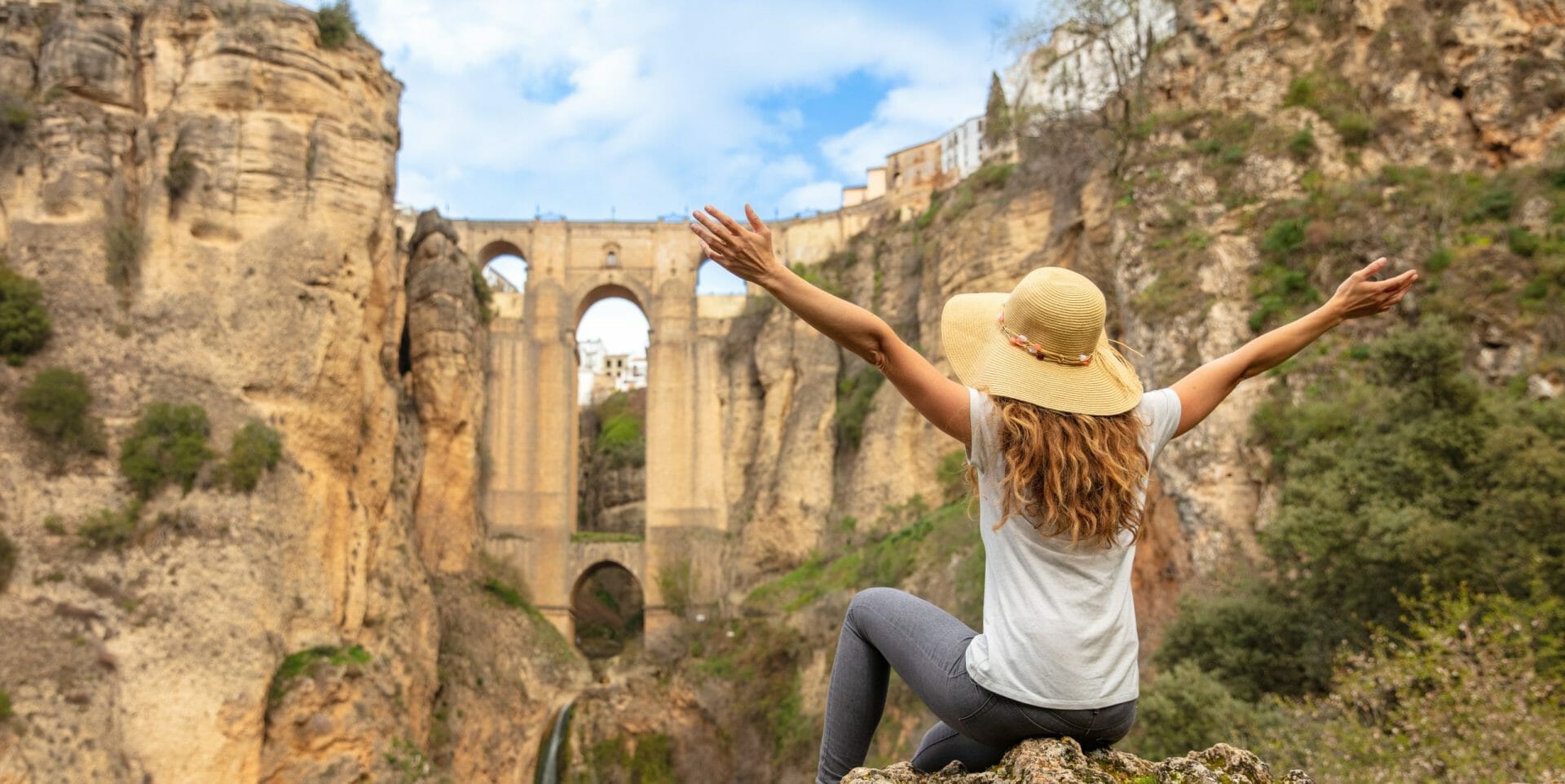
Builders worked for 34 years, from 1759 to 1793, on the Puente Nuevo, which rises about 58 meters over El Tajo, the gorge about 120 meters deep the Guadalevín River cut through the town. Ronda's bullring dates from 1784, one of the oldest in Spain. Ernest Hemingway spent summers in the old quarter, and Orson Welles's ashes rest in a well on the estate of his friend, the bullfighter Antonio Ordóñez. From the cliff walk you hear the river far below. Logistics: a day on foot in Ronda with your licensed guide, no hotel change.
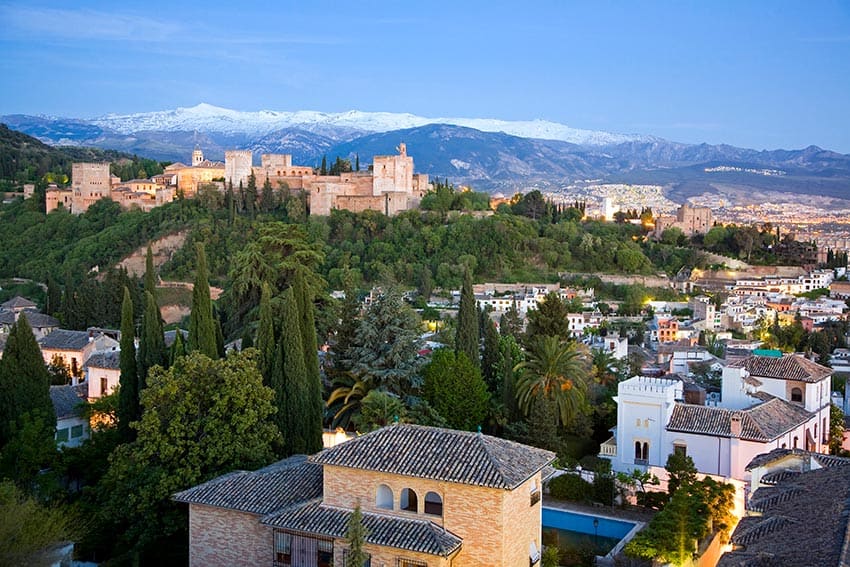
Day Eighteen
Granada and the Albaicín
UNESCO added the Albaicín to the Alhambra listing in 1994. The quarter keeps its Nasrid-era street plan, and its cármenes, whitewashed houses with walled gardens, climb the hill opposite the palace. Your licensed guide times the walk to reach the Mirador de San Nicolás toward sunset, when the view takes in the Alhambra with the Sierra Nevada behind it. Logistics: Ronda to Granada by road, about 2 hours, licensed driver.

Day Nineteen
The Alhambra with Israel
Where your dates allow, Israel, one of our licensed guides in Granada, leads the day. UNESCO calls the Alhambra the best example of Nasrid art, and the Generalife above it grew around a country residence of the emirs in the thirteenth and fourteenth centuries. You hear water running through the Generalife courtyards before you reach the Nasrid Palaces, whose entry follows the time printed on each ticket. Logistics: our team books named Alhambra tickets with a fixed Nasrid Palaces slot, and the monument checks each passport at the gate. No hotel change today.
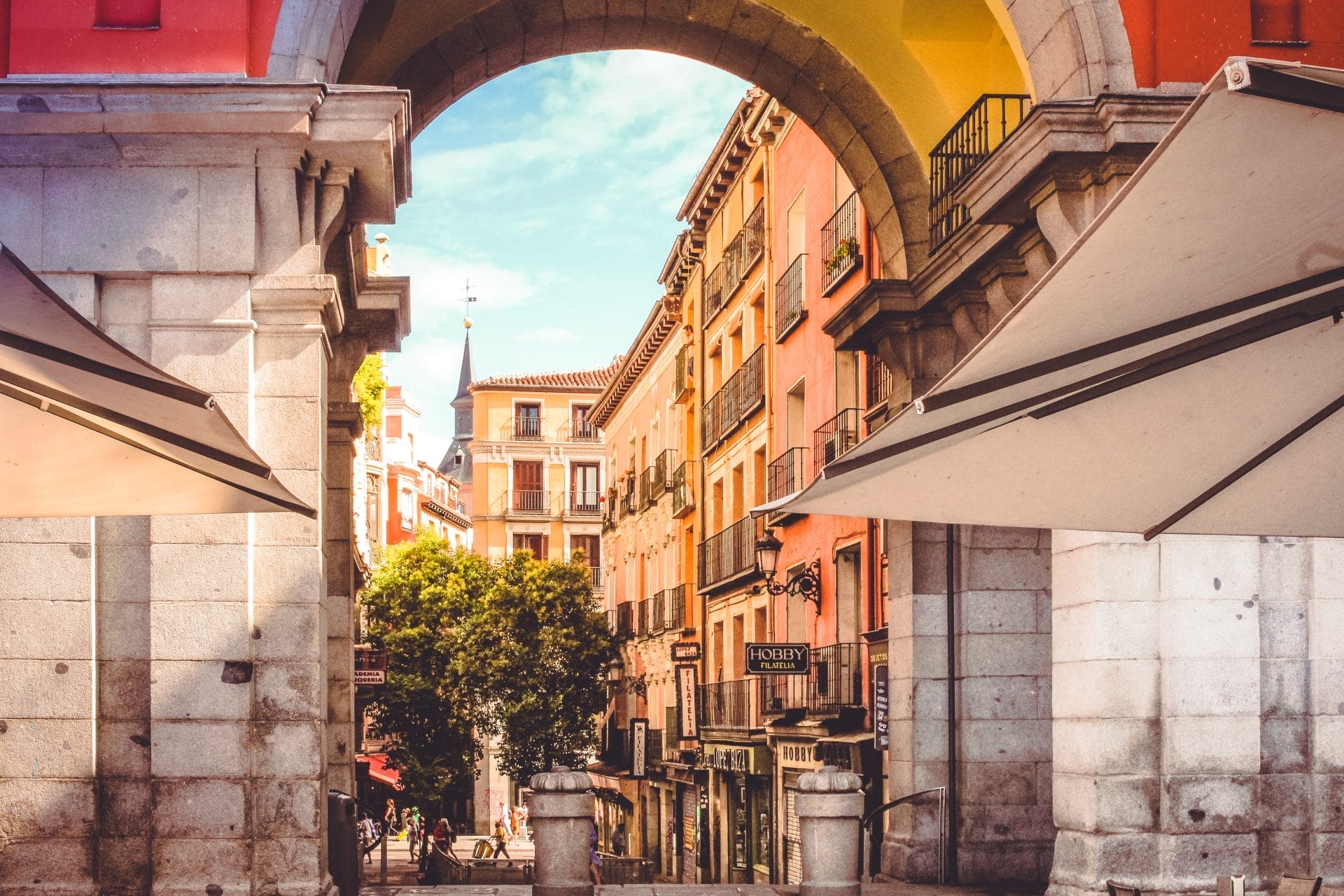
Day Twenty
High-Speed Train to Madrid
Madrid's Royal Palace rose from 1738 on the site of the old Alcázar, which burned in 1734. With about 135,000 square meters of floor space and 3,418 rooms, it ranks as the largest royal palace in Europe, and the royal family uses it for state ceremonies. Your licensed guide continues to the Plaza Mayor, which Juan Gómez de Mora completed in 1619, where 237 balconies look over the square and the painted Casa de la Panadería fills one side. Logistics: our team books the high-speed train from Granada to Madrid Atocha, about 3 hours 30 minutes, and a licensed driver meets you at the station.

Day Twenty One
The Prado with Anna
Where your dates allow, Anna, an art historian, leads your morning at the Prado. The museum opened in 1819 in a building Juan de Villanueva designed in 1785, and it holds Velázquez's Las Meninas of 1656 alongside Goya, El Greco, Titian and Bosch. UNESCO listed the Paseo del Prado and the Buen Retiro in 2021. The afternoon leads into the 120 hectares of the Retiro and the glass-and-iron Palacio de Cristal beside its lake, a venue of the 1887 Philippines Exposition. Logistics: a day in Madrid on foot and by car, with Anna at the Prado and a licensed driver on hand, no hotel change.

Day Twenty Two
Toledo, City of Three Cultures
Toledo sits on a rock above a loop of the Tagus, about 70 kilometers south of Madrid, and UNESCO inscribed the old city in 1986. Jews, Christians and Muslims shared its streets in the Middle Ages. Samuel ha-Levi, treasurer to King Pedro of Castile, built the El Tránsito synagogue in 1357, and it now houses the Sephardic Museum. In the church of Santo Tomé hangs El Greco's Burial of the Count of Orgaz, begun in 1586. Before the drive back, taste mazapán de Toledo, which has held EU protected geographical indication status since 2008. Logistics: Madrid to Toledo by road, about 1 hour each way, licensed guide and licensed driver.
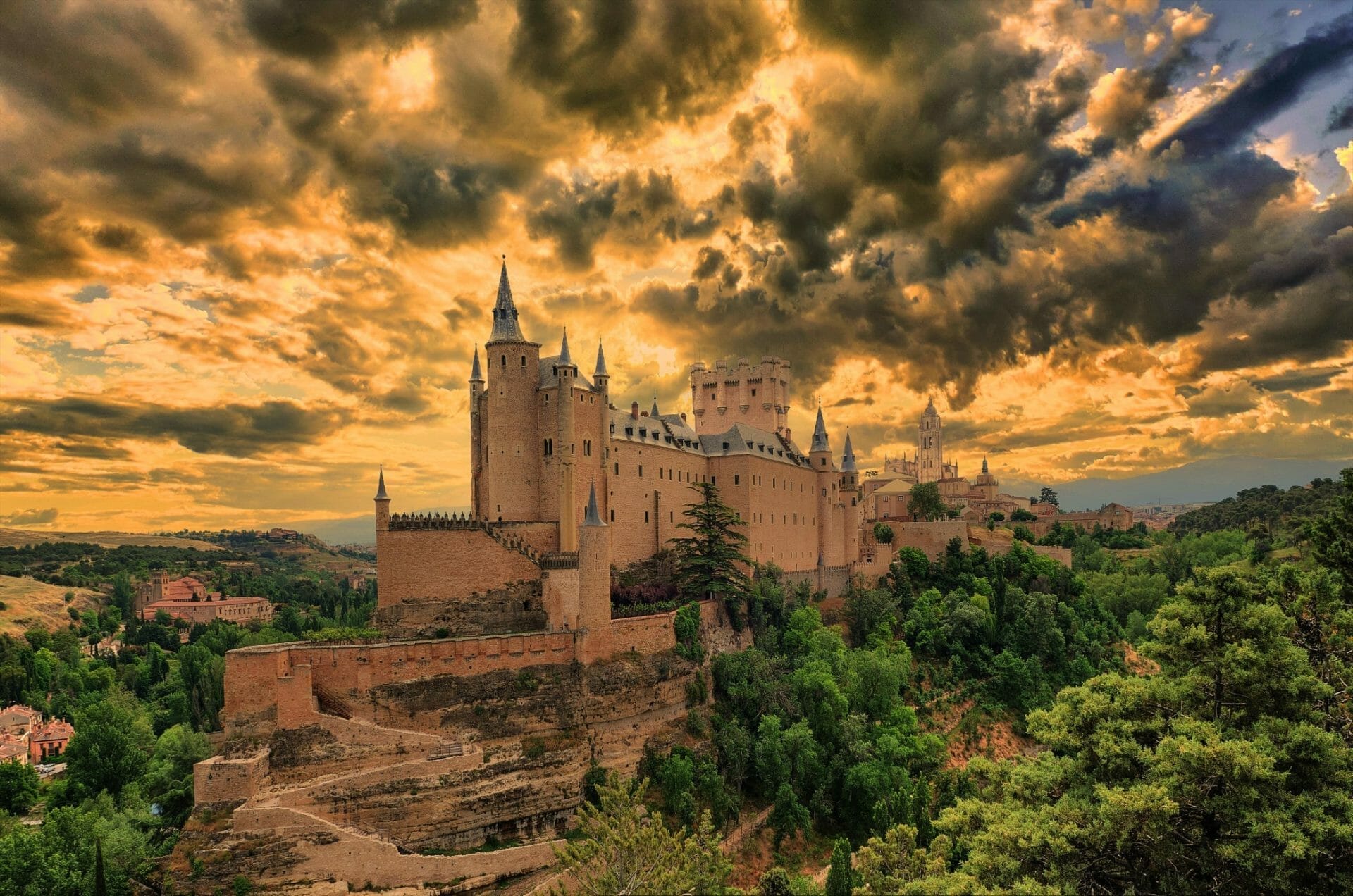
Day Twenty Three
Segovia and La Granja
Segovia's Roman aqueduct runs 813 meters through the lower town on 128 pillars carrying two tiers of arches, and UNESCO inscribed the old town and aqueduct in 1985. The Alcázar began as a fortress around the eleventh century. Lunch brings cochinillo, roast suckling pig, carved in the Segovian way with the edge of a plate. In the afternoon, La Granja de San Ildefonso, the palace Philip V began in 1721 on the model of his grandfather's Versailles, sets 26 gravity-fed fountains in its gardens. Logistics: Madrid to Segovia by road, about 1 hour 30 minutes, with La Granja on the same day, licensed guide and licensed driver.
Day Twenty Four
North to La Rioja
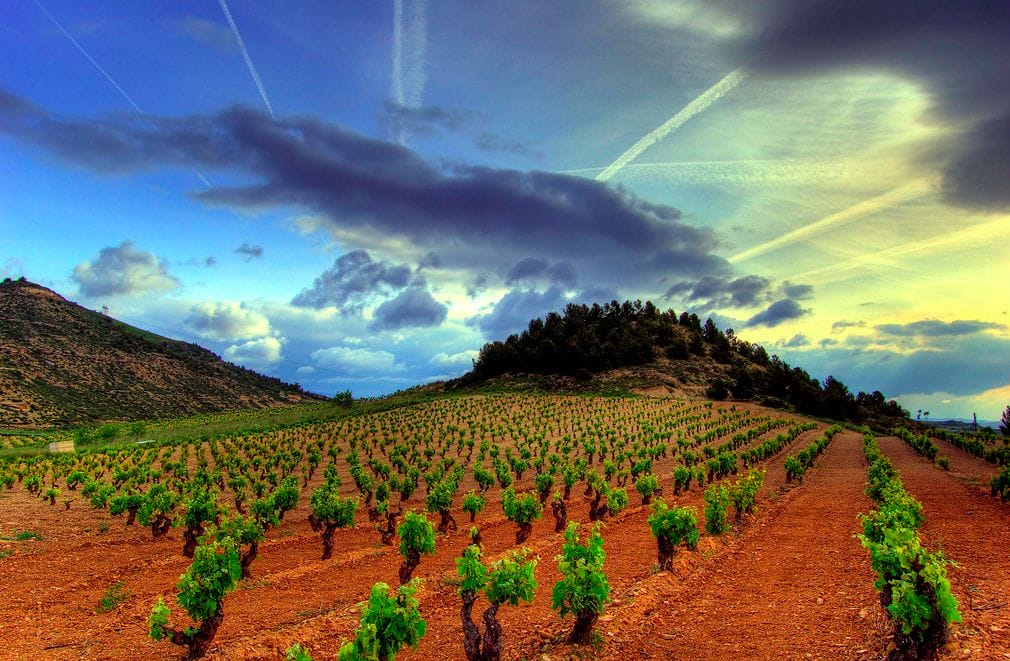
Day 24 is a long road day, about three and a half hours north across Castile, with a lunch stop on the way. Logroño, the capital of La Rioja, rewards the drive in the evening. Calle Laurel, beside the San Blas market in the old town, fills with bars where many specialize in a single pincho, from mushrooms to stuffed peppers, each with a glass of Rioja. Logistics: Madrid to Logroño by road, about 3 hours 30 minutes, licensed driver.
Day Twenty Five
Rioja Wineries and San Millán
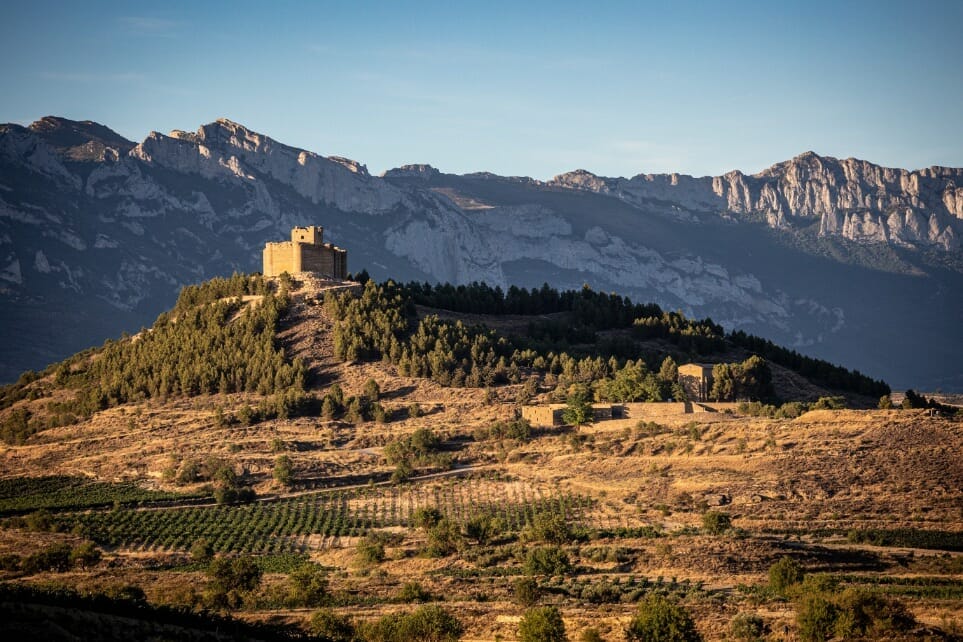
In Haro, many of Rioja's best-known bodegas stand together in the Barrio de la Estación beside the railway station, and your licensed guide arranges a winery visit and tasting there. The afternoon heads to San Millán de la Cogolla, where UNESCO listed the monasteries of Yuso and Suso in 1997. A monk at Suso added notes in Castilian and Basque to a Latin codex, the first known written Spanish. On the way, Santo Domingo de la Calzada's cathedral keeps a pair of live chickens, descendants of the birds in a Camino de Santiago legend. Logistics: a day in the Rioja wine country with your licensed guide and licensed driver, no hotel change.

Day Twenty Six
San Sebastián's Old Town
British and Portuguese troops burned San Sebastián in 1813, and most buildings in the Parte Vieja date from the rebuilding afterward, including the Plaza de la Constitución of 1817. Your licensed guide walks the old quarter, the promenade above La Concha beach and the slopes of Monte Urgull, with the Atlantic rolling into the bay below. The evening starts with pintxos at the bar counters of the Parte Vieja. Logistics: La Rioja to San Sebastián by road, about 2 hours, licensed driver.
Day Twenty Seven
Pintxos, Txakoli and a Gastronomic Society
A group of friends formed San Sebastián's first txoko, or gastronomic society, in 1870, and members still cook for themselves, their families and guests in private club kitchens. Where available, your guide arranges a lunch as a member's guest. Through the evening pintxo bars, txakoli, a dry and lightly sparkling white wine, pours from a height into tall glasses. The Getaria version, made from the Hondarrabi Zuri grape, gained its denominación de origen in 1989. Logistics: a food day on foot in San Sebastián with your licensed guide, no hotel change.

Day Twenty Eight
Flight to Barcelona and the Gothic Quarter
Barcelona's Gothic Quarter owes much of its look to restoration in the late nineteenth and early twentieth centuries, timed for the 1929 International Exhibition, around surviving stretches of the Roman wall. Josep Oriol Mestres and August Font built the cathedral's façade between 1882 and 1913. Your licensed guide walks you through the late-afternoon light in the lanes around the cathedral and the Plaça del Rei. Logistics: San Sebastián to Barcelona by direct flight, about 1 hour 10 minutes, and a licensed driver meets you on arrival.

Day Twenty Nine
Gaudí's Barcelona
Work on the Sagrada Família began in 1882, and Gaudí took over the design a year later. Pope Benedict XVI consecrated it as a basilica in 2010, and Gaudí lies in its crypt. UNESCO lists his Nativity façade and crypt among seven Gaudí works. In the afternoon, Park Güell, built for Eusebi Güell from 1900 to 1914 and open to the public since 1926, leads up to the mosaic serpentine bench by Josep Maria Jujol. Logistics: our team books the Sagrada Família and Park Güell entries in advance, licensed guide and licensed driver.

Day Thirty
Departure from Barcelona
Barcelona's El Prat airport lies about 15 kilometers southwest of the city center, so a late-morning flight still leaves time for a last coffee and a walk on the Passeig de Gràcia. VIP fast-track assistance at the airport is available by request. Logistics: hotel to Barcelona airport by private vehicle with your licensed driver.
What does a 30 day Spain and Portugal itinerary look like?
A 30 day Spain and Portugal itinerary has room for 13 bases with at least two nights in each, from the Azores to Barcelona. This one gives Portugal 12 nights across São Miguel, Porto, the Douro Valley, Lisbon, Évora and the Algarve, and Spain 17 nights across Seville, Ronda, Granada, Madrid, La Rioja, San Sebastián and Barcelona. Two flights and one high-speed train cover the longest distances, and day trips to Sintra, Monsaraz, Córdoba, Toledo and Segovia leave from bases where you already sleep.
How should you spend one month in Spain and Portugal?
Spend one month in Spain and Portugal by giving each region two or three nights and letting day trips do the rest of the work. The pattern on this route is a travel day followed by a full touring day in the same place, with longer stays where the day trips cluster: three nights in Seville for Córdoba, four in Madrid for Toledo and Segovia. Food and wine thread through the month, from cozido in Furnas and port in Gaia to the pincho bars of Logroño and the gastronomic societies of San Sebastián.
Spain and Portugal itinerary for 30 days: how many places fit?
Thirteen overnight bases fit into 30 days without a single one-night stop, and the day trips add Sintra, Cascais, Monsaraz, Sagres, Córdoba, the white villages, Toledo, Segovia and Haro. Adding a fourteenth base, such as Coimbra or Bilbao, pushes two stops down to single nights, so our team usually trades one region for another rather than adding to the count. Removing the Azores leaves 28 days and 12 bases on the mainland.
Thirty days, or a shorter Spain and Portugal trip?
Thirty days suits travelers who want both countries in one trip and the time to sit down for lunch in each. A shorter route serves you better when you have two or three weeks, or when one country matters more than the other. The 14-day Spain and Portugal private tour covers Madrid, Toledo, Granada, Seville, Lisbon, Sintra, Porto and the Douro, the headline cities at two nights each, and fits a first visit with two weeks of leave.
The 18-day best of Spain and Portugal tour runs from Barcelona through Madrid, Granada, Ronda, the white villages and Seville to Évora, Monsaraz and Lisbon, close to this route’s southern half without the Azores, Porto or the Basque coast. The 25-day Spain and Portugal tour keeps an Azores start and adds Faial island, then leaves out the Alentejo, the Algarve, Ronda and Barcelona and ends in Bilbao.
If one country is the priority, the 22-day Spain private tour spends its time on Madrid, Andalusia, the Basque Country, La Rioja and Barcelona, and the 21-day Portugal tour with the Azores adds Braga, Guimarães and Coimbra, which this route passes by. Every multi-country route sits on our multi-country trips page.
Who this journey suits
Recently retired couples with a free month, who want Iberia in one journey rather than three separate trips over several years.
Professionals on a sabbatical or a long break between roles, who value four nights in Madrid and three in Seville over a new hotel every morning.
Returning travelers who saw Madrid, Seville and Lisbon on a first visit and now want the Azores, the Alentejo, the Algarve, La Rioja and the Basque coast.
Food and wine travelers, since the route passes through the Douro, the Alentejo, La Rioja and San Sebastián, with tastings and long lunches built into the days.
Families with adult children, where one or two family members join for a single leg and our team plans their arrivals and departures around the main route.
The people behind the route
Three people carry the days where depth matters most, each where your dates allow.
Israel, one of our licensed guides in Granada, leads Alhambra days. He builds the visit around the Nasrid Palaces time slot, so the Generalife and the Alcazaba fit around it at an easy pace.
Anna, an art historian, leads our Prado visits in Madrid. She shapes the morning around the painters you care about, from Velázquez and Goya to El Greco and Bosch.
Luisa, one of our licensed guides in Lisbon and Sintra, leads the Sintra day with a licensed driver alongside her, and knows the order of palaces and gardens to suit the day.
What the 30-day journey costs and what it includes
This 30-day journey starts from $29,642 per person, double occupancy. The from-price covers 29 nights in deluxe four-star properties selected for comfort, location and service. Five-star luxury properties are available by request. It also covers licensed guides on touring days, licensed drivers and private vehicles for every transfer and excursion, and the planning and in-country support of our team.
What moves the price: travel dates and season, hotel category, the number of travelers sharing vehicles and guides, single rooms, and added private experiences such as a sunset sail from Lisbon, a boat on the Douro, a balloon flight over the Rioja vineyards or a lunch at a San Sebastián gastronomic society. Our team prices each journey to your dates and party.
When the route looks close to the month you have in mind, speak with our team about your dates, your party and the pace you want.
Questions about the 30-day Spain and Portugal itinerary
How many days do you need for Spain and Portugal?
Two weeks covers the classic pairing of Madrid, Andalusia, Lisbon and Porto at about two nights a base. Thirty days covers 13 bases. It adds the Azores, the Douro Valley, the Alentejo, the Algarve, the white villages, La Rioja, the Basque coast and Barcelona, and still gives every base at least two nights. Seville gets three nights and Madrid four, which leaves room for day trips to Córdoba, Toledo and Segovia without a hotel change. If your time sits between the two, our 18-day and 25-day routes cover the middle ground, and our team adjusts any of them to your dates. The number of days matters less than the number of bases: a good rule is no more than one hotel change for every two or three days.
Is a month too long for Spain and Portugal?
A month suits travelers who want the whole peninsula at a steady pace. This route spends 12 nights in Portugal and 17 in Spain, and only three days carry three hours or more on the road: Day 7 from the Douro to Lisbon, Day 16 through the white villages to Ronda, and Day 24 from Madrid to La Rioja. Two short flights and one high-speed train replace the longest drives. Sixteen of the 30 days carry no hotel change, helped by four nights in Madrid and three in Seville. If a month feels long, the route divides cleanly: the Portuguese half from the Azores to the Algarve runs 12 days, and the Spanish half from Seville to Barcelona runs 18.
What is the best time of year for a 30-day Spain and Portugal trip?
April to June and September to October suit this route best, because the month spans the Atlantic islands, the Alentejo plains and the inland heat of Andalusia and Madrid. AEMET’s 1981 to 2010 averages give Seville a mean daily high of 23.4°C (about 74°F) in April and 26.0°C (about 79°F) in October, against 36.0°C (about 97°F) in July. Madrid averages 18.2°C (about 65°F) in April and 19.4°C (about 67°F) in October. IPMA’s figures for Lisbon show 19.8°C (about 68°F) in April and 22.5°C (about 72°F) in October. For a summer departure, our team plans early starts and long midday breaks in Andalusia and Madrid.
How do you travel between Spain and Portugal on this route?
The route crosses the border by road, from the Algarve to Seville, about 2 hours 40 minutes with a licensed driver. Within the month, two flights and one high-speed train cover the longest gaps: Ponta Delgada to Porto (about 2 hours 20 minutes), Granada to Madrid by AVE (about 3 hours 30 minutes) and San Sebastián to Barcelona (about 1 hour 10 minutes). Licensed drivers handle every other transfer by private vehicle, door to door, so luggage stays in the car and the day’s touring fits around the drive. Our team sends the full schedule, with every time and contact, before you leave home.
Why does the 30-day itinerary start in the Azores?
São Miguel sits in the Atlantic between North America and mainland Portugal, and Azores Airlines flies nonstop to Ponta Delgada from Boston. Starting there puts the island’s volcanic lake, hot springs and Terra Nostra gardens at the front of the trip, at a quieter pace than a capital city on the first morning. A flight of about 2 hours 20 minutes then carries you to Porto for the mainland. Two nights on São Miguel give you a full day in the Furnas valley, including the cozido lunch cooked in the volcanic ground. If the Azores do not fit your dates, our team starts the route in Porto, and the trip runs 28 days.
Is the 30-day route fixed?
No. The route as written shows one balanced order of bases, and our team shortens, extends or reorders it around your dates, interests and pace. Typical adjustments include a third night in Lisbon or Granada, a Douro stay moved to the harvest weeks, the Azores dropped for a Porto start, or an ending in Madrid instead of Barcelona. Each change keeps the same principle: at least two nights per base and no more than one long road day in a row. Travel days, guides and drivers, and in-route tickets all move with the change, so you receive a revised day-by-day plan and price.
How much walking does the itinerary involve?
Several old quarters on this route sit on hills with cobbled lanes and steps, including Porto’s Ribeira, Lisbon’s Alfama, the Albaicín in Granada, Toledo, Ronda and Segovia. The Alhambra visit also covers a large site on foot. Your licensed driver drops you at the top of a quarter where roads allow, so the walk runs downhill, and your guide sets the pace to your party. The Seven Hanging Valleys walk in the Algarve, about 5.6 kilometers, is optional, and a boat trip along the same coast covers the cliffs from the water. Your guide is glad to advise on suitability before booking.
Do we need to book the Alhambra in advance?
Yes. Alhambra tickets are personal, and the Nasrid Palaces admit each visitor only during the time slot printed on the ticket. Visitors show an original ID card or passport at the entrance, and children aged 3 to 11 enter free but need a reservation alongside the adult tickets. Our team books your tickets as soon as your dates are set and builds the Granada days around the Nasrid Palaces slot, with the Albaicín on the arrival afternoon and the full Alhambra day after it. Where your dates allow, Israel, one of our licensed guides in Granada, leads the visit.
Are there free days on the 30-day itinerary?
The route as written plans every day, including a guided Furnas day on Day 2, so you never spend the first full day alone. Sixteen of the 30 days carry no hotel change, among them Day 4 in Porto, Day 6 in the Douro, Day 12 in the Algarve, Day 14 in Seville, Day 17 in Ronda, Day 21 in Madrid, Day 25 in La Rioja and Day 27 in San Sebastián. Any of these turns into a free day on request, and most travelers on a month-long route choose two or three. Our team keeps the driver on call for the day, so a free morning still includes a lift to lunch or a spa.
Who guides and drives us on the 30-day tour?
In Spain, a licensed guide leads each touring day and a licensed driver handles the vehicle, always two separate people. In Lisbon and Sintra, where your dates allow, Luisa, one of our licensed guides, works alongside a licensed driver. Elsewhere in Portugal, a licensed driver-guide, one person holding both licenses, looks after you. Where your dates allow, Israel leads the Alhambra day in Granada and Anna, an art historian, leads the Prado visit in Madrid. Our team in Madrid plans the whole route, books every ticket and stays in contact through the month.
We keep a list of vetted four- and five-star hotels, well located and enjoyed by our past travelers and by our own team.
Examples for each overnight stop on this route. Choose a deluxe boutique hotel or a five-star stay, and your travel advisor matches each night to your wishes, the season and availability.
São Miguel, Azores
Boutique: Senhora da Rosa, Tradition & Nature Hotel. An 18th-century farm estate at the edge of Ponta Delgada, with an outdoor pool and spa.
Five-star: Octant Ponta Delgada. A modern seafront hotel near Ponta Delgada’s port, with a seventh-floor pool and bar over the Atlantic.
Porto
Boutique: Torel 1884. An 1884 palace near São Bento station, with rooms themed on Portugal’s voyages of discovery.
Five-star: The Yeatman. Terraced into the Gaia hillside among the port lodges, every room with a terrace facing Porto.
Douro Valley
Boutique: Quinta do Vallado Wine Hotel. An 18th-century house once owned by Dona Antónia Ferreira, plus a modern schist building among vineyards.
Five-star: Six Senses Douro Valley. A restored 19th-century manor near Lamego, above Douro vine terraces, with a large spa.
Lisbon
Boutique: Memmo Alfama. A design hotel on an Alfama lane, with a pool beside its wine-bar terrace over the Tagus.
Five-star: Four Seasons Hotel Ritz Lisbon. A 1959 landmark beside Eduardo VII Park, filled with mid-century Portuguese art and tapestries.
Évora and the Alentejo
Boutique: Albergaria do Calvário. A 16th-century olive-oil mill inside Évora’s old walls, now a 22-room boutique hotel.
Five-star: Convento do Espinheiro. A restored 15th-century convent near Évora, with arched patios and an underground wine cellar.
Algarve
Boutique: Octant Praia Verde. A hotel in the pine woods of the eastern Algarve, with a boardwalk to Praia Verde beach.
Five-star: Vila Vita Parc. A clifftop resort at Porches on more than 50 acres of gardens, with its own beach below.
Seville
Boutique: Hotel Casa 1800 Sevilla. A 19th-century mansion with a patio and a rooftop pool facing the cathedral and Giralda.
Five-star: Hotel Alfonso XIII. Built for the 1929 Ibero-American Exposition, a neo-Mudéjar palace of tiles and arches near the Alcázar.
Ronda
Boutique: Hotel Montelirio. A stately old house on the edge of the Tajo gorge, close to the Puente Nuevo.
Also consider: Parador de Ronda. The old town hall and market building on the edge of El Tajo, beside the Puente Nuevo.
Granada
Boutique: Parador de Granada. A 15th-century Franciscan convent inside the Alhambra precinct, with gardens facing the Generalife.
Five-star: Hospes Palacio de los Patos. A 19th-century palace beside a contemporary wing, linked by gardens, with a spa below.
Madrid
Boutique: Tótem Madrid. A restored 19th-century building on Calle Hermosilla, steps from Serrano’s shops in the Salamanca district.
Five-star: Rosewood Villa Magna. Reopened by Rosewood in 2021 on the Paseo de la Castellana, with a leafy front garden.
La Rioja
Boutique: Hotel Viura. Stacked concrete cubes beside the village church in Villabuena de Álava, with a rooftop terrace.
Five-star: Hotel Marqués de Riscal. Frank Gehry’s titanium ribbons over the Marqués de Riscal winery in Elciego.
San Sebastián
Boutique: Hotel Villa Soro. A protected 19th-century villa with a garden and old brick stables, five minutes from Zurriola beach.
Five-star: Hotel María Cristina. The 1912 Belle Époque landmark on the Urumea river, where film-festival stars stay each September.
Barcelona
Boutique: H10 Casa Mimosa. A listed 19th-century Modernista building on Pau Claris, on the same block as Gaudí’s La Pedrera.
Five-star: Mandarin Oriental Barcelona. A former bank on Passeig de Gràcia turned into a calm, pale-toned hotel with a rooftop pool.
What's Included
A Very Personalized Itinerary, Just For You and Your Schedule
Hand-Picked Ultra-Luxury & Boutique Hotel Options
Insider Experiences + Inspiring Sightseeing + Magical Upgrades
Private Touring with Your Own Personal Expert Guide
Private Airport & Train Station Luxury Transfers
Full Breakfasts + Food & Wine Tasting Options
Your Choice of Activities on “Design Your Days”®
Expert Advice, Restaurant Ideas & Reservations
24/7 Support & Concierge Service from Spain, Portugal & Morocco
Magical is an award-winning luxury travel agency
Private journeys with soul & stories
Excellent independent reviews
Only five journeys per country, per week
Hidden gems, insider fun & vetted hotels
Your private guide, deluxe vehicle & flexible pace
24/7 concierge-style support
We handle everything — you live the dream
American Precision, Local Soul
Our Unforgettable Trips Are Tailored Just For You
Hi from Spain & Portugal,
Along with our local partners across Portugal, Spain, Morocco and beyond we believe that our clients deserve the truly tailor-made private luxury trips, not generic "one-size-fits-all" plans.
Get inspired with our sample trips then get in touch about an expert-made personalized custom luxury itinerary, just for you.
Kind regards,
Dan O'Beirne & the MPT team
Request a Quote